The Pokémon card grading landscape shifted dramatically in late 2025 when PSA's parent company acquired Beckett Grading Services (BGS). This consolidation has positioned CGC (Certified Guaranty Company) as the primary independent alternative to the PSA/BGS conglomerate, fundamentally changing the decision calculus for collectors choosing where to grade their cards.
If you're trying to decide between CGC and BGS for your Pokémon cards in 2026, you're facing a more complex decision than ever before. This comprehensive guide examines pricing, turnaround times, resale values, and the strategic implications of supporting independent grading companies versus the industry giant.
The 2026 Grading Landscape: What Changed
The acquisition of Beckett by Collectors Universe (PSA's parent company) represents the most significant consolidation in the grading industry's history. Here's what it means for collectors:
Market Implications:
- PSA and BGS now operate under the same corporate ownership
- CGC has emerged as the leading independent grading alternative
- Some collectors are deliberately choosing CGC to support competition
- BGS's future direction remains uncertain under new ownership
- Pricing and service levels at both companies continue to evolve
This consolidation has created both opportunities and concerns. While some collectors worry about reduced competition, others see CGC's independence as increasingly valuable to the hobby's long-term health.
Pricing remains one of the most tangible differences between these grading companies. Here's how they compare across service levels:
CGC Pricing Structure
Bulk/Economy Tiers:
- Bulk submissions (20+ cards): $12-15 per card
- Standard service: $18-22 per card
- Express options: $35-75 per card
- Subgrade addition: +$5 per card (optional)
Turnaround Times:
- Bulk: 30-45 business days
- Standard: 15-25 business days
- Express: 5-10 business days
BGS Pricing Structure
Service Tiers:
- Economy (50+ cards): $14.95 per card
- Standard service: $22-30 per card
- Premium options: $50-100+ per card
- Subgrades: Included in all service levels
Turnaround Times:
- Economy: 60-75+ business days
- Standard: 45-60 business days
- Premium: 10-20 business days
The Real Cost Difference
When comparing apples to apples, CGC typically costs $2-7 less per card at comparable service levels. However, the more significant difference lies in turnaround times:
Example Scenario:
Grading 20 modern Pokémon cards at the economy level:
- CGC: $240-300 total, 30-45 day turnaround
- BGS: $299-440 total, 60-75+ day turnaround
CGC delivers cards back 30-45 days faster while costing $60-140 less for this submission size. For collectors and dealers who need faster inventory turnover, this time advantage translates directly to opportunity cost savings.
Cost and speed matter, but resale value ultimately determines your grading ROI. Here's what 2026 market data reveals:
Modern Pokémon Cards (2020-2026 Sets)
CGC 10 vs BGS 9.5:
- CGC 10 typically sells for 70-85% of PSA 10 prices
- BGS 9.5 typically sells for 78-88% of PSA 10 prices
- BGS 9.5 generally commands 5-10% premium over CGC 10
Real-World Example:
Charizard ex (Obsidian Flames Special Illustration Rare)
- PSA 10: $450-500
- BGS 9.5: $375-425 (83% of PSA 10)
- CGC 10: $340-390 (76% of PSA 10)
High-Grade Modern Cards
CGC Perfect 10/Pristine 10:
- Gaining significant market acceptance
- Some cards now matching or exceeding PSA 10 prices
- Particularly strong for Japanese cards and modern chase cards
- Still building track record compared to BGS Black Label
BGS Black Label 10 (Quad 10):
- Commands 115-140% of PSA 10 prices
- The most prestigious grade in the hobby
- Extremely rare (less than 1% of submissions)
- Premium has remained stable despite corporate changes
Real-World Example:
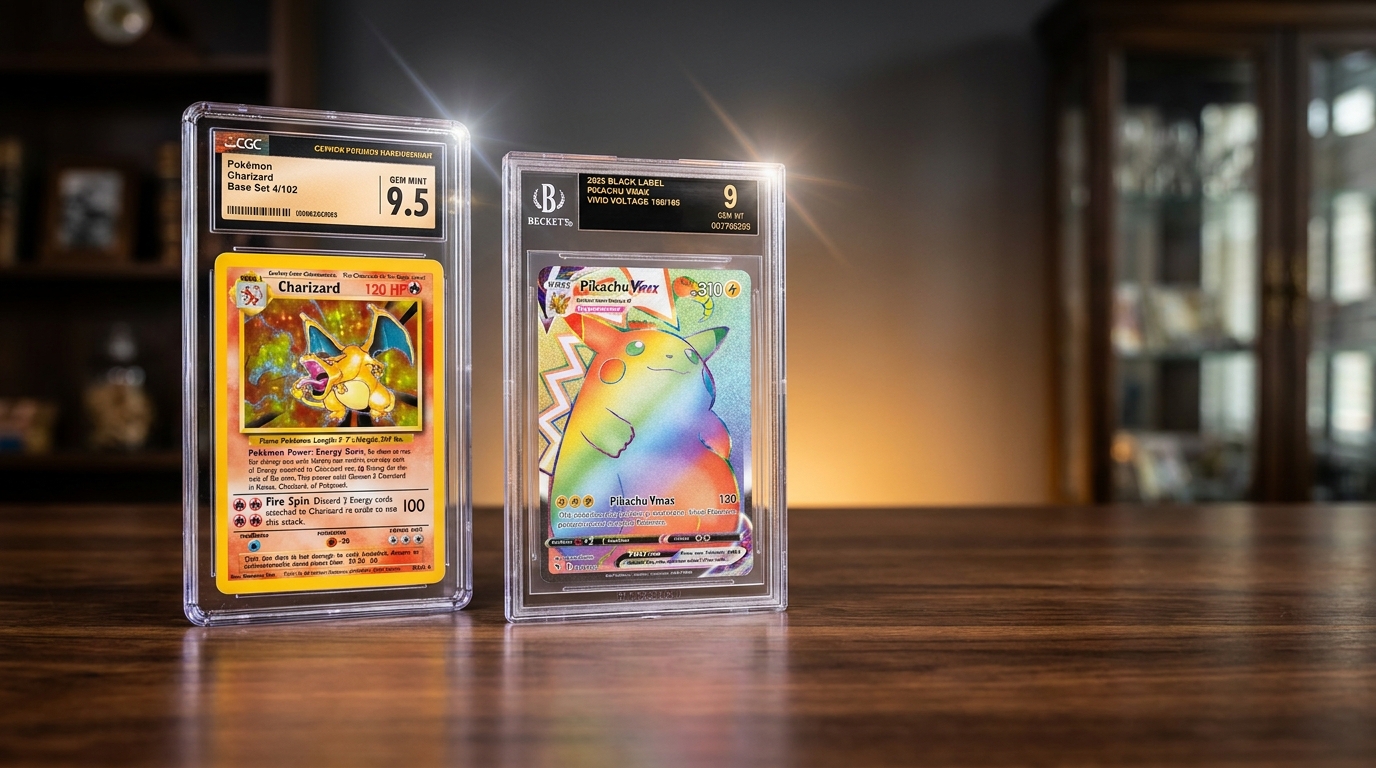
Pikachu VMAX (Vivid Voltage Rainbow Rare)
- PSA 10: $280-320
- BGS Black Label 10: $380-450 (135% of PSA 10)
- CGC Perfect 10: $290-350 (105% of PSA 10)
Vintage Pokémon Cards (Pre-2020)
For vintage cards, the resale value gap widens:
Vintage Resale Multipliers:
- BGS 9.5: 75-85% of PSA 10
- CGC 10: 65-80% of PSA 10
- PSA maintains strongest market preference for vintage
Vintage collectors remain more conservative, showing stronger preference for established grading companies with longer track records.
BGS's most distinctive feature is its mandatory subgrade system, breaking down the overall grade into four components:
Understanding BGS Subgrades
The Four Categories:
- Centering: Front and back alignment within borders
- Corners: Sharpness and wear on all four corners
- Edges: Condition of card edges and potential chipping
- Surface: Print quality, scratches, and surface imperfections
Each category receives its own grade from 1-10, and these determine the overall grade through a weighted average system.
Why Subgrades Matter
For Collectors:
- Understand exactly why a card received its grade
- Identify specific weaknesses (e.g., "9.5 with 9.0 centering")
- Make informed purchasing decisions
- Valuable for building registry sets
For Resale:
- "Strong 9.5" (four 9.5 subgrades) commands premium
- "Weak 9.5" (mix of 9.0 and 10 subgrades) sells for less
- Transparency helps buyers understand value
- Particularly important for high-value vintage cards
Example Scenario:
Two BGS 9.5 Charizard cards:
- Card A: 9.5/9.5/9.5/9.5 subgrades = $400
- Card B: 10/9/9.5/10 subgrades = $350
Despite identical overall grades, Card A's consistency commands a premium.
CGC's Subgrade Option
CGC offers optional subgrades for an additional $5 per card:
CGC Subgrade Considerations:
- Not standard like BGS (must request)
- Same four-category breakdown
- Less market recognition than BGS subgrades
- Useful for personal collection knowledge
- Minimal impact on resale value currently
Most CGC submitters skip subgrades to save costs, as the market doesn't yet price them significantly differently.
Slab Quality and Presentation
The physical holder protecting your card matters for both preservation and aesthetics:
BGS Slab Characteristics
Physical Features:
- Thicker, more substantial plastic (3.5mm)
- Premium, weighty feel
- Traditional design with gold/silver borders
- Black Label slabs feature distinctive black border
- Some susceptibility to scratching over time
Collector Perception:
- "Premium" feel appreciated by collectors
- 27-year heritage in grading
- Distinctive appearance on display
- Heavier for shipping (minor consideration)
CGC Slab Characteristics
Physical Features:
- Modern, scratch-resistant plastic
- UV protection to prevent fading
- Cleaner, more minimalist design
- Slightly thinner profile (3mm)
- QR code for instant verification
Collector Perception:
- Modern, clean aesthetic
- Better long-term card protection
- Easier to photograph (less glare)
- Some collectors prefer traditional BGS look
Practical Considerations
For long-term storage and display, CGC's UV protection and scratch resistance offer tangible advantages. For collectors who value traditional aesthetics and premium feel, BGS slabs may be preferable despite being slightly less protective.
CGC makes the most sense in these specific scenarios:
1. Modern Card Submissions
Ideal For:
- Cards from 2020-2026 sets
- Modern chase cards and alt arts
- Japanese modern cards
- Cards you plan to hold long-term
Why CGC Works:
- Cost savings add up on volume submissions
- Faster turnaround for modern market timing
- CGC 10 resale gap narrowing for modern cards
- Supporting independent competition
2. Budget-Conscious Grading
Ideal For:
- Building a graded collection economically
- Testing card grades before committing to premium service
- Cards with uncertain market value
- Bulk submissions of 50+ cards
Why CGC Works:
- Lower per-card costs
- Faster turnaround reduces opportunity cost
- Acceptable resale values for personal collection
3. Quick Turnaround Needs
Ideal For:
- Dealers needing inventory turnover
- Cards from newly released sets
- Taking advantage of market timing
- Pre-sale grading for events
Why CGC Works:
- 2-3x faster than BGS at comparable price points
- More predictable turnaround times
- Better customer service responsiveness
4. Supporting Industry Competition
Ideal For:
- Collectors concerned about monopolistic practices
- Those valuing independent grading
- Long-term hobby health advocates
Why CGC Works:
- Only major independent alternative
- Competitive pressure keeps all companies honest
- Diversifying the grading ecosystem
BGS remains the superior choice in specific situations:
1. Black Label Hunting
Ideal For:
- Ultra-premium modern cards
- Cards with perfect centering and surfaces
- Building high-end collections
- Maximum resale value pursuit
Why BGS Works:
- Black Label 10 commands 115-140% premiums
- Most prestigious grade in the hobby
- Unmatched market recognition
- Worth the extra cost and time for elite cards
2. Subgrade Transparency
Ideal For:
- Vintage card collectors
- Registry set builders
- Cards with specific known weaknesses
- Educational/research purposes
Why BGS Works:
- Mandatory subgrades included
- Market understands BGS subgrade implications
- Helps justify pricing on sales
- Valuable for collection management
3. High-Value Vintage Cards
Ideal For:
- Base Set holos and first editions
- Neo-era cards
- Cards worth $500+
- Investment-grade pieces
Why BGS Works:
- Stronger market acceptance for vintage
- Subgrades add credibility
- 27-year grading history
- Better resale value retention
4. Traditional Collector Preference
Ideal For:
- Collectors who value heritage
- Those preferring premium slab feel
- Display-focused collections
- Traditional aesthetics
Why BGS Works:
- Established market presence
- Premium presentation
- Collector community familiarity
- Proven long-term track record
The PSA/BGS consolidation introduces strategic considerations beyond simple cost-benefit analysis:
Market Concentration Concerns
Potential Issues:
- Reduced competitive pressure on pricing
- Less innovation without true competition
- Single entity controlling 85%+ of grading market
- Potential for anti-competitive practices
Why Collectors Care:
- Healthy competition keeps prices reasonable
- Multiple options protect against service degradation
- Industry needs checks and balances
- Long-term hobby sustainability
CGC as the Alternative
Strategic Value:
- Only major independent grading company
- Competitive pressure on PSA/BGS pricing
- Innovation driver (UV protection, faster service)
- Backup option if PSA/BGS policies change
Growing Market Share:
- CGC submissions up 40% year-over-year
- Increasing acceptance in Pokémon community
- Resale value gap narrowing steadily
- Younger collectors showing less brand loyalty
Some collectors intentionally choose CGC for a portion of their submissions specifically to support competition, even when BGS might command slightly higher resale values.
Use this decision framework based on your specific situation:
Step 1: Identify Your Primary Goal
Maximum Resale Value:
- High-value cards ($300+): Consider BGS for Black Label potential
- Modern cards ($50-300): CGC acceptable, 5-10% resale gap
- Vintage cards: BGS generally stronger
Cost Efficiency:
- Bulk submissions: CGC saves $2-7 per card
- Personal collection: CGC provides better value
- Testing grades: CGC lower risk
Speed:
- Time-sensitive: CGC 2-3x faster
- Market timing: CGC better for new releases
- No rush: BGS acceptable despite longer waits
Step 2: Assess Your Card
Black Label Potential?
- Perfect centering visible?
- Flawless surfaces under magnification?
- Pack-fresh with no handling?
- If yes to all: BGS worth the premium
Modern or Vintage?
- Modern (2020+): CGC competitive
- Vintage (pre-2020): BGS stronger market
- Japanese: CGC gaining ground
Card Value:
- Under $100 raw: CGC better ROI
- $100-500 raw: Either acceptable
- Over $500 raw: Consider BGS
Step 3: Calculate Your ROI
Before submitting to either company, determine if grading makes financial sense using a grading calculator to factor in costs, expected grades, and current market values.
Key Calculations:
- Grading cost + shipping + insurance
- Expected grade probability
- Market value at each grade
- Time value of money (opportunity cost)
Step 4: Consider Long-Term Strategy
Building a Collection:
- CGC offers better cost efficiency
- Consistency matters (choose one primary company)
- Mix acceptable for different card tiers
Dealer/Investor:
- Turnaround time directly impacts ROI
- Market acceptance crucial
- Diversification across grading companies reduces risk
Hobby Health:
- Supporting competition has long-term value
- Diversifying submissions helps entire ecosystem
- Consider allocating some submissions to CGC
1. Chasing Black Labels Blindly
Black Label 10s represent less than 1% of BGS submissions. Many collectors waste money submitting cards with visible centering issues or minor surface imperfections hoping for quad 10s.
Better Approach:
- Realistically assess centering with a ruler
- Examine surfaces under bright light and magnification
- Only submit true Black Label candidates to BGS
- Send borderline cards to CGC for better cost efficiency
2. Ignoring Turnaround Times
A card that takes 75 days to return may miss optimal market timing:
Example:
New set release hype cycle:
- Week 1-4: Peak prices
- Week 5-8: Prices stabilize
- Week 9+: Prices often decline
CGC's faster service better captures early market premiums.
3. Mixing Grading Companies Randomly
Inconsistent grading company choices create collection management challenges:
Issues:
- Harder to display cohesively
- Different slab sizes complicate storage
- Buyers prefer consistency
- Difficult to track population data
Better Approach:
- Choose primary company for most cards
- Reserve BGS for Black Label candidates
- Use CGC for bulk modern submissions
- Maintain consistency within sets
4. Overlooking Submission Preparation
Both companies have specific submission requirements:
Common Errors:
- Incorrect card counts
- Missing declared values
- Improper packaging
- Wrong service level selection
Best Practices:
- Use card savers, not toploaders
- Verify declared values match insurance
- Double-check submission forms
- Include proper documentation
The grading landscape will continue evolving throughout 2026 and beyond:
CGC's Trajectory
Expected Developments:
- Continued market share growth
- Narrowing resale value gap with BGS/PSA
- Enhanced services and faster turnarounds
- Stronger Pokémon-specific initiatives
Market Acceptance:
- Younger collectors showing less brand loyalty
- Modern cards seeing CGC gain parity
- International markets embracing CGC faster
- Dealer acceptance increasing
BGS Under New Ownership
Uncertainties:
- Future pricing structure changes
- Service level modifications
- Integration with PSA systems
- Potential policy changes
Likely Continuity:
- Black Label prestige maintained
- Subgrade system preserved
- Premium positioning continued
- Beckett brand heritage respected
Market Dynamics
Trends to Watch:
- Increasing acceptance of multiple grading companies
- Resale value gaps narrowing for modern cards
- Competition driving service improvements
- Technology integration (blockchain, AI grading)
Choosing between CGC and BGS in 2026 requires balancing multiple factors:
Choose CGC When:
- Grading modern cards from recent sets
- Budget and speed are priorities
- Building a personal collection economically
- Supporting independent competition matters
- Submitting bulk quantities
Choose BGS When:
- Pursuing Black Label grades on premium cards
- Grading high-value vintage cards
- Subgrade transparency is important
- Maximum resale value is the priority
- Traditional collector preferences matter
The Hybrid Approach:
Many collectors use both services strategically:
- BGS for Black Label candidates and vintage
- CGC for bulk modern submissions
- Diversification supports hobby health
- Flexibility based on specific card needs
Bottom Line:
Neither company is universally superior. CGC offers better value and speed for most modern Pokémon cards, while BGS maintains advantages for premium vintage cards and Black Label hunting. The PSA/BGS consolidation makes CGC increasingly important as the primary independent alternative, adding strategic value beyond simple cost-benefit analysis.
Note: Past performance does not guarantee future results. Always do your own research before making investment decisions. Grading company preferences and resale values can shift over time based on market dynamics and collector sentiment.
Whichever company you choose, follow these best practices:
Preparation:
- Research current turnaround times on company websites
- Verify your cards meet minimum value requirements
- Review submission guidelines thoroughly
- Prepare proper packaging materials
- Calculate total costs including shipping and insurance
Documentation:
- Create detailed submission forms
- Photograph cards before shipping
- Declare accurate values for insurance
- Keep tracking numbers and confirmation emails
- Set calendar reminders for expected return dates
Post-Grading:
- Inspect slabs immediately upon return
- Document grades and any discrepancies
- Store slabs properly in protective cases
- Update collection spreadsheets
- Plan future submissions based on results
The choice between CGC and BGS ultimately depends on your specific goals, budget, and the cards you're grading. Both companies provide professional, reliable services that add value and protection to your Pokémon cards. The key is matching the right service to your particular needs and understanding the trade-offs involved.