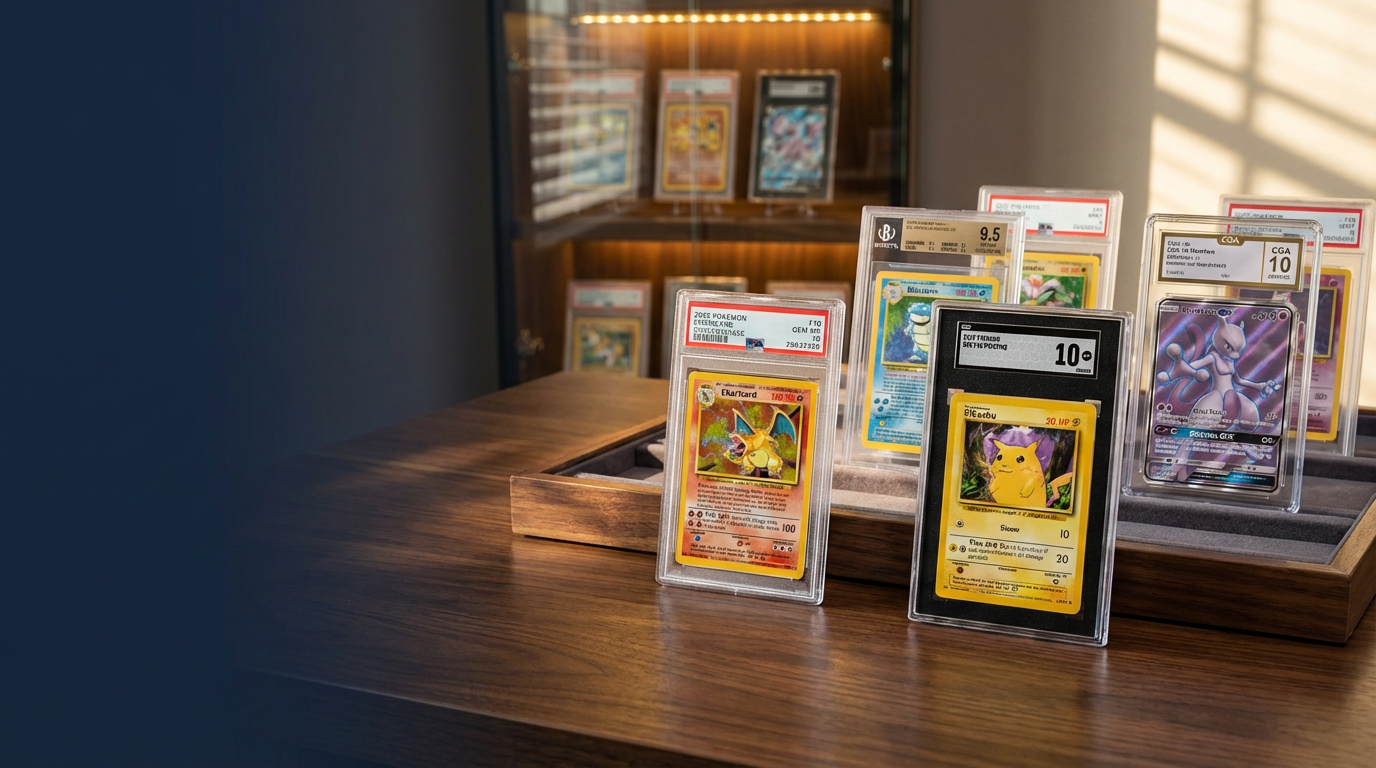
SGC vs PSA Grading 2026: Which Saves You Money?
Choosing between SGC and PSA for grading your Pokemon cards can mean the difference between spending $15 or $50 per card—and that's before considering turnaround times, resale values, and hidden costs. With PSA's parent company now owning SGC, the grading landscape has shifted dramatically in 2026, creating new opportunities for savvy collectors to maximize value.
This comprehensive comparison breaks down the real costs, turnaround times, resale value differences, and strategic considerations to help you make the smartest grading decision for your collection.
The 2025 Game-Changer: Same Ownership, Different Companies
Before diving into the numbers, understanding the relationship between these grading giants is crucial. In 2025, Collectors Holdings (PSA's parent company) acquired SGC, fundamentally changing the competitive landscape.
What This Means for Collectors:
- No "dead slab" concerns: SGC slabs maintain long-term credibility with institutional backing
- Separate operations: Both companies continue operating independently with distinct standards
- Market stability: SGC's position as the #2 grading company is now more secure than ever
- Pricing remains competitive: SGC continues its value-focused positioning
This ownership structure has actually strengthened SGC's appeal—collectors get budget-friendly pricing with the security of knowing their slabs won't become obsolete.
The Real Cost Breakdown: Beyond the Sticker Price
When comparing grading costs, most collectors only look at the per-card fee. The reality is far more complex.
SGC Pricing Structure (2026)
Standard TCG Grading:
- $15 per card (no membership required)
- $9 per card for bulk submissions (20+ cards)
- No hidden fees or surprise charges
- Free return shipping on orders over $250
Total Cost Per Card (Including Supplies):
- Card saver: $0.25
- Shipping to SGC: ~$10-15 (20 cards = $0.50-0.75/card)
- Insurance: ~$1-2 per card for mid-value cards
- True cost: $16.75-18.75 per card
PSA Pricing Structure (2026)
Value Bulk (Membership Required):
- $24.99 per card with $149 annual membership
- Membership breaks even after just 6 cards
- Maximum declared value: $499 per card
- Turnaround: 75-95+ business days
Value (No Membership):
- $49.99 per card
- Same service level as Value Bulk
- Makes sense for 5 or fewer cards annually
Total Cost Per Card (Value Bulk, Including Membership & Supplies):
- Membership cost (amortized over 20 cards): $7.45
- Card saver: $0.25
- Shipping to PSA: ~$15-20 (20 cards = $0.75-1.00/card)
- Insurance: ~$1-2 per card
- True cost: $34.44-35.69 per card
The Verdict: SGC Saves You 47-52% Per Card
For a typical 20-card submission:
- SGC total cost: $335-375
- PSA total cost: $689-714
- Savings with SGC: $354-379 (enough to grade 20+ additional cards)
Turnaround Time: The Hidden Cost of Waiting
Time is money in the Pokemon card market. Price fluctuations, market trends, and opportunity costs make turnaround speed a critical factor.
SGC Turnaround Times (2026)
- Standard service: 30-50 business days
- Actual performance: Often 3-4 weeks for TCG submissions
- Consistency: SGC regularly beats their estimates
- Express options: Available for 10-15 business days at premium pricing
PSA Turnaround Times (2026)
- Value Bulk: 75-95+ business days (often longer)
- Actual performance: Frequently exceeds 100 business days
- Inconsistency: Turnaround varies significantly by submission period
- Express options: $150+ per card for faster service
The Speed Advantage in Action
Scenario: You pull a chase card from a new set release.
SGC Timeline:
- Ship card: Week 1
- Grading complete: Week 5-7
- Listed for sale: Week 8
- Total time to market: 8 weeks
PSA Timeline:
- Ship card: Week 1
- Grading complete: Week 15-20
- Listed for sale: Week 21
- Total time to market: 21+ weeks
Market Impact: By week 21, that chase card's value may have dropped 30-50% as supply increases and hype fades. SGC's speed advantage can preserve thousands in value for high-end cards.
Resale Value: The PSA Premium
Here's where PSA fights back. Despite higher costs and slower service, PSA slabs command premium prices in the secondary market.
The PSA 10 vs SGC 10 Price Gap
High-Value Modern Cards ($500+ raw):
- PSA 10 premium: 20-30% higher than SGC 10
- Example: Charizard VMAX (Shiny) PSA 10 sells for $1,800-2,000; SGC 10 sells for $1,400-1,600
- Gap narrows as card values decrease
Mid-Range Cards ($100-500 raw):
- PSA 10 premium: 10-20% higher than SGC 10
- Example: Umbreon VMAX Alt Art PSA 10 at $450; SGC 10 at $380-400
- SGC often offers better ROI after factoring grading costs
Vintage Cards (Pre-2000):
- PSA dominates vintage market with 30-40% premiums
- Established collector base strongly prefers PSA for vintage
- SGC gaining ground but still significantly behind
Japanese Cards:
- PSA commands 25-35% premium for Japanese Pokemon
- Japanese collectors overwhelmingly prefer PSA
- SGC market for Japanese cards is limited
SGC 9.5 vs PSA 10: The Value Opportunity
SGC's unique 9.5 grade ("Mint+") creates interesting market dynamics:
- SGC 9.5 often sells only 10-20% above raw prices
- Represents cards that barely missed PSA 10 standards
- Strategy: Buy SGC 9.5s at near-raw prices, crack and resubmit to PSA
- Success rate: ~30-40% convert to PSA 10 (anecdotal data)
- ROI potential: 100-200% if successful
Grading Standards: Consistency vs Opportunity
SGC's Reputation for Consistency
Collector sentiment across Reddit, YouTube, and forums consistently praises SGC for:
Stricter Top-Grade Standards:
- SGC 10 "Gem Mint" is harder to achieve than PSA 10
- More conservative with centering tolerances
- Fewer "gift 10s" compared to PSA
Grader Consistency:
- Less variation between individual graders
- More predictable outcomes
- Fewer complaints about regrade inconsistency
Transparent Subgrades:
- SGC provides detailed subgrades (centering, corners, edges, surface)
- Helps collectors understand exactly why cards grade where they do
- Valuable for learning and future submissions
PSA's Grading Variability
The Regrade Lottery:
- Common complaints about inconsistency between graders
- Same card can receive different grades on resubmission
- Creates opportunity for "grade bumping" but frustration for consistency
Centering Leniency:
- PSA 10 allows 60/40 centering (more forgiving than SGC)
- Creates more PSA 10s, but potentially lower quality ceiling
- Some collectors view PSA 10 as less prestigious than SGC 10
Market Acceptance:
- Despite inconsistency complaints, market still rewards PSA grades
- Brand recognition drives value more than technical grading accuracy
- Established buyer base trusts PSA authentication
The Hybrid Strategy: Best of Both Worlds
Savvy collectors in 2026 aren't choosing one company exclusively—they're strategically using both.
Send to SGC When:
-
Building a Personal Collection
- Lower costs mean you can grade more cards
- Beautiful "Tuxedo" slab design for display
- Fast turnaround lets you enjoy graded cards sooner
-
Grading Mid-Range Modern Cards ($50-300 raw)
- Cost savings outweigh PSA premium
- Example: $100 raw card → SGC 10 worth $180, costs $18 to grade = $62 profit
- Same card → PSA 10 worth $200, costs $35 to grade = $65 profit (marginal gain)
-
Testing Card Quality
- Use SGC's consistency to gauge if cards are worth PSA submission
- SGC 10 candidates might be PSA 10 worthy
- Much cheaper than PSA "pre-screening"
-
Time-Sensitive Submissions
- New set releases where speed matters
- Market-timing opportunities
- Flipping for quick profit
-
Bulk PC Grading
- Protecting collection cards that won't be sold
- Grading childhood cards for nostalgia
- Creating graded binder collections
Send to PSA When:
-
High-Value Cards ($500+ raw)
- PSA premium justifies higher costs and wait times
- Example: $1,000 raw card → PSA 10 worth $2,500 vs SGC 10 worth $2,000
- Extra $500 far exceeds additional $17 grading cost
-
Vintage Cards (Especially WOTC Era)
- PSA dominates vintage market
- Established collector base expects PSA
- Significantly higher premiums for vintage PSA slabs
-
Japanese Cards
- Japanese market strongly prefers PSA
- 25-35% premium justifies costs
- Better liquidity for PSA Japanese cards
-
Investment-Grade Cards
- Cards purchased specifically for long-term appreciation
- PSA's market dominance provides better exit liquidity
- Institutional buyers prefer PSA
-
Cards with Regrade Potential
- If centering is 60/40 or better (PSA more lenient)
- Cards that might benefit from grader variability
- When you're willing to play the "regrade lottery"
Calculating Your Grading ROI
Before submitting any card, run the numbers to ensure grading makes financial sense.
The Grading ROI Formula
Break-Even Analysis:
- Estimated graded value - Raw card value = Potential gain
- Potential gain - Grading cost = Net profit
- Net profit ÷ Raw card value = ROI percentage
Example: Modern Chase Card
- Raw value: $200
- SGC 10 value: $350
- Grading cost: $18
- Net profit: $132
- ROI: 66%
Same Card, PSA Route:
- Raw value: $200
- PSA 10 value: $400
- Grading cost: $35
- Net profit: $165
- ROI: 82.5%
Risk Factor: PSA takes 3-4x longer. If card value drops 20% during grading period:
- PSA 10 value drops to $320
- Net profit: $85
- ROI: 42.5% (now worse than SGC despite premium)
For complex grading decisions with multiple factors, our Grading Calculator helps you model different scenarios including turnaround time risk, grade probability, and total cost analysis.
Slab Aesthetics: The Subjective Factor
While not financial, slab design matters for personal collections and social media presentation.
SGC's "Tuxedo" Design
- Black border with gold accents
- Clean, modern aesthetic
- Card-focused design (minimal branding)
- Subgrades clearly displayed
- Instagram-friendly for collection photos
- Consistently praised by collectors
PSA's Classic Design
- White border with red/blue accents
- Traditional, recognizable look
- Larger PSA branding
- Simpler grade presentation
- Some consider it dated; others appreciate the classic look
- Instantly recognizable in photos
Collector Preference: SGC wins aesthetic polls 60-70% of the time, but PSA's recognition factor shouldn't be underestimated—buyers instantly know what they're looking at.
2026 Market Trends & Future Outlook
The grading landscape continues evolving. Here's what's shaping decisions in 2026:
SGC's Growing Market Share
- Up from 15% to 23% market share (2023-2026)
- Younger collectors more open to SGC than vintage collectors
- Modern Pokemon community increasingly accepts SGC
- Price gap between SGC and PSA narrowing for modern cards
PSA's Continued Dominance
- Still commands 67-70% market share
- Brand recognition remains strongest
- Vintage and Japanese markets firmly PSA territory
- Membership model locks in customer loyalty
Emerging Considerations
- CGC gaining ground in Pokemon (currently 7-10% share)
- Population reports becoming more important for rare cards
- Digital authentication and blockchain integration discussions
- Potential for AI-assisted pre-grading tools
Common Grading Mistakes to Avoid
Mistake #1: Grading Everything
The Problem: Not all cards benefit from grading. Cards worth less than $50 raw rarely justify grading costs.
The Fix: Only grade cards where the graded value minus grading costs exceeds raw value by 50%+ for worthwhile ROI.
Mistake #2: Ignoring Turnaround Time Risk
The Problem: Submitting hyped cards to PSA's slow service, watching values crater during 4-month wait.
The Fix: Use SGC for time-sensitive modern cards. Save PSA for stable, established cards.
Mistake #3: Chasing PSA for Everything
The Problem: Spending $35 to PSA grade a $100 card that becomes a $150 PSA 10, when SGC would've yielded similar profit.
The Fix: Reserve PSA for high-value cards where the premium justifies costs.
Mistake #4: Submitting Poor Candidates
The Problem: Sending cards with obvious flaws, paying grading fees for PSA 6-8 grades that sell below raw prices.
The Fix: Learn to pre-screen cards. Only submit near-mint to mint candidates. When in doubt, get a second opinion from experienced collectors.
Mistake #5: Forgetting About Membership Costs
The Problem: Comparing PSA's $24.99 rate to SGC's $15 without factoring in the $149 membership.
The Fix: Calculate true per-card costs including membership, shipping, and supplies. SGC is cheaper unless you're grading 50+ cards annually.
The Verdict: Which Grading Company Should You Choose?
There's no universal answer—the right choice depends on your specific situation.
Choose SGC If:
- You're grading for your personal collection
- You're working with mid-range modern cards ($50-300)
- Speed matters for market-timing
- You're grading 1-20 cards and want to minimize costs
- You value consistency and stricter standards
- You appreciate superior slab aesthetics
- You're building a graded binder collection
Choose PSA If:
- You're grading high-value cards ($500+)
- You're working with vintage WOTC cards
- You're grading Japanese cards
- You're grading for resale/investment purposes
- You can wait 3-4 months for turnaround
- You're submitting 20+ cards annually (membership pays off)
- You want maximum liquidity and buyer recognition
The Smart Collector's Approach:
Use both strategically. Send personal collection and mid-range modern cards to SGC for cost savings and speed. Reserve PSA for high-value, vintage, and Japanese cards where the premium justifies the investment.
Key Takeaways
-
SGC saves 47-52% per card compared to PSA when factoring in all costs, making it ideal for bulk submissions and personal collections.
-
PSA commands 10-30% higher resale prices for graded cards, but this premium only justifies the cost for high-value cards ($500+).
-
Turnaround time is a hidden cost—SGC's 30-50 day service vs PSA's 75-95+ days can mean the difference between selling at peak hype or after values decline.
-
The hybrid strategy wins: Use SGC for personal collection and mid-range cards; use PSA for high-value, vintage, and investment-grade cards.
-
Same ownership eliminates "dead slab" concerns—SGC slabs have institutional backing and long-term credibility.
-
Calculate ROI before submitting—not every card benefits from grading. Factor in turnaround time risk and total costs.
-
SGC offers better consistency in grading standards, while PSA's variability creates both frustration and regrade opportunities.
-
Market trends favor SGC growth among modern collectors, but PSA still dominates vintage and Japanese markets.
Note: Past performance does not guarantee future results. Always do your own research before making investment decisions. Grading costs, turnaround times, and market premiums can change. Verify current pricing and service levels before submitting cards.
Pokemon Price Tracker
Market Analyst
Related Articles
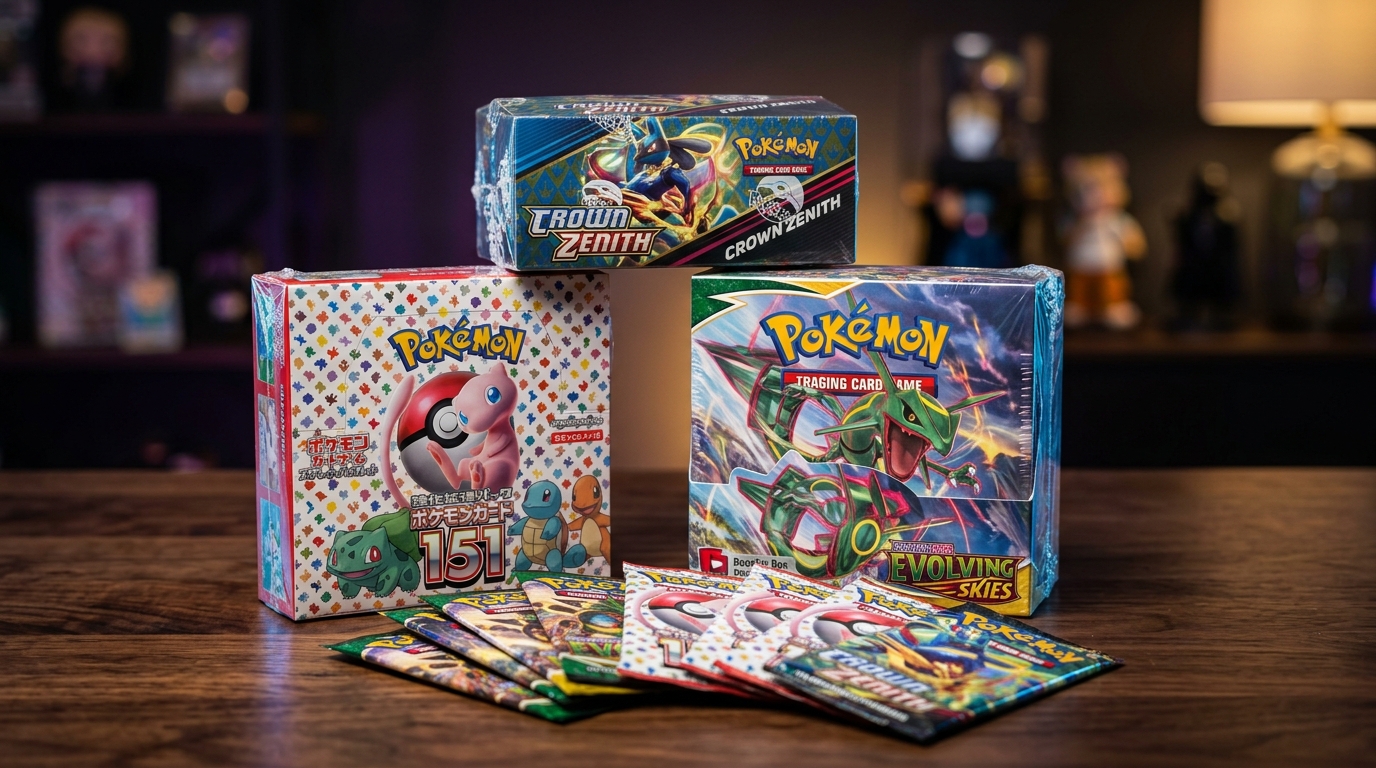
Best Pokemon Booster Boxes to Buy and Hold in 2026
From Evolving Skies to Japanese Pokemon 151, discover the best Pokemon booster boxes to buy and hold in 2026. Data-driven picks, portfolio strategy, and key metrics to watch for long-term sealed investors.
Pokemon Price Tracker
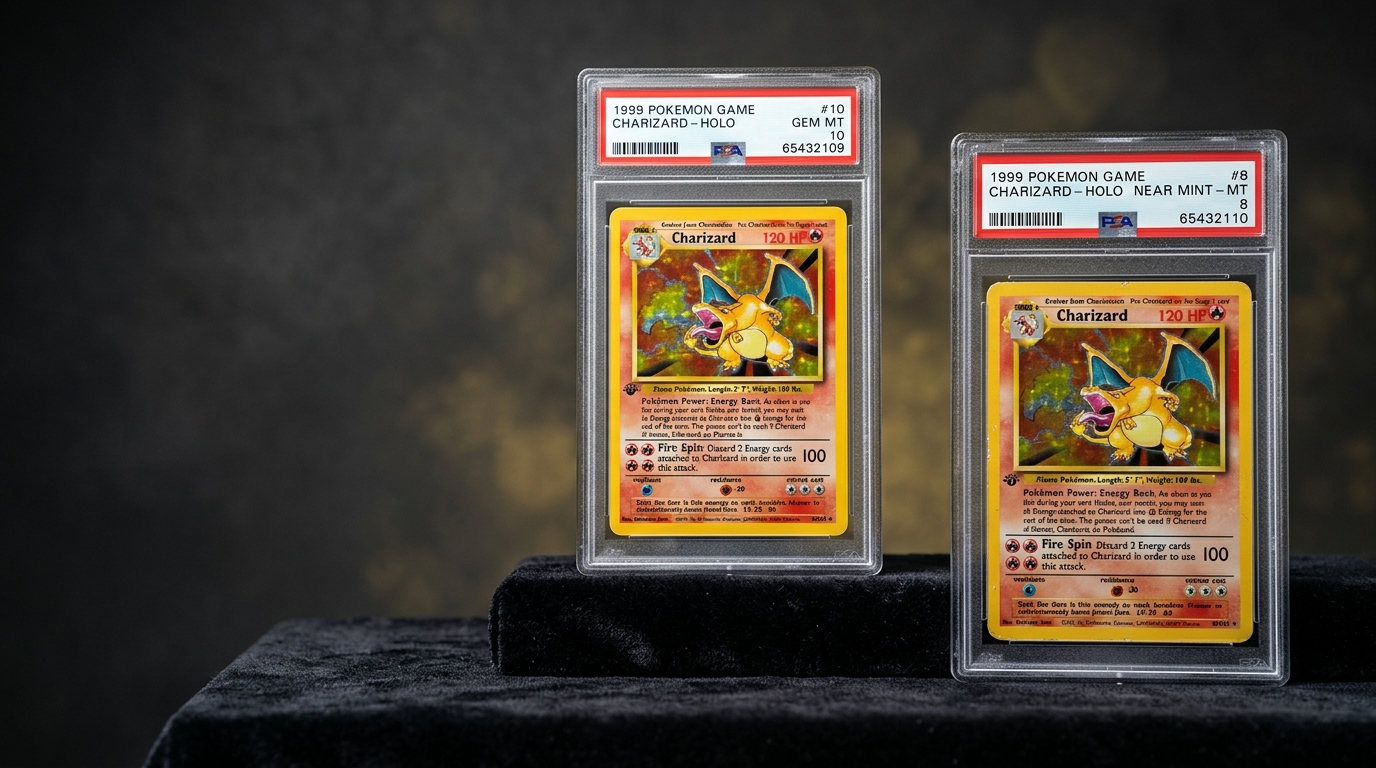
PSA 10 vs PSA 9: 2026 Price Gap Analysis & ROI Data
PSA 10s command 3x to 20x more than PSA 9s in 2026, but the gap varies wildly by card and era. We break down real sales data, ROI frameworks, and when grading actually makes financial sense.
Pokemon Price Tracker
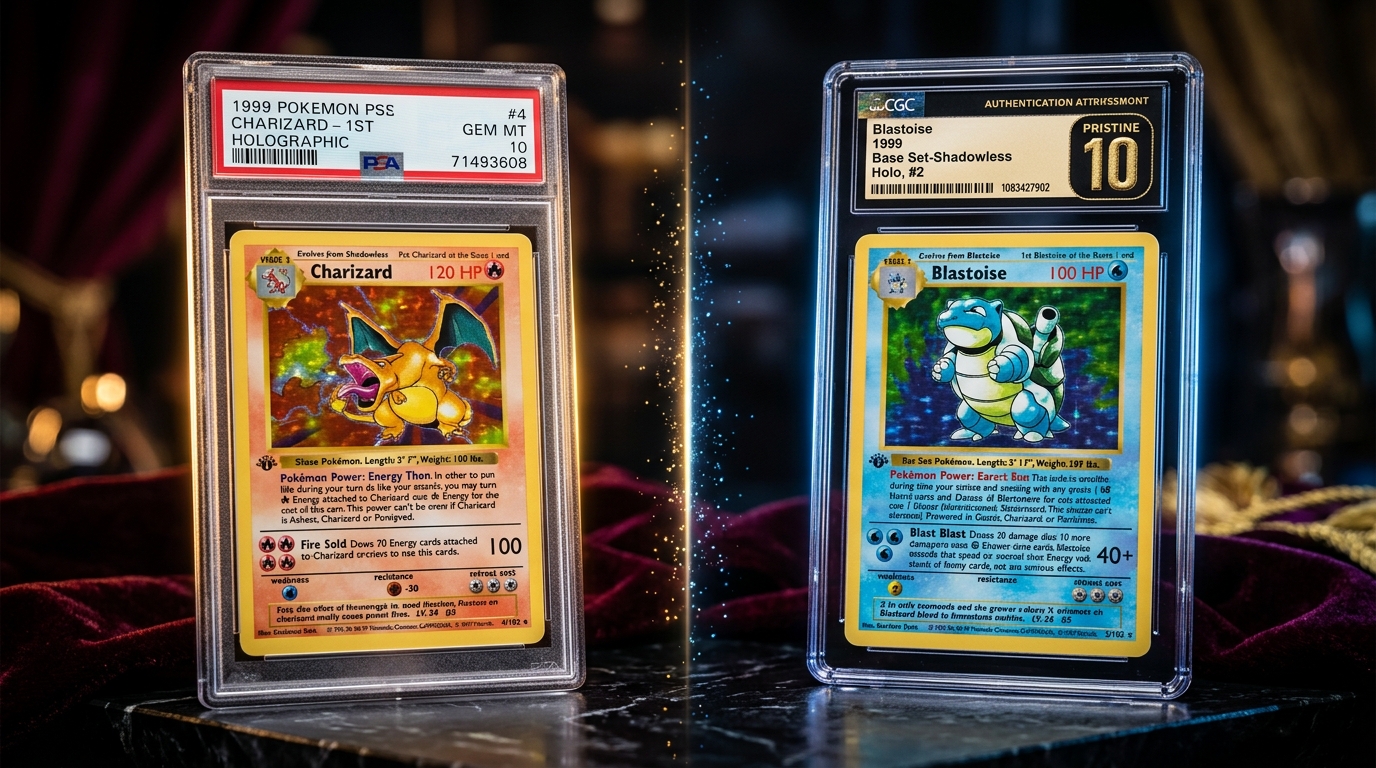
CGC vs PSA in 2026: Which Grader Holds Value Best?
PSA's 2026 Value tier pause has reshaped the grading landscape. We compare CGC vs PSA on pricing, turnaround, resale premiums, and market share to help you choose the right grader for every submission.
Pokemon Price Tracker
Stay Updated
Subscribe to our newsletter for the latest Pokemon card market trends, investment opportunities, and exclusive insights delivered straight to your inbox.