The graded Pokemon card market has exploded into a $10 billion industry as of 2026, with 94% of confirmed collectors now owning at least one graded card. What was once a niche practice reserved for vintage treasures has become mainstream for modern pulls, competitive cards, and investment pieces alike.
But with PSA, CGC, and BGS all competing for your submissions, which grading company offers the best value in 2026? The answer isn't as straightforward as it once was. The landscape has shifted dramatically, with CGC capturing 25% market share in 2025 and the PSA premium shrinking to just 5-10% for modern cards. This comprehensive guide breaks down everything you need to know about Pokemon card slabs in 2026.
Pokemon cards dominated the grading industry in 2025, accounting for 97 of the top 100 cards graded by major companies. TCG cards have officially outpaced sports cards in submission volume, reflecting the explosive growth of the Pokemon TCG market.
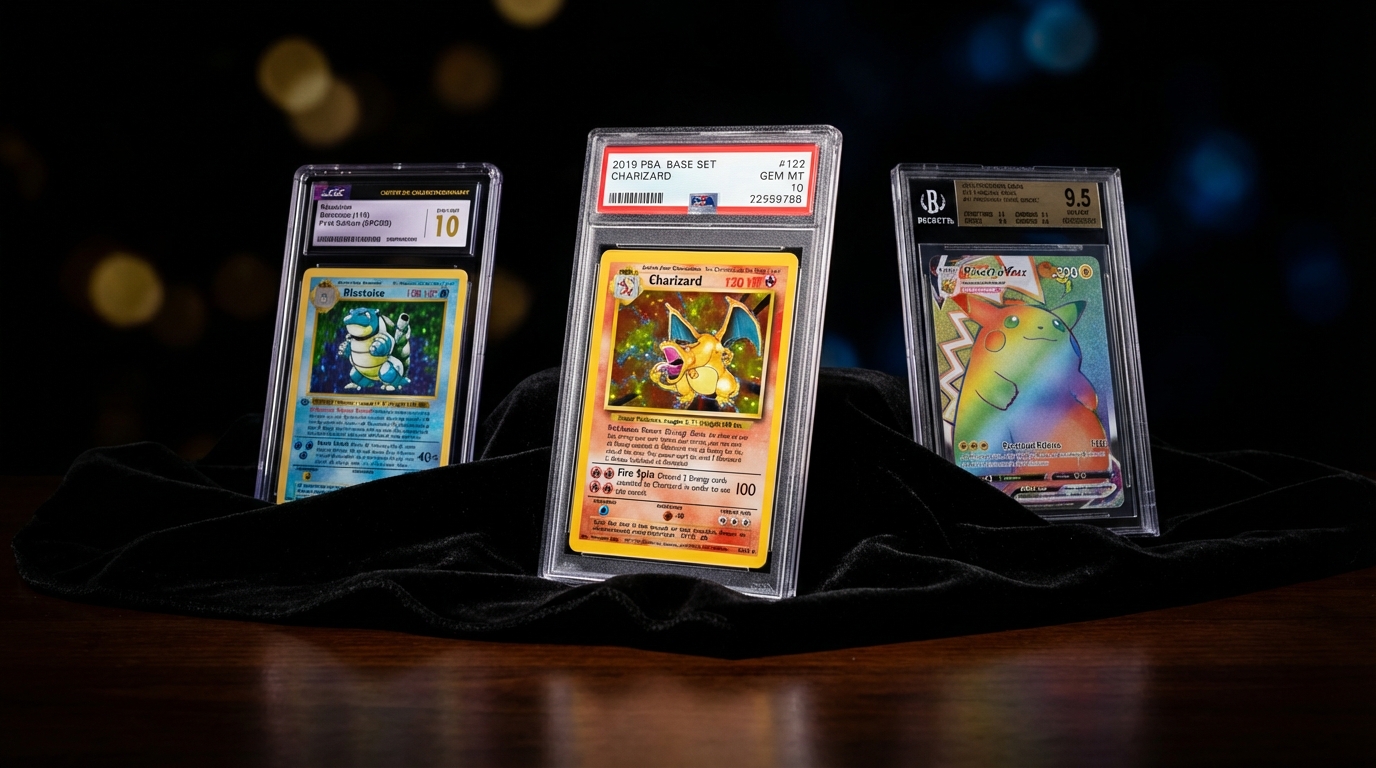
Three companies dominate the Pokemon grading space:
- PSA (Professional Sports Authenticator): The institutional titan with the longest track record
- CGC (Certified Guaranty Company): The rapidly growing challenger with faster turnarounds
- BGS (Beckett Grading Services): The sub-grade specialist, now owned by CGC
Each offers distinct advantages depending on your goals, timeline, and the specific cards you're grading.
PSA: The Institutional Standard
Market Position & Recognition
PSA remains the most recognized name in card grading, with decades of history and the largest population database. Their slabs are instantly recognizable with the classic red label, and PSA 10s have historically commanded the highest premiums in the secondary market.
Key Advantages:
- Strongest brand recognition among collectors and investors
- Largest population database for comparative analysis
- Highest liquidity - PSA slabs typically sell fastest
- Industry standard for vintage cards (pre-2000)
- Most accepted by auction houses and high-end dealers
Current Drawbacks in 2026:
- Longest turnaround times: ~42 days for express service, 7+ months for standard
- Higher submission costs: $22-24 per card for most service levels
- Grading standards perceived as inconsistent by some submitters
- Premium over CGC has narrowed significantly for modern cards
PSA Grading Scale
PSA uses a straightforward 1-10 scale:
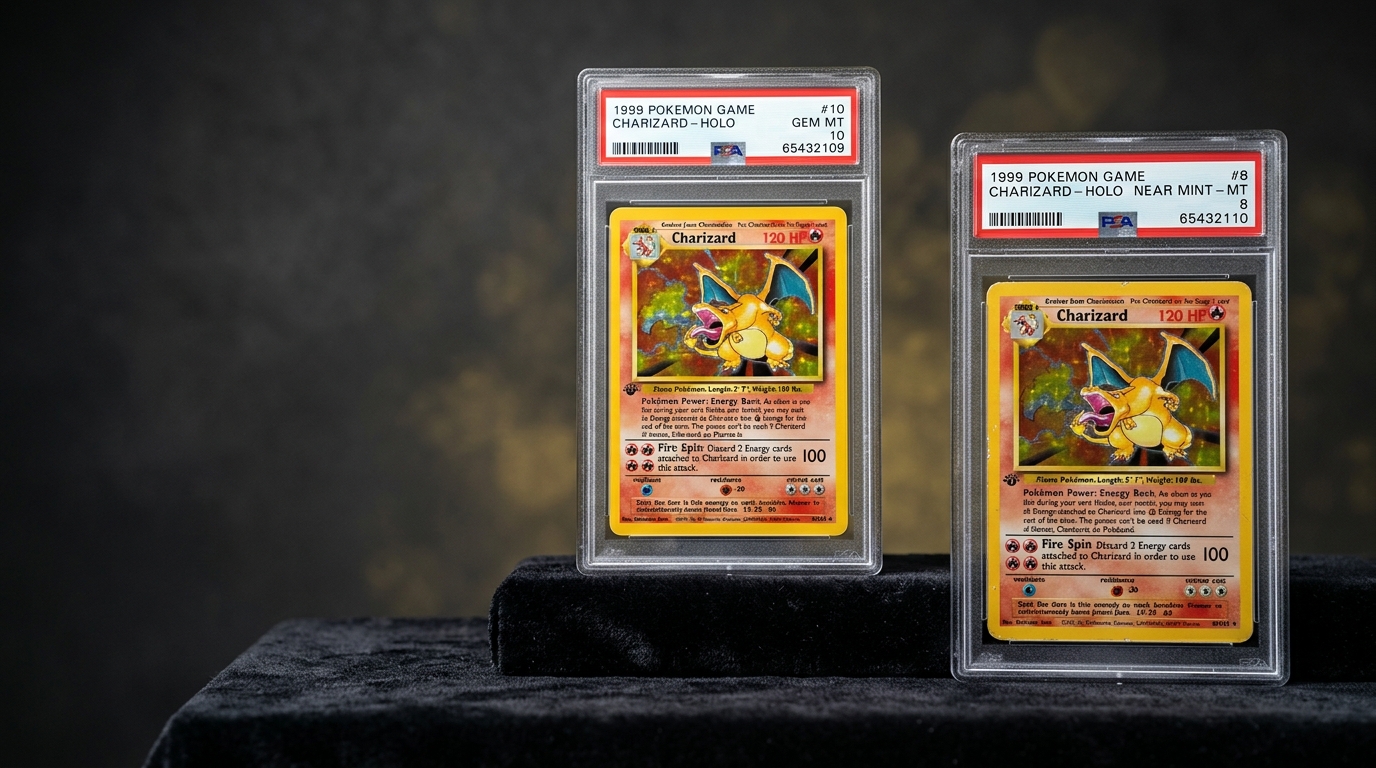
- PSA 10 (Gem Mint): Perfect or near-perfect card
- PSA 9 (Mint): Minor imperfections only
- PSA 8 (Near Mint-Mint): Slight wear visible
No sub-grades are provided, which some collectors view as less transparent than BGS.
When to Choose PSA
Best for:
- Vintage cards (Base Set, Neo, e-Series, ex era)
- Ultra-premium modern cards where maximum resale value matters
- Cards you plan to hold long-term
- Submissions where you can wait 6-7 months
- Cards likely to grade PSA 10 where the premium still exists
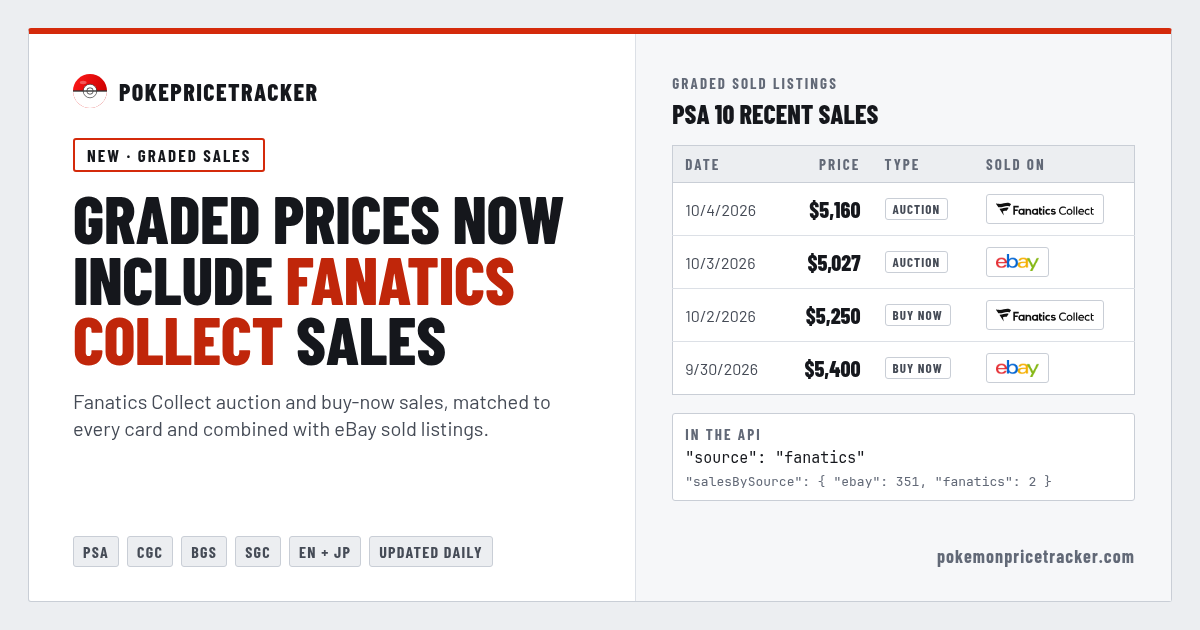
Real Example: A Base Set Charizard PSA 10 consistently sells for 15-20% more than CGC equivalents, making PSA the clear choice for vintage high-value cards.
The 2026 Market Shift
CGC has fundamentally disrupted the grading market. After capturing 25% market share in 2025, they've continued gaining ground in 2026 through aggressive pricing, faster turnarounds, and consistent grading standards.
The PSA 10 premium has collapsed from 25-30% to just 5-10% for modern Pokemon cards. Consider this real-world comparison:
- Mega Lucario ex SIR (Surging Sparks): $1,078 PSA 10 vs $980 CGC Gem Mint 10 (~9% difference)
- Mega Zygarde ex SIR: CGC Pristine 10 sold for £720 vs £680 for PSA equivalent (CGC commanded 6% premium)
Current CGC Advantages
Key Strengths:
- Fastest turnaround times: ~18 days average in 2026
- Lowest submission costs: $15 per card for standard service
- Consistent grading standards: More predictable outcomes
- Superior slab design: Better UV protection and card visibility
- Growing market acceptance: Premium gap closing rapidly
- Pristine 10 grade: Higher tier than standard 10
Potential Concerns:
- Slightly lower liquidity than PSA (though improving rapidly)
- Less historical data for population comparisons
- Some older collectors still prefer PSA brand recognition
CGC Grading Scale
CGC offers more granular grading:
- CGC Pristine 10: Flawless card with perfect centering
- CGC Gem Mint 10: Near-perfect card
- CGC Mint+ 9.5: Exceptional card with minor flaws
- CGC Mint 9: High-quality card with slight imperfections
When to Choose CGC
Best for:
- Modern cards (Scarlet & Violet era onwards)
- Cards you want graded quickly (3 weeks vs 7 months)
- Bulk submissions where cost matters
- Cards for personal collection where brand matters less
- Mid-range cards ($50-500 raw value)
- Cards where opportunity cost of waiting matters
Real Example: Submitting 20 modern pulls to CGC costs $300 with 18-day turnaround. The same PSA submission costs $440-480 and takes 7 months. For modern cards selling within 10% of PSA equivalents, CGC offers superior ROI.
If you're trying to decide whether grading makes financial sense for your specific cards, consider using a Grading ROI Calculator to determine if the costs justify the potential value increase.
Current Market Position
BGS (Beckett Grading Services) occupies a unique niche in 2026. While they offer detailed sub-grades that some collectors prize, their market share has declined as CGC (which now owns Beckett assets) has risen.
BGS Grading System
BGS provides four sub-grades:
- Centering: Front and back alignment
- Corners: Sharpness and wear
- Edges: Whitening and chipping
- Surface: Scratches, print lines, and damage
Grade Tiers:
- BGS 10 (Pristine): All four sub-grades at 10 - extremely rare
- BGS 9.5 (Gem Mint): Sub-grades averaging 9.5+
- BGS 9 (Mint): Sub-grades averaging 9+
The BGS Challenge in 2026
While BGS sub-grades provide valuable transparency, the market has spoken: BGS 9.5 cards consistently sell for less than PSA 10 equivalents, despite often having beautiful sub-grades like 9.5/9.5/10/10.
The issue is liquidity. Fewer collectors actively seek BGS slabs, meaning cards take longer to sell and command lower prices.
When to Choose BGS
Best for:
- Personal collection where you value detailed grading information
- Cards with exceptional centering/corners you want documented
- Niche markets where BGS is preferred (some Japanese collectors)
- Cards you don't plan to resell
- Submissions where you're chasing BGS 10 Pristine (lottery ticket approach)
Avoid BGS for:
- Cards you plan to flip quickly
- Modern cards where CGC offers better value
- Vintage cards where PSA commands premium
- Bulk submissions (cost and turnaround not competitive)
Turnaround Times
| Company | Express/Fast | Standard | Bulk |
|---|
| PSA | 42 days | 7 months | Not available |
| CGC | 10 days | 18 days | 30 days |
| BGS | 30 days | 45 days | 60+ days |
Winner: CGC - Significantly faster across all service levels.
Pricing (Per Card)
| Company | Standard Service | Express |
|---|
| PSA | $22-24 | $75+ |
| CGC | $15 | $45 |
| BGS | $20 | $65 |
Winner: CGC - Most affordable for bulk and standard submissions.
Resale Value Premium (Modern Cards)
| Grade | Premium vs Raw | Market Liquidity |
|---|
| PSA 10 | 5-10% over CGC 10 | Highest |
| CGC Gem Mint 10 | Baseline (strong) | High and growing |
| BGS 9.5 | 10-15% under PSA 10 | Lower |
Winner: PSA (narrowly) - Still commands slight premium, but CGC closing fast.
Resale Value Premium (Vintage Cards)
| Grade | Premium vs Raw | Market Preference |
|---|
| PSA 10 | 20-30% over CGC | Strongly preferred |
| CGC Gem Mint 10 | Baseline | Growing acceptance |
| BGS 9.5 | 15-25% under PSA 10 | Limited market |
Winner: PSA (decisively) - Vintage market still heavily favors PSA.
Modern Pull (2023-2026 Sets)
Recommended: CGC
For cards from Scarlet & Violet base through current sets:
- PSA premium has shrunk to 5-10%
- CGC turnaround saves 5-6 months of opportunity cost
- Lower submission cost improves ROI
- Growing market acceptance makes resale easy
Example: Iono Special Illustration Rare from Paldea Evolved
- Raw value: ~$300
- CGC 10 value: ~$850
- PSA 10 value: ~$920
- CGC saves $7-9 per card and 6 months waiting
Vintage Cards (Pre-2010)
Recommended: PSA
For Base Set, Neo, e-Series, ex era, and Diamond & Pearl:
- PSA commands 20-30% premium over CGC
- Vintage collectors strongly prefer PSA
- Population data more comprehensive
- Higher liquidity for resale
Example: Neo Genesis Lugia 1st Edition
- PSA 10 value: ~$8,500
- CGC Gem Mint 10 value: ~$6,200
- 37% premium justifies higher cost and longer wait
Mid-Era Cards (2010-2022)
Recommended: Case-by-case (slight CGC edge)
For Black & White through Sword & Shield:
- PSA premium exists but narrower (10-15%)
- Consider card value and timeline
- CGC if value under $500 raw
- PSA if value over $1,000 raw
Japanese Cards
Recommended: PSA (with CGC as strong alternative)
Japanese market nuances:
- PSA historically preferred in Japan
- CGC gaining acceptance, especially for modern Japanese cards
- BGS has niche following for certain Japanese collectors
- Consider destination market (Western vs Japanese buyers)
Bulk Modern Submissions
Recommended: CGC (decisively)
For 20+ card submissions:
- Cost savings: $140-180 per 20 cards vs PSA
- Time savings: 18 days vs 7 months
- Modern card premium gap minimal
- Better ROI on cards valued $20-200 raw
1. Grading Low-Value Cards
Mistake: Submitting cards worth $15-30 raw
Reality: After $15-24 grading fee, even a 10 needs to sell for $40+ just to break even. Most modern commons and uncommons don't justify grading costs.
Rule of thumb: Only grade cards worth $50+ raw, or cards you believe will grade 10 and sell for 3x+ the grading cost.
2. Ignoring Opportunity Cost
Mistake: Choosing PSA for modern cards because of 5-10% premium
Reality: Waiting 7 months means missing market windows. A modern card that sells for $500 today might sell for $350 in 7 months. The CGC "discount" often disappears when you factor in market timing.
Example: Surging Sparks SIRs peaked in December 2025. Cards submitted to PSA in November 2025 returned in June 2026 when prices had dropped 30-40%. CGC submissions returned in December 2025 at peak prices.
3. Submitting Obvious Non-10s to PSA
Mistake: Sending off-center or corner-dinged cards to PSA hoping for a 10
Reality: PSA 9s often sell for less than CGC 9.5s due to the stigma. If your card isn't a clear 10 candidate, CGC's Mint+ 9.5 grade is more marketable.
4. Overlooking Slab Aesthetics
Mistake: Ignoring how the card looks in the holder
Reality: CGC slabs offer better UV protection and card visibility. For personal collection pieces, this matters. BGS slabs are bulkier and less display-friendly.
5. Batch Mixing
Mistake: Sending vintage and modern cards in the same submission
Reality: Split submissions strategically - vintage to PSA, modern to CGC. This optimizes both cost and resale value.
Step 1: Assess Card Value
- Under $50 raw: Don't grade unless personal collection
- $50-200 raw: CGC for modern, evaluate vintage case-by-case
- $200-1,000 raw: CGC for modern, PSA for vintage
- $1,000+ raw: PSA for maximum liquidity
Step 2: Consider Timeline
- Need to sell within 3 months: CGC only
- Comfortable waiting 6-9 months: PSA acceptable for vintage
- No timeline pressure: Optimize by card type
Step 3: Evaluate Grade Probability
- Clear 10 candidate: Either PSA or CGC works
- Likely 9-9.5: CGC preferred (9.5 more marketable)
- Uncertain grade: CGC for faster feedback loop
Step 4: Calculate True ROI
Factor in:
- Grading cost
- Shipping/insurance
- Opportunity cost of waiting
- Current market trends
- Expected grade probability
Step 5: Execute Strategically
- Batch similar cards together
- Use appropriate service level
- Time submissions around set releases
- Track results to refine strategy
CGC Momentum Continues
CGC's market share growth shows no signs of slowing. As more collectors experience their faster turnarounds and consistent grading, acceptance grows. Expect the PSA premium to narrow further in 2026-2027, potentially reaching parity for modern cards.
PSA's Response
PSA has acknowledged the competitive pressure and announced initiatives to improve turnaround times. However, institutional inertia makes rapid change difficult. Their vintage card dominance remains secure, but modern card market share is at risk.
BGS's Uncertain Future
With CGC owning Beckett assets, BGS's future is unclear. The sub-grade niche remains, but market share continues declining. Expect potential integration or rebranding in the next 12-24 months.
Technology Integration
All three companies are exploring blockchain verification and digital population tracking. CGC leads in technological innovation, which may provide additional competitive advantages.
Market Maturation
As grading becomes mainstream (94% of collectors own graded cards), expect:
- More sophisticated buyer understanding of grading nuances
- Continued narrowing of company premiums based on objective quality
- Greater emphasis on turnaround time and customer service
- Potential new entrants to the market
Choose PSA when:
- Grading vintage cards (pre-2010)
- Submitting ultra-premium cards ($1,000+ raw)
- Maximizing liquidity is critical
- You can wait 6-9 months
- Card is clear 10 candidate
Choose CGC when:
- Grading modern cards (2023+)
- Speed matters (need card back in 3 weeks)
- Submitting bulk orders (20+ cards)
- Card value is $50-500 raw
- Cost efficiency is priority
- Card might grade 9-9.5
Choose BGS when:
- Personal collection where sub-grades matter
- Targeting BGS 10 Pristine for specific cards
- You value detailed grading breakdown
- Not planning to resell
Don't grade when:
- Card worth under $50 raw
- Card has obvious flaws preventing 9+ grade
- Market for that card is declining
- You need liquidity immediately
The Pokemon card grading landscape has fundamentally shifted in 2026. CGC's rise has democratized grading through lower costs and faster turnarounds, while PSA maintains its vintage card dominance. BGS serves a niche but struggles with liquidity.
For most collectors and investors, a hybrid strategy makes sense: CGC for modern cards, PSA for vintage treasures. This approach optimizes cost, turnaround time, and resale value across your portfolio.
The days of blindly submitting everything to PSA are over. Strategic grading requires understanding these company differences and matching them to your specific cards and goals. The collectors who thrive in 2026 and beyond will be those who grade smarter, not just more.
Note: Past performance does not guarantee future results. Always do your own research before making investment decisions. Grading company preferences and premiums can shift based on market conditions.