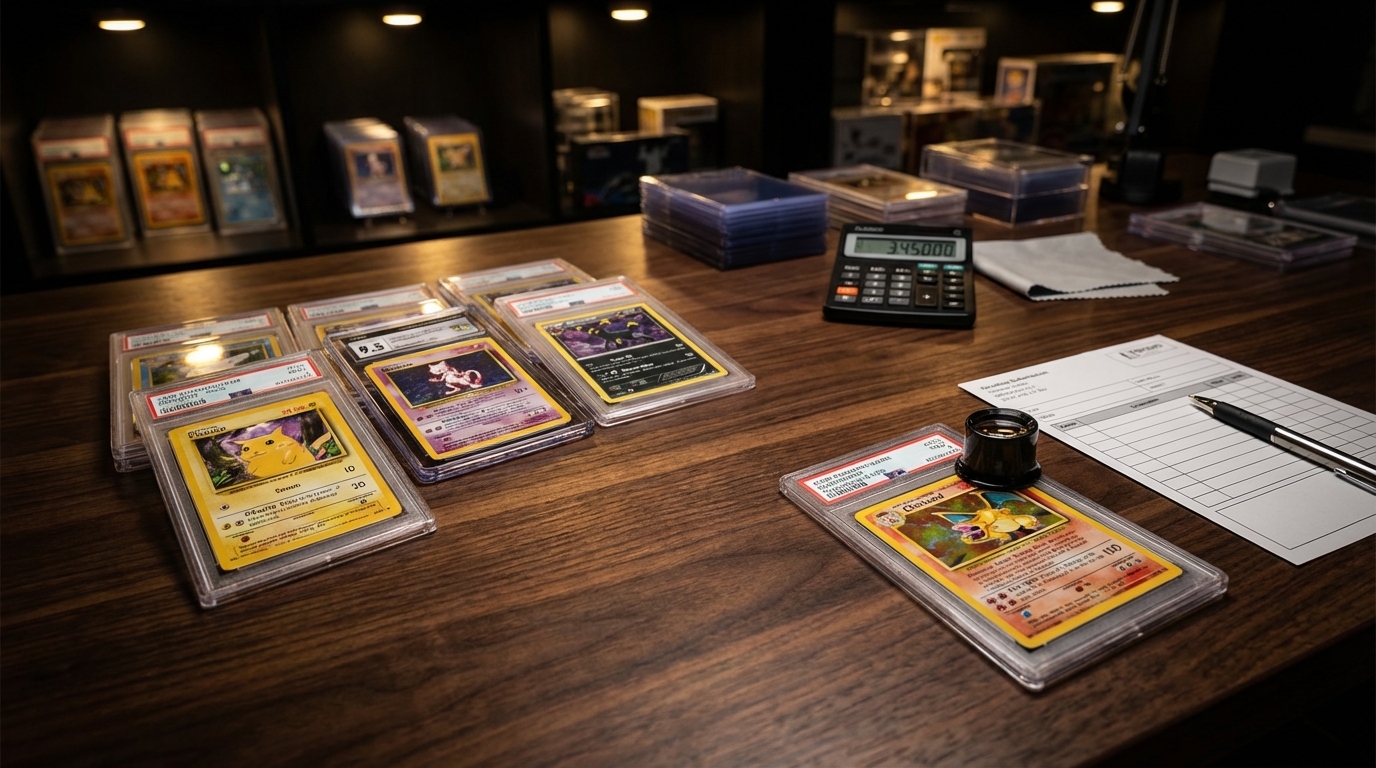
Regrade Your Pokemon Cards: When It's Worth It in 2026
You're staring at your PSA 9 Base Set Charizard, knowing that a single grade bump to PSA 10 could mean an extra $12,000 in your pocket. Or maybe you've got a collection of CGC slabs and you're wondering if crossing them over to PSA is worth the hassle and expense. Regrading Pokemon cards has become increasingly popular in 2026, but it's not always the right move.
With PSA maintaining its market dominance at roughly 70% market share while CGC rapidly gains ground at 25%, the grading landscape has shifted dramatically. The premium gap between PSA 10 and CGC Gem Mint 10 has narrowed from 25-30% just a few years ago to just 5-10% for modern cards today. This changing dynamic makes the decision to regrade more nuanced than ever before.
In this comprehensive guide, we'll break down exactly when regrading makes financial sense, when it's a waste of money, and how to calculate whether that potential grade bump is worth the investment.
Understanding Regrading vs. Crossover Services
Before diving into strategy, let's clarify the terminology:
Regrading means cracking your card out of its current slab and resubmitting it to the same grading company, hoping for a better grade on the second assessment.
Crossover service allows you to submit a card in its current slab to a different grading company. The new company evaluates the card through the holder, and if it meets their standards, they'll crack it out and reslab it. If not, they return it in the original holder.
Cracking and crossing involves manually removing the card from its current holder and submitting it raw to a different grading company—a riskier approach that forfeits the safety net of crossover service.
Each approach carries different risks, costs, and potential rewards. Understanding which method suits your situation is crucial for maximizing returns.
The 2026 Grading Market Landscape
The Pokemon card grading market has evolved significantly:
PSA Still Leads, But the Gap Is Closing
PSA graded approximately 8.2 million cards in 2025 and continues to command premium prices, particularly for vintage cards. However, their turnaround times remain lengthy:
- Bulk service: 75-95 days at $25 per card
- Regular service: 45-60 days at $40 per card
- Express service: 15-20 days at $100+ per card
CGC's Rapid Ascent
CGC has captured 25% of the TCG grading market as of late 2025, offering compelling advantages:
- Faster turnaround: 20-45 days for standard service
- Lower pricing: $15-18 per card for bulk submissions
- Narrowing premium gap: Only 5-10% difference on modern cards
BGS/Beckett's Uncertain Future
Following CGC's acquisition of Beckett (BGS) assets, some collectors are proactively moving BGS slabs to PSA or CGC for better liquidity and market acceptance. BGS cards, particularly those without pristine subgrades, often face steeper discounts in the current market.
When Regrading Makes Financial Sense
1. High-Value Vintage Cards on the Grade Threshold
This is where regrading can deliver life-changing returns. Consider these scenarios:
Base Set Charizard (Shadowless)
- PSA 9: ~$3,000
- PSA 10: ~$15,000
- Potential gain: $12,000
- Cost: $40-100 (depending on service level)
- ROI if successful: 12,000%+
1st Edition Base Set Blastoise
- PSA 8: ~$1,200
- PSA 9: ~$4,500
- Potential gain: $3,300
- Cost: $40-100
- ROI if successful: 3,200%+
The math is compelling when the grade differential represents thousands of dollars. However, success rates matter. If you believe your PSA 9 Charizard has a legitimate 30% chance of bumping to PSA 10, your expected value is:
Expected Value = (0.30 × $12,000) - (0.70 × $100) = $3,600 - $70 = $3,530
Even with just a 10% chance, the expected value remains strongly positive at $1,100.
2. Cards Graded Under Older, Stricter Standards
Grading standards have evolved over the years. Cards graded by PSA in 2015-2018 were often held to stricter standards than those graded in 2020-2023. If you have vintage cards graded 5-10 years ago that received 8s or 9s, they may have a legitimate shot at a grade bump.
Look for:
- Cards with minimal visible flaws that received surprisingly low grades
- Older PSA labels (pre-2020) on high-value cards
- Cards where the grade seems inconsistent with current market standards
3. CGC to PSA Crossovers for Vintage Cards
While the premium gap has narrowed for modern cards, vintage CGC cards still sell at 15-25% discounts compared to PSA equivalents:
CGC 9.5 vs PSA 10 on Vintage Cards:
- Base Set Venusaur CGC 9.5: ~$1,800
- Base Set Venusaur PSA 10: ~$2,400
- Premium difference: $600 (33%)
CGC 9 vs PSA 9 on Vintage Cards:
- Jungle Scyther 1st Edition CGC 9: ~$180
- Jungle Scyther 1st Edition PSA 9: ~$240
- Premium difference: $60 (33%)
For vintage cards worth $500+ in their current CGC holder, crossing to PSA can capture significant value. Use PSA's crossover service to minimize risk—if the card doesn't meet PSA standards at the requested grade, it returns in the original CGC holder.
4. BGS Cards Seeking Better Liquidity
BGS cards, particularly those without black label (pristine 10) status, face liquidity challenges in 2026. BGS 9.5s often sell closer to PSA 9 prices than PSA 10 prices, even when the card quality suggests PSA 10 potential.
Consider crossing BGS to PSA if:
- Your BGS 9.5 has strong subgrades (9.5s and 10s)
- The card is worth $300+ in its current holder
- You've struggled to find buyers at fair market value
5. Misgraded or Questionable Grades
Sometimes grading companies make mistakes. If you receive a grade that seems dramatically inconsistent with the card's condition:
- Surface issues graded too harshly: Vintage cards with factory print lines receiving low grades
- Centering graded incorrectly: Cards that appear well-centered receiving low grades for centering
- Edge wear overpenalized: Minor edge wear resulting in grades 2-3 points lower than expected
In these cases, regrading with the same company or crossing to a competitor may yield better results.
When Regrading Is NOT Worth It
1. Modern Cards Where CGC and PSA Trade Similarly
The premium gap for modern cards has collapsed to just 5-10% in 2026. Consider this example:
Mega Lucario ex Special Illustration Rare (Temporal Forces)
- PSA 10: $1,078
- CGC Gem Mint 10: $980
- Premium difference: $98 (10%)
After paying crossover fees ($25-40), shipping ($15-20), and waiting 45-90 days, you're netting perhaps $30-50 in additional value. Unless you're crossing dozens of cards, the juice isn't worth the squeeze.
2. Cards Worth Under $50 Raw
Grading economics simply don't work for low-value cards. Consider:
- Grading fee: $15-25 (bulk) to $40+ (regular)
- Shipping both ways: $10-20
- Crossover fee: Additional $10-15
- Total cost: $35-75+
If your card is worth $50 raw and $100 graded as a PSA 10, you're looking at marginal returns even with a successful grade bump. Factor in the probability of not getting the grade you want, and expected value turns negative quickly.
3. Cards That Clearly Won't Grade Higher
Be honest about your card's condition. According to 2025 grading data, 9.1% of submitted cards fall below PSA 8 standards. If your card has:
- Visible creases or bends
- Significant edge wear or whitening
- Surface scratches visible to the naked eye
- Poor centering (70/30 or worse)
Regrading is throwing good money after bad. Accept the grade and move on.
4. Cards Where You're Chasing Unrealistic Grades
Some collectors develop "grade obsession," repeatedly regrading PSA 9s hoping for that elusive 10. The data tells a sobering story:
- PSA 9 to PSA 10 bump rate: Approximately 5-8% on resubmission
- Cost per attempt: $40-100
- Break-even attempts: Usually 2-3 maximum
If you've already tried twice without success, you're likely dealing with a "strong 9" that will never hit 10. Cut your losses.
5. Cards in Older Holders Just for Cosmetic Reasons
Some collectors want to upgrade from older PSA holders to newer labels purely for aesthetics. Unless the card is worth $1,000+, the cost of reholdering ($20-30) plus shipping and waiting time rarely justifies the cosmetic improvement.
Calculating Regrading ROI: A Framework
Before submitting any card for regrading or crossover, use this framework to evaluate potential returns:
Step 1: Identify Current and Target Values
- Current grade value: What your card sells for today
- Target grade value: What the card would sell for with a grade bump
- Value differential: Target minus current
Step 2: Calculate Total Costs
- Grading/crossover fee: $15-100 depending on service level
- Shipping both ways: $10-20
- Insurance: 1-2% of card value
- Opportunity cost: Could you invest this money elsewhere?
- Total cost: Sum of all expenses
Step 3: Estimate Success Probability
Be conservative. Research comparable cards and grading outcomes:
- Strong candidate: 25-40% chance of bump
- Moderate candidate: 10-25% chance
- Weak candidate: 5-10% chance
Step 4: Calculate Expected Value
Expected Value = (Success Probability × Value Differential) - (Failure Probability × Total Cost)
If expected value is positive and exceeds $100, regrading may be worthwhile.
Step 5: Consider Intangible Factors
- Time investment: Is 60-90 days acceptable?
- Risk tolerance: Can you afford to lose the grading fees?
- Portfolio strategy: Does this fit your collecting goals?
For a more detailed analysis of grading costs and potential returns, you can use our Grading Calculator to run specific scenarios for your cards.
Best Practices for Successful Regrading
1. Document Everything
Before cracking any slab:
- Photograph the card extensively from all angles, in and out of the holder
- Document the certification number and original grade
- Note any flaws visible through the holder
- Record market comps at current and target grades
This documentation protects you if something goes wrong and helps you make informed decisions.
2. Use Crossover Services When Possible
Crossover services minimize risk. Both PSA and CGC offer crossover options that return your card in the original holder if it doesn't meet the requested grade. This safety net is worth the extra $10-15 fee.
PSA Crossover Service:
- Submit with minimum grade requirement
- Card stays in original holder if minimum not met
- $20 additional fee beyond standard grading
CGC Crossover Service:
- Similar protection with minimum grade option
- $15 additional fee
- Generally faster turnaround than PSA
3. Time Your Submissions Strategically
Grading companies experience seasonal demand fluctuations:
- Slower periods: January-February, July-August
- Peak periods: October-December (holiday rush), March-April (post-tax return season)
Submitting during slower periods often yields faster turnarounds and potentially more consistent grading.
4. Consider Bulk Submissions for Multiple Cards
If you have 10+ cards to regrade, bulk submissions offer significant savings:
- PSA Bulk: $25/card (minimum 10 cards)
- CGC Bulk: $15-18/card (minimum 20 cards)
The per-card savings of $15-25 can dramatically improve your ROI, especially for cards in the $200-500 range.
5. Join Grading Submission Groups
Many collectors participate in group submissions through local card shops or online communities. These groups aggregate cards to reach bulk minimums, passing savings to participants. You'll typically pay $2-5 above bulk pricing, still saving significantly versus individual submissions.
Common Regrading Mistakes to Avoid
Mistake 1: Emotional Attachment Overriding Economics
"This is my childhood Charizard—it deserves to be a 10!" Emotional attachment clouds judgment. If the card objectively grades as a 9 based on visible flaws, no amount of sentimental value will change the grade.
Mistake 2: Cherry-Picking Based on Anecdotal Evidence
"My friend got three 9s bumped to 10s, so I should too!" Survivorship bias is real. You hear about the successes, not the dozens of failed attempts. Base decisions on data, not stories.
Mistake 3: Ignoring Opportunity Cost
That $500 you spend on regrading fees could be invested in undervalued cards, sealed product, or other opportunities. Always consider alternative uses for your capital.
Mistake 4: Cracking Slabs Prematurely
Once you crack a slab, there's no going back. If you crack a PSA 9 hoping for a 10 and receive an 8, you've destroyed significant value. Use crossover services whenever possible to maintain downside protection.
Mistake 5: Regrading During Market Peaks
If your card has recently spiked in value due to market hype, regrading adds time risk. By the time you receive the card back in 60-90 days, the market may have cooled, eliminating any gains from a grade bump.
The Future of Regrading in 2026 and Beyond
Several trends will shape regrading decisions:
AI-Assisted Pre-Grading
Several companies now offer AI-powered pre-grading services that analyze high-resolution photos to predict grades with 80-85% accuracy. These tools can help you make more informed regrading decisions before spending money on submissions.
Continued CGC Market Share Growth
As CGC approaches 30% market share, the premium for PSA slabs will likely continue narrowing, especially for modern cards. This reduces the financial incentive for crossovers on newer releases.
Increased Grading Consistency
Both PSA and CGC have invested heavily in grading consistency training and technology. This should reduce the variance that makes regrading viable, meaning fewer "misgraded" cards in circulation.
Population Report Pressure
As population reports grow, particularly for modern cards, PSA 10 premiums will compress. A card with 50 PSA 10s commands a higher premium than one with 5,000 PSA 10s. This affects the value proposition of chasing grade bumps.
Real-World Case Studies
Case Study 1: The Successful Vintage Crossover
Card: Base Set Charizard (Unlimited) Original Grade: CGC 9 Original Value: $850 Action: PSA crossover service, minimum grade 9 Result: PSA 9 New Value: $1,100 Net Gain: $250 - $65 (fees) = $185 profit Time: 78 days
Lesson: Vintage cards with established PSA premiums remain strong crossover candidates.
Case Study 2: The Failed Modern Regrade
Card: Scarlet & Violet Iono Special Illustration Rare Original Grade: PSA 9 Original Value: $180 Action: Cracked and resubmitted to PSA Result: PSA 9 (again) New Value: $180 Net Loss: $55 (grading + shipping) Time: 82 days
Lesson: Modern cards with tight population spreads rarely benefit from regrading.
Case Study 3: The Grade Bump Jackpot
Card: 1st Edition Jungle Flareon Original Grade: PSA 8 Original Value: $280 Action: Resubmitted to PSA (card graded in 2017) Result: PSA 9 New Value: $850 Net Gain: $570 - $40 = $530 profit Time: 91 days
Lesson: Older slabs on vintage cards can benefit from evolving grading standards.
Key Takeaways
Regrading Pokemon cards in 2026 requires careful analysis and realistic expectations:
When to Regrade:
- High-value vintage cards on grade thresholds ($1,000+ value differential)
- Cards graded under older, stricter standards (pre-2020)
- CGC vintage cards crossing to PSA (15-25% premium opportunity)
- BGS cards with strong subgrades seeking better liquidity
- Cards with obvious grading inconsistencies
When to Skip Regrading:
- Modern cards where CGC and PSA trade within 5-10%
- Cards worth under $50 raw
- Cards with obvious condition issues preventing grade bumps
- After 2-3 failed regrade attempts
- Purely cosmetic holder upgrades on sub-$1,000 cards
Success Framework:
- Calculate expected value using realistic success probabilities
- Use crossover services to minimize downside risk
- Time submissions during slower periods
- Consider bulk submissions for multiple cards
- Document everything before cracking slabs
Note: Past performance does not guarantee future results. Always do your own research before making investment decisions.
The decision to regrade ultimately comes down to math, not emotion. Run the numbers, be honest about your card's condition, and only proceed when expected value clearly justifies the cost and risk. In 2026's evolving grading landscape, strategic regrading can unlock significant value—but only when approached with discipline and data-driven decision-making.
The narrowing premium gap between PSA and CGC, combined with improved grading consistency across the industry, means the golden age of easy regrading profits may be behind us. Focus on the highest-conviction opportunities where substantial value differentials and legitimate grading inconsistencies create genuine upside potential.
Pokemon Price Tracker
Market Analyst
Related Articles
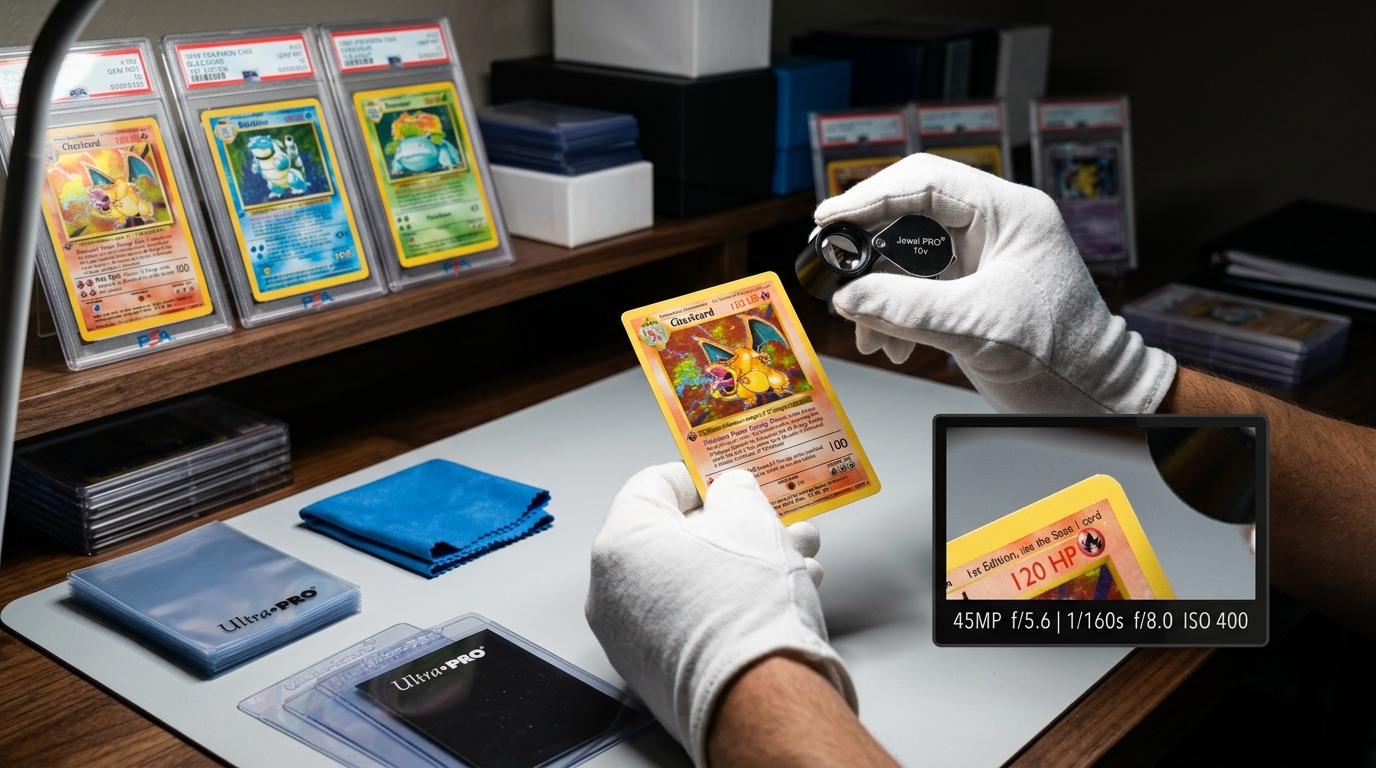
How to Grade Pokemon Cards: Step-by-Step 2026 Guide
Learn how to grade Pokemon cards in 2026 with this complete step-by-step guide covering PSA's paused Value tiers, the $79.99 minimum, pre-screening techniques, and when grading still makes financial sense.
Pokemon Price Tracker
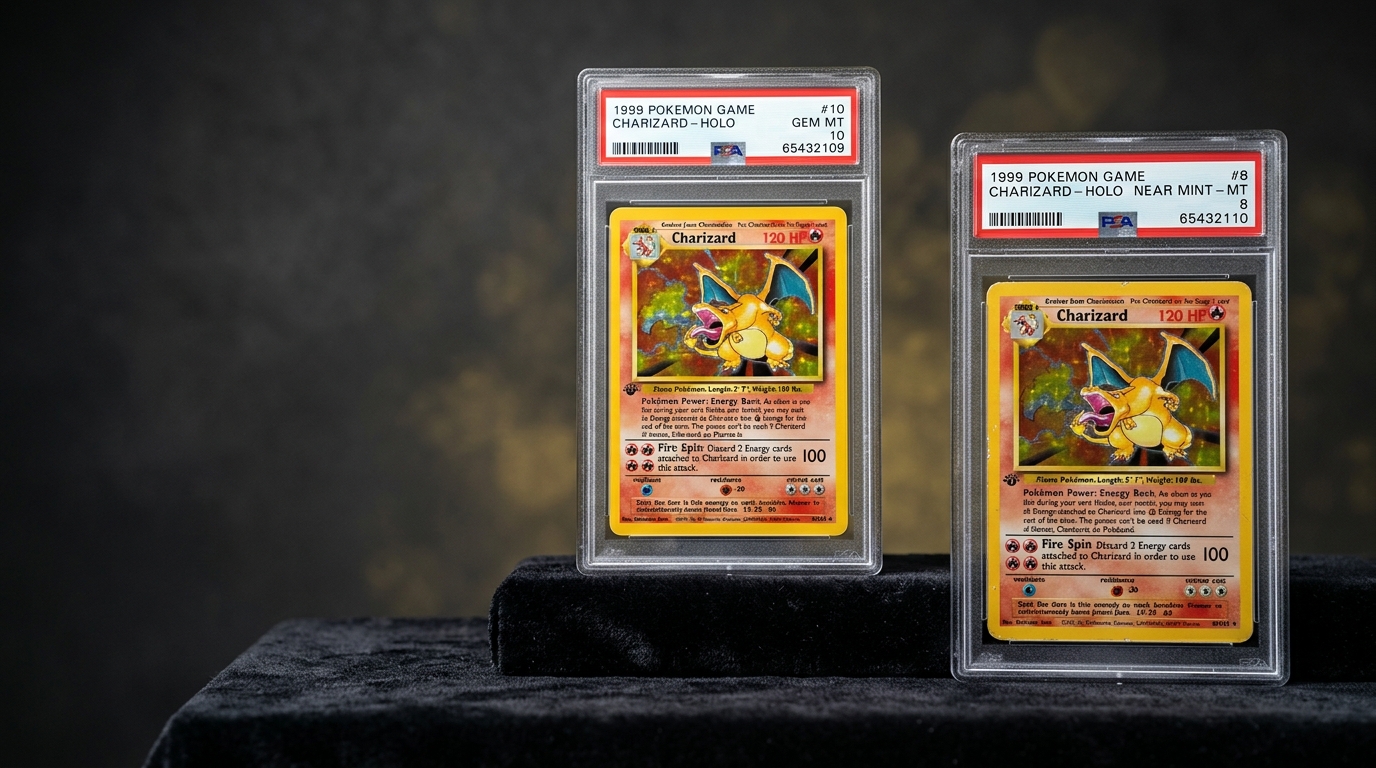
PSA 10 vs PSA 9: 2026 Price Gap Analysis & ROI Data
PSA 10s command 3x to 20x more than PSA 9s in 2026, but the gap varies wildly by card and era. We break down real sales data, ROI frameworks, and when grading actually makes financial sense.
Pokemon Price Tracker
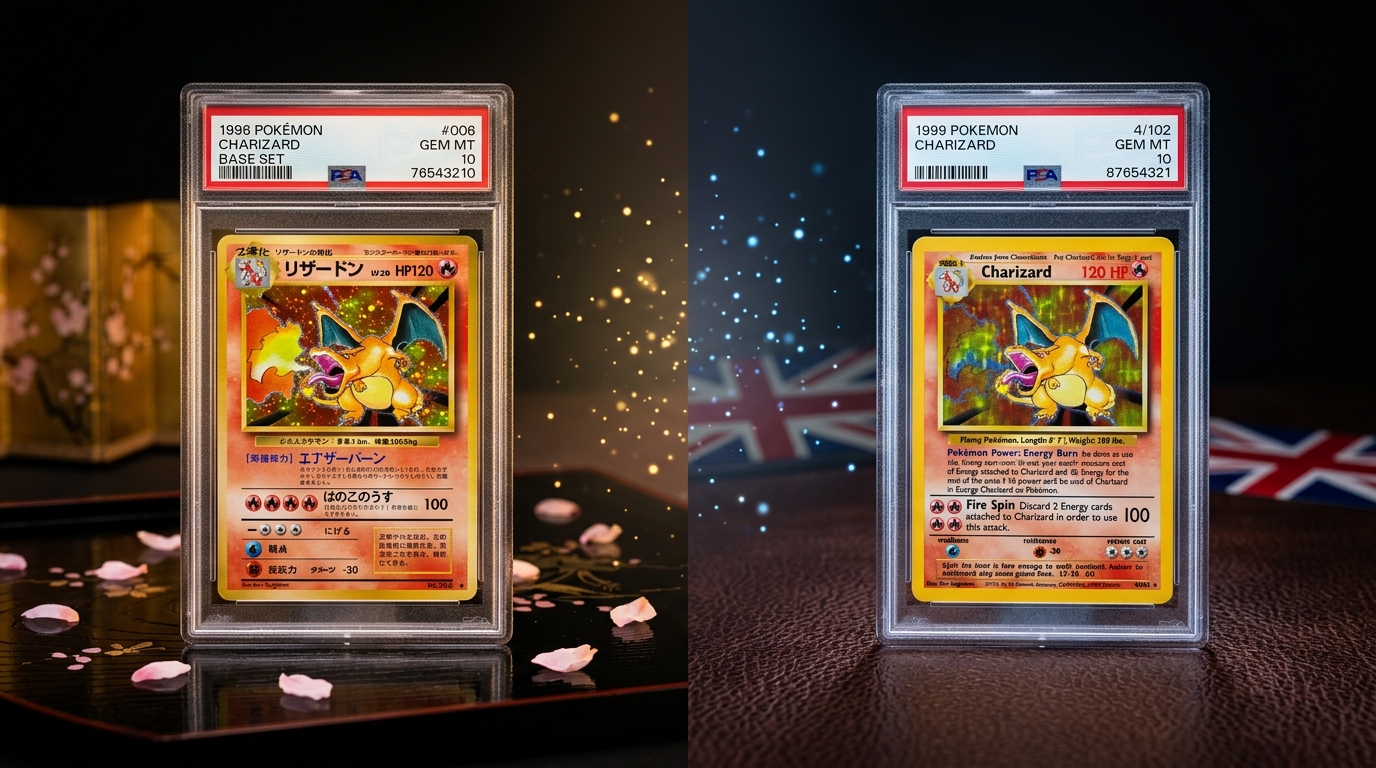
Japanese vs English Pokemon Cards: Which Holds Value in 2026?
The Japanese vs English Pokemon card debate has fundamentally shifted in 2026. Japanese PSA 10s now command 20-40% premiums over English equivalents, while raw English cards still cost 2x-6x more. Here's how to navigate both markets strategically.
Pokemon Price Tracker
Stay Updated
Subscribe to our newsletter for the latest Pokemon card market trends, investment opportunities, and exclusive insights delivered straight to your inbox.