How to Grade Pokemon Cards: Complete 2025 Guide
Grading Pokemon cards has evolved from a niche practice into an essential strategy for serious collectors and investors. With 94% of confirmed collectors owning graded cards and the market continuing to surge into 2025, understanding the grading process is more crucial than ever. Whether you're sitting on vintage Base Set holos or modern alt-arts, this comprehensive guide will walk you through everything you need to know about submitting cards for professional grading.
Why Grade Your Pokemon Cards?
Before diving into the how-to, let's understand why grading matters:
Protection and Preservation: Graded cards are sealed in tamper-proof cases that protect against wear, moisture, and handling damage.
Authentication: Professional grading companies verify your card's authenticity, crucial in an era of sophisticated counterfeits.
Market Value: A PSA 10 can sell for 5-10x (or more) compared to raw near-mint cards. For example, the Umbreon VMAX alt-art ("Moonbreon") crossed the $2,000 threshold in September 2025 for PSA 10 grades.
Liquidity: Graded cards sell faster and command more buyer confidence than raw cards.
Understanding the Grading Companies
PSA (Professional Sports Authenticator)
PSA dominates with over 70% market share of graded Pokemon cards. They remain the gold standard for resale value, particularly for vintage cards.
Pros:
- Highest resale premiums
- Most trusted brand
- Best for vintage cards (Base Set, Neo, etc.)
Cons:
- Most expensive option ($18.99-$21.99 bulk, $27.99 individual)
- Longest turnaround times (60-120 days for economy)
- Strictest grading standards
CGC (Certified Guaranty Company)
CGC has been gaining ground rapidly in 2024-2025, with the pricing gap between CGC and PSA narrowing, especially for modern cards.
Pros:
- Most affordable ($12-15 per card)
- Faster turnaround times
- High-quality slabs with better card visibility
- Excellent for modern cards
Cons:
- Lower resale premiums than PSA (though improving)
- Less established in Pokemon market
BGS (Beckett Grading Services)
BGS is known for its subgrade system and the coveted Black Label 10.
Pros:
- Subgrades provide detailed breakdown
- Black Label 10 is the rarest, most valuable grade
- Strong reputation in sports cards
Cons:
- BGS 9.5 typically sells for less than PSA 10
- More expensive ($14.95+ per card, $3 extra for subgrades)
- Longer turnaround (45+ days)
TAG Grading
TAG is emerging as an AI-powered alternative with significantly faster turnarounds.
Pros:
- 30-45 day turnaround
- 20-50% more affordable than PSA economy
- Bulk 20-card option averages $15 per card
Cons:
- Limited market recognition
- Lower resale values
- Still building reputation
The Four Pillars of Card Grading
Every grading company evaluates cards based on four fundamental criteria:
1. Centering
Centering measures how evenly the card image is positioned within the borders.
PSA 10 Requirements:
- Front: 55/45 or better (left-to-right and top-to-bottom)
- Back: 75/25 or better
How to Check:
- Use a ruler or digital calipers
- Measure border width on opposite sides
- Calculate the ratio (smaller measurement ÷ larger measurement)
- Example: 2mm left border, 3mm right border = 2÷3 = 66.7% (66.7/33.3 ratio)
Pro Tip: Vintage cards often have centering issues due to printing technology of the era. Modern cards from 2016+ generally have better centering.
2. Corners
Corners must be sharp and square with minimal wear.
What Graders Look For:
- Sharp, pointed corners (PSA 10)
- Slight rounding or minor whitening (PSA 9)
- Obvious rounding or whitening (PSA 8 or below)
How to Check:
- Examine under bright light at multiple angles
- Use a jeweler's loupe (10x magnification)
- Look for any white spots or fraying
- Check all four corners on both sides
Common Issues:
- Factory edge wear (even on "pack fresh" cards)
- Corner bumps from pack insertion
- Whitening on dark-bordered cards (especially visible)
3. Edges
Edges are evaluated for smoothness, color consistency, and wear.
Red Flags:
- Whitening (especially on holos and dark borders)
- Chipping or nicks
- Rough or uneven edges
- Color breaks
How to Check:
- Tilt card under light to see edge condition
- Run your finger gently along edges (never on surface)
- Use magnification for detailed inspection
Pro Tip: Vintage Wizards of the Coast cards often have rough cut edges from the factory. This is somewhat acceptable for older cards but will still impact grades.
4. Surface
Surface condition is often the most critical factor and hardest to evaluate.
What Graders Look For:
- Scratches (even microscopic ones)
- Print lines or roller marks
- Dents or indentations
- Holo scratches (particularly damaging)
- Staining or discoloration
How to Check:
- Examine under bright LED light at multiple angles
- Tilt card to catch light reflection on holo surfaces
- Look for print lines (horizontal lines across card)
- Check for any indentations by feeling the surface gently
Critical Note: Even tiny scratches invisible to the naked eye can drop a card from PSA 10 to PSA 9. This is why "pack fresh" doesn't guarantee gem mint.
Preparing Cards for Grading: Step-by-Step
Step 1: Pre-Grade Your Cards
Before spending money on grading, honestly assess your cards.
Use This Checklist:
- Centering: 55/45 or better on front?
- Corners: All four sharp with no whitening?
- Edges: Clean with no whitening or chipping?
- Surface: No scratches, print lines, or dents?
- Holo (if applicable): No scratching visible under light?
Reality Check: If you're unsure whether a card is PSA 9 or 10, it's probably a 9. Only grade cards you believe have a strong shot at PSA 9 or higher.
ROI Consideration: Before submitting, check if grading makes financial sense. A card worth $50 raw that might grade PSA 9 (worth $75) isn't worth grading when factoring in $25+ in grading costs plus shipping. For help with these calculations, use our Grading ROI Calculator to determine if grading is worth it for your specific cards.
Step 2: Proper Storage Before Submission
Immediately After Pulling:
- Handle by edges only (never touch the surface)
- Sleeve in penny sleeve (opening at top)
- Place in top loader or card saver
- Store in cool, dry place away from sunlight
Never:
- Touch the card surface with bare fingers
- Use PVC sleeves (causes damage over time)
- Stack cards without protection
- Store in humid environments
Step 3: Choose Your Grading Company
Base your choice on:
For Vintage Cards (Pre-2003):
- Best Choice: PSA (highest resale value)
- Budget Option: CGC (good alternative)
For Modern Cards (2016+):
- Best Value: CGC (pricing gap with PSA is narrowing)
- Premium Option: PSA (if targeting absolute maximum resale)
- Fast Option: TAG (if you need quick turnaround)
For High-End Cards ($500+ raw value):
- Always PSA - the premium is worth it at this level
Step 4: Select Service Level
Each company offers multiple service tiers:
PSA Service Levels (2025):
- Bulk (20+ cards): $18.99-$21.99 per card, 60-120 days
- Value: $27.99 per card, 45-75 days
- Regular: $75 per card, 30-45 days
- Express: $150+ per card, faster turnaround
CGC Service Levels:
- Bulk: ~$12-15 per card, 30-60 days
- Standard: ~$20 per card, 20-30 days
- Express: $50+ per card, faster turnaround
Pro Tip: Unless you need cards back urgently, economy/bulk services are the best value. The grade quality is identical across service levels.
Step 5: Packaging Your Submission
Materials Needed:
- Card Savers (preferred) or semi-rigid holders
- Penny sleeves
- Bubble mailer or small box
- Submission forms (printed from grading company website)
Packaging Steps:
- Sleeve Each Card: Place in penny sleeve with opening at top
- Add to Card Saver: Insert sleeved card into Card Saver
- Bundle Cards: Group 10-20 cards together with rubber band (not too tight)
- Add Submission Form: Print and complete form from grading company
- Wrap Bundle: Wrap card bundle in bubble wrap
- Box It: Place in sturdy box with padding on all sides
- Label Clearly: Mark "FRAGILE - TRADING CARDS" on outside
Critical: Never use tape on Card Savers or penny sleeves. Use rubber bands to bundle.
Step 6: Shipping Your Cards
Shipping Options:
- USPS Priority Mail with Insurance: Most cost-effective ($10-20)
- FedEx/UPS with Insurance: More expensive but faster tracking
- Signature Required: Recommended for high-value submissions
Insurance Tips:
- Insure for 50% of potential graded value
- Keep all receipts and tracking numbers
- Take photos of your packaged submission
Shipping Addresses (verify on official websites):
- PSA: P.O. Box 6180, Newport Beach, CA 92658
- CGC: P.O. Box 4738, Sarasota, FL 34230
- BGS: 6100 Wilcrest Dr., Houston, TX 77072
Step 7: Track Your Submission
Once shipped:
- Register Your Submission: Use tracking number on company website
- Monitor Status: Check for updates (received, grading, quality control, shipped)
- Be Patient: Economy services take 60-120 days
- Expect Delays: Turnaround times are estimates, not guarantees
Common Grading Mistakes to Avoid
1. Grading Low-Value Cards
The Math Doesn't Work: If a card is worth $20 raw and $40 as PSA 9, you'll lose money after $25+ in grading costs and shipping.
Rule of Thumb: Only grade cards worth $75+ raw, or cards you believe will achieve PSA 10 and sell for 5x+ raw value.
2. Overestimating Card Condition
Reality Check: Most collectors overgrade their own cards by 1-2 points. What you think is a PSA 10 is often a PSA 8 or 9.
Solution: Join grading communities on Reddit or Discord and get feedback before submitting.
3. Poor Packaging
Common Errors:
- Using top loaders instead of Card Savers (some companies reject these)
- Insufficient padding in shipping box
- Not using penny sleeves
- Tape on card holders
4. Choosing Wrong Company for Card Type
Mistake: Sending vintage cards to TAG or modern cards to BGS when PSA or CGC would yield better ROI.
Solution: Research sold listings on eBay for your specific card to see which grading company commands highest prices.
5. Ignoring Market Timing
Consider: Grading during peak hype can lead to disappointment when cards return 3-4 months later and hype has cooled.
Strategy: Grade cards you plan to hold long-term, not cards riding short-term hype waves.
Understanding Your Grades
PSA Grading Scale
- PSA 10 (Gem Mint): Perfect or near-perfect card
- PSA 9 (Mint): Minor imperfection, still excellent
- PSA 8 (Near Mint-Mint): Slight wear, very collectible
- PSA 7 (Near Mint): Moderate wear
- PSA 6 and below: Significant wear
What Each Grade Means for Value
PSA 10 vs PSA 9: Typically 2-4x difference for modern cards, 5-10x for vintage
PSA 9 vs PSA 8: Usually 1.5-2x difference
PSA 8 vs Raw NM: Often minimal difference, sometimes grading isn't worth it
Example - Umbreon VMAX Alt-Art (Moonbreon):
- Raw NM: ~$400-500
- PSA 9: ~$800-1,000
- PSA 10: $2,000+ (crossed threshold September 2025)
Advanced Tips for Serious Graders
Bulk Submission Strategy
Maximize Value:
- Wait until you have 20+ cards to submit for bulk pricing
- Mix high-value and medium-value cards in same submission
- Submit during slower periods (avoid post-set release rushes)
Cracking and Regrading
If you receive a grade lower than expected:
When to Consider:
- Card received PSA 9 but you strongly believe it's a 10
- Significant value difference between grades (5x+)
- No obvious flaws that would prevent higher grade
Process:
- Crack the slab carefully (many YouTube tutorials)
- Resubmit to same or different company
- Accept risk of receiving same or lower grade
Warning: Only crack slabs if the potential upside significantly outweighs costs and risks.
Crossover Services
Some collectors cross cards from one grading company to another:
Example: CGC 10 to PSA (hoping for PSA 10 for higher resale value)
PSA Crossover Service: Submit graded card in slab, PSA only grades if it meets your minimum grade requirement
Success Rate: Variable, depends on grading company standards alignment
Market Trends: What Cards to Grade in 2025
Hot Categories
Vintage WOTC (1999-2003):
- Base Set, Jungle, Fossil holos remain strong
- Neo series seeing renewed interest
- E-Reader series undervalued, good grading targets
Modern Alt-Arts:
- Evolving Skies alt-arts (especially Umbreon, Rayquaza)
- Lost Origin alt-arts (Giratina leading the charge)
- Crown Zenith Galarian Gallery cards
Japanese Exclusives:
- Masaki promos seeing massive gains
- Japanese alt-arts from recent sets
- VS Series and Web Series cards
Recent Breakouts:
- Alt-Art Latias & Latios-GX broke $2,000 (now listing at $2,699+)
- Prismatic Evolutions chase cards showing strength
- Stellar Crown special illustrations gaining traction
Cards NOT Worth Grading
Avoid:
- Modern bulk rares/holos under $10 raw
- Heavily played vintage cards (PSA 6 or below likely)
- Cards with obvious damage (creases, stains, tears)
- Modern commons/uncommons (unless rare error)
- Reprinted promos with low demand
After Grading: Selling Your Cards
Best Marketplaces for Graded Cards
eBay:
- Largest audience
- Best for high-end cards ($500+)
- 12.9% fees (13.9% for new sellers)
- Buyer protection can favor buyers
TCGPlayer:
- Lower fees for Direct program
- Strong Pokemon community
- Better for mid-range cards ($50-500)
Facebook Groups:
- No fees (PayPal G&S recommended)
- Requires building reputation
- Best for quick sales
Auction Houses (PWCC, Heritage):
- For ultra-high-end cards ($5,000+)
- Professional presentation
- Buyer's premium adds 15-20% to final price
Pricing Strategy
- Research Sold Listings: Check eBay sold listings for your exact card and grade
- Consider Timing: Sell during hype peaks, hold during lulls
- Factor in Fees: eBay takes ~13%, PayPal ~3%
- Competitive Pricing: Price 5-10% below lowest current listing for quick sale
- Patience Premium: Willing to wait? Price at market rate or slightly above
Final Thoughts: Is Grading Right for You?
Grading makes sense when:
✅ You have cards worth $75+ raw with strong grade potential ✅ You plan to sell cards and want maximum value ✅ You want long-term preservation of valuable cards ✅ You're building a serious collection ✅ You can afford to wait 60-120 days for turnaround
Grading might not make sense when:
❌ Your cards are low-value modern bulk ❌ Cards have obvious condition issues ❌ You need immediate liquidity ❌ You're grading purely on speculation ❌ The math doesn't support ROI
The Pokemon card market remains active heading into 2026, with prices continuing to rise for key cards. Professional grading has become standard practice for serious collectors, with 94% of confirmed collectors owning graded cards. Whether you're grading vintage Base Set Charizards or modern Moonbreons, following this guide will help you navigate the process successfully.
Note: Past performance does not guarantee future results. Always do your own research before making investment decisions.
Key Takeaways
- PSA dominates with 70%+ market share, best for vintage and maximum resale value
- CGC offers best value for modern cards with improving market acceptance
- The four pillars (centering, corners, edges, surface) determine your grade
- Only grade cards worth $75+ raw or with strong PSA 10 potential
- Proper preparation is crucial: penny sleeves, Card Savers, careful packaging
- Bulk submissions save money ($18.99-21.99 per card vs $27.99 individual)
- Be realistic about card condition - most collectors overgrade by 1-2 points
- Calculate ROI before submitting to ensure grading makes financial sense
- Market timing matters - grade cards you plan to hold, not short-term hype
- Patience required - economy services take 60-120 days for turnaround
Grading Pokemon cards is both an art and a science. With this comprehensive guide, you're now equipped with the knowledge to make informed decisions about which cards to grade, which company to use, and how to maximize your return on investment. Happy grading!
Pokemon Price Tracker
Market Analyst
Related Articles
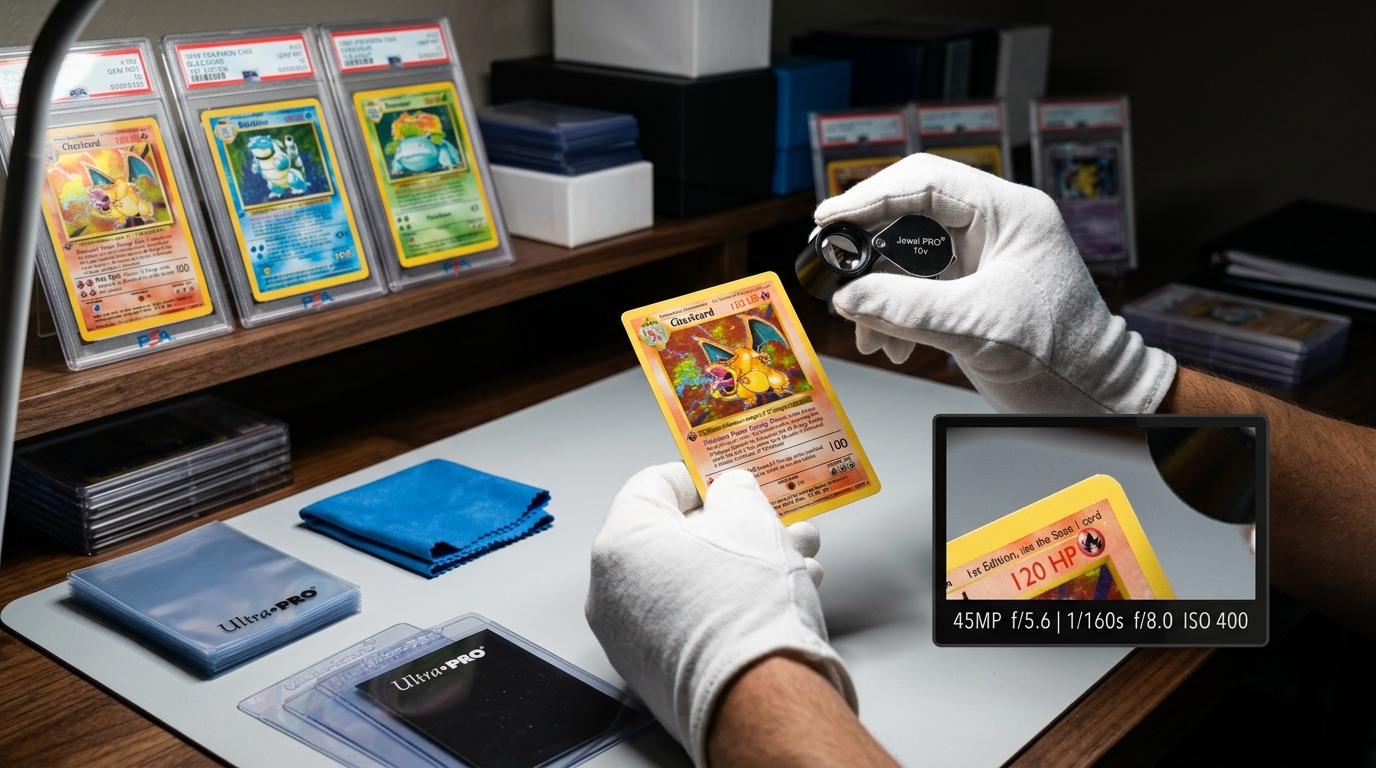
How to Grade Pokemon Cards: Step-by-Step 2026 Guide
Learn how to grade Pokemon cards in 2026 with this complete step-by-step guide covering PSA's paused Value tiers, the $79.99 minimum, pre-screening techniques, and when grading still makes financial sense.
Pokemon Price Tracker
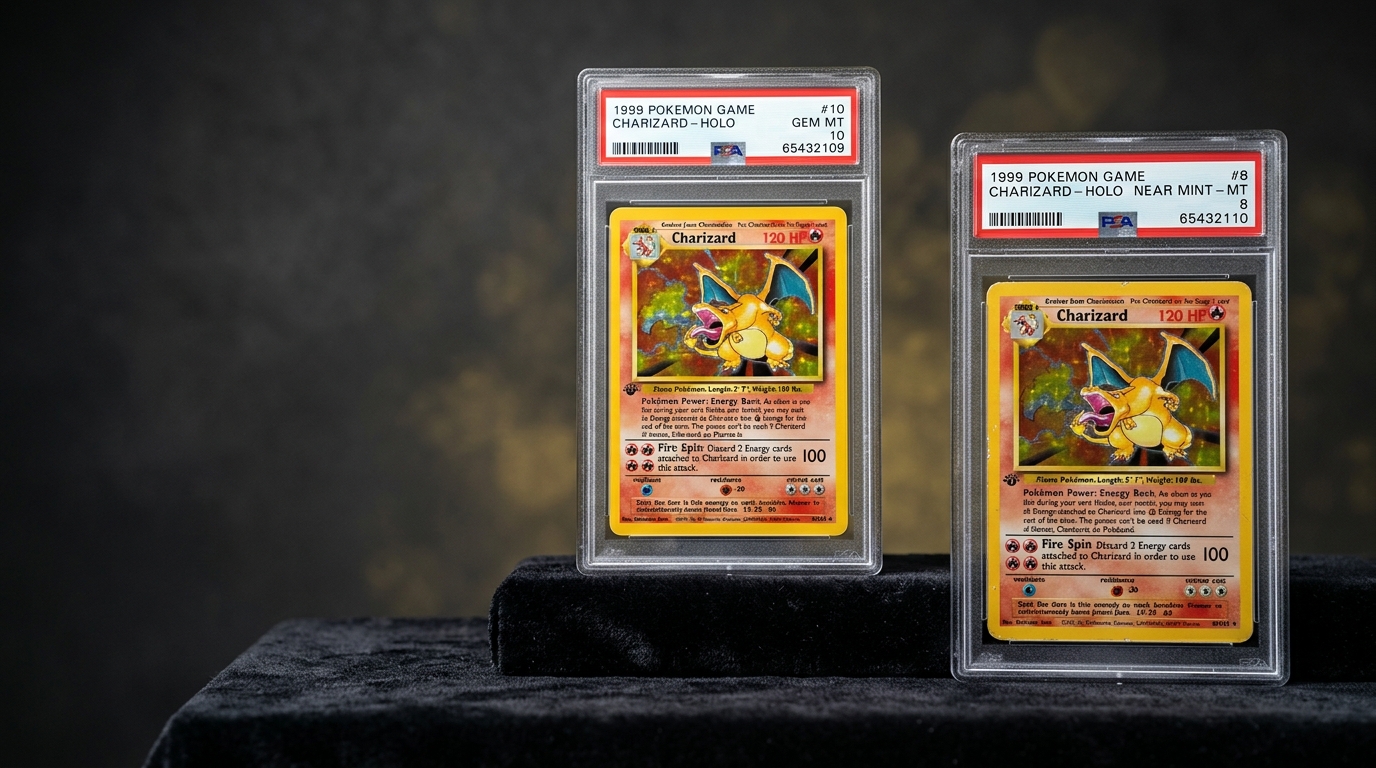
PSA 10 vs PSA 9: 2026 Price Gap Analysis & ROI Data
PSA 10s command 3x to 20x more than PSA 9s in 2026, but the gap varies wildly by card and era. We break down real sales data, ROI frameworks, and when grading actually makes financial sense.
Pokemon Price Tracker
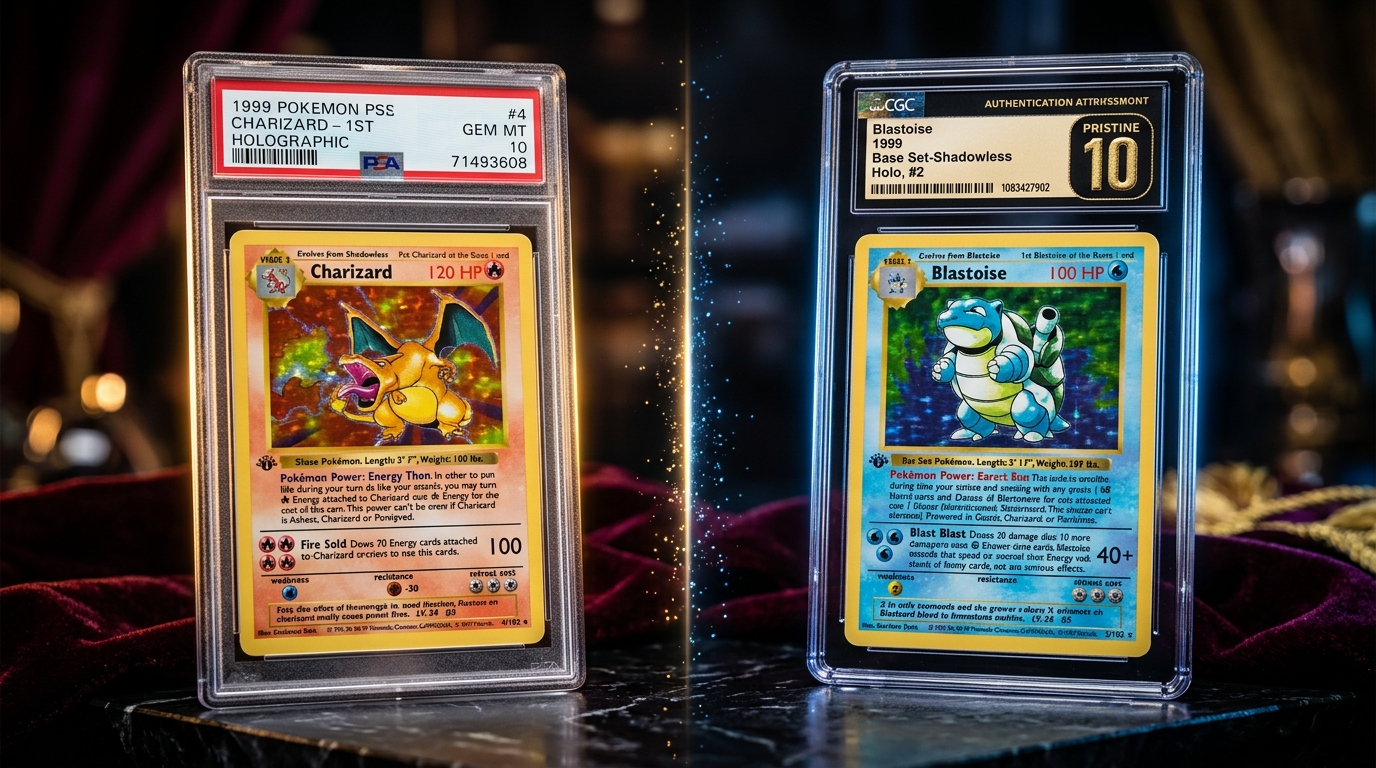
CGC vs PSA in 2026: Which Grader Holds Value Best?
PSA's 2026 Value tier pause has reshaped the grading landscape. We compare CGC vs PSA on pricing, turnaround, resale premiums, and market share to help you choose the right grader for every submission.
Pokemon Price Tracker
Stay Updated
Subscribe to our newsletter for the latest Pokemon card market trends, investment opportunities, and exclusive insights delivered straight to your inbox.