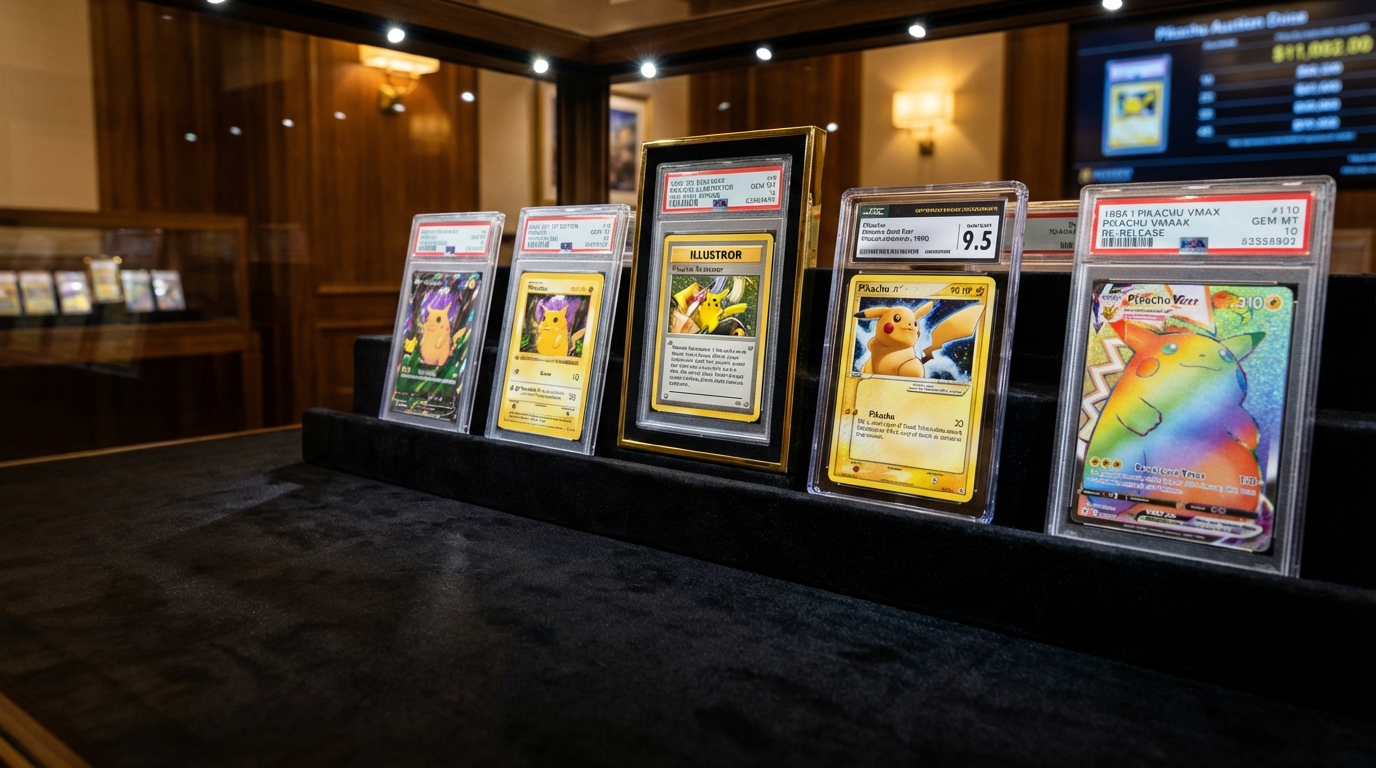
Pikachu Card Price Guide: Most Valuable Variants 2026
Pikachu isn't just Pokémon's beloved mascot—it's also the face of some of the most valuable trading cards in existence. In February 2026, a PSA 10 Pikachu Illustrator shattered records by selling for $16.492 million, officially becoming the most expensive trading card ever sold at auction, surpassing even legendary sports cards. As Pokémon celebrates its 30th anniversary in 2026, the market for rare Pikachu cards has never been more dynamic.
Whether you're a seasoned collector, a curious investor, or simply wondering what your childhood cards might be worth, this comprehensive guide breaks down the most valuable Pikachu variants, current market trends, and what makes certain cards command astronomical prices.
The Record-Breaking Pikachu Illustrator Sale
On February 16, 2026, the trading card world witnessed history when venture capitalist A.J. Scaramucci purchased Logan Paul's PSA 10 Pikachu Illustrator for $16.492 million at Goldin Auctions. This sale represented more than just a transaction—it marked a cultural milestone for the Pokémon TCG community.
Why This Sale Matters
- Highest Price Ever: Surpassed all previous trading card records, including sports cards
- Massive ROI: Logan Paul earned approximately $8 million profit after purchasing the card for $5.275 million in 2021
- Ultimate Rarity: Only 41 Pikachu Illustrator cards exist, and this is the only PSA 10 copy
- Cultural Validation: Demonstrated that Pokémon cards can compete with traditional collectibles at the highest levels
- Timing: Sale occurred just days before Pokémon's 30th anniversary on February 27, 2026
The sale even included a custom diamond necklace worth $75,000, showcasing how ultra-rare Pokémon cards have transcended into luxury collectible territory.
Understanding the 2026 Pikachu Card Market
The Pokémon card market in 2026 looks dramatically different than it did during the 2020-2024 speculation boom. Understanding these shifts is crucial for anyone looking to buy, sell, or invest in Pikachu cards.
Current Market Dynamics
Vintage vs. Modern Divide
- Vintage WOTC (Wizards of the Coast) cards have appreciated 30-50% heading into the anniversary year
- Modern cards (2020-2025) are experiencing 20-50% price corrections as the market normalizes
- The Pokémon Company printed 10.2 billion cards in 2025, creating significant supply pressure on modern releases
Collector-Driven Ecosystem
- The speculator/flipper business model has become largely unprofitable in 2026
- Serious collectors are now the primary market drivers
- Focus has shifted from "quick flips" to long-term value and personal connection
- Authentication and grading have become more critical than ever
Anniversary Effect
- Pokémon's 30th anniversary is driving renewed interest in vintage cards
- Special releases like the Pokémon Day 2026 Collection and First Partner Illustration Collection are creating buzz
- McDonald's 30th Anniversary collaboration expected to introduce new collectors to the hobby
The Most Valuable Pikachu Cards in 2026
1. Pikachu Illustrator (1998) - The Holy Grail
Current Values:
- PSA 10: $16,492,000 (February 2026 sale)
- PSA 9: Last sold for $54,970 in 2016 (current estimated value $3-5 million)
- PSA 7: Approximately $900,000
- PSA 6: $300,000-$500,000
What Makes It Special: The Pikachu Illustrator was never sold in stores. Instead, it was awarded to winners of the CoroCoro Comic Illustration Contest in Japan in 1997-1998. Only 41 copies are confirmed to exist, making it exponentially rarer than even the most limited modern chase cards.
The card features unique "ILLUSTRATOR" text where "Trainer" would normally appear, and artwork by Atsuko Nishida showing Pikachu drawing. Its historical significance as one of the first promotional cards ever created, combined with its extreme rarity, makes it the undisputed king of Pokémon cards.
Investment Outlook: With only one PSA 10 in existence and growing institutional interest in alternative assets, this card's value trajectory appears to have no ceiling. However, at this price point, we're discussing museum-quality collectibles rather than accessible investments.
2. Base Set 1st Edition Shadowless Pikachu (1999)
Current Values:
- PSA 10: $25,000-$35,000
- PSA 9: $3,000-$5,000
- PSA 8: $800-$1,200
- PSA 7: $300-$500
What Makes It Special: This is the Pikachu that started it all for English collectors. The 1st Edition Base Set Shadowless variant represents the earliest English printing of Pokémon cards. The "shadowless" designation refers to the lack of a shadow on the right side of the card's artwork frame—a feature that was added in later print runs.
As the most iconic Pokémon on the most iconic card set, this combination has proven to be a blue-chip investment within the hobby. PSA 10 examples have shown consistent appreciation of 15-25% annually over the past decade.
Market Trend: Heading into 2026, these cards are experiencing renewed demand from collectors who grew up with the original Base Set. The 30th anniversary nostalgia factor is particularly strong for this variant.
3. Pikachu Gold Star (EX Holon Phantoms, 2006)
Current Values:
- PSA 10: $8,000-$12,000
- PSA 9: $1,500-$2,500
- PSA 8: $500-$800
What Makes It Special: Gold Star cards were the original ultra-rare chase cards, predating modern full arts and secret rares. Printed on holofoil with a gold star next to the name, these cards featured alternate-colored Pokémon (in this case, a flying Pikachu with a different hue).
The Gold Star Pikachu is particularly desirable because:
- Limited print run during the EX era
- Nostalgic appeal for collectors who were active during 2005-2007
- Beautiful artwork that stands out even among modern cards
- Part of a complete Gold Star set that many collectors pursue
Investment Outlook: Gold Star cards have been steady performers in the vintage market. They're expensive enough to filter out casual buyers but accessible enough for serious collectors to acquire. This middle-tier positioning has created stable demand.
4. Pikachu VMAX Rainbow Rare (Vivid Voltage, 2020)
Current Values:
- PSA 10: $250-$350
- PSA 9: $80-$120
- Raw NM: $40-$60
What Makes It Special: This card represents the pinnacle of modern Pikachu chase cards. As a Rainbow Rare from the popular Vivid Voltage set, it features the textured rainbow foil pattern that has become synonymous with premium modern cards.
Despite experiencing a significant correction from its 2021 peak (when PSA 10s sold for $800-$1,000), this card remains popular because:
- Stunning visual appeal with rainbow texture
- Pikachu's enduring popularity
- Relatively affordable entry point for collectors
- Strong pull rate data suggests true scarcity
Market Trend: This card exemplifies the modern market correction. After the speculation bubble, prices have stabilized at levels that reflect genuine collector demand rather than FOMO-driven investing. At current prices, it represents decent value for collectors who appreciate the aesthetic.
5. Pikachu EX Full Art (XY Promo 124, 2016)
Current Values:
- PSA 10: $400-$600
- PSA 9: $100-$150
- Raw NM: $50-$80
What Makes It Special: This promotional card was distributed at the 2016 Pokémon World Championships and features gorgeous full-art illustration of Pikachu in an action pose. As a limited distribution promo with significant tournament history, it holds special appeal for competitive players and collectors alike.
The card bridges the gap between vintage and modern, coming from an era before the massive print runs of 2020-2025.
6. Surging Sparks Pikachu ex Special Illustration Rare (2024)
Current Values:
- PSA 10: $180-$250
- PSA 9: $60-$90
- Raw NM: $30-$50
What Makes It Special: One of the newest additions to the Pikachu pantheon, this Special Illustration Rare from the Surging Sparks set (released late 2024) features stunning artwork that has quickly become a fan favorite. The card shows Pikachu in a dynamic, beautifully illustrated scene that showcases the evolution of Pokémon card artwork.
Despite being very recent, it's already commanding premium prices due to:
- Exceptional artwork quality
- Lower pull rates than standard cards
- Fresh appeal to current collectors
- Part of the popular Scarlet & Violet era
Investment Outlook: As a very recent release, this card is still finding its price floor. Modern cards typically need 3-5 years to establish stable market values. However, the artwork quality suggests it could become a long-term favorite.
7. Pikachu & Zekrom GX Rainbow Rare (Cosmic Eclipse, 2019)
Current Values:
- PSA 10: $200-$300
- PSA 9: $60-$90
- Raw NM: $35-$55
What Makes It Special: Tag Team GX cards represented a unique era in Pokémon TCG history, featuring two Pokémon on a single card. This Rainbow Rare variant combines Pikachu with the legendary Zekrom, creating a powerful visual and competitive card.
The card benefits from:
- Dual Pokémon appeal (Pikachu + legendary)
- End of the Sun & Moon era nostalgia
- Competitive play history
- Rainbow Rare premium finish
8. Birthday Pikachu (Japanese, 1998)
Current Values:
- PSA 10: $3,000-$5,000
- PSA 9: $800-$1,200
- PSA 8: $300-$500
What Makes It Special: This Japanese promotional card was given to Pokémon Card Game Official Trainer members on their birthdays during 1998. It features Pikachu holding balloons with "HAPPY BIRTHDAY" text, making it one of the most charming vintage promos.
Its appeal comes from:
- Personal, sentimental theme
- Very limited distribution (only to club members)
- Early promotional card history
- Crossover appeal to Japanese card collectors
Market Trend: Japanese vintage promos have been outperforming English counterparts in recent years, with collectors appreciating the original artwork and historical significance.
Factors That Determine Pikachu Card Value
Understanding what makes certain Pikachu cards valuable helps collectors make informed decisions about which cards to pursue or sell.
Rarity and Print Run
Tournament Promos and Contest Cards Cards like Pikachu Illustrator that were awarded rather than sold have inherent scarcity. Even if demand were to decrease, supply cannot increase.
1st Edition and Early Prints First edition stamps and early print runs (like Shadowless Base Set) command premiums because they represent the earliest versions of cards.
Modern Pull Rates While modern sets have massive print runs, individual chase cards can still be rare. A card that appears once every 1,000 packs is scarce even if millions of packs exist.
Condition and Grading
The difference between grades can mean thousands or even millions of dollars:
PSA 10 vs PSA 9 Premium
- Pikachu Illustrator: ~300-400% premium for PSA 10
- Base Set 1st Edition: ~500-700% premium for PSA 10
- Modern cards: ~150-200% premium for PSA 10
Why Condition Matters More Now As the market has matured, collectors have become more sophisticated. Raw cards are increasingly viewed with skepticism unless from trusted sources. Professional grading provides:
- Authentication against counterfeits
- Objective condition assessment
- Market liquidity (easier to buy/sell)
- Long-term preservation
Historical Significance
Cards tied to Pokémon's history command premiums:
- First English set (Base Set)
- First promotional cards (Illustrator, Birthday)
- Tournament history (World Championship promos)
- Cultural moments (cards from Pokémon Go era, anniversary sets)
Artwork and Visual Appeal
Never underestimate aesthetic value. Cards with exceptional artwork maintain value even when similar cards from the same set decline. The Special Illustration Rares from recent sets command premiums specifically because of artwork quality.
Playability History
While less important than for other TCGs, competitive play history does impact value. Cards that were tournament staples often maintain collector interest even after rotation.
Investment Considerations for Pikachu Cards
Pokémon cards have grown 3,821% in value since 2004, compared to the S&P 500's 483% return over the same period. However, this aggregate statistic masks significant variation between individual cards and categories.
Vintage vs. Modern Investment Thesis
Vintage Cards (Pre-2010)
- Pros: Fixed supply, historical significance, proven track record, nostalgia factor
- Cons: High entry prices, authentication challenges, condition sensitivity
- Best For: Long-term holders with significant capital
Modern Cards (2020-Present)
- Pros: Affordable entry, easier to acquire in gem mint condition, beautiful artwork
- Cons: Massive print runs, uncertain long-term demand, still price-finding
- Best For: Collectors who prioritize aesthetics over investment returns
Middle Era (2010-2019)
- Pros: Balanced rarity/accessibility, establishing price history, nostalgia starting to build
- Cons: Less historical significance than vintage, higher supply than vintage
- Best For: Balanced collector-investors seeking growth with manageable risk
Risk Factors to Consider
Market Volatility The 20-50% correction in modern cards demonstrates how quickly sentiment can shift. Cards that seem like sure winners can lose half their value in months.
Counterfeit Risk As values increase, so does counterfeiting sophistication. Always:
- Buy graded cards from reputable sellers
- Learn authentication techniques
- Use escrow services for high-value transactions
- Verify seller reputation and return policies
Condition Sensitivity A single corner ding can reduce a card's value by 70-80%. Proper storage is essential:
- Use penny sleeves and top loaders
- Store in climate-controlled environments
- Avoid direct sunlight
- Consider professional grading for valuable cards
Liquidity Concerns Unlike stocks, selling high-value cards can take weeks or months. Factor in:
- Auction house fees (15-20%)
- Grading costs ($20-$10,000 depending on declared value)
- Shipping and insurance
- Time to find qualified buyers
Strategic Approaches
The Blue-Chip Strategy Focus on established, high-value cards with proven track records:
- Base Set 1st Edition Shadowless (PSA 9-10)
- Gold Star cards (PSA 9-10)
- Major promotional cards
This approach prioritizes capital preservation with steady appreciation potential.
The Emerging Value Strategy Identify undervalued cards from the 2010-2019 era before nostalgia premium kicks in:
- Full Art EX cards from XY era
- Early GX cards from Sun & Moon
- Limited distribution promos
This requires more market knowledge but offers higher upside potential.
The Completion Strategy Build complete sets or subsets:
- All Gold Star cards
- Complete vintage promo collection
- Master set of specific expansion
Complete sets often command premiums above individual card values.
The Aesthetic Strategy Simply collect cards you love regardless of investment potential. This approach:
- Maximizes personal enjoyment
- Removes stress of market timing
- Often performs well long-term anyway (beautiful cards hold value)
How to Buy and Sell Valuable Pikachu Cards
Where to Buy
Auction Houses
- Best for: Ultra-rare cards ($10,000+)
- Examples: Heritage Auctions, Goldin, PWCC
- Pros: Authentication, serious buyers, market validation
- Cons: High fees, slow process, minimum values
Online Marketplaces
- Best for: Mid-range cards ($100-$10,000)
- Examples: eBay, TCGPlayer, Mercari
- Pros: Large selection, competitive pricing, buyer protection
- Cons: Counterfeit risk, condition disputes, variable seller quality
Card Shops and Shows
- Best for: Building relationships, inspecting in person
- Pros: See before buying, negotiate, community connection
- Cons: Limited selection, potentially higher prices, travel required
Private Sales
- Best for: Serious collectors with industry connections
- Pros: Best prices, flexibility, discretion
- Cons: Requires trust, no buyer protection, authentication burden
Selling Strategies
Timing Your Sale
- Anniversary years (like 2026) typically see increased demand
- Avoid selling during market downturns unless necessary
- Holiday season (October-December) often brings strong prices
- Tax season (January-April) can be slower
Presentation Matters
- Professional photography with proper lighting
- Clear description of condition, including any flaws
- Provide certification numbers for graded cards
- Compare to recent sales of similar cards
Fee Considerations
- eBay: ~13% total fees (selling + payment processing)
- Auction houses: 15-20% buyer's premium (sometimes seller fees too)
- TCGPlayer: ~11% fees
- Private sales: 0% but may need to discount for quick sale
Protecting Your Pikachu Card Investment
Storage Best Practices
For Raw Cards
- Penny sleeve (opening at top)
- Top loader (opening at top, opposite direction from sleeve)
- Team bag or card saver for additional protection
- Store vertically in card storage box
- Climate-controlled environment (65-70°F, 35-55% humidity)
For Graded Cards
- Keep in original case
- Store vertically or flat (never at angle)
- Avoid stacking heavy items on top
- Consider display cases with UV protection
- Maintain stable temperature and humidity
Insurance Considerations
Once your collection exceeds $5,000-$10,000, standard homeowners or renters insurance may not provide adequate coverage:
Collectibles Insurance
- Specialized policies for trading cards
- Coverage for market value (not just purchase price)
- Typical cost: $1-$2 per $100 of coverage annually
- Recommended providers: Collectibles Insurance Services, American Collectors Insurance
Documentation Requirements
- Maintain purchase records
- Photograph all valuable cards
- Keep grading certificates and receipts
- Update valuations annually
- Store documentation separately from collection
Authentication and Grading
For Pikachu cards worth $100+, professional grading often makes sense:
When to Grade
- Card appears to be in gem mint condition
- Card value would increase significantly with high grade
- Planning to sell in near future
- Want authentication and long-term protection
When Not to Grade
- Card has visible flaws (likely grades PSA 7 or lower)
- Card value doesn't justify grading costs
- Personal collection with no sale plans
- Grading backlog is extremely long
Grading Company Comparison
- PSA: Market standard, highest resale values, longest turnaround
- CGC: Faster service, detailed subgrades, growing acceptance
- BGS: Preferred for modern cards, strict grading, subgrades available
The Future of Pikachu Card Values
While we can't predict the future with certainty, several factors will likely influence Pikachu card values in coming years:
Supporting Factors
Generational Wealth Transfer Millennials and Gen Z collectors are entering peak earning years. As disposable income increases, demand for nostalgia-driven collectibles typically follows.
Institutional Recognition The $16.492 million Illustrator sale brings legitimacy to Pokémon cards as serious collectibles, potentially attracting institutional investors and museums.
Pokémon's Enduring Popularity Pokémon remains the highest-grossing media franchise in history ($100+ billion). As long as new generations discover Pokémon, Pikachu cards will have collector demand.
Fixed Supply of Vintage No more vintage cards will ever be printed. As cards are lost, damaged, or permanently held in collections, available supply decreases.
Risk Factors
Generational Interest Shift If younger generations don't develop interest in physical cards (preferring digital collectibles), demand could decline long-term.
Market Saturation The 10.2 billion cards printed in 2025 represent unprecedented supply. Modern cards may struggle to appreciate for decades.
Economic Factors Collectibles are discretionary purchases. Economic recession could pressure prices, particularly for modern cards.
Changing Collector Preferences Tastes evolve. Cards that seem essential today might fall out of favor as new generations of collectors emerge with different preferences.
Key Takeaways
-
The Pikachu Illustrator's $16.492 million sale establishes Pokémon cards as legitimate blue-chip collectibles competing with sports cards and fine art
-
Vintage cards are appreciating while modern cards correct from speculation-driven peaks—the market is bifurcating
-
Condition is paramount: The difference between PSA 9 and PSA 10 can mean 5-10x price difference for valuable cards
-
Rarity trumps all: Cards with fixed, limited populations (promos, 1st editions, tournament cards) have the strongest long-term appreciation potential
-
The 30th anniversary is driving renewed interest in vintage Pikachu cards and creating opportunities for both buyers and sellers
-
Modern cards require patience: Recent releases need years to establish stable values; don't expect quick returns
-
Authentication matters more than ever: As values increase, so does counterfeiting—buy graded when possible
-
Collect what you love: The most successful long-term collectors focus on personal connection rather than pure speculation
Note: Past performance does not guarantee future results. Always do your own research before making investment decisions.
Final Thoughts
Pikachu cards represent the intersection of nostalgia, artistry, and investment potential. From the record-breaking Illustrator to affordable modern chase cards, there's a Pikachu card for every collector and budget.
The 2026 market offers unique opportunities as vintage cards appreciate into the 30th anniversary while modern cards find their true value after the speculation bubble. Whether you're drawn to the historical significance of Base Set, the beauty of modern Special Illustration Rares, or the investment potential of middle-era cards, understanding the factors that drive value is essential.
Remember that the best collections are built with patience, research, and genuine passion for the hobby. The cards that bring you joy today may also prove to be wise investments tomorrow—but even if they don't, you'll have a collection that tells your personal story within Pokémon's incredible 30-year history.
Happy collecting, and may your pulls be ever in your favor!
Tags:
Pokemon Price Tracker
Market Analyst
Related Articles
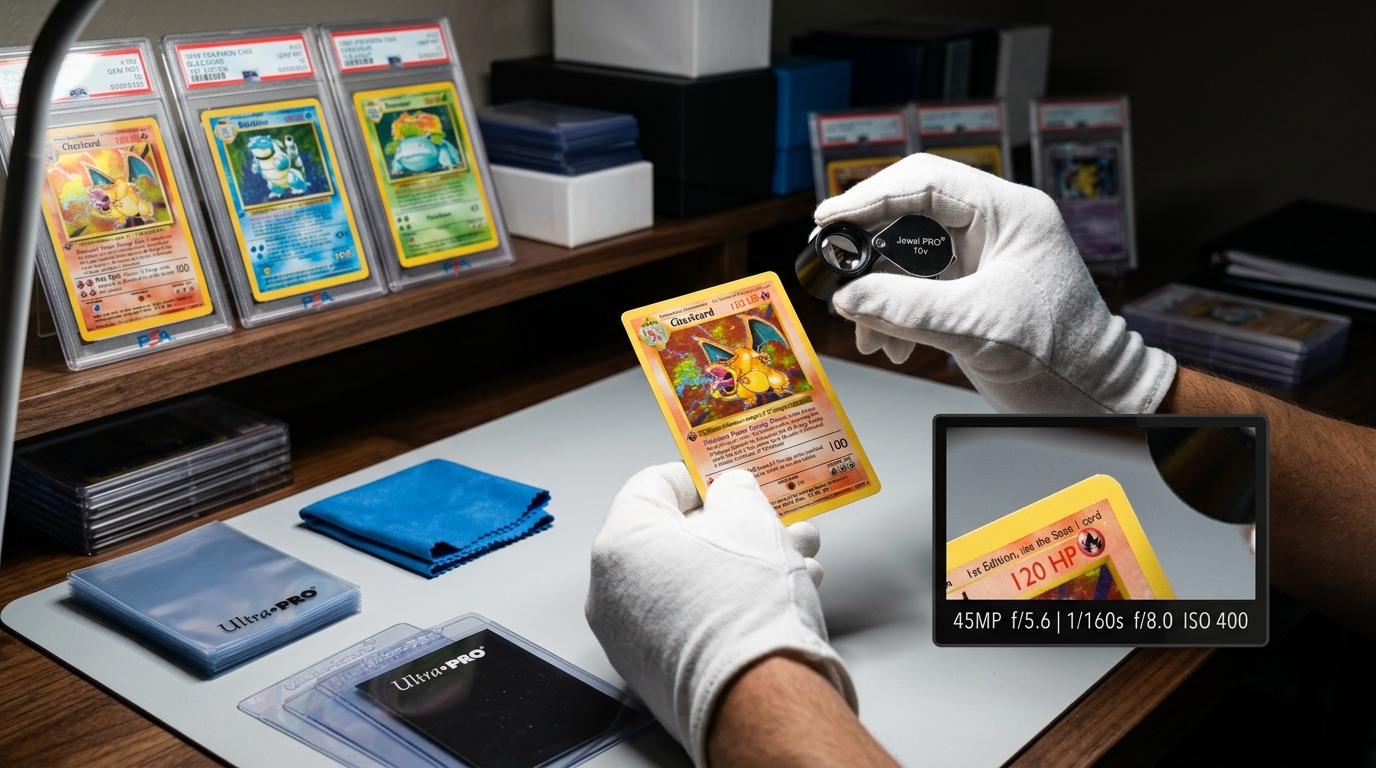
How to Grade Pokemon Cards: Step-by-Step 2026 Guide
Learn how to grade Pokemon cards in 2026 with this complete step-by-step guide covering PSA's paused Value tiers, the $79.99 minimum, pre-screening techniques, and when grading still makes financial sense.
Pokemon Price Tracker
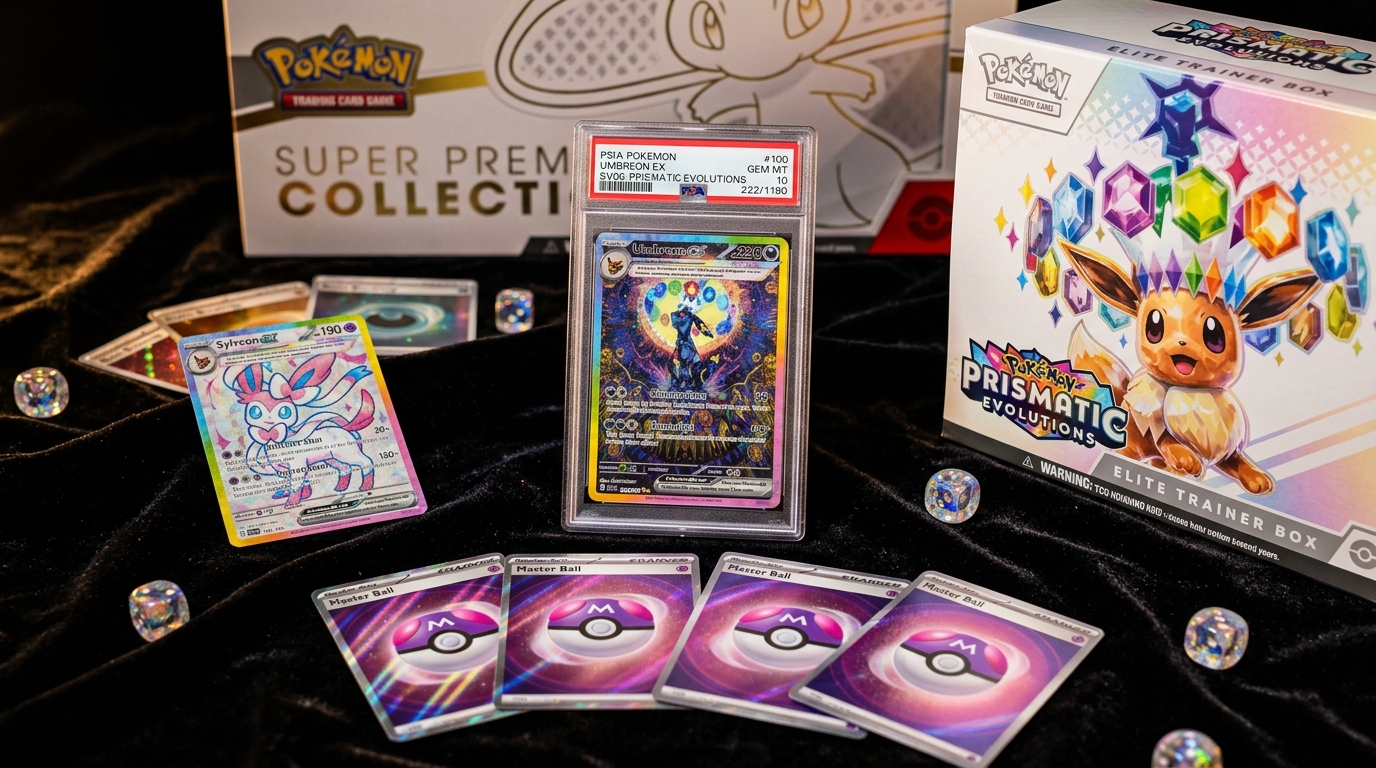
Prismatic Evolutions Price Guide: 2026 Market Update
A comprehensive 2026 price guide for Pokemon Prismatic Evolutions covering the Umbreon ex SIR, Sylveon ex, Master Ball reverse holos, sealed ETBs, and Super Premium Collection. Get current market values, grading insights, and set completion costs.
Pokemon Price Tracker
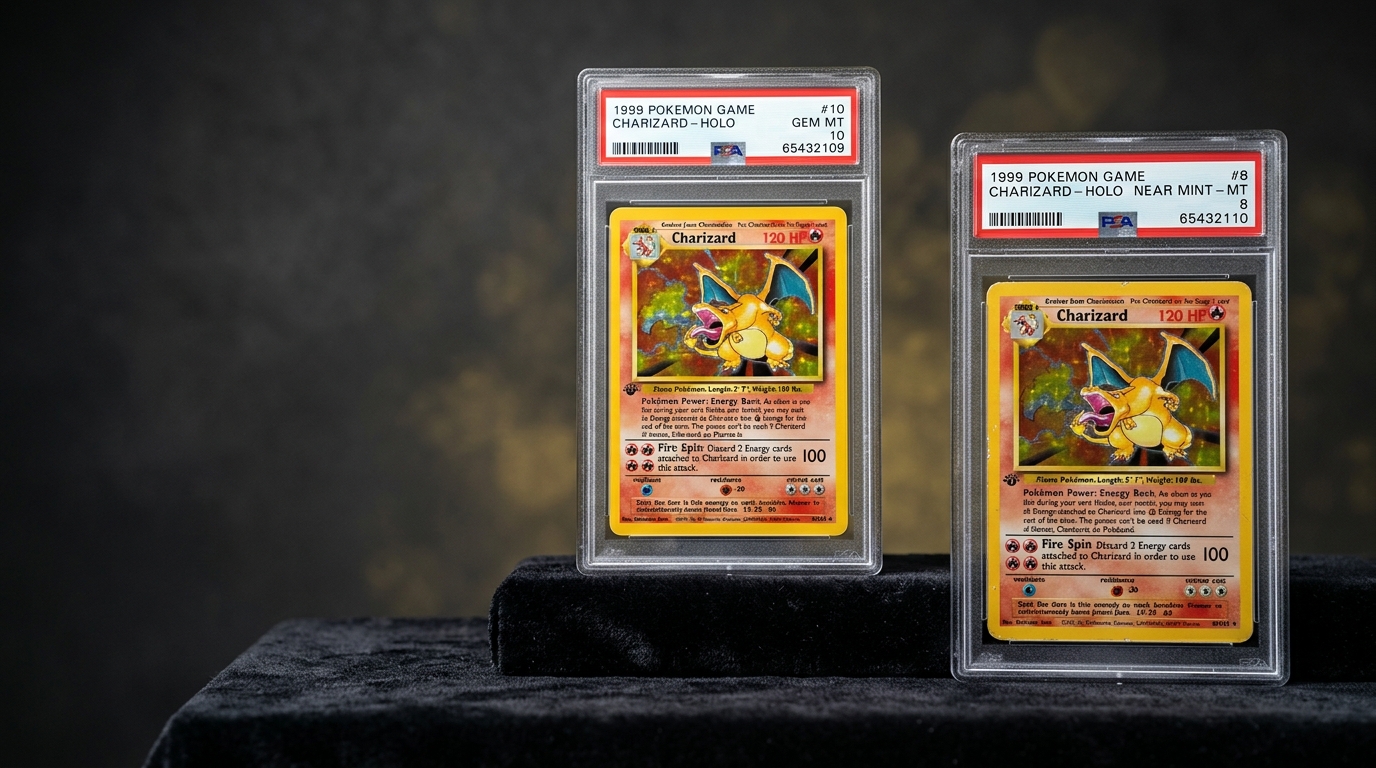
PSA 10 vs PSA 9: 2026 Price Gap Analysis & ROI Data
PSA 10s command 3x to 20x more than PSA 9s in 2026, but the gap varies wildly by card and era. We break down real sales data, ROI frameworks, and when grading actually makes financial sense.
Pokemon Price Tracker
Stay Updated
Subscribe to our newsletter for the latest Pokemon card market trends, investment opportunities, and exclusive insights delivered straight to your inbox.