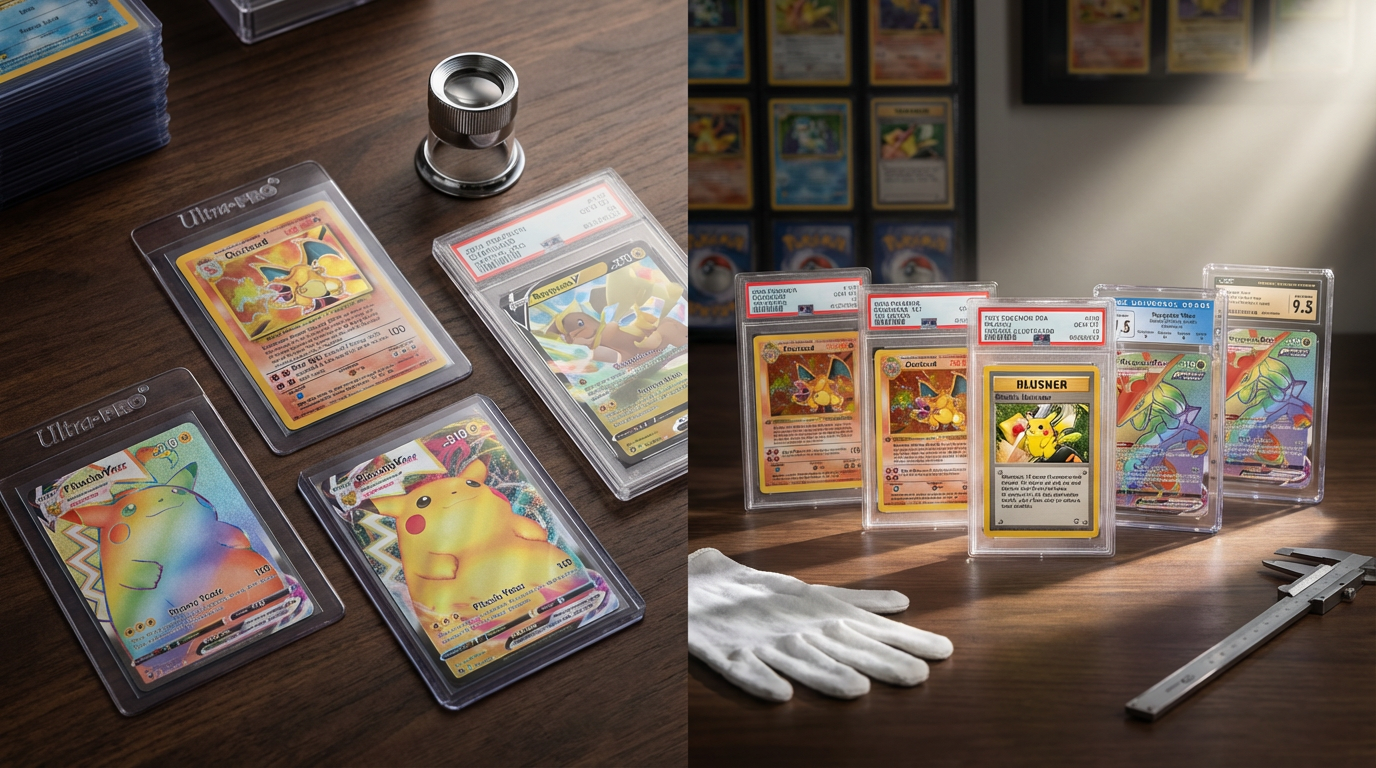
Raw vs Graded Pokemon Cards: ROI Analysis 2026
With Pokemon's 30th anniversary driving unprecedented market momentum in 2026, collectors and investors face a critical question: should you grade your Pokemon cards, or keep them raw? The answer isn't as simple as "always grade" or "never grade"—it depends on dozens of factors that can mean the difference between doubling your investment and losing money.
The Pokemon card market has grown an astounding 3,821% since 2004, crushing traditional investments like the S&P 500 (483% growth) and even tech giants like Meta (1,844% growth). But this explosive growth has made the grading decision more complex than ever. With PSA grading fees ranging from $18.99 to $300+ per card, understanding the true ROI of grading is essential for maximizing your collection's value.
This comprehensive analysis breaks down the real numbers, hidden costs, and strategic considerations that determine whether grading makes financial sense for your specific cards.
Understanding the Grading Premium: What the Data Shows
The value difference between raw and graded Pokemon cards varies dramatically based on multiple factors. Here's what current market data reveals:
Modern Cards (2020-2026)
- PSA 10 graded cards command 2-5x premium over comparable raw cards
- PSA 9 cards typically fetch only 30-50% of a PSA 10's value—a massive drop for a single grade point
- Cards graded PSA 8 or below often sell for less than raw Near Mint copies
- Modern chase cards with high pull rates see smaller grading premiums
Vintage Cards (Pre-2003)
- PSA 10 vintage cards can fetch 5-10x their raw counterparts
- Some vintage PSA 10s command 2,400%+ increases over raw values (extreme cases)
- Even PSA 9 vintage cards see significant premiums due to scarcity
- Condition sensitivity is extreme—minor flaws devastate value
The $100 Threshold Rule
Cards valued above $100 in raw condition that appear Near Mint or better typically see 120-300% value increases when achieving PSA 10 status. Cards below $10 raw rarely see more than 70% increases, often failing to cover grading costs entirely.
The True Cost of Grading in 2026
Before calculating ROI, you need to understand all-in costs:
Direct Grading Fees
- PSA: $18.99 (value tier, 65 business days) to $300+ (super express)
- CGC: Starting around $12-15 per card for bulk submissions
- BGS: Starting at $14.95 per card for standard service
Hidden Costs That Eat Into ROI
- Shipping to grading company: $10-30 depending on insurance and quantity
- Return shipping: $15-40 with insurance
- Card savers/supplies: $0.50-2 per card
- Insurance: Required for valuable cards, adds 1-3% of declared value
- Time value: 2-6 months turnaround for most services
- Opportunity cost: Missing market peaks while cards are in grading
Real All-In Cost Example
Grading a single $100 raw card through PSA value service:
- PSA fee: $18.99
- Card saver: $1
- Shipping to PSA: $15 (split among 10 cards)
- Return shipping: $20 (split among 10 cards)
- Insurance: $2
- Total: ~$60 per card when factoring in all costs
This means your $100 raw card needs to sell for at least $160 graded just to break even—a 60% increase minimum.
ROI Scenarios: When Grading Makes Financial Sense
Scenario 1: High-Value Vintage Card
Card: Base Set Charizard, raw Near Mint condition
- Raw market value: $500
- Estimated grade: PSA 9
- PSA 9 market value: $2,000
- All-in grading cost: $75
- Net profit: $1,425
- ROI: 285%
Verdict: Strong financial decision. Even if it grades PSA 8, you likely break even or profit slightly.
Scenario 2: Modern Chase Card
Card: Recent set ultra-rare, pack-fresh condition
- Raw market value: $80
- Estimated grade: PSA 10
- PSA 10 market value: $200
- All-in grading cost: $60
- Net profit: $60
- ROI: 75%
Verdict: Marginal. Profit exists but small margin for error. If it grades PSA 9 ($90 value), you lose money.
Scenario 3: Low-Value Modern Card
Card: Common full art trainer, Near Mint
- Raw market value: $15
- Estimated grade: PSA 10
- PSA 10 market value: $35
- All-in grading cost: $55
- Net profit: -$35
- ROI: -233%
Verdict: Terrible financial decision. Never grade cards worth less than $50 raw unless for personal collection purposes.
Scenario 4: Grading for Future Value
Card: Current set card with competitive play potential
- Current raw value: $120
- Estimated grade: PSA 10
- Current PSA 10 value: $250
- All-in grading cost: $60
- Current net profit: $70 (58% ROI)
- Projected 2-year PSA 10 value: $500+
- Projected net profit: $320+ (267% ROI)
Verdict: Strategic hold. Grading locks in condition and positions for long-term appreciation, especially approaching Pokemon's 30th anniversary.
Grading Company Comparison: Where to Send Your Cards
PSA (Professional Sports Authenticator)
Market Share: 78% of Pokemon market
Pros:
- Highest resale values—buyers prefer PSA
- Most recognized brand globally
- Best for vintage cards and investment pieces
- Largest population database
Cons:
- Highest costs
- Longest turnaround times (typically 2-4 months)
- Inconsistent grading standards reported by some collectors
Best For: Cards worth $100+ raw, vintage cards, cards intended for resale
CGC (Certified Guaranty Company)
Market Share: Growing rapidly, approximately 15% of Pokemon market
Pros:
- Lower costs than PSA
- Faster turnaround (1-2 months typical)
- Stricter, more consistent grading standards
- Modern label design appeals to younger collectors
Cons:
- Lower resale values than PSA (typically 10-20% less)
- Less market acceptance for vintage cards
- Smaller population database
Best For: Modern cards, bulk submissions, cards for personal collection
BGS (Beckett Grading Services)
Market Share: 5-7% of Pokemon market
Pros:
- Detailed subgrades for centering, edges, corners, surface
- Black Label 10 (BGS 10 with all 10 subgrades) commands massive premiums
- Well-respected in sports card market
Cons:
- Lowest liquidity in Pokemon market
- Black Label 10 extremely rare—most cards get 9.5 or lower
- Higher costs than CGC
Best For: Ultra-premium cards where perfection matters, cards with exceptional centering
The Grading Decision Matrix: Should You Grade?
Use this framework to determine if grading makes sense:
Grade If ALL These Apply:
- Raw value exceeds $50 (preferably $100+)
- Card appears Near Mint/Mint with no visible flaws
- Centering looks 60/40 or better on both front and back
- No print lines, scratches, or edge wear visible
- You can afford to wait 2-6 months for turnaround
- Graded version sells for 2x+ raw value consistently
Don't Grade If ANY Apply:
- Raw value under $50 (rare exceptions for sentimental value)
- Visible flaws like whitening, scratches, or dents
- Poor centering (70/30 or worse)
- You need liquidity now—raw cards sell faster
- Graded premium is less than 100% over raw
- Card has high population of PSA 10s already
Consider These Strategic Factors:
- Market timing: Grade before major events (anniversaries, movie releases)
- Set popularity: Grade cards from beloved sets (Base Set, Neo, ex era)
- Population scarcity: Low PSA 10 populations mean higher premiums
- Personal goals: Collection display vs. investment vs. quick flip
Advanced ROI Strategies for 2026
Strategy 1: Bulk Grading for Cost Efficiency
Submitting 20+ cards simultaneously reduces per-card costs significantly:
- Shared shipping: $3-5 per card vs. $20+ solo
- Bulk service discounts at CGC
- Insurance cost spreading
- Improved ROI: 15-25% better margins
Tip: Join local collector groups to share bulk submissions
Strategy 2: Grade Modern Cards Immediately
For pack-fresh modern cards with strong potential:
- Minimize handling and storage risk
- Lock in pristine condition before degradation
- Position for long-term holds
- Avoid market saturation as more people grade over time
Best for: First edition modern sets, special editions, chase cards
Strategy 3: Strategic Vintage Grading
For vintage cards, timing and selectivity matter:
- Only grade cards that look PSA 9+ worthy
- Focus on iconic Pokemon (Charizard, Pikachu, starters)
- Target low-population cards where PSA 10 is rare
- Consider CGC for vintage if personal collection (save 30-40% on costs)
Strategy 4: The Crack-and-Regrade Approach
Advanced technique for experienced collectors:
- Buy PSA 9 cards that look undergraded
- Crack slab and resubmit to different company
- Target cards where PSA 10 is 3x+ PSA 9 value
- Risk: Card could grade lower, damage during cracking
- Reward: 200-400% returns on successful upgrades
Only attempt if: You have experience, card has obvious grading error, math strongly favors the risk
Common Grading Mistakes That Destroy ROI
Mistake 1: Grading Without Proper Inspection
Many collectors submit cards without thorough examination:
- Use a jeweler's loupe (10x magnification minimum)
- Check under bright light for print lines
- Examine edges at angles for whitening
- Measure centering with digital tools
Cost of mistake: $60+ in grading fees for a card that grades PSA 7
Mistake 2: Ignoring Population Reports
High population PSA 10s have compressed premiums:
- Check PSA population data before grading
- Cards with 1,000+ PSA 10s see minimal premiums
- Target cards with under 100 PSA 10s for best ROI
Mistake 3: Wrong Grading Company Selection
Sending vintage cards to CGC or modern cards to BGS:
- PSA for vintage = 15-25% higher sale prices
- CGC for modern bulk = 30% cost savings
- BGS only for Black Label potential = niche market
Mistake 4: Grading During Market Peaks
Submitting during hype cycles creates problems:
- Cards arrive back after hype dies
- Overcrowded populations from mass grading
- Longer turnaround times during peak demand
Better approach: Grade during market lulls, hold for next cycle
Mistake 5: Emotional Grading Decisions
Grading childhood cards regardless of value:
- Sentimental value ≠ financial ROI
- Grade personal favorites separately from investment pieces
- Accept that some cards shouldn't be graded financially
Solution: Set aside budget for "heart grades" separate from ROI calculations
The 2026 Market Context: Pokemon's 30th Anniversary Impact
Pokemon's 30th anniversary in 2026 creates unique grading considerations:
Market Momentum Factors
- 30-50% price increases expected for vintage cards leading to anniversary
- Graded vintage cards seeing strongest appreciation
- Media attention bringing new collectors and investors
- Nostalgia premium at all-time high for original 151 Pokemon
Strategic Timing Recommendations
- Grade vintage cards Q1-Q2 2026 to capture pre-anniversary momentum
- Hold raw modern cards until market stabilizes post-anniversary
- Focus grading on Base Set, Jungle, Fossil for maximum anniversary effect
- Consider CGC for cost savings if planning long-term holds past 2026
Post-Anniversary Outlook
Market may cool after 30th anniversary:
- Grade strategically now for anniversary peak
- Expect population inflation as collectors mass-grade
- Premium cards will maintain value; common cards may compress
Calculating Your Personal Grading ROI
To determine if grading makes sense for your specific situation, you can use our grading calculator to run the numbers on your cards. Input your card's raw value, estimated grade, and grading costs to see projected ROI.
Key Variables to Consider:
- Current raw market value (check recent eBay sold listings)
- Realistic grade estimate (be conservative—most cards grade lower than expected)
- All-in grading costs (don't forget shipping and insurance)
- Time horizon (can you wait 6+ months for optimal sale timing?)
- Opportunity cost (could that money earn more elsewhere?)
The Break-Even Formula
Minimum Graded Value = Raw Value + All-In Grading Costs + (Raw Value × Desired Return %)
Example: $100 raw card, $60 grading cost, 50% desired return:
- Minimum graded value = $100 + $60 + ($100 × 0.50)
- Minimum graded value = $210
If PSA 10 comps sell for $210+, grading makes sense. Below that, keep it raw.
Raw Card Advantages: When Not Grading Wins
Grading isn't always optimal. Raw cards offer distinct advantages:
Liquidity and Speed
- Raw cards sell faster (days vs. weeks)
- No waiting months for grading turnaround
- Easier to move quickly during market peaks
- Lower barriers to entry for buyers
Cost Efficiency
- Zero grading fees
- No risk of disappointing grade
- No shipping/insurance costs
- Immediate availability of capital
Market Flexibility
- Can bundle raw cards for bulk sales
- Easier to trade with other collectors
- Option to grade later if value increases
- No commitment to single grading company
When Raw Is Optimal
- Cards worth under $50
- Cards with visible flaws (PSA 7 or lower likely)
- High-population modern cards (minimal grading premium)
- Short-term flips (need quick liquidity)
- Bulk collections (grading costs prohibitive)
Future-Proofing Your Grading Strategy
The Pokemon market evolves constantly. Position yourself for success:
Emerging Trends to Watch
- CGC market share growth: May rival PSA by 2028-2030
- Digital authentication: Blockchain and NFC chips coming
- AI grading: Automated systems may reduce costs
- Market maturation: Premiums may compress as more cards get graded
Adaptive Strategies
- Diversify grading companies: Don't put all cards with one company
- Focus on true scarcity: Grade cards that will remain rare
- Monitor population reports: Avoid overcrowded grades
- Stay informed: Market dynamics shift quarterly
Long-Term Considerations
- Graded cards preserve condition for decades
- Raw cards risk degradation without proper storage
- Insurance easier with graded cards
- Estate planning simpler with authenticated assets
Conclusion: Making the Right Grading Decision
The raw vs. graded decision isn't binary—it's a strategic calculation based on card value, condition, market timing, and personal goals. The data clearly shows that grading makes financial sense for cards worth $100+ in raw condition that appear Near Mint or better, particularly vintage cards and low-population modern chase cards.
However, the 60% of collectors grading cards worth under $50 are likely destroying value rather than creating it. The all-in costs of grading—often $55-75 per card—create a high bar that only select cards can clear profitably.
Key Takeaways
- Only grade cards worth $50+ raw (preferably $100+) in Near Mint+ condition
- PSA delivers highest ROI for vintage and investment-grade cards
- CGC offers best value for modern cards and bulk submissions
- Factor all-in costs including shipping, insurance, and opportunity cost
- Pokemon's 30th anniversary in 2026 creates optimal timing for vintage grading
- Use the 2x rule: Only grade if graded value is 2x+ raw value consistently
- Population matters: Low PSA 10 populations command highest premiums
- Be realistic about condition: Most cards grade lower than owners expect
Final Recommendation
Approach grading as a business decision, not an emotional one. Run the numbers, inspect cards thoroughly, understand market dynamics, and only commit when the math strongly favors grading. For many cards, staying raw is the smarter financial choice.
The Pokemon market's 3,821% growth since 2004 proves the asset class's viability, but maximizing returns requires strategic thinking about preservation, authentication, and market positioning. Whether raw or graded, the key is making informed decisions based on data, not hype.
Note: Past performance does not guarantee future results. Always do your own research before making investment decisions.
Pokemon Price Tracker
Market Analyst
Related Articles
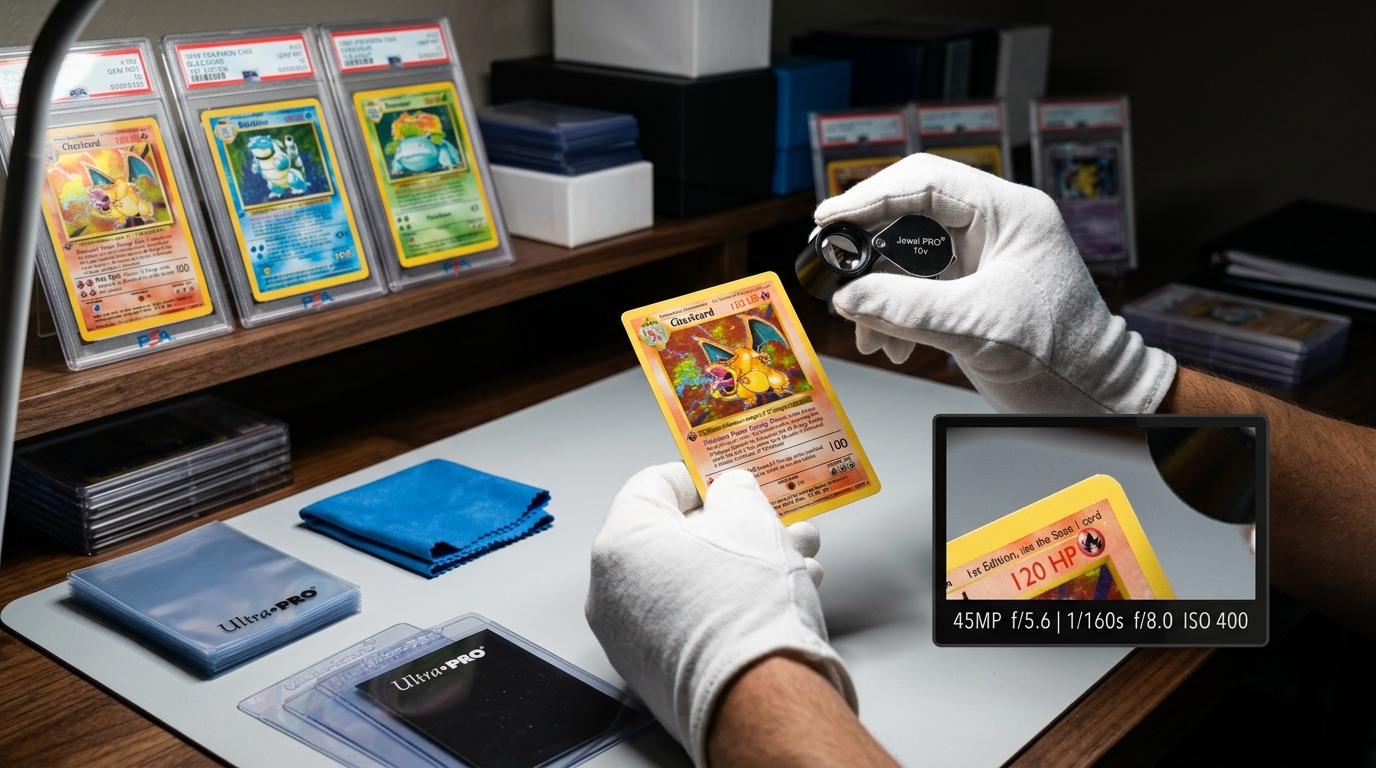
How to Grade Pokemon Cards: Step-by-Step 2026 Guide
Learn how to grade Pokemon cards in 2026 with this complete step-by-step guide covering PSA's paused Value tiers, the $79.99 minimum, pre-screening techniques, and when grading still makes financial sense.
Pokemon Price Tracker
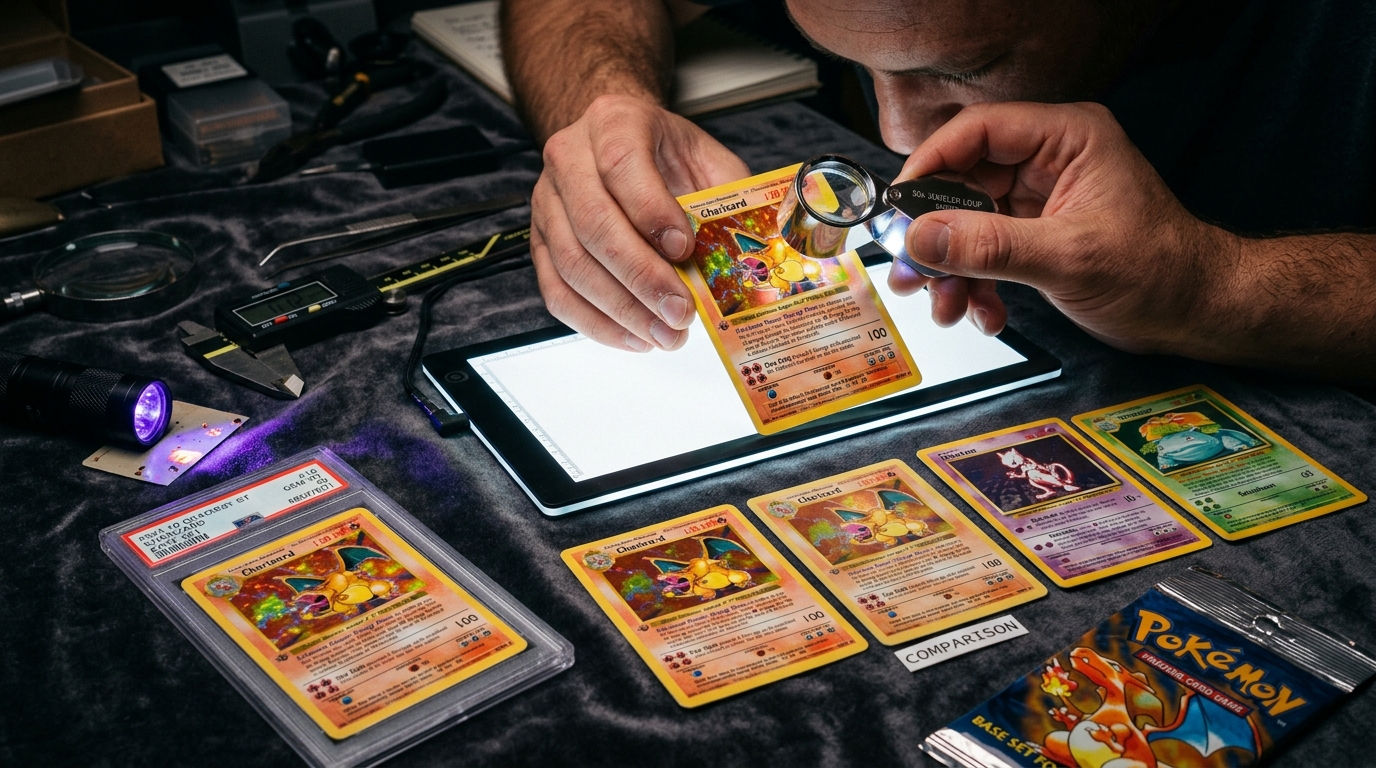
How to Spot Fake Pokemon Cards: 2026 Authentication Guide
Counterfeit Pokémon cards have reached new levels of sophistication in 2026, with fake Chaos Rising Mega Evolution ex cards, replica PSA slabs, and counterfeit sealed booster boxes flooding the market. This comprehensive 10-step authentication guide teaches collectors how to spot fakes using the lig
Pokemon Price Tracker

Best Pokemon Booster Boxes to Buy and Hold in 2026
From Evolving Skies to Japanese Pokemon 151, discover the best Pokemon booster boxes to buy and hold in 2026. Data-driven picks, portfolio strategy, and key metrics to watch for long-term sealed investors.
Pokemon Price Tracker
Stay Updated
Subscribe to our newsletter for the latest Pokemon card market trends, investment opportunities, and exclusive insights delivered straight to your inbox.