Best Pokemon Cards to Grade in 2026: ROI Calculator Guide
Pokemon Price Tracker
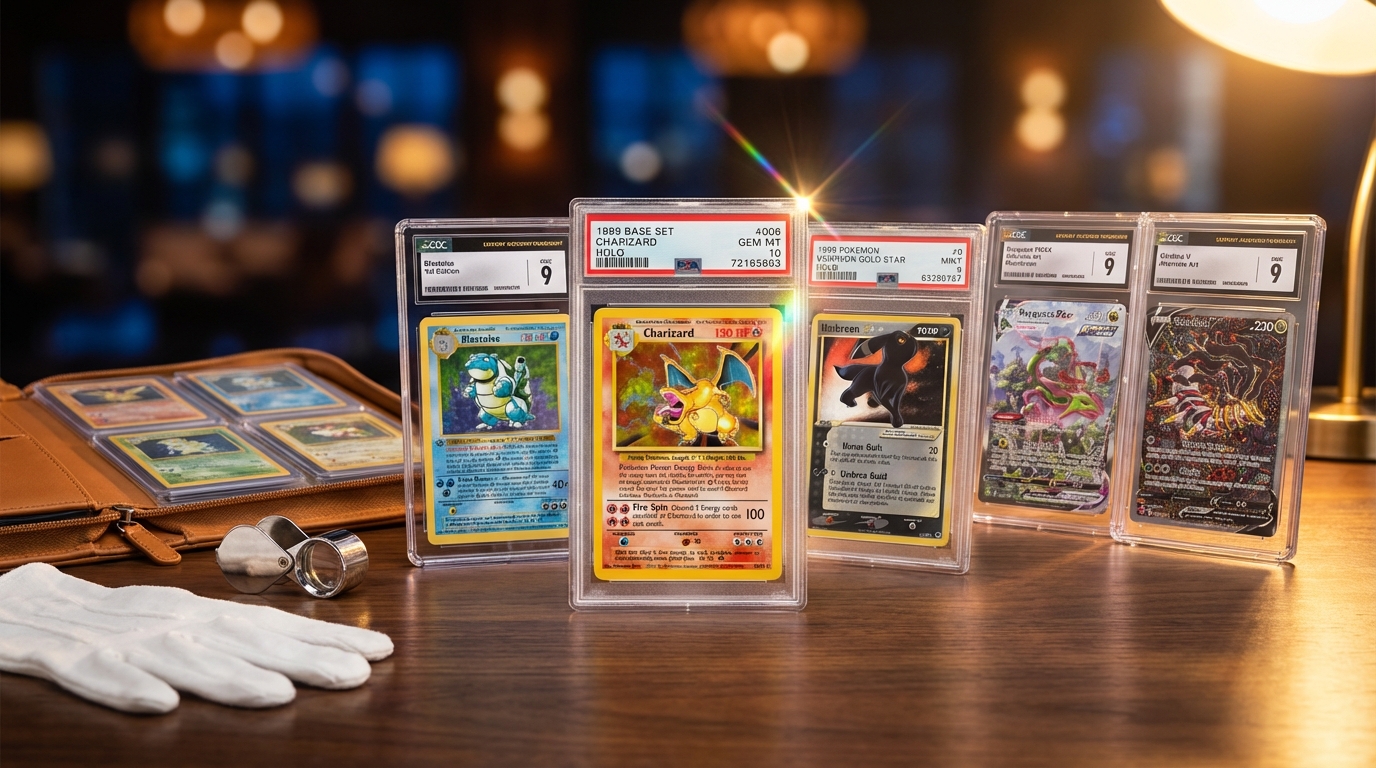
Best Pokemon Cards to Grade in 2026: ROI Calculator Guide
With Pokemon's 30th anniversary driving unprecedented interest in 2026, collectors and investors face a critical question: which cards are actually worth the time and expense of professional grading? While grading can transform a $50 card into a $500 gem, it can just as easily turn a profit opportunity into a money-losing proposition.
The Pokemon TCG market has matured significantly since the pandemic boom, with prices stabilizing and creating genuine opportunities for strategic grading investments. However, success requires understanding which cards offer legitimate ROI potential and which will simply drain your wallet in grading fees.
This comprehensive guide breaks down the mathematics of grading profitability, identifies the specific cards worth submitting in 2026, and provides actionable strategies to maximize your return on investment.
Understanding Grading ROI: The Math Behind Profitable Submissions
Before submitting any card for grading, you need to understand the fundamental economics that determine whether you'll profit or lose money.
The ROI Formula
Grading ROI comes down to a simple calculation:
Profit = (Graded Card Value) - (Raw Card Cost + Grading Fee + Shipping/Insurance)
For a submission to be worthwhile, you need:
- Raw card cost: Your purchase price
- Grading fee: $15-$300 depending on service and turnaround
- Shipping/insurance: $10-$50 for safe transport
- Expected graded value: Must exceed all costs by meaningful margin
The $50 Raw Value Threshold
Industry data shows that cards valued below $50 in raw condition rarely justify grading costs. Here's why:
- $10 raw card → PSA 10 worth $30 = $20 gain - $25 grading cost = -$5 loss
- $50 raw card → PSA 10 worth $150 = $100 gain - $25 grading cost = +$75 profit
- $100 raw card → PSA 10 worth $400 = $300 gain - $25 grading cost = +$275 profit
The sweet spot for grading ROI typically starts at cards worth $50+ in raw near-mint condition, where PSA 10 grades can command 2-5x premiums for modern cards and 5-10x for vintage cards.
The PSA 10 vs PSA 9 Cliff
One of the most critical factors in grading ROI is the dramatic value difference between PSA 10 and PSA 9:
- PSA 10 cards represent the absolute best condition possible
- PSA 9 cards typically command only 30-50% of PSA 10 values
- This creates enormous risk: a single minor flaw drops your return by 50-70%
Example: A modern chase card might be worth $400 in PSA 10 but only $150 in PSA 9. If you paid $80 for the raw card and $20 for grading, your outcomes are:
- PSA 10: $400 - $100 = +$300 profit
- PSA 9: $150 - $100 = +$50 profit (83% less)
- PSA 8: Often worth less than raw cost
This is why only pristine cards with strong centering, sharp corners, and flawless surfaces should be submitted.
2026 Grading Service Comparison
Choosing the right grading company significantly impacts your ROI. Here's how the major services compare in 2026:
PSA (Professional Sports Authenticator)
Pricing:
- Value tier: $21.99/card (Collectors Club members, $99/year membership)
- Regular: $50/card
- Express: $150/card
- Super Express: $300/card
Pros:
- Highest resale values (10-20% premium over competitors)
- Most recognized brand globally
- Best for vintage and high-value cards
Cons:
- Most expensive base pricing
- Longer turnaround times at lower tiers
- Requires membership for best rates
CGC (Certified Guaranty Company)
Pricing (January 2026 update):
- Bulk: $15/card (20+ cards)
- Economy: $18/card
- Standard: $55/card
- Express: $100/card
Pros:
- Best cost efficiency for bulk submissions
- Excellent holder quality with protective case
- Growing market acceptance
Cons:
- 10-15% lower resale values vs PSA
- Less brand recognition among casual buyers
BGS (Beckett Grading Services)
Pricing:
- Basic: $14.95/card (45+ day turnaround)
- Standard: $30/card
- Subgrade service: +$3/card
Pros:
- Subgrades provide detailed condition breakdown
- BGS 10 "Black Label" commands premium prices
- Strong reputation for grading standards
Cons:
- BGS 10 extremely difficult to achieve
- Most cards fall into 9-9.5 range
- Subgrades add cost without always adding value
ROI Recommendation by Card Type
- Vintage cards ($500+ raw): PSA for maximum resale value
- Modern cards ($100-500 raw): CGC for cost efficiency, PSA if targeting high-end collectors
- Bulk modern ($50-100 raw): CGC bulk tier offers best ROI
- Ultra-premium cards ($5,000+ raw): PSA express service justified by value
Top Modern Cards Worth Grading in 2026
The modern market offers the most accessible grading opportunities for collectors. Here are the cards showing strongest ROI potential:
Illustration Rare & Special Illustration Rare Cards
The Scarlet & Violet era's premium pull rates have created a tiered market where pristine examples command significant premiums:
Giratina VSTAR (Crown Zenith)
- Raw NM: $80-$120
- PSA 10: $300-$400
- ROI potential: 200-250%
- Why grade: Stunning artwork, competitive playability, limited print window
Charizard ex SAR (Obsidian Flames)
- Raw NM: $150-$200
- PSA 10: $500-$700
- ROI potential: 230-280%
- Why grade: Charizard premium, beautiful illustration, set chase card
Iono SAR (Paldea Evolved)
- Raw NM: $100-$140
- PSA 10: $350-$450
- ROI potential: 220-250%
- Why grade: Playable supporter, character popularity, clean design grades well
Alternate Art Cards (Sword & Shield Era)
Sword & Shield alternate arts remain strong grading candidates as the era moves into "modern vintage" status:
Umbreon VMAX Alt Art (Evolving Skies)
- Raw NM: $250-$350
- PSA 10: $800-$1,200
- ROI potential: 220-270%
- Why grade: Most iconic modern card, Umbreon popularity, print quality issues make PSA 10 scarce
Rayquaza VMAX Alt Art (Evolving Skies)
- Raw NM: $200-$280
- PSA 10: $600-$900
- ROI potential: 200-250%
- Why grade: Dragon-type premium, stunning artwork, Evolving Skies scarcity
Moonbreon (Umbreon VMAX Alt Art)
- Raw NM: $300-$400
- PSA 10: $1,000-$1,500
- ROI potential: 230-280%
- Why grade: Nickname recognition, strongest modern alt art, proven track record
Mega Evolution Series (2026 Release)
The new Mega Evolution series launched in 2026 as the largest English set ever with 290+ cards. Early chase cards showing grading potential:
Mega Charizard X (Full Art)
- Raw NM: $90-$130
- PSA 10 projection: $350-$500
- ROI potential: 270-320%
- Why grade: New mechanic nostalgia, Charizard factor, fresh release means fewer graded copies
Mega Lucario (Secret Rare)
- Raw NM: $70-$100
- PSA 10 projection: $250-$350
- ROI potential: 240-280%
- Why grade: Fan-favorite Pokemon, competitive potential, clean card design
Top Vintage Cards Worth Grading in 2026
Vintage cards offer the highest ROI multipliers but require more expertise to identify gradable candidates.
Base Set & Jungle (1999-2000)
Charizard (Base Set 4/102)
- Raw NM: $800-$1,500
- PSA 10: $25,000-$40,000
- ROI potential: 1,500-2,500%
- Why grade: Holy grail status, 30th anniversary boost, PSA 10 population remains under 5,000
Blastoise (Base Set 2/102)
- Raw NM: $300-$500
- PSA 10: $4,000-$7,000
- ROI potential: 800-1,300%
- Why grade: Starter nostalgia, cleaner print quality than Charizard makes PSA 10 achievable
Venusaur (Base Set 15/102)
- Raw NM: $250-$400
- PSA 10: $3,500-$5,500
- ROI potential: 900-1,200%
- Why grade: Completing starter trio, undervalued vs Charizard/Blastoise
Neo Genesis & Neo Destiny (2000-2001)
Lugia (Neo Genesis 9/111)
- Raw NM: $400-$600
- PSA 10: $5,000-$8,000
- ROI potential: 830-1,200%
- Why grade: Legendary bird premium, excellent artwork, Neo series appreciation
Shining Charizard (Neo Destiny 107/105)
- Raw NM: $1,500-$2,500
- PSA 10: $30,000-$50,000
- ROI potential: 1,400-2,000%
- Why grade: Original "shiny" cards, extreme scarcity in PSA 10 (under 200 population)
EX Era (2003-2007)
Gold Star Rayquaza (EX Deoxys 107/107)
- Raw NM: $2,000-$3,500
- PSA 10: $25,000-$40,000
- ROI potential: 900-1,400%
- Why grade: Gold Star rarity, dragon-type premium, low PSA 10 population
Charizard ex (Fire Red Leaf Green 105/112)
- Raw NM: $800-$1,200
- PSA 10: $8,000-$12,000
- ROI potential: 700-1,000%
- Why grade: EX era appreciation, Charizard factor, clean card design
Cards to Avoid Grading in 2026
Not every expensive or popular card makes a good grading candidate. Here are categories to avoid:
Low-Value Modern Bulk
Commons and uncommons under $5 raw
- Even PSA 10 rarely exceeds $15-20
- Grading costs eliminate any profit
- Exception: True vintage commons from Base Set may be worth grading for personal collection
Over-Graded Modern Cards
Cards with 10,000+ PSA 10 population
- Market saturation suppresses premiums
- Examples: Many Sun & Moon holos, standard V cards
- PSA 10 premium drops to 50-80% over raw when supply is high
Print Quality Problem Cards
Certain sets and cards have notorious quality control issues:
Evolving Skies regular holos
- Factory print lines plague this set
- Even "mint" cards often grade PSA 8-9
- High risk of losing money on grading fees
Fusion Strike full arts
- Centering issues extremely common
- PSA 10 rate estimated under 20% even for fresh pulls
- Better to sell raw unless absolutely perfect
Played Condition Vintage
Cards with visible wear rarely justify grading:
- PSA 6 and below typically sell for less than raw NM copies
- Grading costs eat into already-low values
- Exception: Ultra-rare cards like Charizard where authentication adds value even at low grades
Using the Grading ROI Calculator
To determine if a specific card is worth grading, you can use our grading calculator which factors in:
- Current raw card value - What you paid or current market price
- Expected grade - Be realistic; most cards grade PSA 9, not 10
- Graded card comps - Recent sold prices for that grade
- Grading service costs - Including shipping and insurance
- Time value - Turnaround time affects when you can sell
Step-by-Step ROI Calculation
Example: Umbreon VMAX Alt Art
- Raw card cost: $300 (purchase price)
- Grading fee: $22 (PSA Value tier with membership)
- Shipping/insurance: $15 (both ways, insured)
- Total investment: $337
- PSA 10 sold comps: $900-1,100 (use conservative $950)
- PSA 9 sold comps: $400-500 (use conservative $425)
- Estimated PSA 10 rate: 30% (based on card condition)
Expected value calculation:
- 30% chance PSA 10: 0.30 × $950 = $285
- 70% chance PSA 9: 0.70 × $425 = $297.50
- Expected graded value: $582.50
- Expected profit: $582.50 - $337 = +$245.50 (73% ROI)
This positive expected value makes it a good grading candidate, even accounting for the risk of PSA 9.
Maximizing Your Grading ROI: Advanced Strategies
1. Buy Raw Cards Strategically
The best grading profits come from buying undervalued raw cards:
Where to find deals:
- Local card shops (less price-efficient than online)
- Facebook Marketplace and OfferUp (negotiate bulk deals)
- Estate sales and garage sales (vintage goldmines)
- Collection buyouts (requires capital but best margins)
What to look for:
- Cards listed as "NM" by non-experts (often better than described)
- Bulk lots where seller doesn't recognize value
- Cards in toploaders that show good centering in photos
- Vintage cards from original collectors (often better storage)
2. Master Card Evaluation
Developing an eye for gradable cards is crucial:
Centering requirements for PSA 10:
- Front: 60/40 or better (left-right and top-bottom)
- Back: 75/25 or better
- Use a ruler or centering tool to measure borders
Corner inspection:
- Use a jeweler's loupe (10x magnification)
- Look for any whitening or fraying
- Even microscopic wear can drop to PSA 9
Surface examination:
- Check under bright light at multiple angles
- Look for scratches, print lines, or indentations
- Holo cards: check for scratching on foil
3. Timing Your Submissions
Best times to grade:
- January-March: Lower submission volumes, faster turnarounds
- After set rotation: Competitive cards gain value when rotated out
- Before major anniversaries: 2026's 30th anniversary creates urgency
Worst times to grade:
- November-December: Holiday rush creates 2-3 month delays
- Immediately after major releases: Wait for market to stabilize
- During grading company backlogs: Check current turnaround times
4. Bulk Submission Strategies
Maximize efficiency with bulk orders:
CGC bulk tier benefits:
- $15/card for 20+ cards (vs $18 economy)
- Submit 20 cards worth $50-100 raw each
- Total cost: $300 grading + $50 shipping = $350
- If 30% grade 10 and 70% grade 9, still profitable on most cards
Diversification approach:
- Don't submit 20 copies of same card
- Mix vintage and modern
- Include some "safe" cards likely to grade well
- Include a few high-risk, high-reward cards
2026 Market Factors Affecting Grading ROI
Pokemon's 30th Anniversary Impact
The 30th anniversary in 2026 is driving several trends:
Vintage card surge:
- Base Set, Jungle, and Fossil seeing 30-50% price increases
- PSA 10 populations remain limited, driving premiums higher
- Nostalgia factor bringing adult collectors back to hobby
Anniversary product releases:
- Special anniversary sets creating new chase cards
- Reprints of classic cards with modern design elements
- Increased media attention driving mainstream interest
Mega Evolution Series Launch
The new Mega Evolution series (290+ cards) creates unique opportunities:
Early grading advantage:
- Few graded copies exist in first 3-6 months
- Early PSA 10s command premium prices
- Population reports show scarcity, driving values
Risk factors:
- New sets can crash in value after initial hype
- Print runs may be larger than expected
- Grade only clear chase cards, not bulk holos
Market Stabilization Post-Pandemic
The market has matured significantly:
Positive factors:
- Scalpers largely exited, reducing artificial demand
- Serious collectors dominate market, supporting stable prices
- Graded card premiums becoming more consistent
Considerations:
- Fewer "moonshot" gains than 2020-2021
- More realistic pricing makes ROI calculations more reliable
- Quality over quantity approach works better
Common Grading Mistakes to Avoid
Mistake #1: Grading Based on Raw Value Alone
The error: "This card is worth $200 raw, so I should grade it!"
Why it fails: Raw value doesn't predict grading ROI. A $200 card that commonly grades PSA 9 might only be worth $250 graded, losing money after fees.
Solution: Research actual graded comps for the specific card. Check population reports to see grade distribution.
Mistake #2: Overestimating Card Condition
The error: "This looks perfect to me, definitely a PSA 10!"
Why it fails: Most collectors overestimate condition by 1-2 grades. Your "PSA 10" is likely a PSA 8-9.
Solution: Be brutally honest. If you see any flaws, assume PSA 9 at best. Only grade cards that are truly flawless.
Mistake #3: Grading Non-Chase Cards
The error: "I'll grade all my holos from this set!"
Why it fails: Only chase cards and key holos command meaningful grading premiums. Bulk holos rarely justify costs.
Solution: Focus on set chase cards, popular Pokemon, and cards with competitive playability.
Mistake #4: Ignoring Population Reports
The error: Submitting cards without checking how many are already graded.
Why it fails: Cards with 10,000+ PSA 10 population see minimal premiums due to oversupply.
Solution: Check population data before submitting. Target cards with under 1,000 PSA 10 population for modern, under 100 for vintage.
Mistake #5: Using Wrong Grading Service
The error: "BGS is cheapest, I'll use them for everything!"
Why it fails: Different services excel with different card types. PSA commands highest premiums for vintage; CGC offers best bulk efficiency for modern.
Solution: Match service to card type and value. PSA for vintage and premium modern, CGC for bulk modern submissions.
Building a Profitable Grading Portfolio
Think of grading as an investment portfolio requiring diversification:
Conservative Holdings (50-60% of budget)
Characteristics:
- Cards worth $100-300 raw
- Strong PSA 10 premiums (2-3x raw value)
- Popular Pokemon with proven demand
- Lower risk of losing money
Examples:
- Modern alt arts from Sword & Shield
- Scarlet & Violet Special Illustration Rares
- Base Set holos (Blastoise, Venusaur, Alakazam)
Moderate Risk (30-40% of budget)
Characteristics:
- Cards worth $300-800 raw
- Higher PSA 10 premiums (3-5x raw value)
- Requires good condition assessment skills
- Moderate competition in graded market
Examples:
- Neo series holos (Lugia, Typhlosion)
- EX era ex cards
- Modern chase cards (Moonbreon, Giratina VSTAR)
High Risk/High Reward (10-20% of budget)
Characteristics:
- Cards worth $1,000+ raw
- Extreme PSA 10 premiums (5-20x raw value)
- Very difficult to find in gradable condition
- Significant capital required
Examples:
- Base Set Charizard
- Gold Star cards
- Shining cards from Neo Destiny
- Crystal cards from Aquapolis/Skyridge
Conclusion: Strategic Grading in 2026
Grading Pokemon cards can be highly profitable in 2026, but success requires a strategic, data-driven approach. The key takeaways:
Core principles:
- Only grade cards worth $50+ raw that appear truly mint
- Understand the PSA 10 vs PSA 9 value cliff before submitting
- Choose the right grading service for each card type
- Calculate expected value accounting for grade probability
- Focus on chase cards with proven demand and limited PSA 10 populations
2026-specific opportunities:
- Pokemon's 30th anniversary driving vintage card appreciation
- Mega Evolution series creating early grading opportunities
- Market stabilization making ROI calculations more reliable
- Modern alt arts and Special Illustration Rares offering accessible entry points
Risk management:
- Diversify across vintage and modern cards
- Be conservative in condition assessment
- Avoid over-graded cards with high PSA 10 populations
- Factor in all costs including shipping, insurance, and time value
The collectors and investors who succeed in grading are those who treat it as a calculated investment rather than a gamble. By using the strategies and card recommendations in this guide, you can identify genuine ROI opportunities while avoiding the common pitfalls that trap inexperienced graders.
Remember: the goal isn't to grade everything you own—it's to grade the right cards at the right time for maximum profitability. Start with a few high-confidence submissions, learn from the results, and scale your grading operation as your expertise grows.
Note: Past performance does not guarantee future results. Always do your own research before making investment decisions.
Tags:
Pokemon Price Tracker
Market Analyst
Related Articles
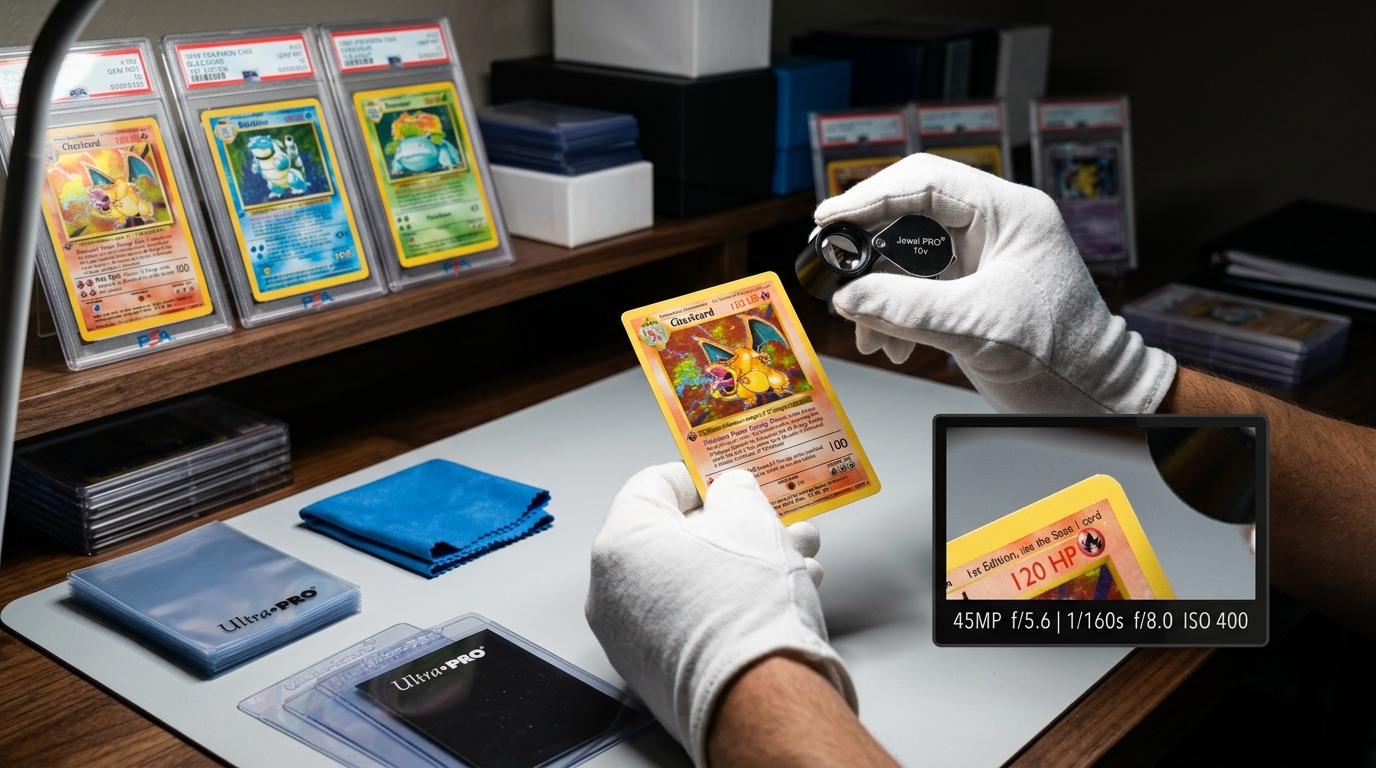
How to Grade Pokemon Cards: Step-by-Step 2026 Guide
Learn how to grade Pokemon cards in 2026 with this complete step-by-step guide covering PSA's paused Value tiers, the $79.99 minimum, pre-screening techniques, and when grading still makes financial sense.
Pokemon Price Tracker
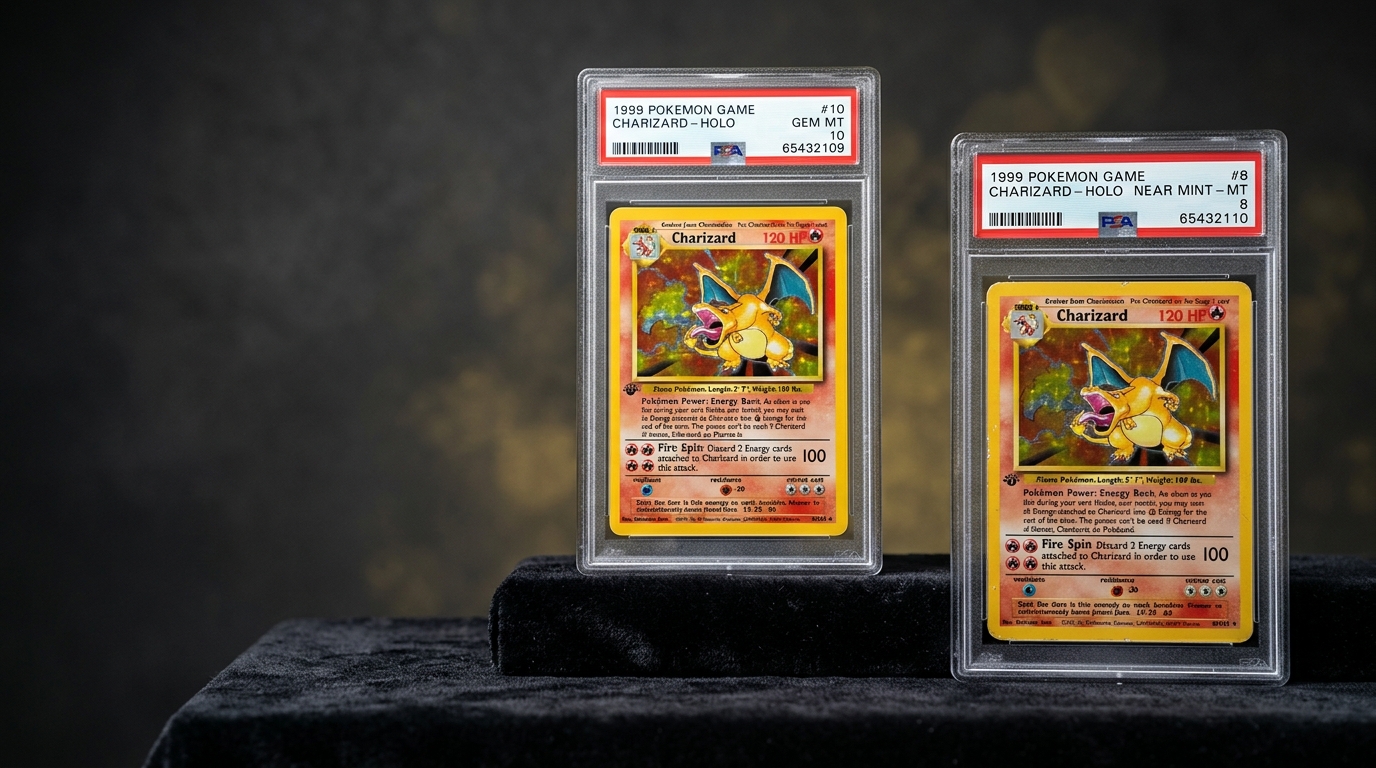
PSA 10 vs PSA 9: 2026 Price Gap Analysis & ROI Data
PSA 10s command 3x to 20x more than PSA 9s in 2026, but the gap varies wildly by card and era. We break down real sales data, ROI frameworks, and when grading actually makes financial sense.
Pokemon Price Tracker
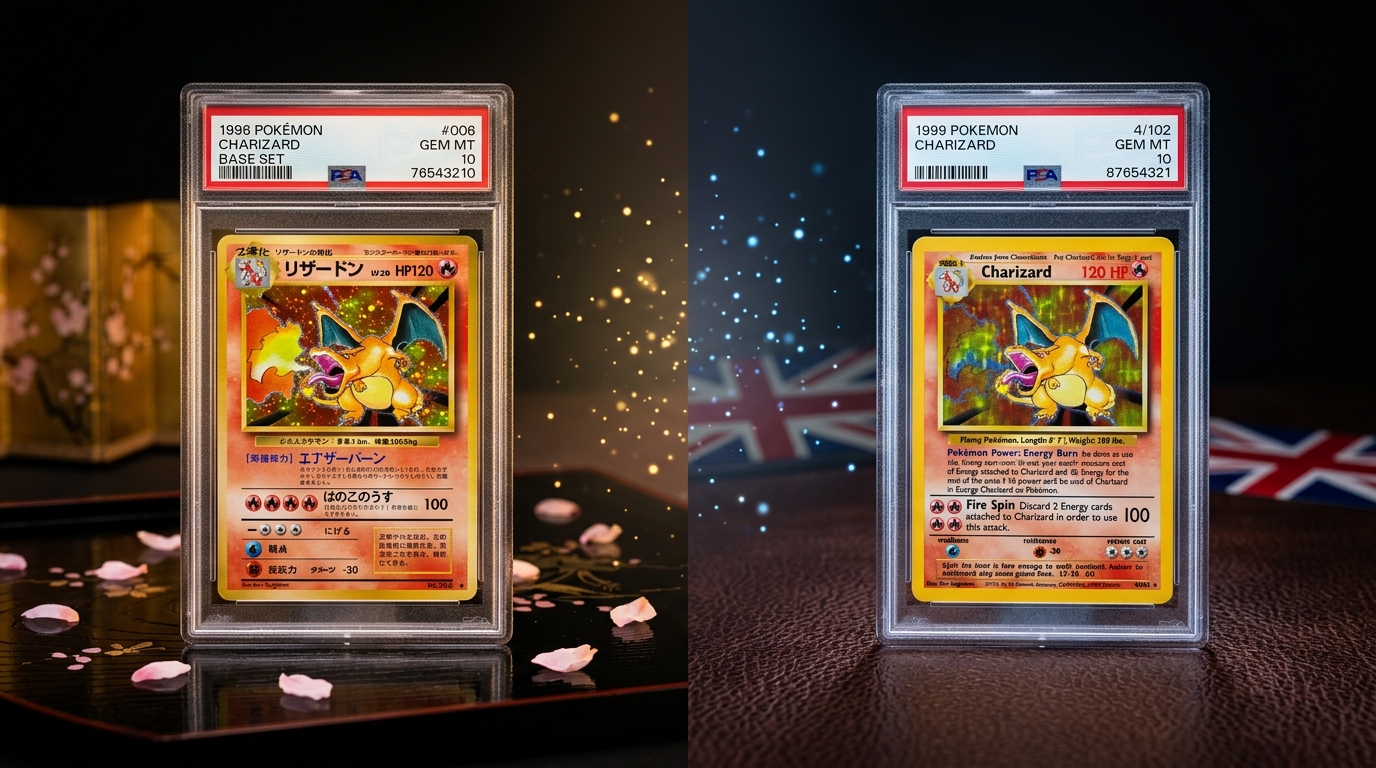
Japanese vs English Pokemon Cards: Which Holds Value in 2026?
The Japanese vs English Pokemon card debate has fundamentally shifted in 2026. Japanese PSA 10s now command 20-40% premiums over English equivalents, while raw English cards still cost 2x-6x more. Here's how to navigate both markets strategically.
Pokemon Price Tracker
Stay Updated
Subscribe to our newsletter for the latest Pokemon card market trends, investment opportunities, and exclusive insights delivered straight to your inbox.