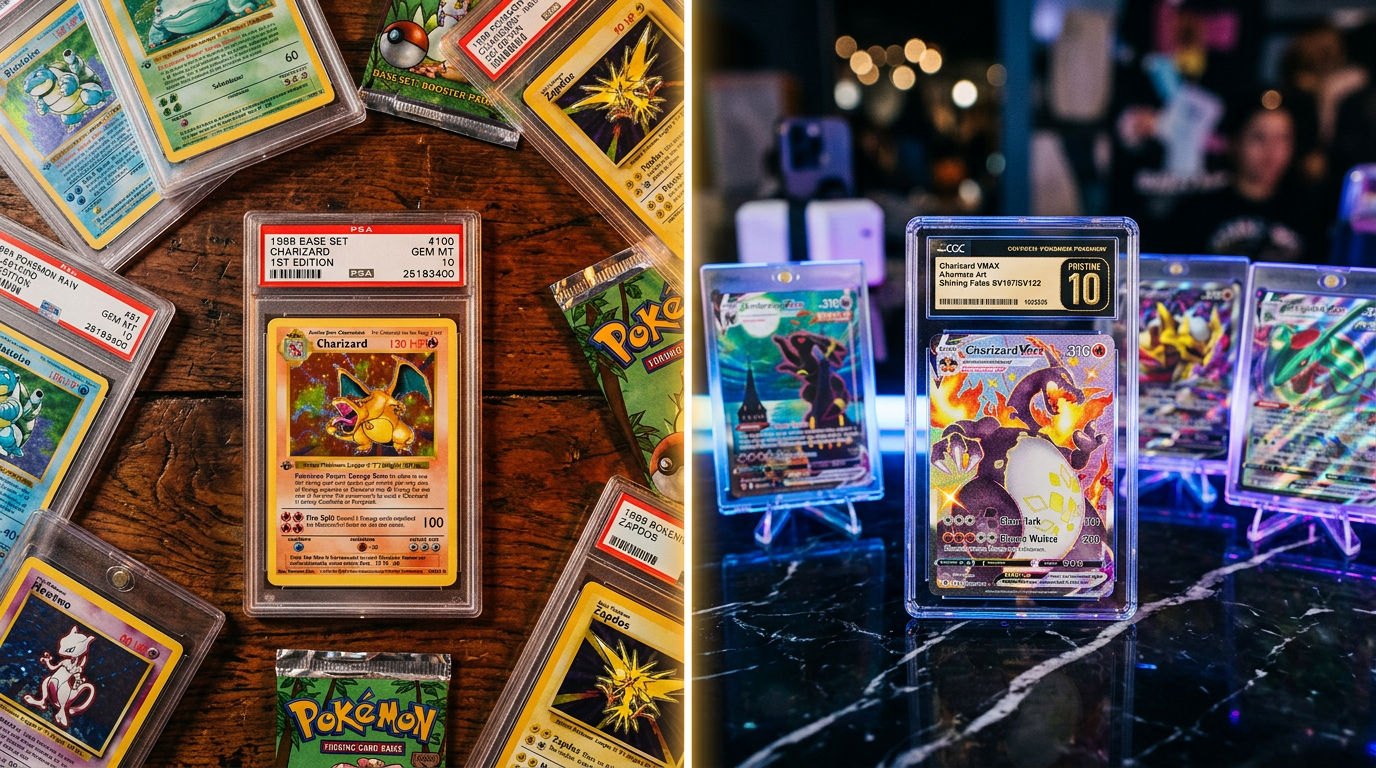
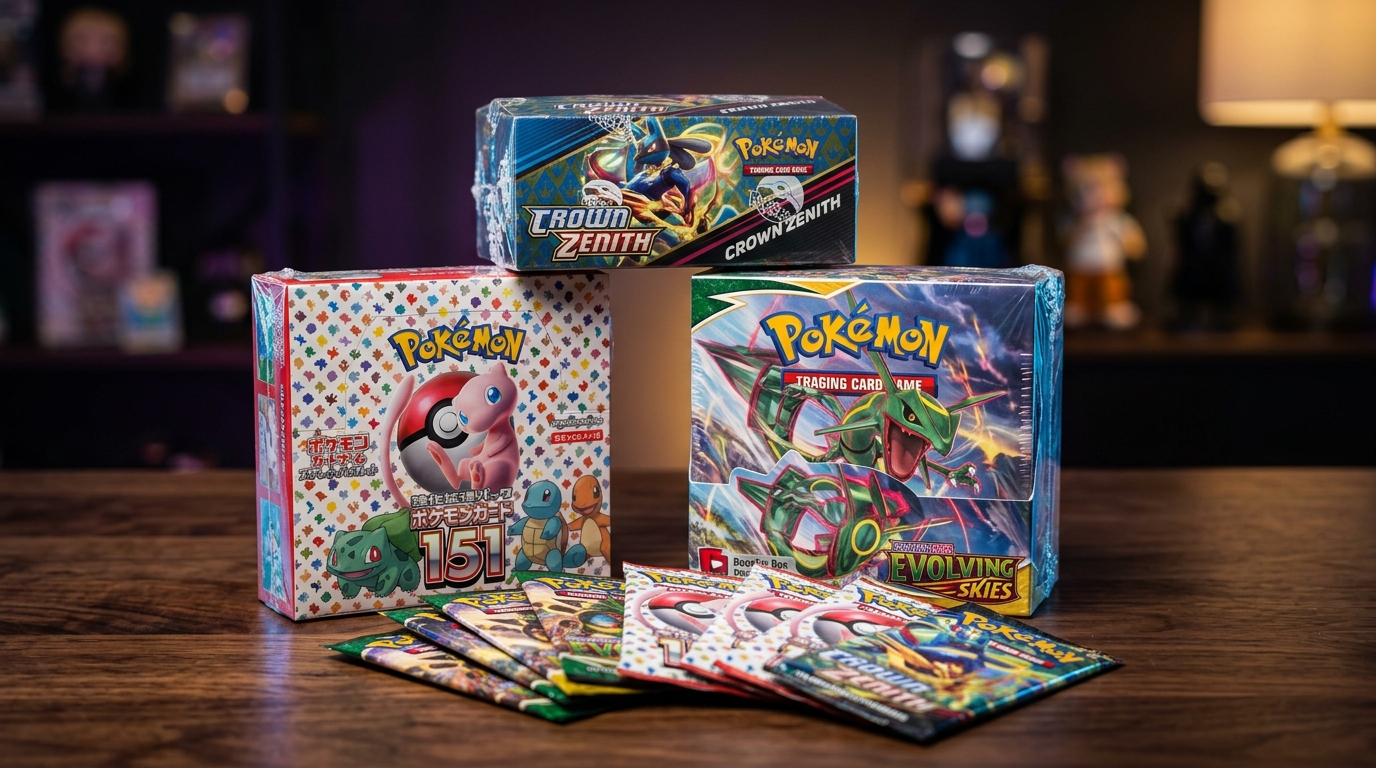
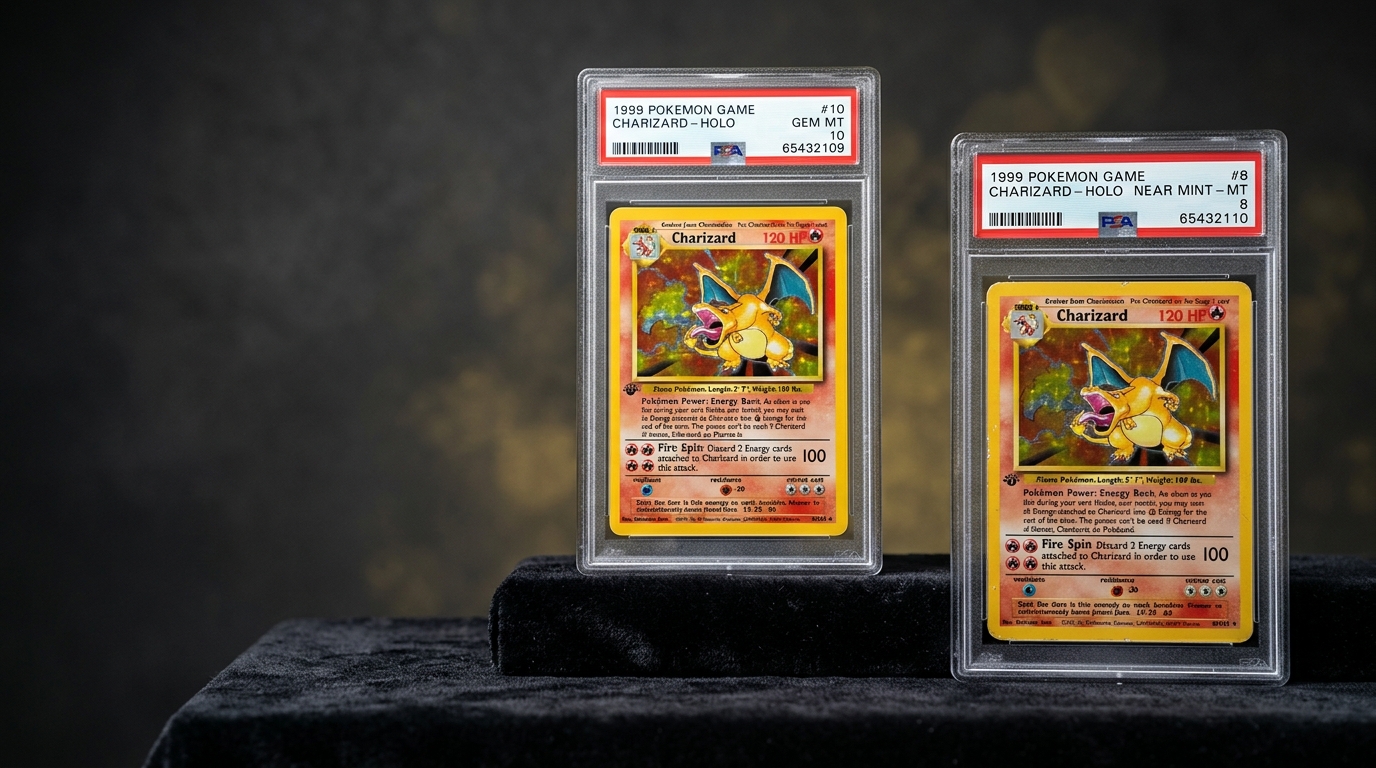
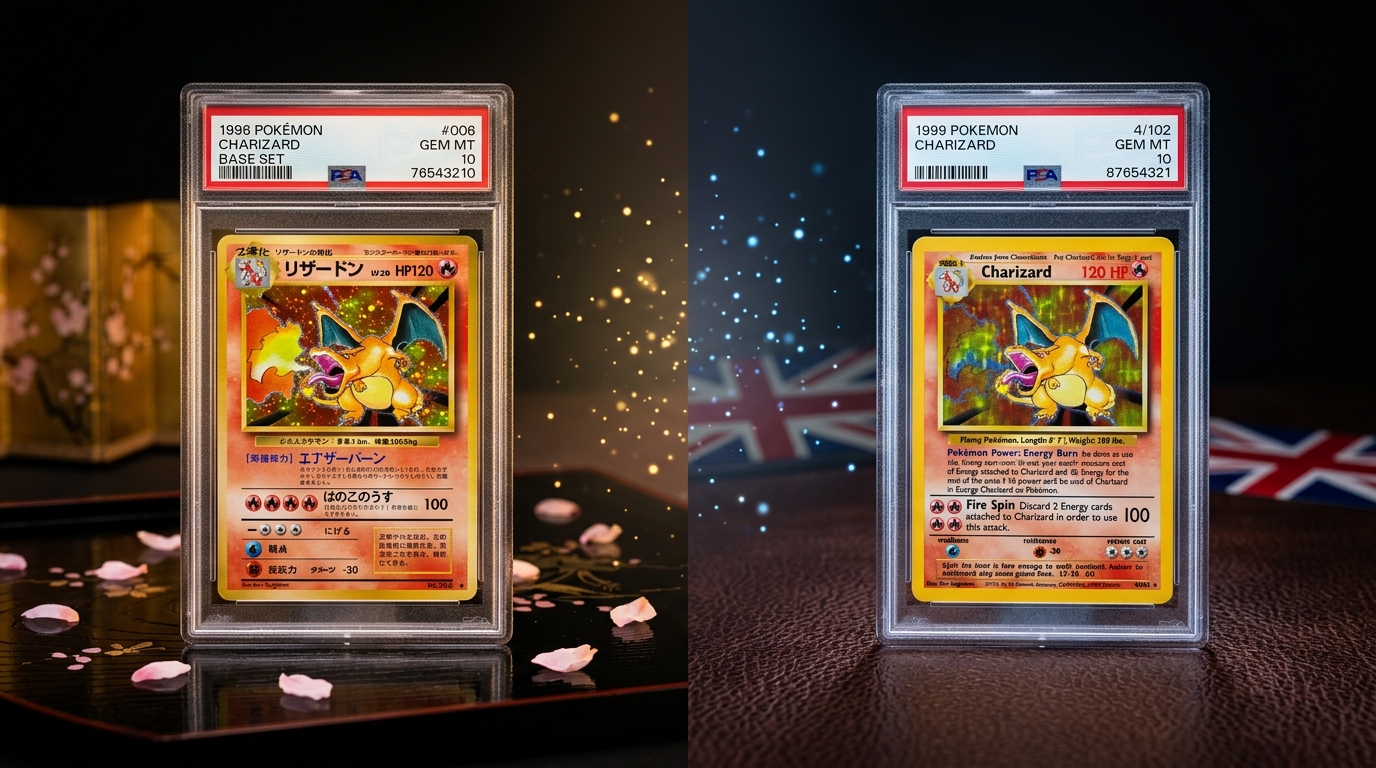
The Pokemon TCG market has evolved into a $2.7 billion annual ecosystem in 2026, and investors are facing a defining question: should you put your money into vintage Wizards of the Coast cards from 1998-2003, or chase the explosive modern releases from 2020 onward? With the 30th anniversary celebrations driving record-breaking sales and buyers spending over $450 million on cards in early 2026 alone, the stakes have never been higher.
This guide breaks down both markets with data-driven analysis, real price examples, and actionable strategies to help you allocate capital intelligently — whether you're a patient long-term investor or a fast-moving flipper.
Before diving into vintage vs modern, it's worth understanding just how dramatically this hobby has transformed. The Pokemon TCG market has delivered a staggering 3,821% value increase since 2004, crushing the S&P 500's 483% growth over the same period. What was once dismissed as childhood nostalgia is now a serious alternative asset class.
Key 2026 market indicators:
- Total market size: $2.7 billion annually
- Q1 2026 spending: $450 million
- All-time record sale: $16.49 million (Pikachu Illustrator PSA 10, Goldin Auctions, February 2026)
- 30th anniversary catalysts: Multiple celebration sets driving renewed interest in both eras
This explosive growth has split the market into two distinct investment universes, each with its own rules, risks, and rewards.
Vintage Pokemon (1996-2003)
The vintage era covers the original Wizards of the Coast (WOTC) releases — Base Set, Jungle, Fossil, Team Rocket, Gym Heroes, Gym Challenge, Neo series, and the early E-Card sets. This is the era of 1st Edition Shadowless Charizards, Trophy Pikachus, and the legendary Illustrator card.
Vintage market characteristics:
- Naturally scarce due to print runs from 20+ years ago
- Driven primarily by nostalgia and historical significance
- Price range: $500 to $550,000+ for iconic PSA 10s
- Slower price movement, but more stable trajectories
- Population reports heavily favor lower-grade copies
Modern Pokemon (2020-2026)
The modern era is generally defined as Sword & Shield onward, though some collectors extend it back to Sun & Moon. This era is characterized by alternate art cards, special illustration rares, and aggressive print runs.
Modern market characteristics:
- High print runs but selective scarcity through chase cards
- Driven by illustration quality, character popularity, and competitive play
- Price range: $20 to $5,000 for most chase cards
- Highly liquid with active daily trading
- More volatile but more accessible to new investors
Why Vintage Continues to Outperform
Vintage Pokemon cards are the blue-chip stocks of the TCG world. They benefit from a phenomenon that modern cards simply cannot replicate: guaranteed and shrinking supply. Every year, more vintage cards are graded, damaged, or locked away in long-term collections, reducing the available pool.
Consider these vintage benchmarks in 2026:
| Card | Grade | 2020 Price | 2026 Price | Growth |
|---|
| 1st Edition Shadowless Charizard | PSA 10 | $35,000 | $420,000+ | ~1,100% |
| Base Set Charizard | PSA 10 | $4,500 | $18,000 | ~300% |
| 1st Edition Blastoise | PSA 10 | $3,000 | $14,500 | ~383% |
| Neo Genesis Lugia | PSA 10 | $2,800 | $11,000 | ~292% |
Strengths of Vintage Investing
- Scarcity is permanent — No reprints can dilute true 1st Edition or Shadowless populations
- Nostalgia premium — Original collectors now in their 30s-40s have peak disposable income
- Historical significance — These cards launched the entire franchise
- Lower volatility — Vintage corrections are typically shallower than modern crashes
- Trophy asset status — Iconic vintage cards function as alternative store-of-value assets
Risks of Vintage Investing
- High capital requirements — Quality vintage starts at $500+ and quickly scales to five and six figures
- Authentication risk — Counterfeits and trimmed cards are widespread
- Condition sensitivity — A PSA 9 vs PSA 10 can mean a 10x price difference
- Liquidity constraints — Selling a $50,000 card takes weeks, not hours
- Insurance and storage costs — Holding vintage requires real overhead
For anyone considering grading raw vintage cards to capture the PSA 10 premium, running the numbers through a Grading ROI Calculator is essential before submitting — the gap between grading cost and graded value determines whether the submission makes sense.
Why Modern Has Exploded
Modern Pokemon has become its own investment thesis, driven not by scarcity alone but by artistic merit and character demand. Special illustration rares, alternate arts, and Japanese exclusives have created a new collecting paradigm where a card released in 2024 can sell for $3,000 within months.
Notable modern performers in 2026:
| Card | Set | Release Price | 2026 Price |
|---|
| Umbreon VMAX Alt Art | Evolving Skies | $400 | $2,800+ |
| Charizard UPC | Ultra Premium Collection | $80 | $650 |
| Giratina V Alt Art | Lost Origin | $250 | $1,100 |
| Pikachu with Grey Felt Hat | Van Gogh Promo | $0 (free promo) | $850 |
Strengths of Modern Investing
- Low barrier to entry — Quality modern chase cards start around $20-50
- High liquidity — Active eBay, TCGPlayer, and Whatnot markets enable same-day exits
- Sealed product upside — Booster boxes and ETBs offer asymmetric returns post-rotation
- Cultural moments — Pokemon Presents, anniversaries, and game releases create predictable demand spikes
- Accessibility — You can build a meaningful modern portfolio with $1,000
Risks of Modern Investing
- Print run uncertainty — The Pokemon Company can extend prints, crushing scarcity premiums
- Volatility — Modern cards can drop 50% in weeks during hype cycles ending
- Set rotation — Competitive demand evaporates when sets leave Standard
- Saturation risk — Too many "chase" cards in modern sets dilutes individual demand
- Trend dependency — Modern relies more on cultural momentum than fundamental scarcity
Capital Efficiency
- Vintage: Requires $5,000+ to build a meaningful position
- Modern: Can build a diversified portfolio with $500-1,000
- Winner for small investors: Modern
Return Potential
- Vintage: Steady 15-25% annualized for blue-chips since 2020
- Modern: 50-300% gains on winners, but with significant losers
- Winner for high upside: Modern (with risk)
- Winner for risk-adjusted returns: Vintage
Liquidity
- Vintage: Days to weeks for high-end pieces; auction venues for trophies
- Modern: Minutes to hours on major platforms
- Winner: Modern
Knowledge Barrier
- Vintage: Requires expertise in print variations, centering standards, and authentication
- Modern: More straightforward but requires tracking constant new releases
- Winner for beginners: Modern
Long-Term Stability
- Vintage: Three decades of demonstrated demand growth
- Modern: Limited track record beyond 5-6 years
- Winner: Vintage
Rather than choosing one market entirely, most successful Pokemon investors blend both. Here are three frameworks based on investor profile:
The Conservative Collector (70% Vintage / 30% Modern)
Ideal for investors with $10,000+ capital and a 5-10 year horizon.
- 50% allocation to PSA 9-10 WOTC holofoils (Base Set, Jungle, Fossil)
- 20% allocation to graded Neo era cards
- 20% allocation to modern alternate arts with cultural staying power
- 10% allocation to sealed vintage product (booster boxes when authenticatable)
The Balanced Investor (50% Vintage / 50% Modern)
Ideal for investors with $3,000-10,000 capital and a 3-7 year horizon.
- 30% in mid-tier vintage (PSA 8-9 holos, key non-holos)
- 20% in sealed vintage product where authentication is reliable
- 25% in modern alternate art chase cards
- 25% in sealed modern booster boxes from premium sets
The Aggressive Trader (20% Vintage / 80% Modern)
Ideal for investors with $500-3,000 capital and a 1-3 year horizon.
- 20% in one or two key vintage cards as portfolio anchors
- 40% in modern chase cards from current sets
- 25% in sealed modern product positioned for post-rotation appreciation
- 15% in Japanese exclusive promos and chase cards
For any investor tracking specific cards across either era, monitoring price history over time reveals patterns that single snapshots miss — particularly the seasonality of demand spikes around Pokemon Presents and holiday releases.
One of the most overlooked strategies bridges both worlds: sealed product investing. Vintage sealed booster boxes have appreciated dramatically — a 1st Edition Base Set booster box that sold for $500 in 2005 commands $400,000+ in 2026. Modern sealed product offers a similar thesis on a shorter timeline, with sets like Evolving Skies booster boxes appreciating 400%+ since release.
The sealed advantage:
- No grading risk or condition uncertainty
- Eliminates individual card selection risk
- Compounds value as singles within the set appreciate
- Maintains pristine state if stored properly
Several factors will shape the modern vs vintage dynamic through the rest of 2026:
- 30th anniversary celebration sets — Direct reprints could pressure modern prices while reinforcing vintage scarcity
- Continued grading service expansion — More graded cards entering the market changes supply dynamics
- International market growth — Japanese, Korean, and European markets are scaling rapidly
- Macroeconomic conditions — Discretionary spending environment affects luxury collectibles
- Logan Paul-style high-profile sales — Trophy purchases continue to set price ceilings for the entire vintage market
Regardless of which side you favor, these errors destroy returns:
- Buying ungraded vintage from unknown sellers — Authentication risk is real
- Chasing modern hype at peak prices — FOMO buys rarely work out
- Ignoring centering on modern alt arts — A PSA 10 vs PSA 9 modern alt can be a 3x price difference
- Over-concentrating in one set — Even Evolving Skies has had drawdowns
- Neglecting storage — A water-damaged $5,000 card is worth zero
- Selling winners too early — The biggest gains in both markets come from patience
- Vintage Pokemon offers stability, proven appreciation, and trophy asset status — but demands significant capital and expertise
- Modern Pokemon offers accessibility, liquidity, and high upside — but carries higher volatility and print run risk
- The strongest portfolios in 2026 blend both markets based on capital, time horizon, and risk tolerance
- Sealed product offers a hybrid approach that mitigates some single-card risks
- The 30th anniversary creates unique tailwinds for both markets, but with different mechanisms
- Authentication, condition, and storage are non-negotiable regardless of era
Whether you lean vintage or modern, the Pokemon TCG market in 2026 offers more legitimate investment paths than at any point in its history. The collectors who built generational wealth from this hobby didn't pick one side — they understood both markets and allocated accordingly.
Note: Past performance does not guarantee future results. Always do your own research before making investment decisions. The Pokemon TCG market remains a discretionary collectible category subject to cultural, economic, and supply-side risks.