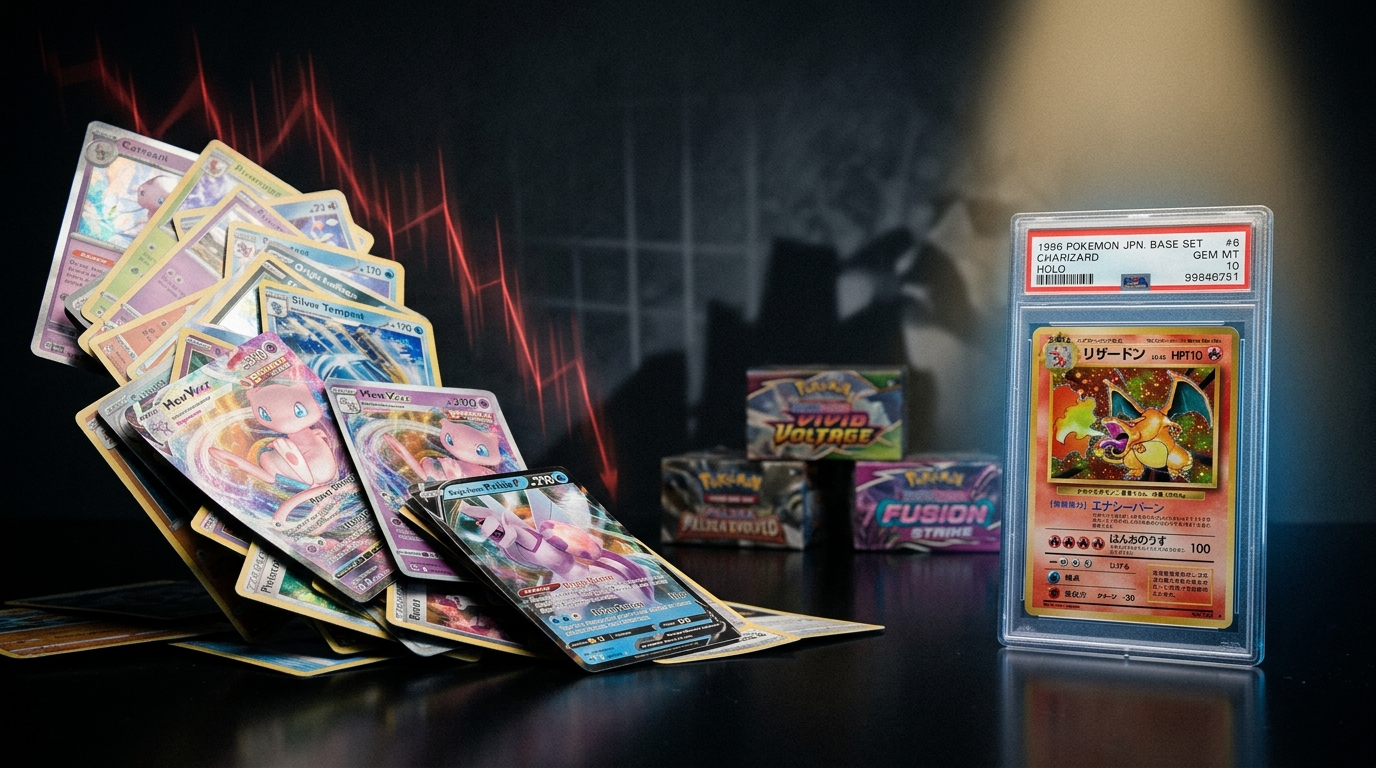
Pokemon Card Market Crash 2026: Signs and How to Prepare
Is the Pokemon card market crashing in 2026? It's the question every collector, investor, and shop owner is asking as modern card prices slide 20-50% from their peaks, sealed product values tumble, and Japanese card shops quietly shutter their doors. But before you panic-sell your collection, the data tells a more nuanced story.
What we're witnessing isn't necessarily a full-blown crash—it's a market correction. And the difference matters enormously for how you should respond. In this comprehensive analysis, we'll break down the warning signs, examine which segments are getting hit hardest, identify what's holding strong, and give you a clear playbook for protecting your collection through 2026.
The Current State of the Pokemon TCG Market in 2026
Let's start with the hard numbers. As of March 2026, the Pokemon TCG market remains a $2.7 billion annual ecosystem—hardly a dying industry. However, beneath that headline figure, significant turbulence is reshaping prices across nearly every category.
Here's what we know:
- Modern cards have dropped 20-45% from their 2024-2025 peaks due to overproduction
- Sealed products have declined 15-25% on average since March 2025
- Vintage cards continue setting records, headlined by Logan Paul's $16.5 million Pikachu Illustrator sale on February 16, 2026
- Japan's market is rapidly cooling, with shops closing across the country
- The long-term trajectory remains strong: 3,821% value increase since 2004, vastly outperforming the S&P 500's 483%
This is the textbook profile of a correction, not a collapse. But that doesn't mean collectors should ignore the warning signs.
Crash vs. Correction: Understanding the Difference
Before we dive into the warning signs, it's critical to understand what we're actually looking at.
A market crash typically involves a rapid, broad-based collapse in prices across nearly all asset categories, often accompanied by panic selling, liquidity crises, and a fundamental loss of confidence. Think 2008 housing or the 1999 baseball card collapse.
A market correction is a healthy pullback from speculative highs, usually 10-30%, that resets prices closer to sustainable fundamentals. Corrections often hit overheated segments hardest while leaving stronger assets relatively unscathed.
The 2026 Pokemon market is exhibiting classic correction behavior:
- Speculative modern cards down sharply
- Premium vintage holding or appreciating
- Sealed product prices normalizing after pandemic-era distortions
- New supply (more print runs, more graded cards) flooding hot segments
- Long-term trendlines still intact
7 Warning Signs the Market Is Cooling
1. Modern Card Prices Have Cratered 20-45%
The most obvious warning sign is the sustained slide in modern card values. Sets released in 2024 and 2025—particularly chase cards from heavily-printed expansions—have seen the steepest declines. The reason is simple economics: The Pokemon Company has dramatically increased print runs to meet demand, which has eroded the scarcity premium that drove prices upward.
2. Sealed Product Prices Are Tumbling
Sealed product was supposed to be the "safe" play. That thesis is being tested.
- Phantasmal Flames booster boxes dropped from $305 to $275 within ten days
- Elite Trainer Boxes fell from $120 to $90—a 25% reduction
- Average sealed product decline of 15-25% since March 2025
For years, sealed product was treated as a near-guaranteed appreciation play. The current data suggests that thesis only holds for products that go genuinely out of print and remain hard to source.
3. Post-Holiday Selling Pressure
January and February 2026 brought additional pain. Post-holiday periods historically push prices down another 15-25% as gift recipients offload unwanted cards into a saturated secondary market. Combined with the Mega Evolution: Ascended Heroes launch on January 30, 2026, capital rotated away from older modern product toward the latest release—a classic sign of a chase-driven market.
4. Japan's Market Is Cooling Rapidly
Japan has been the leading indicator for Pokemon market sentiment for years. Right now, Japanese card prices are falling rapidly, making cards more accessible to children again—a return to the hobby's roots. More concerning: a significant number of Pokémon card shops have been quietly going out of business across Japan as the speculative boom dies out.
When the source market cools, Western markets typically follow within 6-12 months.
5. Graded Card Supply Is Exploding
PSA, CGC, and BGS have all dramatically increased throughput. Population counts for popular modern cards have surged, eroding the scarcity that justified graded premiums. A PSA 10 that was 1-of-2,000 last year might be 1-of-8,000 today—and the price reflects that.
Before submitting cards in this environment, it's more important than ever to run the numbers. Our Grading ROI Calculator lets you input the raw card value, grading fees, and expected grade outcomes to see if submission still makes financial sense.
6. Speculative Buyers Are Exiting
The flippers and short-term speculators who poured into Pokemon during 2020-2023 are largely gone. Auction sell-through rates on modern cards have dropped, and you can see this in eBay completed listings: more relisting, more best-offer activity, and longer time-to-sale.
7. Retail Margins Are Compressing
Local card shops and online retailers are reporting tighter margins as MSRP and street prices converge. When stores can't mark up product significantly above retail, it signals that downstream demand has weakened.
What's Still Holding Strong
It's not all doom and gloom. Several segments are not only holding value but actively appreciating in 2026.
Vintage Cards Are Setting Records
The ultra-high-end of the market is having one of its best years ever. Logan Paul's $16.5 million Pikachu Illustrator sale wasn't an isolated event—it represents continued strong demand for true grails. Base Set, Jungle, Fossil, and Team Rocket holos in high grades continue to command premiums.
True Scarcity Still Commands Premiums
Cards that are genuinely scarce—low population, no reprints possible, established cultural status—are largely insulated from the correction. This includes:
- WOTC-era PSA 10s
- Tournament promos with documented small print runs
- Pre-release stamped cards from early sets
- Error cards with verified scarcity
Iconic Modern Chase Cards
Specific modern cards with cultural staying power (think Charizard variants, key alt arts of beloved Pokemon) have held value better than the broader modern market. Pokemon attachment matters; generic chase cards are getting hit hardest.
How to Prepare: A Practical Playbook
Whether the correction deepens or stabilizes, here's how to position your collection.
1. Audit Your Collection Honestly
Start by understanding what you actually own at current market values—not what you paid, not what it was worth at peak. Track current prices systematically so you can spot trends early rather than discovering losses months after they've occurred.
Using tools like the price history charts on our dashboard gives you visibility into 30, 90, and 365-day trends, which is essential for distinguishing temporary dips from sustained declines.
2. Categorize Holdings by Risk Level
Divide your collection into tiers:
- Tier 1 (Lowest Risk): Vintage holos in high grades, true scarcity items, iconic cards
- Tier 2 (Moderate Risk): Modern alt arts of popular Pokemon, sealed product from out-of-print sets
- Tier 3 (Higher Risk): Recent modern chase cards, heavily-printed sealed product, speculative graded modern
This framework helps clarify which holdings to defend, which to potentially trim, and where to be cautious about adding more.
3. Reconsider New Grading Submissions
With population counts surging and graded premiums compressing, the math on grading has shifted dramatically. Cards that made sense to grade in 2024 may not pencil out in 2026.
Key questions to ask before submitting:
- What is the current PSA 10 price vs. raw NM price?
- What's the realistic probability of hitting a 10 (be honest)?
- How much has the PSA 10 population grown in the last 12 months?
- What are grading and shipping fees totaling?
4. Be Selective With New Purchases
This is not the time for indiscriminate buying. The collectors who emerge strongest from corrections are those who:
- Buy quality over quantity
- Focus on cards with multiple demand drivers (nostalgia, scarcity, Pokemon popularity)
- Avoid chasing the latest hot release
- Pay attention to long-term price trends, not 30-day spikes
5. Don't Panic Sell
Forced selling during corrections is how collectors realize losses. If you don't need the liquidity, holding through volatility is historically the right call for quality cards. Remember the 3,821% appreciation since 2004 happened through multiple corrections.
6. Watch Japan as a Leading Indicator
Japanese market conditions typically precede Western trends by 6-12 months. If you see Japan stabilize and prices firm up there, it's often an early signal for broader recovery. Conversely, continued weakness in Japan suggests more correction ahead.
7. Diversify Across Eras and Categories
If your entire collection is concentrated in modern sealed or recent chase cards, you're maximally exposed to the segments getting hit hardest. Spreading across vintage singles, sealed, modern, and Japanese cards can smooth volatility.
Will the Market Recover? What History Tells Us
No one can predict precisely when prices will stabilize, but historical patterns offer some perspective:
- The 1999-2000 Pokemon bubble took roughly 3-4 years to fully reset before sustained appreciation resumed
- The 2020-2021 pandemic spike took about 18-24 months to correct in most categories
- Each correction has been followed by a higher long-term trendline
The fundamentals supporting Pokemon as a collectible category remain intact: massive global brand recognition, multi-generational nostalgia, continued game and media releases, and a healthy player base. What's changing is the speculative froth—not the underlying asset class.
Most analysts expect modern card prices to stabilize sometime in 2026 as overproduction works through the system and weaker holders complete their selling. Vintage is likely to continue its slow, steady appreciation regardless of modern market conditions.
Red Flags That Would Signal a True Crash
While current conditions point to correction rather than crash, here's what would change that assessment:
- Vintage prices breaking down significantly (currently they're holding/rising)
- Major auction houses pulling back from Pokemon sales
- PSA, CGC, or BGS encountering serious financial trouble
- The Pokemon Company dramatically reducing TCG support
- A 50%+ decline in vintage Charizard and Base Set values
None of these are currently occurring. Until they do, the crash narrative remains overstated.
Key Takeaways
-
The 2026 Pokemon market is correcting, not crashing. Modern cards down 20-45%, sealed down 15-25%, but vintage at all-time highs.
-
Overproduction is the primary culprit for modern price declines. Scarcity has been eroded by larger print runs and surging graded populations.
-
Japan is the leading indicator. Continued weakness there suggests more correction time needed; stabilization would signal recovery.
-
Quality and true scarcity still win. Vintage, low-pop, and culturally iconic cards are weathering the correction well.
-
Grading economics have shifted. Run the numbers before submitting—what worked in 2024 may not work today.
-
Long-term fundamentals remain strong. A 3,821% gain since 2004 includes multiple corrections. The asset class has repeatedly proven resilient.
-
Position defensively, not fearfully. Audit, categorize, be selective, and avoid forced selling.
The Pokemon card market has survived—and ultimately thrived through—every previous correction. While 2026 has been a painful year for holders of modern speculative cards, the broader hobby remains healthy. Collectors who maintain discipline, focus on quality, and use data to guide decisions will be best positioned when the market finds its footing.
Note: Past performance does not guarantee future results. Always do your own research before making investment decisions. This article is for informational purposes only and does not constitute financial advice.
Pokemon Price Tracker
Market Analyst
Related Articles
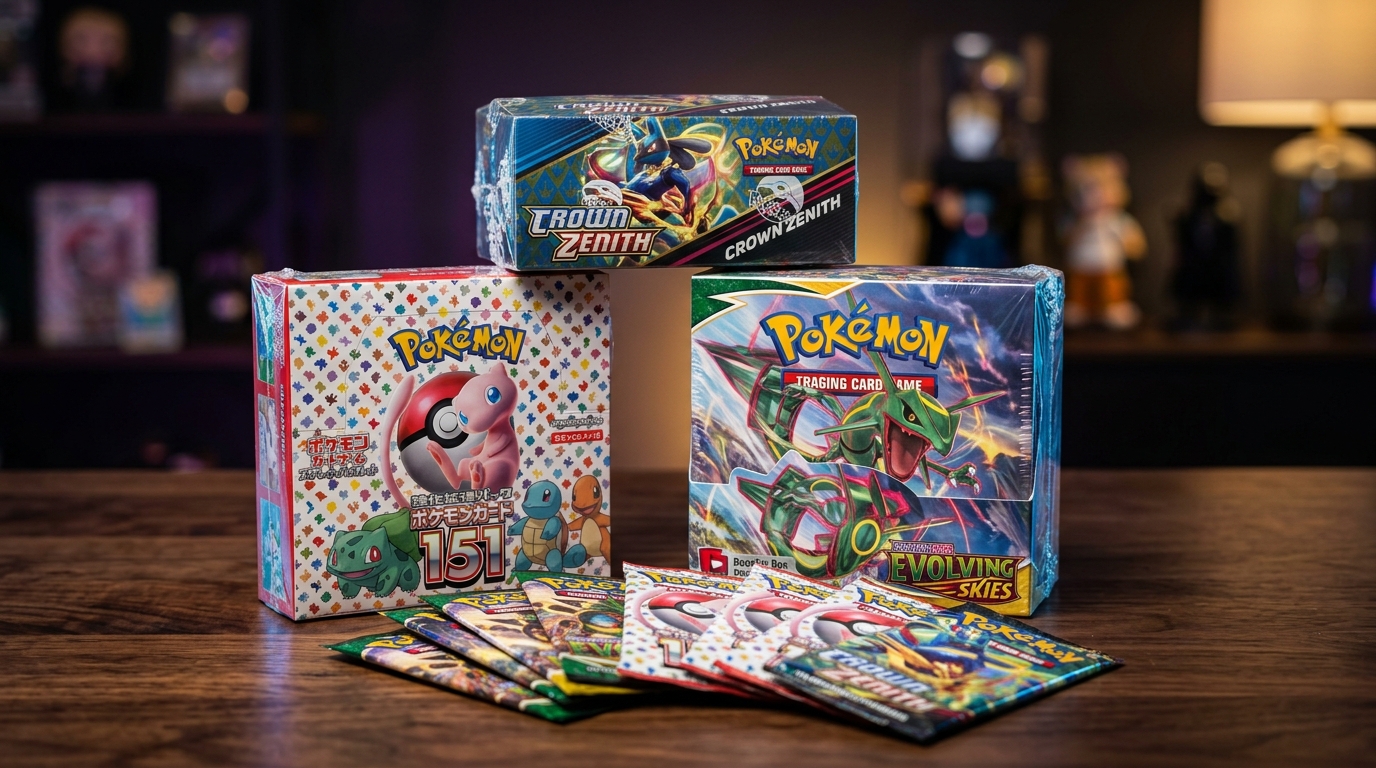
Best Pokemon Booster Boxes to Buy and Hold in 2026
From Evolving Skies to Japanese Pokemon 151, discover the best Pokemon booster boxes to buy and hold in 2026. Data-driven picks, portfolio strategy, and key metrics to watch for long-term sealed investors.
Pokemon Price Tracker
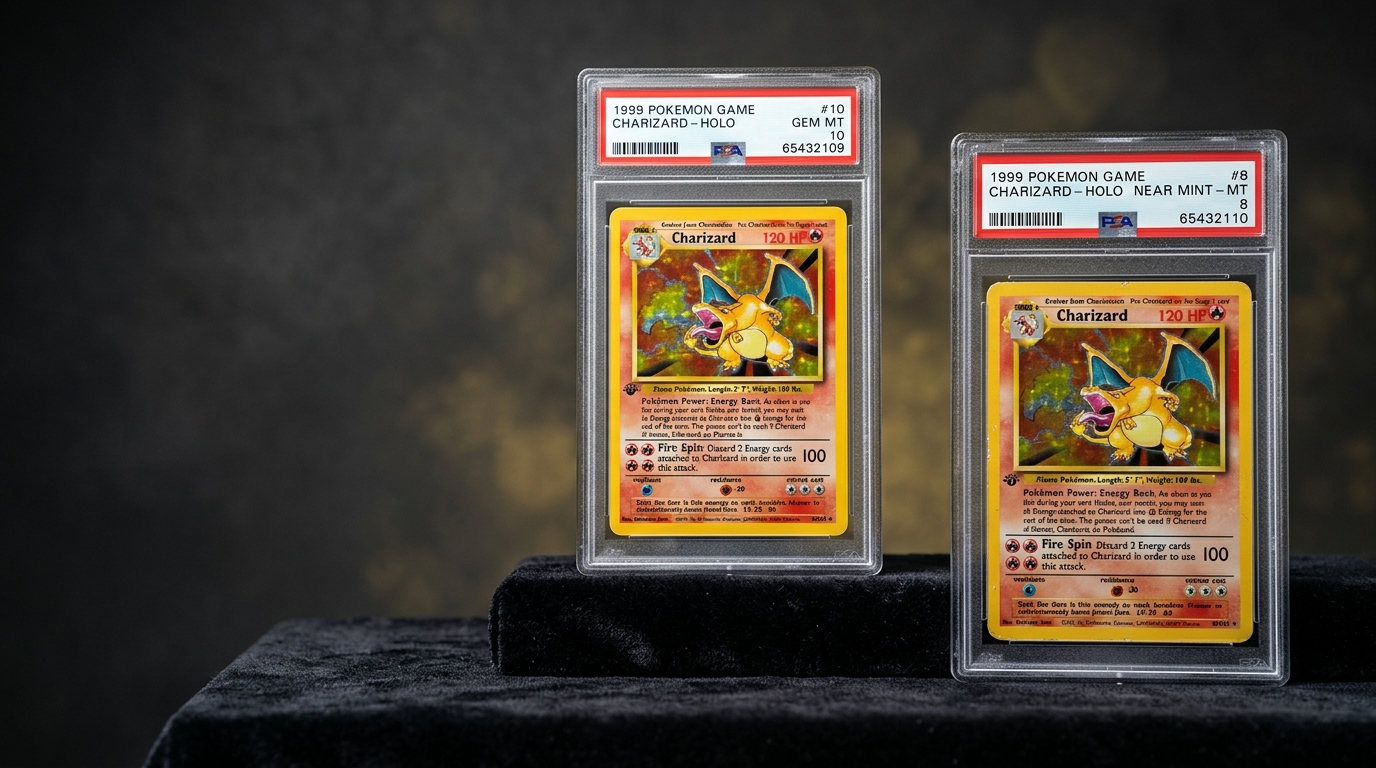
PSA 10 vs PSA 9: 2026 Price Gap Analysis & ROI Data
PSA 10s command 3x to 20x more than PSA 9s in 2026, but the gap varies wildly by card and era. We break down real sales data, ROI frameworks, and when grading actually makes financial sense.
Pokemon Price Tracker
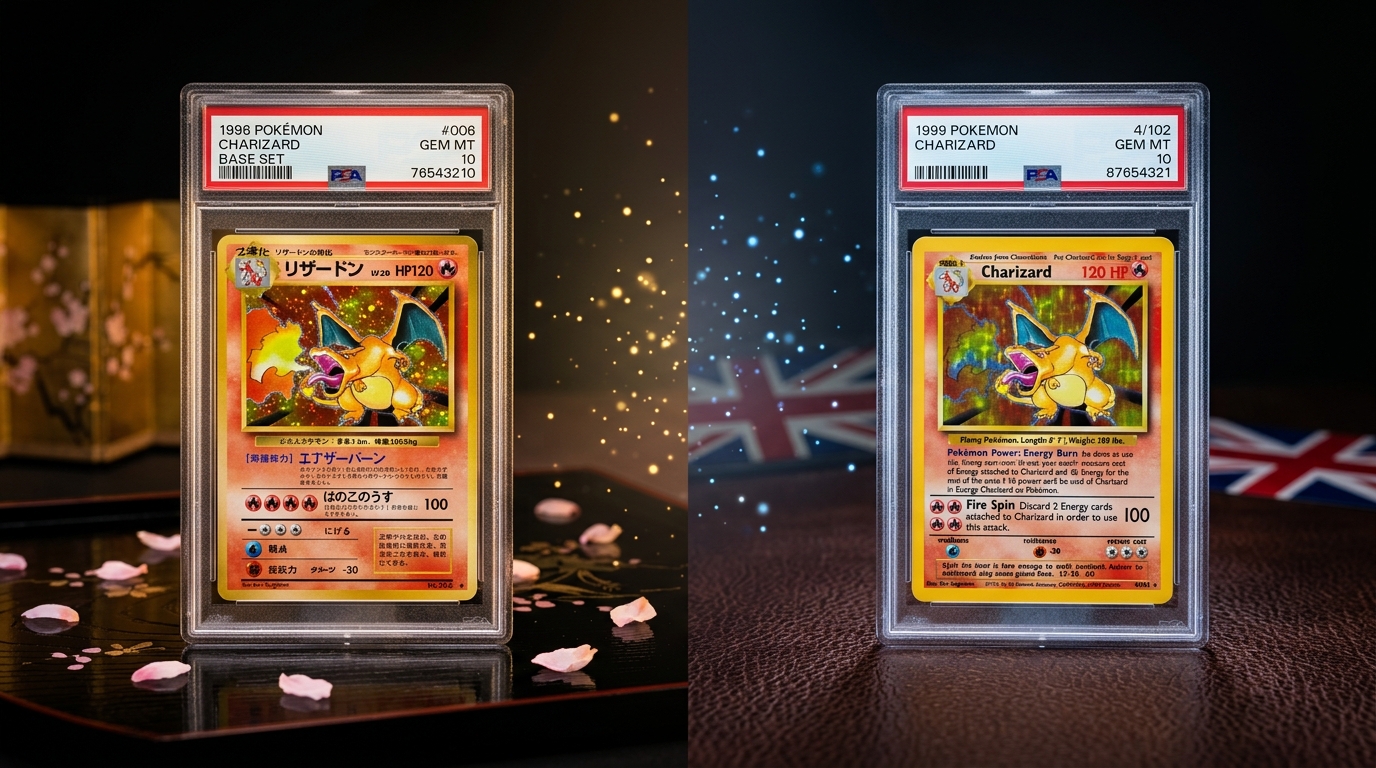
Japanese vs English Pokemon Cards: Which Holds Value in 2026?
The Japanese vs English Pokemon card debate has fundamentally shifted in 2026. Japanese PSA 10s now command 20-40% premiums over English equivalents, while raw English cards still cost 2x-6x more. Here's how to navigate both markets strategically.
Pokemon Price Tracker
Stay Updated
Subscribe to our newsletter for the latest Pokemon card market trends, investment opportunities, and exclusive insights delivered straight to your inbox.