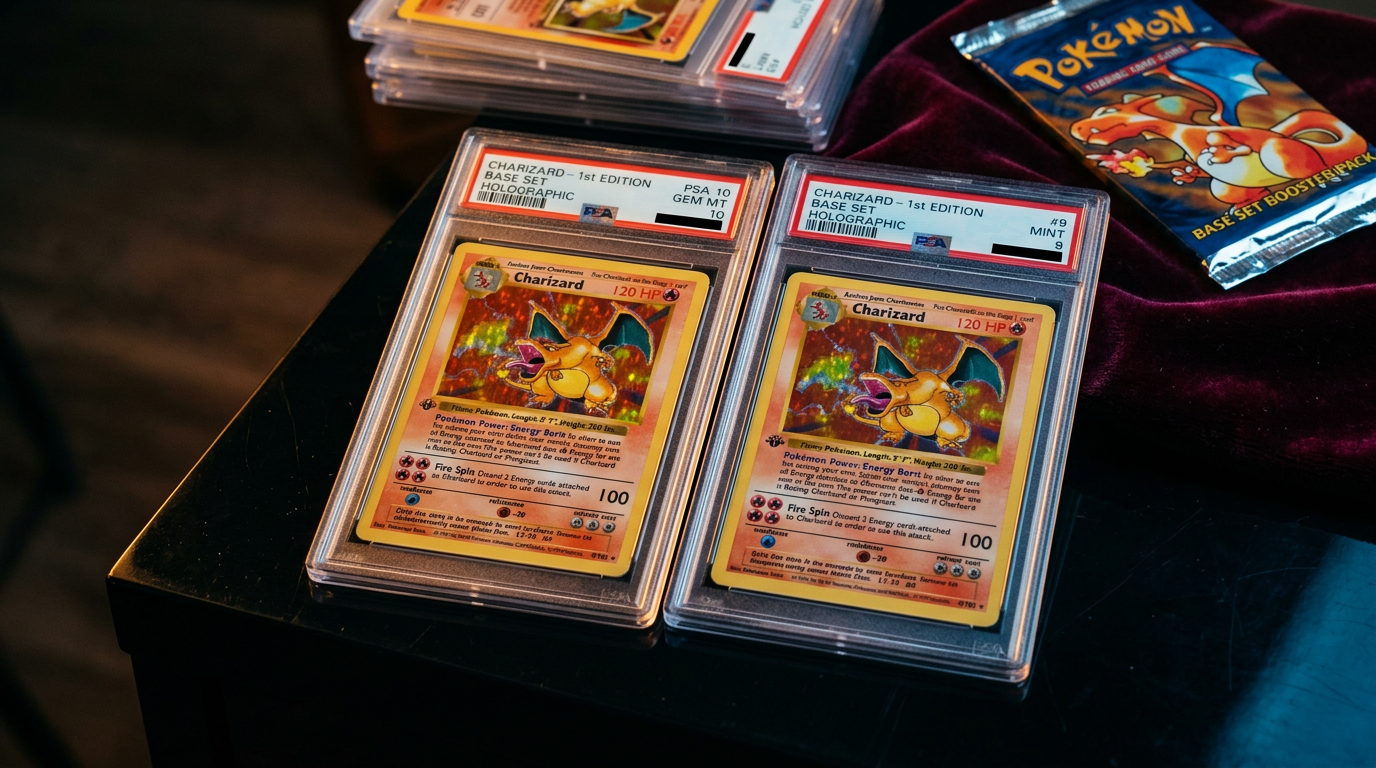
PSA 10 vs PSA 9: Is the Price Gap Worth It in 2026?
The gap between a PSA 9 and PSA 10 has always been one of the most debated topics in Pokemon collecting. But in 2026, with PSA processing a staggering 67,000+ cards daily and Pokemon's 30th anniversary flooding the market with new releases, the answer is more nuanced than ever.
Is chasing that Gem Mint 10 still worth the cost, risk, and wait time? Or has the premium compressed to the point where PSA 9 is the smarter buy? The short answer: it depends entirely on whether you're playing in the vintage or modern market. Let's break down the data.
The 2026 Grading Landscape
Before diving into premiums, it's essential to understand what's driving the current market. PSA is on pace for 26.2 million submissions in 2026, roughly 2 million cards per month. That's an unprecedented volume, and Pokemon is leading the surge.
The February 16, 2026 sale of a Pikachu Illustrator PSA 10 for $16.49 million shocked the hobby and triggered a 22% surge in Pokemon submissions to PSA over the following two weeks. Combined with the rollout of high-profile sets like Ascended Heroes, Perfect Order, and Chaos Rising, graders are drowning in submissions — and that has real implications for turnaround times, pop reports, and eventual PSA 10 scarcity.
Against this backdrop, the PSA 10 vs PSA 9 question splits into two very different markets.
The Core Finding: A Tale of Two Markets
There is no single answer to "is PSA 10 worth the premium." The multiplier depends heavily on the card's era:
- Vintage WOTC (1999-2003): PSA 10 premiums range from 5-20x the PSA 9 price.
- Modern (2020-Present): PSA 10 premiums have compressed to 1.3-2.5x in most cases.
Understanding why these markets diverged is the key to making smart grading and buying decisions.
Vintage WOTC: Where PSA 10 Premiums Are Extreme
Vintage cards from the WOTC era (1999-2003) are where PSA 10s truly separate themselves. Decades of handling, humidity, print defects, and centering issues have made Gem Mint copies genuinely rare. Below is a snapshot of current PSA 9 vs PSA 10 spreads on iconic vintage cards:
| Card | PSA 9 | PSA 10 | Multiplier |
|---|---|---|---|
| Base Set Unlimited Charizard | $2,000-3,000 | $30,000-50,000 | 10-20x |
| Base Set 1st Edition Charizard | $15,000-25,000 | $200,000-400,000+ | 10-20x |
| Neo Genesis 1st Ed Lugia | $2,000-4,000 | $15,000-30,000 | 5-10x |
| Neo Destiny 1st Ed Shining Charizard | $3,000-5,000 | $20,000-40,000 | 5-10x |
| Fossil Gengar Holo | $100-200 | $800-1,500 | 5-8x |
| Jungle Flareon Holo | $80-150 | $500-1,000 | 4-7x |
Why the Premium Is So Extreme
The scarcity math is brutal. Out of 35,000+ Base Set Unlimited Charizards submitted to PSA, fewer than 350 have achieved a PSA 10 grade — roughly a 1% success rate. When you consider that most surviving copies are already graded, the population of gemmable raw copies is essentially fixed and shrinking.
Factors driving the vintage premium:
- Print quality issues: WOTC-era printing had inconsistent centering, holo scratching, and edge chipping.
- Age-related wear: Even carefully stored cards from 1999 often show whitening or surface haze.
- Fixed supply: No new copies are being printed, and pop reports grow slowly.
- Trophy status: A PSA 10 vintage Charizard is a legitimate grail — buyers pay for prestige, not just condition.
- Nostalgia + wealthy collectors: The generation that opened these packs is now in peak earning years.
If you're considering submitting a vintage card, you can use our Grading ROI Calculator to model the expected value based on real PSA 9 vs PSA 10 pricing and historical grade distributions.
Modern Cards: The Premium Compression Story
The story flips completely when you look at modern releases (2020-present). PSA 10 premiums have compressed dramatically for several reasons:
Why Modern PSA 10 Premiums Are Lower
- Better print quality: Modern Pokemon cards are printed with tighter centering and more consistent surfaces.
- Careful pack openers: Collectors now know to weigh, preserve, and sleeve immediately — leading to high raw-to-PSA-10 conversion rates.
- Higher populations: Popular modern chase cards often have PSA 10 pops in the tens of thousands.
- Faster grading turnaround: With PSA processing 67K/day, cards hit the market quickly, keeping supply flowing.
Typical modern multipliers look more like this:
| Card Type | Typical PSA 9 → PSA 10 Multiplier |
|---|---|
| Modern English chase card | 1.3x - 2.0x |
| Modern Alt Art / Special Illustration | 1.5x - 2.5x |
| Japanese modern SAR/SIR | 1.4x - 2.2x |
| Ultra-high-pop promos | 1.1x - 1.5x |
A PSA 9 modern alt art selling for $200 might see its PSA 10 counterpart at $350-450 — a real premium, but nowhere near the 10-20x we see in vintage.
The Break-Even Problem for Modern Grading
When you factor in grading fees ($19-$50+ per card in 2026), shipping, insurance, and the risk of getting a 9 instead of a 10, the math gets tight. If a modern card's PSA 10 sells for $150 and the PSA 9 sells for $100, and you paid $25 to grade it — a 9 outcome nets you $75 (a loss versus raw resale), and a 10 nets $125.
With PSA 10 rates on modern cards ranging anywhere from 30% to 70% depending on the card and submitter skill, expected value is often marginal. Running the numbers through an expected value calculator before submitting a modern batch can save you real money.
PSA 10 vs PSA 9: When Buying Graded Makes Sense
From a buyer's perspective, the decision framework shifts based on your goals:
Buy the PSA 10 When...
- You're buying vintage WOTC cards for long-term hold. The scarcity premium historically holds and expands.
- You want the definitive display piece — trophy cards belong in Gem Mint.
- You're targeting cards with sub-500 PSA 10 pops where every new grade is meaningful.
- Liquidity matters — PSA 10s of major cards sell in days, PSA 9s can sit for weeks.
Buy the PSA 9 When...
- You're a value collector who wants the card, not the grade. A PSA 9 Base Set Charizard is still stunning at 5-10% of the PSA 10 price.
- The card is modern with a large PSA 10 population — the premium isn't justified.
- You plan to crack and resubmit (though this is a gamble; more on this below).
- You want portfolio diversification without the six-figure entry point.
The Crack-and-Resubmit Debate
One temptation with high-value PSA 9s is cracking the slab and resubmitting, hoping for a 10 bump. In 2026, this is riskier than ever:
- PSA's grading standards have tightened as they process more volume and face criticism for over-grading.
- Slab damage risk — even careful cracking can introduce edge wear.
- Cost of failure — if the card comes back a 9 (or worse, an 8), you've paid grading fees for nothing.
- Provenance loss — some collectors track cert numbers, and a card resubmitted repeatedly can raise flags.
For cards with a 10x+ multiplier, the math can favor a resubmit if you're highly confident in the card's centering, corners, edges, and surface. For cards with 2-3x multipliers, it rarely makes sense.
How Pop Report Trends Impact the Gap
One of the most overlooked factors in the PSA 9 vs 10 decision is population trajectory. A card with a small but rapidly growing PSA 10 pop can see its premium compress fast. A card with a stable pop has a more defensible premium.
Before buying a graded card as an investment, check the current population data to see:
- Total PSA 10s in circulation
- Growth rate over the last 6-12 months
- Ratio of PSA 10s to PSA 9s (a key indicator of true scarcity)
- Whether recent submission surges have flooded the market
A modern card with a PSA 10 pop that doubled in the past year is likely to see continued premium compression. A vintage card with a stagnant pop for the past decade tells a very different story.
Practical Framework: Should You Grade Your Card?
Here's a simple 2026 decision framework:
Step 1: Assess the Card's Era and Condition
- Vintage + near-perfect condition → strong grading candidate
- Modern + near-perfect condition → run the EV math first
- Any card with visible flaws → likely not worth grading
Step 2: Check Current PSA 9 vs PSA 10 Spread
- Look up raw sales, PSA 9 sales, and PSA 10 sales on the last 90 days.
- Calculate the true multiplier after fees.
Step 3: Estimate Your Grade Probability
- Use PSA's pop report to see the historical 10 rate for the card.
- Discount by 10-20% for self-submitter skill vs. experienced submitters.
Step 4: Calculate Expected Value
- (Probability of 10 × PSA 10 value) + (Probability of 9 × PSA 9 value) - grading fees - shipping
- Compare to current raw value. If EV < raw, don't grade.
Key 2026 Trends to Watch
Several market forces will shape PSA 9 vs PSA 10 dynamics through the rest of the year:
- Submission volume: If PSA hits 26M+ cards, modern pops will explode and premiums will compress further.
- 30th anniversary specials: New commemorative sets could either dilute or concentrate collector attention.
- Alternative graders gaining share: CGC and TAG continue to grow, offering competitive pricing and, in some cases, tighter grading — which affects PSA's PSA 10 scarcity narrative.
- The Illustrator effect: Trophy sales at the top of the market tend to lift entire tiers below them, but the effect diminishes with distance.
- Vintage supply drying up: Fewer raw high-grade vintage cards enter the market each year, supporting continued PSA 10 premium strength.
Key Takeaways
- Vintage WOTC PSA 10 premiums remain extreme (5-20x) due to genuine scarcity, decades of wear, and trophy demand.
- Modern PSA 10 premiums have compressed to 1.3-2.5x thanks to better print quality, careful collectors, and massive submission volumes.
- PSA is on pace for 26.2M submissions in 2026, and pop reports for modern cards are growing rapidly — a headwind for modern premiums.
- For buyers: PSA 9s of vintage cards can be exceptional value; PSA 10s of modern cards often aren't worth the premium unless the pop is genuinely low.
- For submitters: Run the expected-value math before you ship. Modern grading is a tighter margin business than it was five years ago.
- Pop report trajectory matters more than pop size. A growing pop erodes premiums fast.
The PSA 10 chase isn't dead — but in 2026, it requires more discipline and data than ever. The collectors and investors winning right now are the ones treating each card as its own economic decision, not applying a universal "PSA 10 or nothing" rule.
Note: Past performance does not guarantee future results. Always do your own research before making investment decisions.
Pokemon Price Tracker
Market Analyst
Related Articles
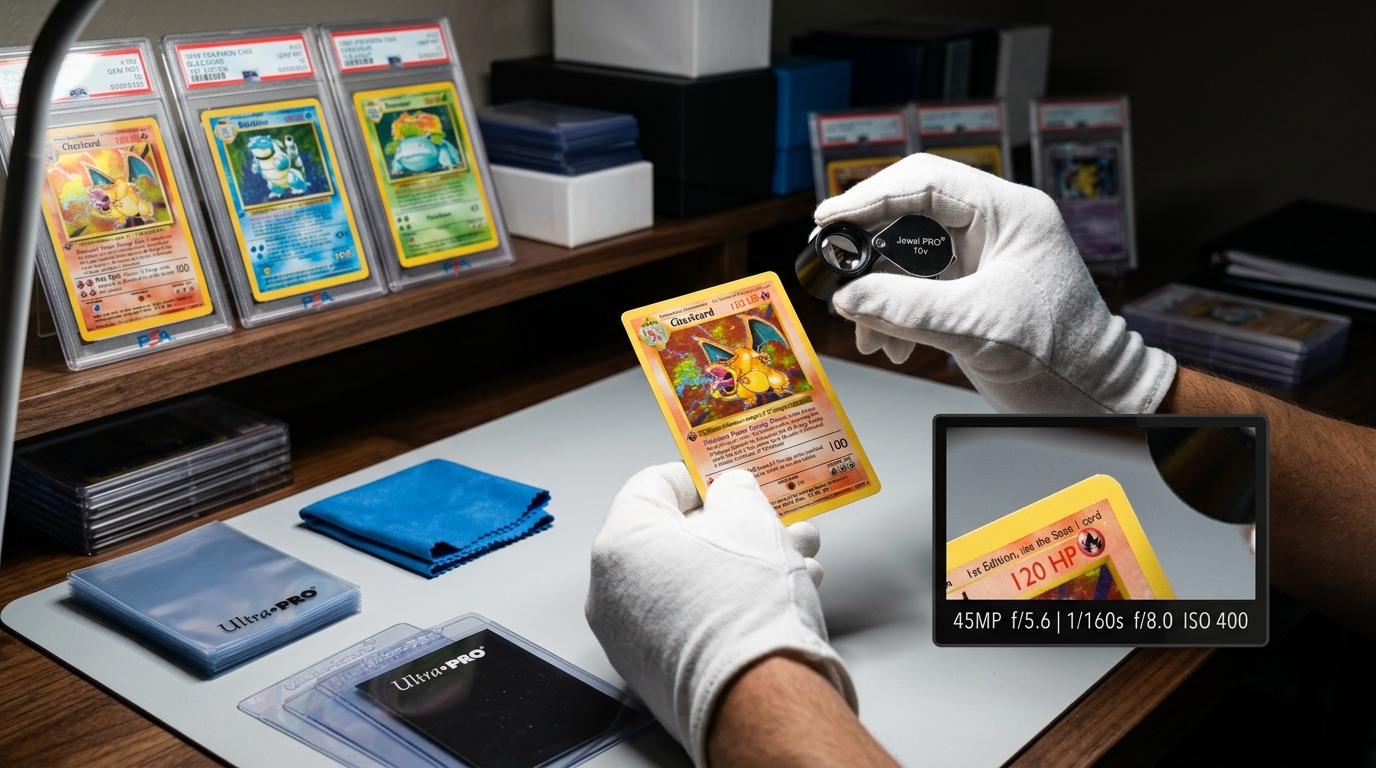
How to Grade Pokemon Cards: Step-by-Step 2026 Guide
Learn how to grade Pokemon cards in 2026 with this complete step-by-step guide covering PSA's paused Value tiers, the $79.99 minimum, pre-screening techniques, and when grading still makes financial sense.
Pokemon Price Tracker
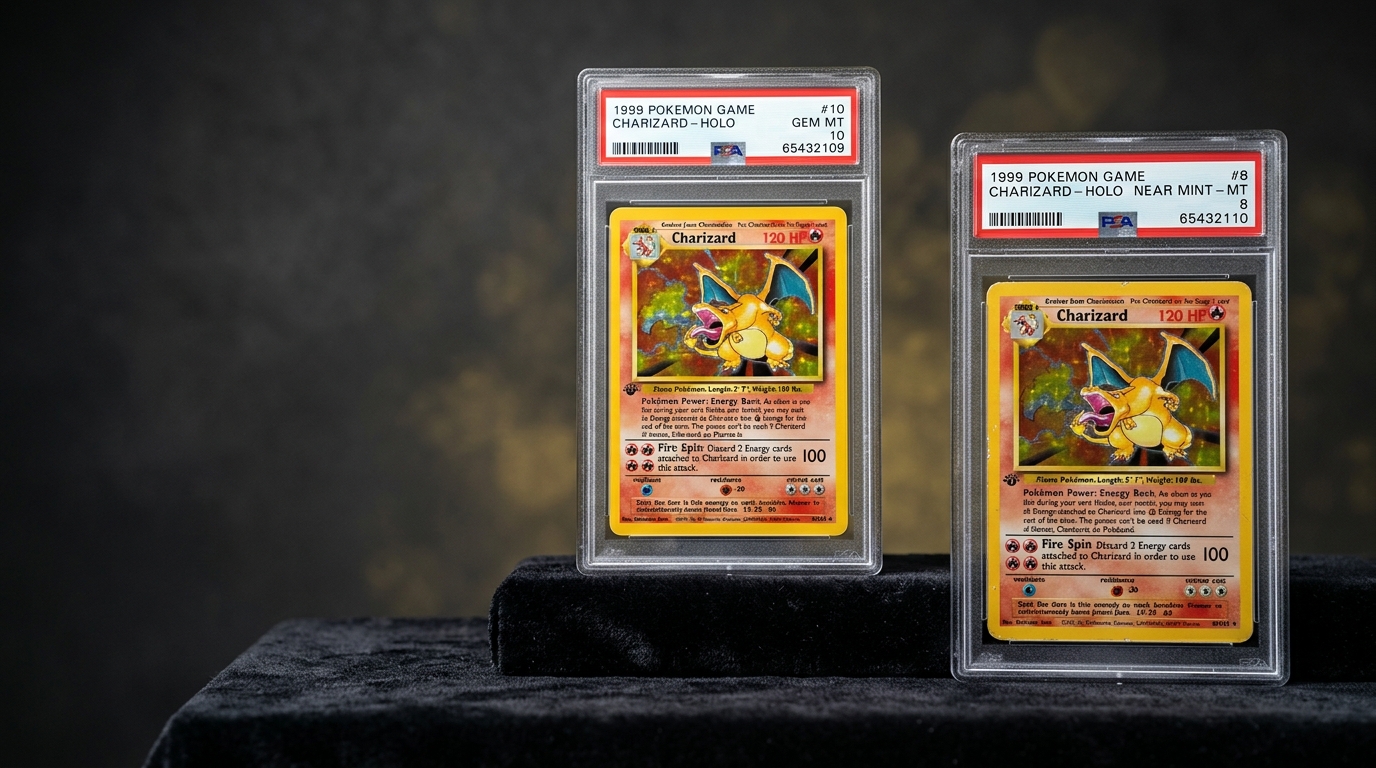
PSA 10 vs PSA 9: 2026 Price Gap Analysis & ROI Data
PSA 10s command 3x to 20x more than PSA 9s in 2026, but the gap varies wildly by card and era. We break down real sales data, ROI frameworks, and when grading actually makes financial sense.
Pokemon Price Tracker
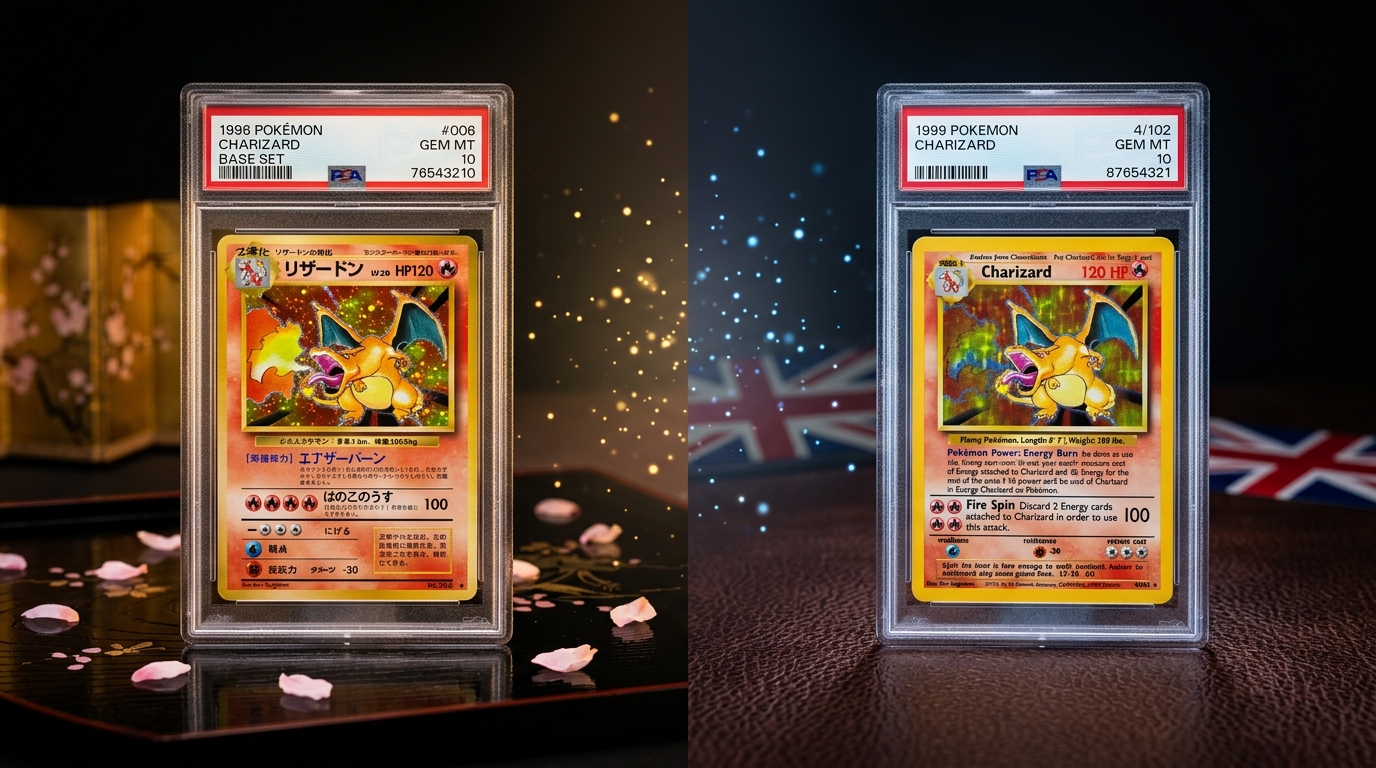
Japanese vs English Pokemon Cards: Which Holds Value in 2026?
The Japanese vs English Pokemon card debate has fundamentally shifted in 2026. Japanese PSA 10s now command 20-40% premiums over English equivalents, while raw English cards still cost 2x-6x more. Here's how to navigate both markets strategically.
Pokemon Price Tracker
Stay Updated
Subscribe to our newsletter for the latest Pokemon card market trends, investment opportunities, and exclusive insights delivered straight to your inbox.