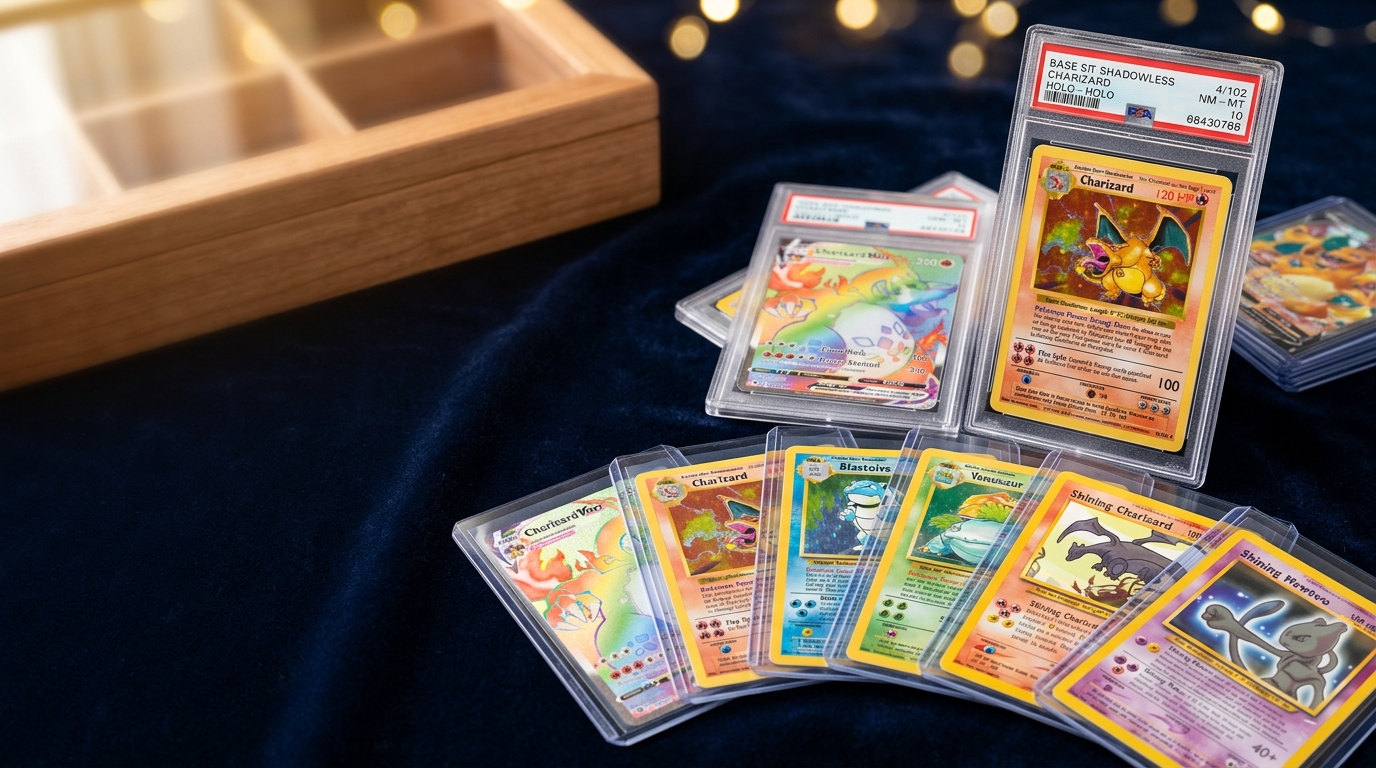
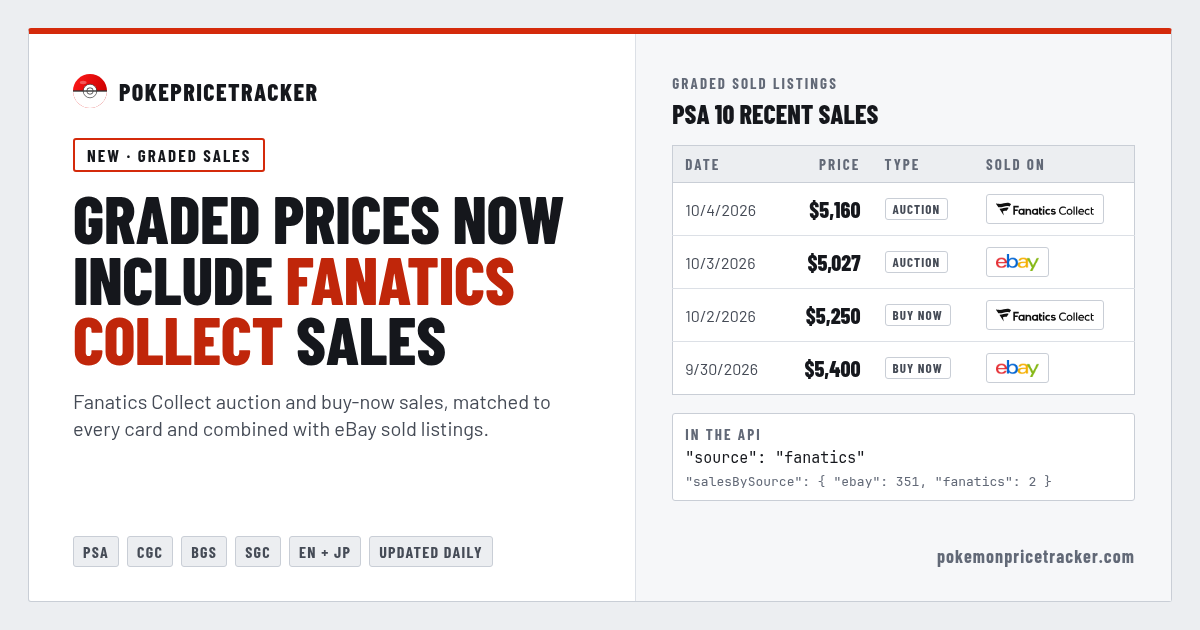
Grading Pokemon cards has evolved from a niche hobby practice into a calculated investment strategy. With PSA, CGC, and BGS submission costs rising in 2026 and the market experiencing a sustained bullish phase driven by the 30th anniversary celebration, choosing which cards to grade has never been more important. Grade the wrong card, and you'll lose $80+ per submission. Grade the right card, and you could multiply your investment 5x or more.
This comprehensive guide breaks down the best Pokemon cards to grade in 2026, the economics behind grading ROI, and the specific data points every collector should analyze before shipping cards to PSA, CGC, or BGS.
The Pokemon card market in 2026 remains in a robust growth phase. Average Pokemon card values are up roughly 46% year-over-year, and chase cards from key modern sets have posted 200-500% gains. This bullish momentum, combined with the 30th anniversary celebration extending into late 2026, has created ideal conditions for strategic grading — but only for cards that genuinely warrant it.
Current Grading Costs (2026)
Understanding cost structure is the foundation of any grading ROI calculation:
- PSA Regular Tier: $79.99 per card (40-50 business days, max declared value ~$1,500)
- PSA Collectors Club Bulk: ~$25 per card (with $149/year membership)
- CGC Bulk: $17 per card
- CGC Economy: $20 per card
- BGS Standard: ~$50 per card
As of June 2026, PSA paused its lower-priced Value tiers to clear a backlog approaching 10 million cards, pushing many submitters toward CGC for bulk economy work. This shift matters because the break-even threshold for most modern cards now sits around $50 raw value — cards below that rarely produce positive ROI after fees, shipping, and insurance.
The PSA 10 Premium Math
A PSA 10 typically commands 3-8x the raw card price on modern chase cards. However, only 15-30% of pack-fresh submissions actually receive a PSA 10 grade. This means your expected value calculation must account for the likelihood of receiving a PSA 9 (usually a 1.2-1.8x multiplier) or lower.
Before submitting any card, run the numbers through a Grading ROI Calculator to see if the math actually works in your favor.
Before we get to specific cards, here's the framework I use to evaluate any grading candidate:
- Raw card value must exceed $50 (ideally $75+)
- PSA 10 multiplier of 3x or greater based on recent sales
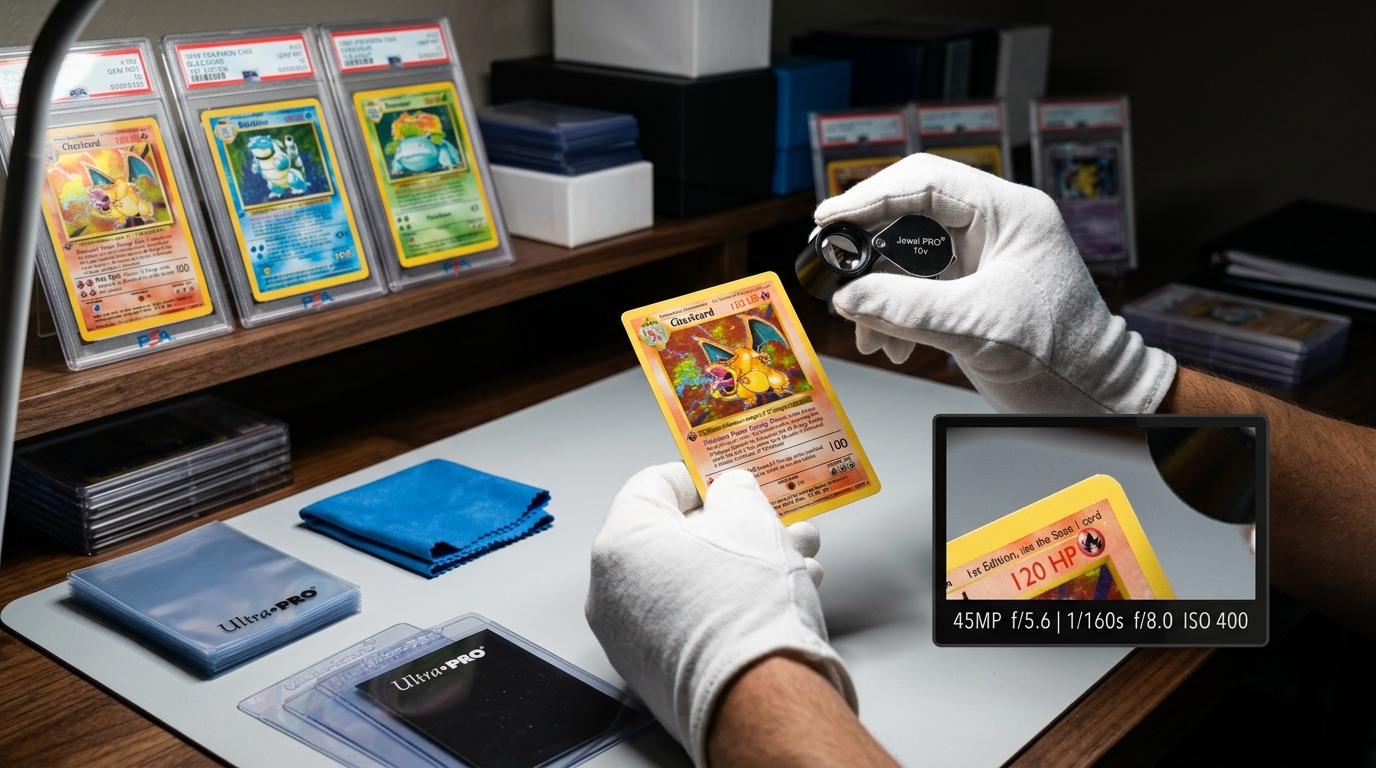
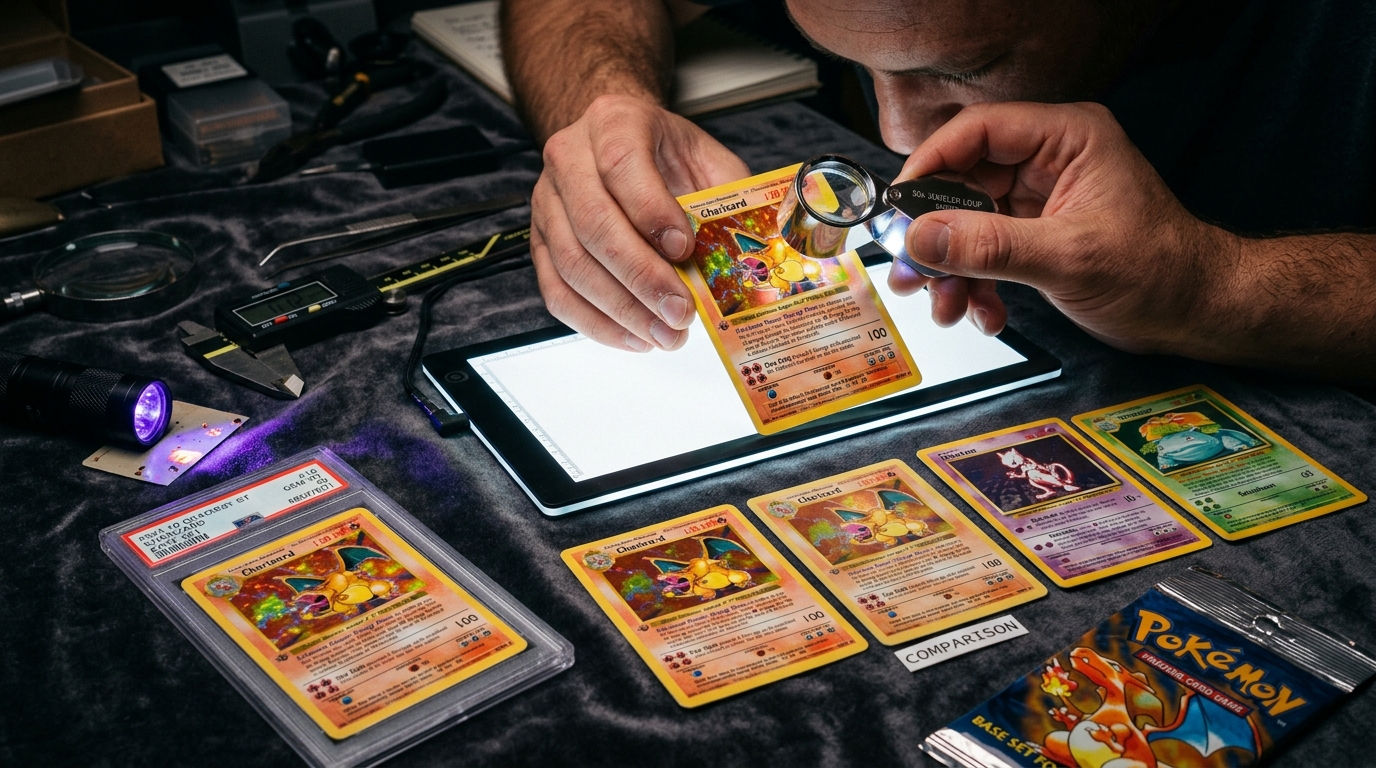
- Centering, surface, corners, and edges all rate at 9.5+ under magnification
- Population report shows a reasonable but not oversaturated PSA 10 count
- Card has liquidity — meaning it sells consistently, not once every 6 months
Cards that check all five boxes are worth grading. Cards that miss even one usually aren't.
1. Scarlet & Violet Chase Cards (Special Illustration Rares)
Special Illustration Rares (SIRs) from Scarlet & Violet-era sets continue to be the most reliable grading targets in 2026. Cards like Iono SIR, Miriam SIR, and Nemona SIR consistently deliver strong PSA 10 premiums.
Why they work:
- Raw prices typically $100-$400
- PSA 10 multipliers averaging 2.5-4x
- Active collector demand from trainer gallery enthusiasts
- Population reports still growing but not saturated
Watch out for: Centering issues on the full-art borders and print lines on the character artwork. Inspect under bright light before submitting.
2. Japanese Promo Cards
Japanese promos remain one of the most underrated grading opportunities in 2026. The centering quality on Japanese print runs is generally superior to English, giving submitters a higher PSA 10 hit rate.
Top targets include:
- Van Gogh Pikachu Promo (still one of the highest-demand promos globally)
- Yu Nagaba Pikachu variants
- Illustration Contest promos
- Anniversary and event exclusives
Check current Japanese card prices before submitting — Japanese cards often trade at a discount raw but achieve near-parity with English cards in PSA 10.
3. 151 Set Chase Cards
The 151 set (both English and Japanese) has maintained remarkable staying power. The nostalgia-driven demand for original 151 Pokemon combined with modern illustration quality creates a perfect storm for graded card appreciation.
Key targets:
- Charizard ex Special Illustration Rare
- Mew ex Special Illustration Rare
- Zapdos ex Special Illustration Rare
- Alakazam ex Special Illustration Rare
Raw prices for these cards range from $80-$500, and PSA 10 examples routinely command 3-5x raw prices when in strong condition.
4. Modern Charizard Cards (Any Set)
Charizard remains the single most bankable Pokemon in the hobby. Any modern Charizard from a major set with an SIR, alt art, or full art treatment is worth analyzing for grading. The demand floor is essentially bulletproof.
5. Anniversary Set Chase Cards
The 30th anniversary products released throughout 2026 have produced numerous grading candidates. Anniversary cards benefit from:
- Built-in collector demand tied to milestone nostalgia
- Limited print windows
- Special foil treatments that grade well when pack-fresh
Vintage grading operates under different rules. Because raw vintage cards command significant premiums, even PSA 7 and PSA 8 grades can generate positive ROI.
1. Base Set Holos (Unlimited and Shadowless)
Base Set holos remain the gold standard of vintage grading. Even beat-up copies of Charizard, Blastoise, and Venusaur carry substantial value. The PSA 10 population on Base Set Charizard Unlimited is still under 200 copies, keeping the premium massive.
Grading tiers to target:
- PSA 9: Still commands significant premiums, more achievable than PSA 10
- PSA 8: Solid ROI on Shadowless copies, especially Charizard
- PSA 7: Only worth it for high-end holos like Charizard
2. Neo Genesis and Neo Destiny Holos
Shining Pokemon from Neo Destiny and holos from Neo Genesis have quietly outperformed Base Set on percentage returns over the past 24 months. Shining Charizard, Shining Magikarp, and Lugia (Neo Genesis) all warrant grading if they present in near-mint condition.
3. E-Series Holos
Aquapolis, Skyridge, and Expedition holos — particularly the Crystal-type Pokemon — remain some of the highest ROI grading opportunities in vintage. Crystal Charizard from Skyridge in PSA 10 has crossed into six-figure territory, and even PSA 8 copies command serious money.
4. First Edition Jungle, Fossil, and Team Rocket
First Edition non-holos from these sets are frequently overlooked. Many can be sourced raw for $10-$40 and graded copies in PSA 9 or 10 sell for 5-15x that amount. The key is centering — Fossil and Team Rocket had notorious centering issues.
5. WOTC Promos
Black Star promos, movie promos, and Pokemon League cards from the WOTC era continue to appreciate. The population reports for many of these cards are surprisingly low, and demand from set-completion collectors keeps prices firm.
Just as important as knowing what to grade is knowing what not to grade:
- Bulk modern commons and uncommons — Almost never worth $17+ per submission
- Reprints without scarcity — Celebrations, McDonald's promos, and other mass-print products
- Damaged vintage below PSA 6 threshold — Grading fees exceed the value uplift
- Cards with obvious print defects — Print lines, poor centering, or edge whitening
- Oversaturated modern chase cards — Some cards have PSA 10 populations exceeding 10,000 copies, crushing the premium
Before submitting, always cross-reference the population data to see how many copies already exist at each grade. A card with a PSA 10 population of 15,000+ will have a much smaller premium than one with a population of 500.
Use this checklist before every submission:
- ✅ Is the raw card value $50 or higher?
- ✅ Does the PSA 10 sell for at least 3x the raw price?
- ✅ Is the centering within 55/45 or better on both axes?
- ✅ Are all four corners sharp under magnification?
- ✅ Is the surface free of scratches, print lines, and whitening?
- ✅ Are the edges clean without chipping or fraying?
- ✅ Does the card have active sales in the past 30 days?
- ✅ Is the PSA 10 population under 5,000 (for modern) or under 1,000 (for vintage)?
If you can't check at least 6 of these boxes, consider selling the card raw instead.
Each grading company offers different value propositions in 2026:
PSA
- Best for: High-value cards, maximum resale premium, brand recognition
- Downsides: Higher costs, longer turnaround, backlog issues
- Ideal card value: $100+
CGC
- Best for: Bulk grading, budget-conscious submitters, modern cards
- Downsides: Lower resale premium versus PSA on most cards
- Ideal card value: $50-$200
BGS
- Best for: Pristine modern cards where a Black Label BGS 10 commands massive premiums
- Downsides: Sub-grades below 9.5 hurt resale, market share has declined
- Ideal card value: $200+ for cards likely to hit 9.5 or 10
Grading isn't just about which cards — it's about when. In 2026, consider these timing factors:
- Set releases: New set hype boosts prices of comparable older chase cards
- Anniversary catalysts: The 30th anniversary window through late 2026 supports vintage premiums
- Turnaround windows: Submitting during PSA backlog periods (like the current one) can mean waiting months
- Market cycles: Bullish markets reward faster submissions; bearish markets reward patience
Here's a realistic framework for approaching grading in 2026:
For Beginners ($500-$1,000 budget)
- Focus on 5-10 higher-value modern chase cards
- Use CGC Bulk to minimize costs
- Target cards with clear PSA 10 comps at 3x+ multipliers
For Intermediate Collectors ($2,500-$10,000 budget)
- Mix modern chase cards with mid-tier vintage
- Get a PSA Collectors Club membership for direct submission
- Diversify across 20-40 cards to smooth out grade variance
For Advanced Investors ($25,000+ budget)
- Focus on high-end vintage where PSA 8-10 differences represent thousands in value
- Consider crossover submissions from CGC to PSA on strong candidates
- Track population reports religiously to identify undervalued targets
Grading Pokemon cards in 2026 remains one of the most lucrative activities in the hobby — but only when approached with discipline. The best grading candidates share common traits: raw values above $50, PSA 10 multipliers of 3x or greater, clean condition across all four grading criteria, and a healthy but not oversaturated population count.
Modern targets like Scarlet & Violet SIRs, 151 chase cards, and Japanese promos offer strong ROI potential. Vintage targets — especially Base Set holos, Neo-era chase cards, and E-Series Crystal Pokemon — continue to appreciate steadily. Avoid grading bulk modern cards, damaged vintage below PSA 6 thresholds, and any card where the math doesn't clearly favor a positive return.
Do your homework on every submission. Check recent sales, verify population data, and run the math before you ever put a card in a submission form. The collectors who consistently profit from grading aren't the ones grading the most cards — they're the ones grading the right cards.
Note: Past performance does not guarantee future results. Always do your own research before making investment decisions.