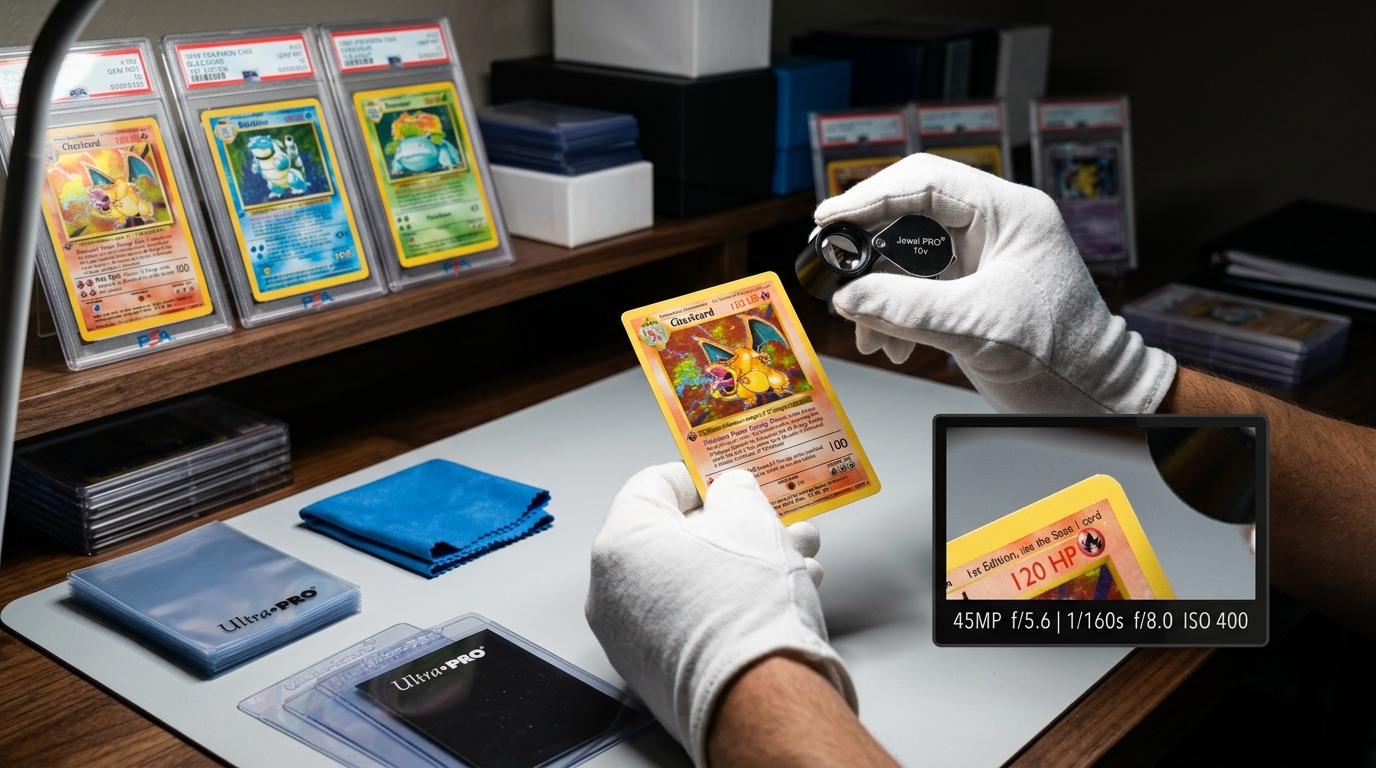
How to Grade Pokemon Cards: Step-by-Step 2026 Guide
Grading Pokemon cards in 2026 looks nothing like it did two years ago. With PSA's Value tiers paused since June, a backlog hovering near 12 million cards, and minimum submission costs climbing to $79.99, the decision of whether and how to grade has become just as important as the grading process itself.
This guide walks you through everything you need to know: how PSA evaluates cards, how to pre-screen your collection, how to submit, and how to think about ROI in today's radically different grading environment.
The State of Pokemon Card Grading in 2026
Before diving into the process, you need to understand the landscape you're submitting into.
On June 2, 2026, PSA temporarily paused its four lowest-cost "Value" grading tiers — and as of this writing, they remain paused. The backlog peaked at approximately 12.4 million units in late July 2026 before beginning a slow decline to around 11.85 million by mid-August. PSA has publicly stated it wants to reduce the backlog to roughly 5 million cards before reopening Value tiers, and it tracks progress through its public Backlog Tracker.
The practical impact: the cheapest realistic PSA submission tier for most collectors is now Regular at $79.99 per card, following a second price increase on February 10, 2026 (the first came roughly six months earlier). PSA effectively closed every sub-$65 tier with that 12-million-card backlog, which has completely rewritten the grading math for mid-value cards.
This means a card you'd have graded for $15–$25 two years ago now needs to clear a much higher value threshold to make financial sense. Running the numbers through a Grading ROI Calculator before submitting has gone from "nice to have" to absolutely essential.
The Four Grading Criteria PSA Uses
Every PSA grader evaluates your card against four criteria. Understanding each one is the foundation of accurate pre-screening.
1. Centering
Centering measures how evenly the printed image sits within the card's borders. For a PSA 10, the card must be at least 55/45 or better on the front and 75/25 on the back.
Centering is the single most common reason near-mint cards grade PSA 9 instead of PSA 10. Unlike corner or surface issues, centering is a factory defect — you can inspect for it the moment you pull a card from a pack, and no amount of careful handling will fix it.
2. Corners
For a PSA 10, all four corners must look sharp and clean even under 10x magnification. Corner whitening — tiny white fibers exposed at the corner tip — is the second-most-common PSA 10 killer. It's caused by handling damage, so cards should move from pack to sleeve to toploader with minimal contact.
Even one soft corner can cap a card at PSA 9, which for many modern Pokemon cards can mean a 3x–10x price difference.
3. Edges
Graders inspect edges for chipping, roughness, whitening, and clean factory cuts. Black-bordered cards (like many V, VMAX, and ex cards) are notoriously brutal here because any white edge wear is immediately visible.
4. Surface
The front and back are inspected for scratches, print lines, indentations, holo wear, and any other defects. Surface is the hardest criterion to evaluate from photos because many scratches are invisible under normal lighting — you need a bright, angled light source and often a loupe to see them.
Step-by-Step: How to Grade Pokemon Cards in 2026
Step 1: Pre-Screen Your Cards Ruthlessly
With minimum submission costs at $79.99, pre-screening is where you make or lose money. Set up a workspace with:
- A bright, color-neutral LED lamp
- A 10x jeweler's loupe
- A soft microfiber cloth
- Penny sleeves and semi-rigid card holders (Card Savers)
- A dark background for inspecting glossy surfaces
Inspect each card in this order:
- Centering first — If it fails 55/45 on the front, stop. It won't PSA 10.
- Corners under 10x magnification — Any whitening or softness kills the 10.
- Edges — Rotate the card and look for chipping or whitening.
- Surface at an angle — Tilt the card under your light. Look for scratches, print lines, and holo scratches on holofoil cards.
A realistic PSA 10 rate for carefully hand-picked raw cards is 20–40% for most modern Pokemon products. Anyone promising higher is either lucky or lying.
Step 2: Decide if Grading Is Financially Worth It
This is where most collectors go wrong in 2026. Your minimum breakeven calculation looks like this:
(PSA 10 market value × estimated 10 rate) + (PSA 9 market value × estimated 9 rate) > Raw card value + Grading cost + Shipping both ways
For a card that sells for $150 raw, $400 in PSA 10, and $180 in PSA 9, with a 30% PSA 10 hit rate:
- Expected graded value: (0.30 × $400) + (0.60 × $180) + (0.10 × $150) = $120 + $108 + $15 = $243
- Costs: $79.99 grading +
$25 shipping/insurance round trip = **$105** - Raw card cost: $150
- Expected net: $243 − $105 − $150 = −$12 (loss)
That card isn't worth grading at Regular tier in 2026, even though it would have been profitable at the old $15 Value tier. Run every card through this math using current comps from Pokemon card prices on Pokemon Price Tracker before you submit.
Note: Past performance does not guarantee future results. Always do your own research before making investment decisions.
Step 3: Choose Your Grading Company
In 2026, this is a more open question than it used to be.
PSA remains the market leader by resale value — a PSA 10 still commands the highest premium on most modern Pokemon cards. But with Value tiers paused and $79.99 minimums, PSA has priced itself out of the mid-value card market for the time being.
CGC has gained significant ground in Pokemon over the past two years, with faster turnaround and lower pricing on comparable tiers. CGC 10 Pristine cards now achieve respectable multipliers, and the gap to PSA 10 has narrowed on many modern sets.
BGS continues to serve the high-end vintage market and offers subgrades, but turnaround times and Pokemon-specific demand remain weaker than PSA.
For most 2026 submissions, the decision tree is:
- High-value modern or vintage card you're confident is a 10: PSA
- Mid-value modern card ($50–$200 raw): CGC often makes more financial sense
- Vintage with potential subgrade story: BGS worth considering
Step 4: Prepare and Package Your Submission
Once you've decided what to submit:
- Clean the card gently — Use a dry microfiber cloth only. Never use solvents, water, or household cleaners.
- Sleeve the card — Place it in a soft penny sleeve first, then a Card Saver I (the semi-rigid holder PSA specifically recommends).
- Fill out the submission form — Declare values honestly. Under-declaring can invalidate insurance; over-declaring unnecessarily increases cost.
- Group cards by declared value — PSA requires all cards in a submission to fall within the service tier's value cap.
- Package securely — Team bags around Card Savers, bundled in a rigid cardboard sandwich, inside a well-padded box.
Step 5: Submit and Track
Create your submission online, print the form, and ship with full tracking and insurance for the declared value. Shipping to PSA from within the US typically costs $15–$30 depending on insurance level.
Once PSA receives your cards, you'll move through these status stages:
- Order received
- Order processed and research
- Grading
- Quality assurance
- Assembly and shipping
In 2026, Regular tier turnaround is advertised at approximately 65 business days, though actual times have varied widely as PSA works through the backlog.
Step 6: Evaluate the Results
When your cards return, compare each grade to current market data. If you consistently get PSA 9s on cards you were confident were 10s, your pre-screening is too loose — tighten your centering and corner standards. Checking population data also helps you understand how rare your specific grade is on each card, which directly affects resale value.
Common Mistakes That Cost Collectors Money in 2026
Mistake 1: Submitting at Minimum Value
At $79.99 per card plus shipping, submitting a $40 raw card hoping for a PSA 10 is almost always a losing bet. The math simply doesn't work on low-value cards anymore.
Mistake 2: Ignoring Centering
Collectors still submit off-center cards hoping "this one might slip through." It won't. Centering is the first thing graders check, and it's measurable, not subjective.
Mistake 3: Handling Cards Too Much
Every time you touch a card with bare fingers, you deposit oils that attract debris and can leave micro-scratches. Use clean cotton or nitrile gloves for high-value cards, or handle only by the edges.
Mistake 4: Over-Submitting Modern Bulk
The days of submitting 50 modern commons at Value tier and flipping PSA 10s for $30 are over. In 2026, every submission should be a deliberate, individually-evaluated decision.
Mistake 5: Not Checking Comps Before Submitting
Market prices move. A card that was profitable to grade six months ago may not be today. Always pull current PSA 10 and PSA 9 sales data from the last 30–60 days before committing.
What Changed About PSA 10 Value in 2026
The PSA 10 premium has evolved. With fewer total cards being graded due to the Value tier pause, population growth has slowed on many modern cards — which is actually bullish for existing PSA 10 holders on cards with capped populations.
However, this cuts both ways. Cards that haven't yet seen heavy grading may see population surges whenever Value tiers reopen, potentially compressing premiums. This is a risk worth modeling before submitting modern cards that have low current populations.
For vintage cards (WOTC-era through EX series), the PSA 10 premium remains extremely strong because supply is naturally constrained — you can't manufacture more 1999 Base Set cards.
When Grading Still Makes Sense in 2026
Despite higher costs, grading remains a strong play in several scenarios:
- High-value chase cards ($300+ raw) where a PSA 10 multiplier justifies the cost
- Vintage cards where authentication alone adds meaningful value
- Sealed-to-slab plays on newly released sets where you're hand-picking from fresh packs
- Personal collection pieces where protection and presentation matter more than ROI
- Rare error cards or misprints where authentication is critical for resale
For collectors tracking which modern sets have the strongest grading economics, cross-referencing current price history with population data is the fastest way to identify candidates.
Key Takeaways
- PSA's Value tier pause and $79.99 minimum have fundamentally changed grading economics in 2026 — pre-screening and ROI math matter more than ever.
- The four grading criteria (centering, corners, edges, surface) remain the foundation. Centering is the #1 PSA 10 killer and the easiest to pre-screen.
- A realistic PSA 10 rate for carefully pre-screened modern raw cards is 20–40%, not the 60%+ some sellers claim.
- CGC has become a legitimate alternative for mid-value cards where PSA's current pricing doesn't pencil out.
- Always run current comps before submitting — the market has shifted enough that old rules of thumb no longer apply.
Grading in 2026 rewards patience and precision. The collectors who thrive in this environment aren't the ones submitting the most cards — they're the ones submitting the right cards.
Note: Past performance does not guarantee future results. Always do your own research before making investment decisions.
Pokemon Price Tracker
Market Analyst
Related Articles
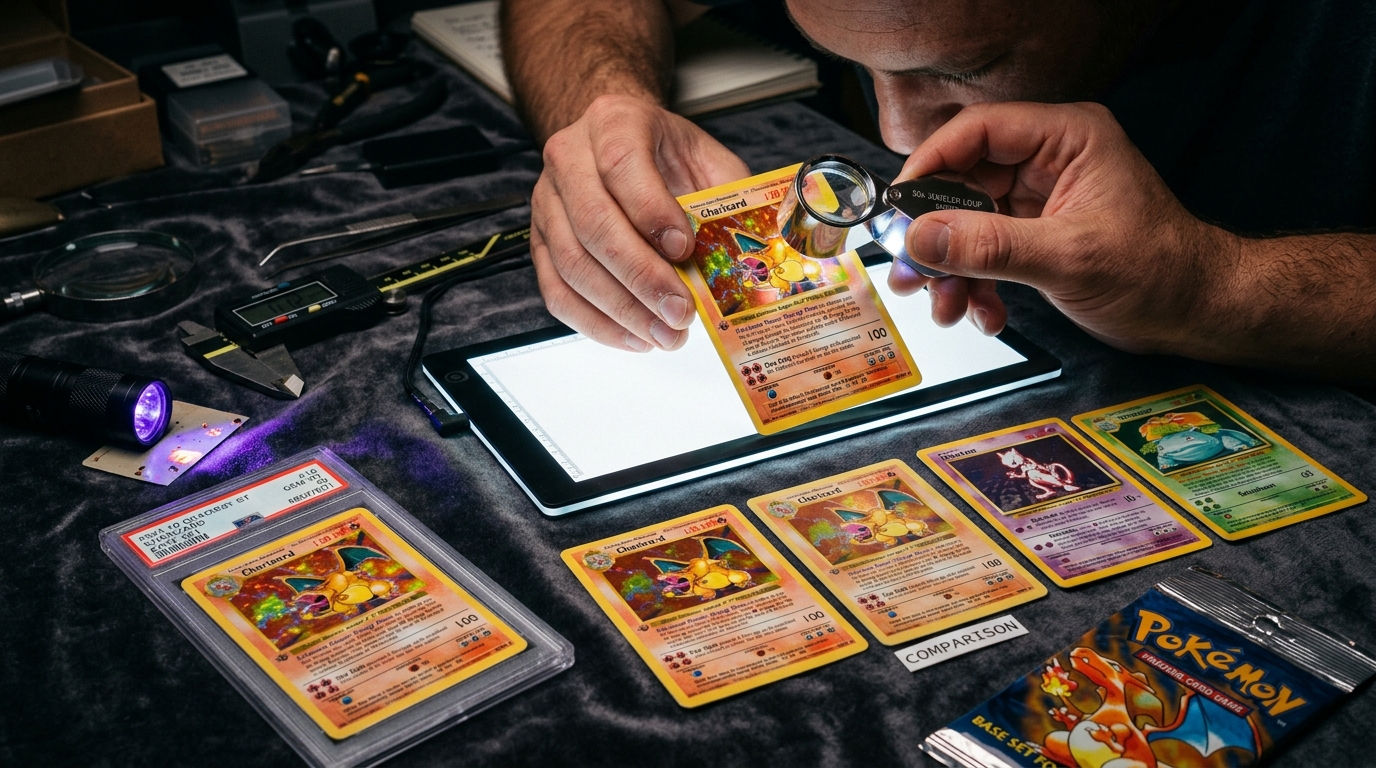
How to Spot Fake Pokemon Cards: 2026 Authentication Guide
Counterfeit Pokémon cards have reached new levels of sophistication in 2026, with fake Chaos Rising Mega Evolution ex cards, replica PSA slabs, and counterfeit sealed booster boxes flooding the market. This comprehensive 10-step authentication guide teaches collectors how to spot fakes using the lig
Pokemon Price Tracker
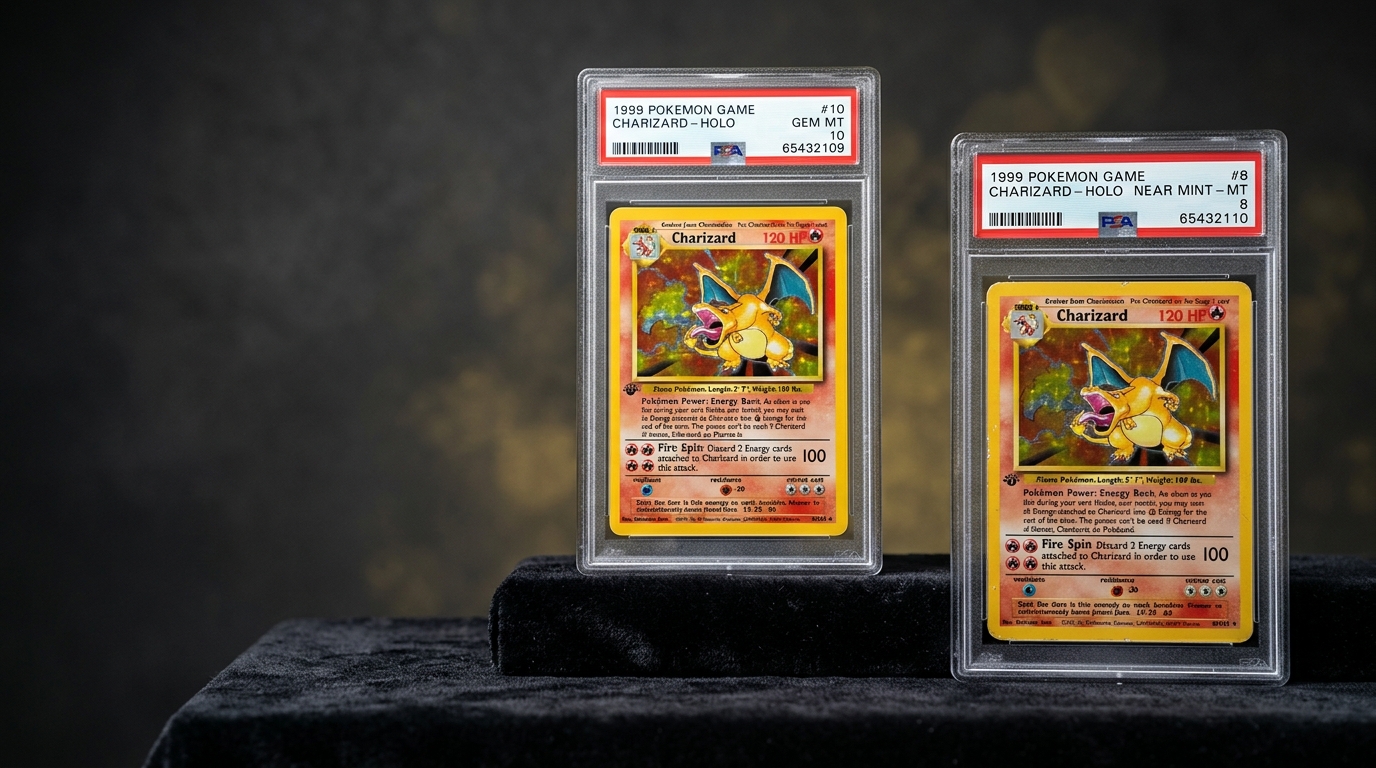
PSA 10 vs PSA 9: 2026 Price Gap Analysis & ROI Data
PSA 10s command 3x to 20x more than PSA 9s in 2026, but the gap varies wildly by card and era. We break down real sales data, ROI frameworks, and when grading actually makes financial sense.
Pokemon Price Tracker
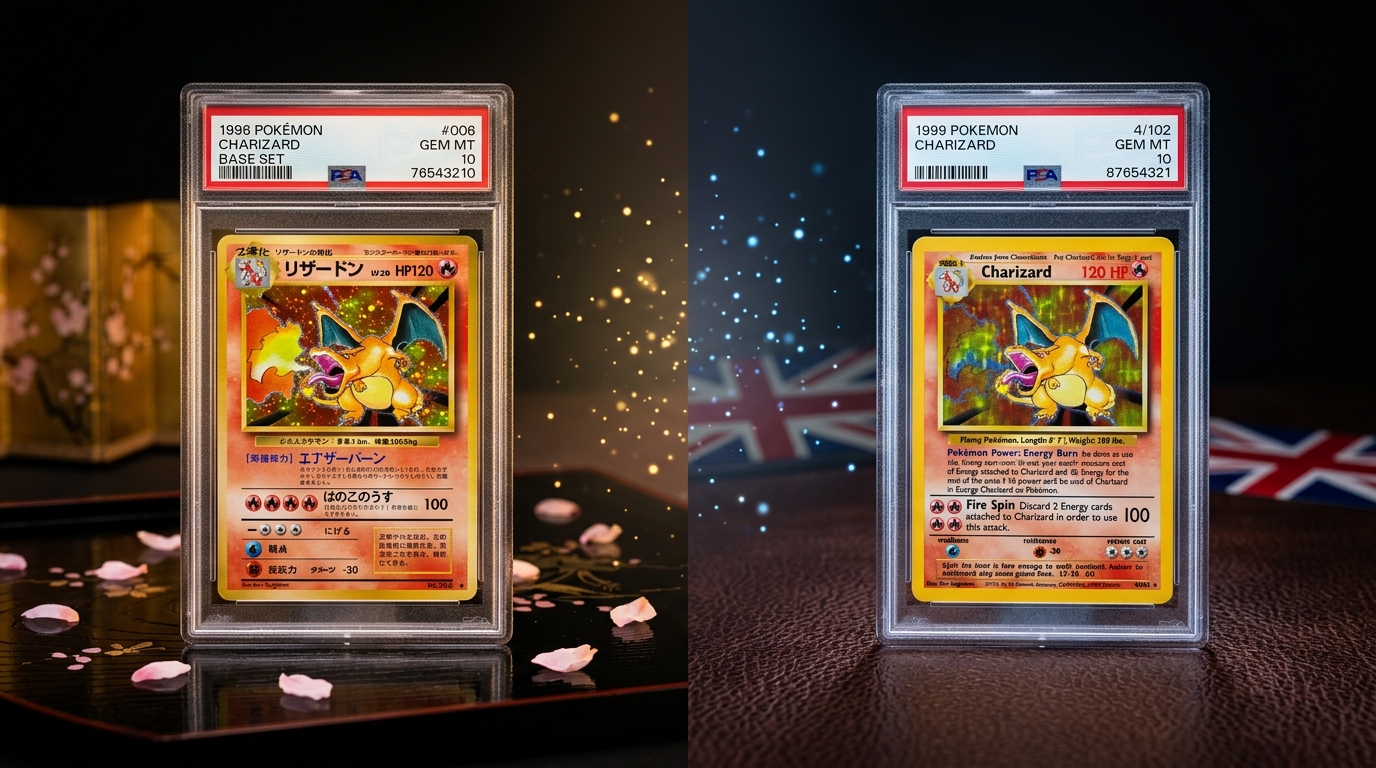
Japanese vs English Pokemon Cards: Which Holds Value in 2026?
The Japanese vs English Pokemon card debate has fundamentally shifted in 2026. Japanese PSA 10s now command 20-40% premiums over English equivalents, while raw English cards still cost 2x-6x more. Here's how to navigate both markets strategically.
Pokemon Price Tracker
Stay Updated
Subscribe to our newsletter for the latest Pokemon card market trends, investment opportunities, and exclusive insights delivered straight to your inbox.