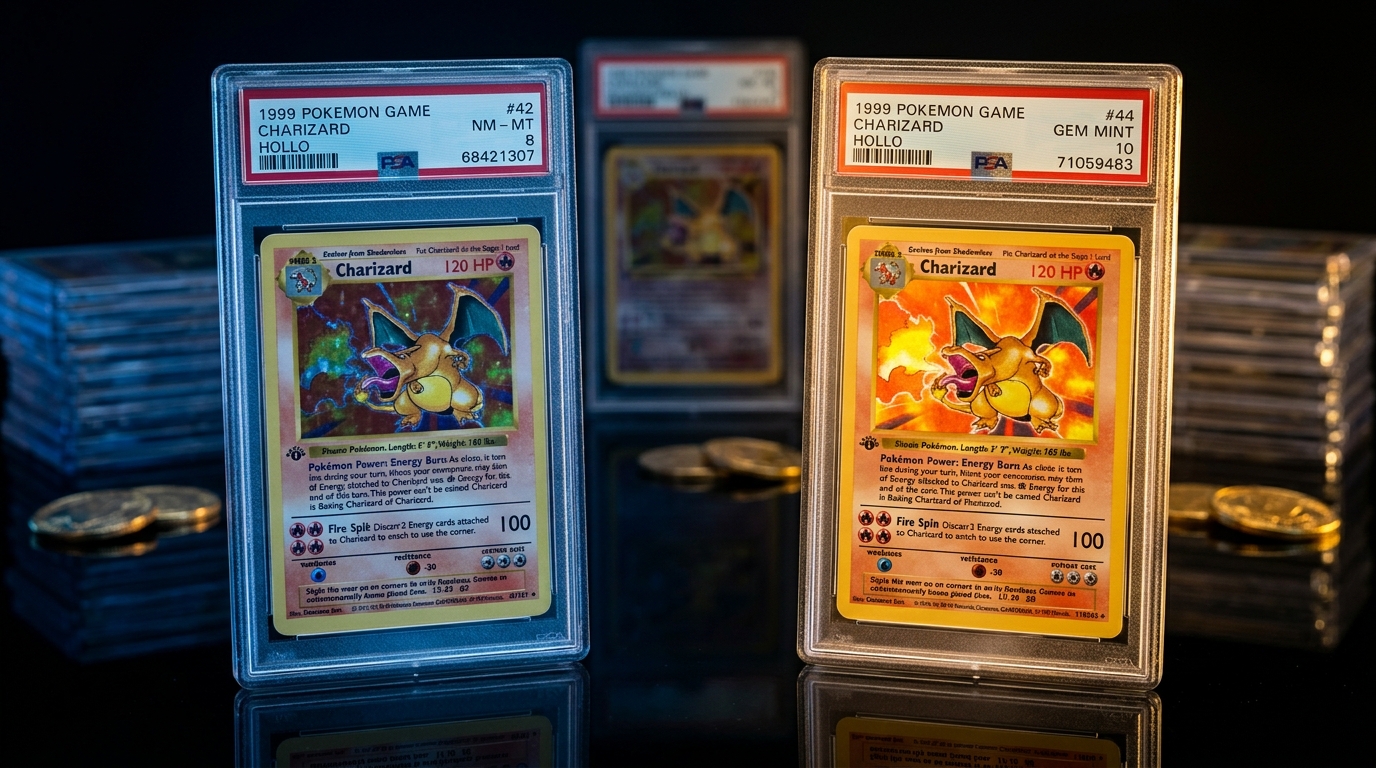
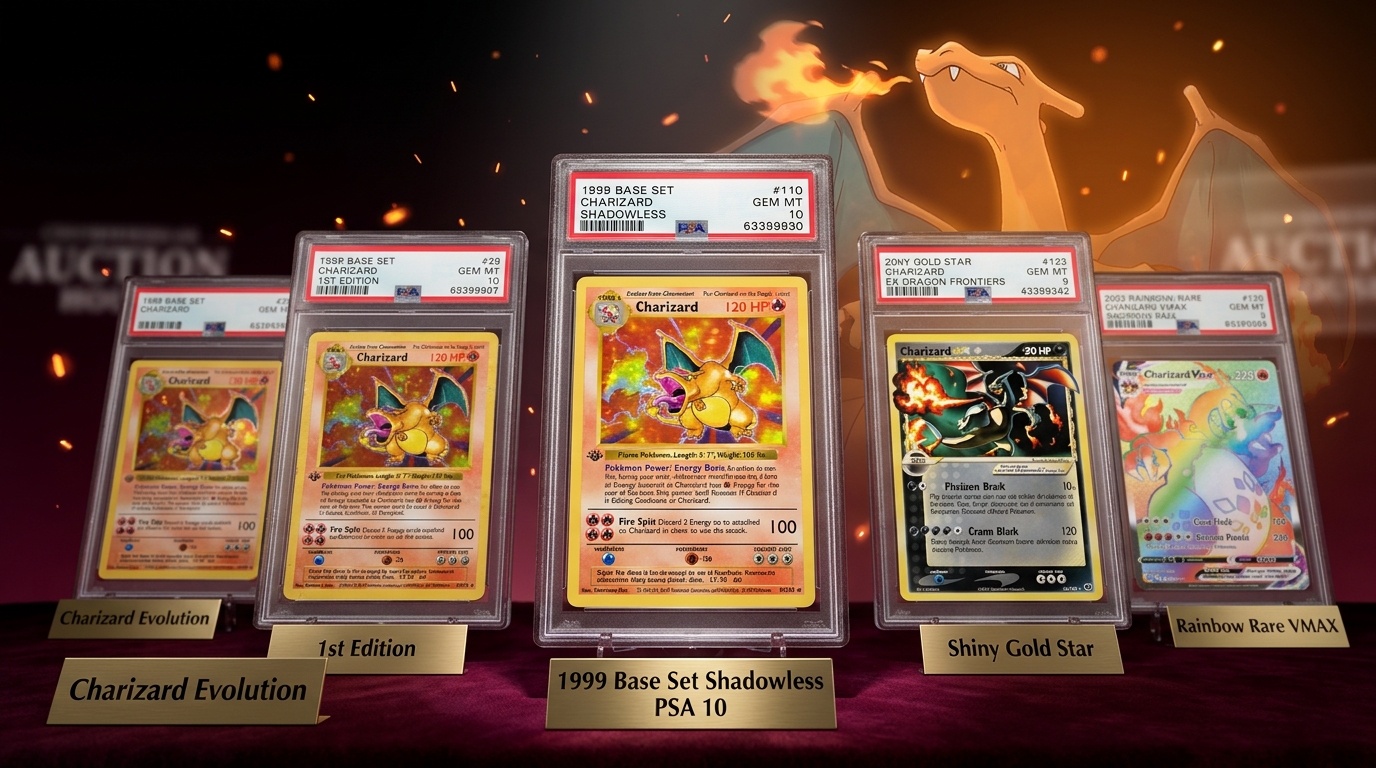
The difference between a PSA 10 and a PSA 9 Pokemon card can be the difference between a life-changing sale and a merely great one. In 2026, with the Pokemon TCG market in a historic bull run and record-breaking sales reshaping the hobby, understanding the price premium between these two grades has never been more critical for collectors and investors.
A recent sale perfectly illustrates the stakes: a Pikachu Illustrator in PSA 10 sold for a jaw-dropping $16.49 million, while the same card in PSA 9 condition sold for $2 million. Same card. Same artwork. Same rarity. A $14.5 million difference based on a single point on the grading scale.
In this comprehensive analysis, we'll break down exactly what you can expect to pay — and earn — when navigating the PSA 10 vs PSA 9 divide across vintage, modern, and sealed-era Pokemon cards.
Understanding the PSA Grading Scale
Before diving into price premiums, it's worth understanding what separates a PSA 9 from a PSA 10:
- PSA 10 (Gem Mint): A virtually perfect card. Four perfectly sharp corners, sharp focus, full original gloss, and must be free of staining, stray print marks, or scratches. Centering must be approximately 55/45 to 60/40 or better on the front and 75/25 or better on the reverse.
- PSA 9 (Mint): A superb condition card that exhibits only one of the following minor flaws: a very slight wax stain on reverse, a minor printing imperfection, or slightly off-white borders. Centering must be approximately 60/40 or better on the front and 90/10 or better on the reverse.
The difference is often microscopic — invisible to the untrained eye — yet the market treats these grades like entirely different products.
Across the entire Pokemon TCG market, a PSA 10 typically sells for 2 to 10 times the price of a PSA 9 of the same card. However, this multiplier varies dramatically based on three key factors:
- Gem rate — the percentage of submissions that achieve PSA 10
- Player and collector demand — how coveted the specific card is
- Card era — vintage cards command far larger premiums than modern cards
Vintage Cards: The Massive Premium Era
Vintage Pokemon cards (generally pre-2003 WOTC era) carry the largest PSA 10 vs PSA 9 gaps in the hobby. Here's why:
- Factory conditions were inconsistent. Early print runs had centering issues, print lines, and surface defects straight from the pack.
- Decades of handling. Most cards have been played with, stored poorly, or passed through multiple hands.
- Low gem rates. Many vintage cards have PSA 10 populations in the double or triple digits — sometimes even single digits.
Typical vintage PSA 10 premiums run 8-20x the PSA 9 price, and for the rarest cards, the gap can exceed $100,000.
Modern Cards: A Different Universe
For modern cards (roughly 2016 onward), the PSA 10 premium is typically 1.3x to 2x the PSA 9 price. That's still meaningful, but it's a completely different world from vintage multipliers.
Why the smaller spread?
- Modern printing quality is significantly better
- Gem rates on modern cards frequently exceed 40-60%
- PSA 10 populations can number in the tens of thousands for popular cards
- Buyers have abundant supply, which caps the premium
Let's look at concrete examples that illustrate how dramatically the PSA 10 premium can vary.
Ultra-High-End Vintage
Pikachu Illustrator Promo
- PSA 10: $16.49 million (2026 record sale)
- PSA 9: $2 million
- Premium multiplier: ~8.25x
- Dollar gap: $14.49 million
1st Edition Base Set Charizard (Holo)
- PSA 10: $400,000+
- PSA 9: $25,000-$40,000
- Premium multiplier: 10-16x
Popular Vintage Chase Cards
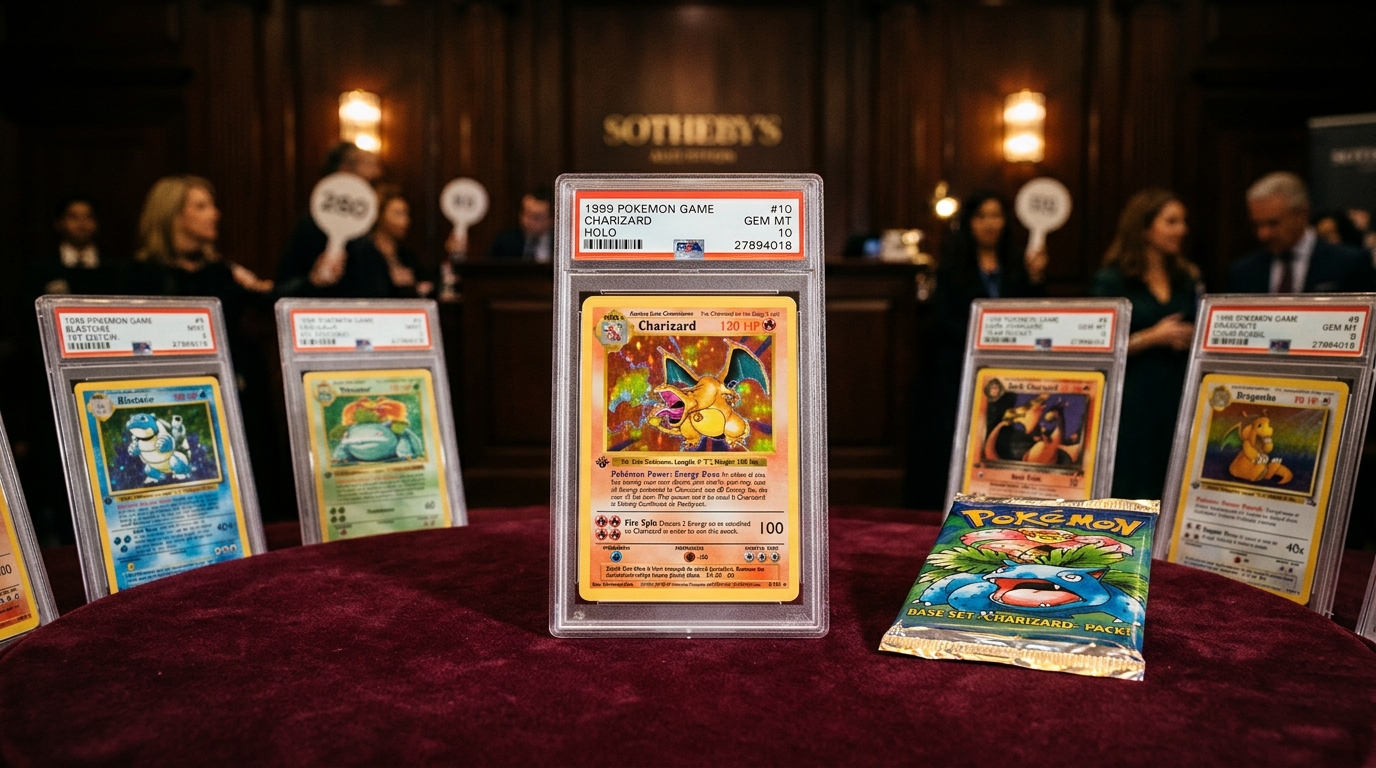
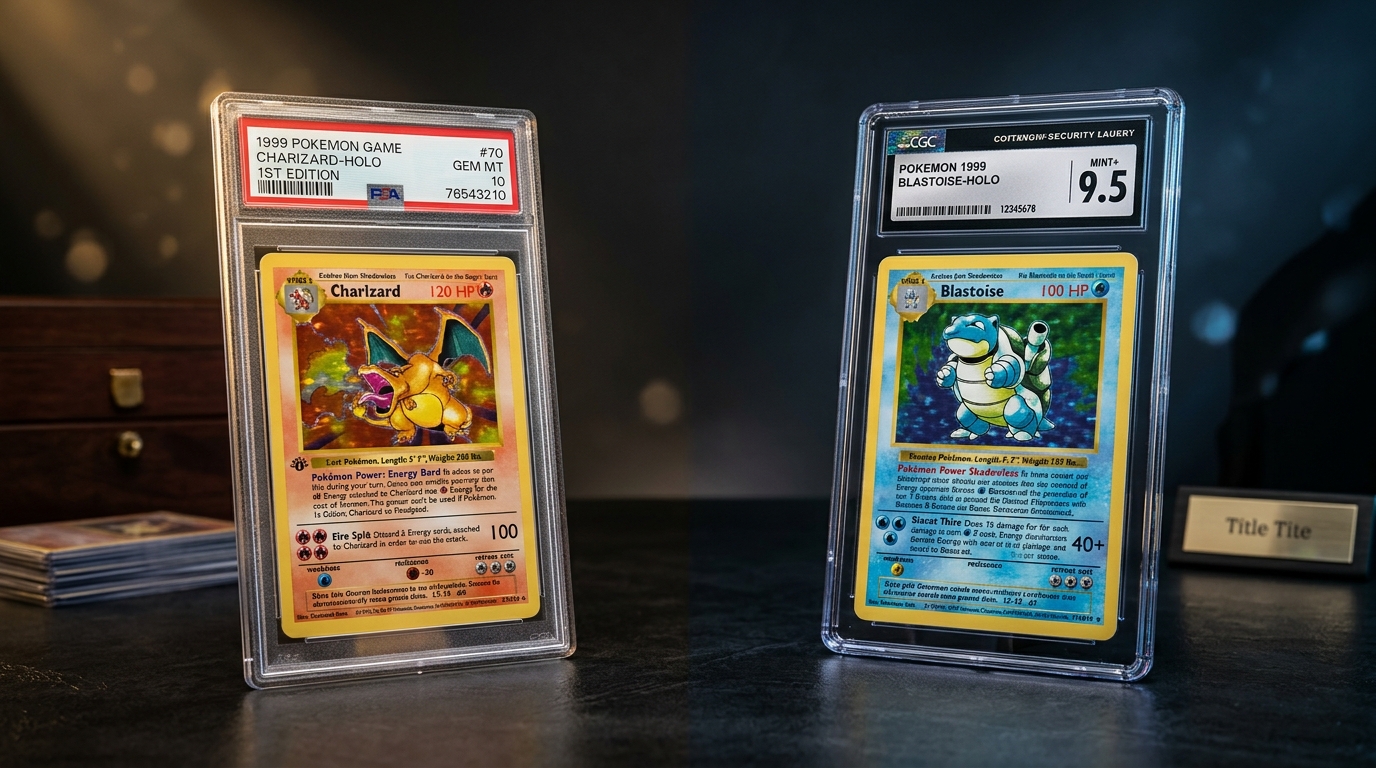
1st Edition Base Set Blastoise & Venusaur (Holo)
- PSA 10: Typically 8-12x PSA 9 pricing
- The gem rate for 1st Edition Base Set holos sits in the low single digits
Neo Genesis Lugia 1st Edition
- One of the lowest gem rates in all of Pokemon
- PSA 10 premiums frequently exceed 15x the PSA 9
Modern Chase Cards
Modern Charizard Alt Arts (2022-2026 era)
- PSA 10: Typically 1.5-2x the PSA 9 price
- Example gap: a $800 PSA 9 might sell for $1,400-$1,600 in PSA 10
Modern Pikachu Secret Rares
- PSA 10 premium: Often just 1.3-1.6x PSA 9
- High gem rates (50%+) keep the spread tight
You can research specific card multipliers using price history charts to see how PSA 10 vs PSA 9 spreads have evolved over time.
1. Gem Rate (The Most Important Factor)
Gem rate is the percentage of submissions that achieve a PSA 10 grade. It's the single most predictive factor for understanding the PSA 10 premium.
- Gem rate under 10%: Expect PSA 10 premiums of 5-20x
- Gem rate 10-30%: Expect premiums of 2-5x
- Gem rate 30-50%: Expect premiums of 1.5-2.5x
- Gem rate over 50%: Expect premiums of 1.2-1.7x
You can look up current gem rates and census information using PSA population data to assess any card's grading difficulty before submitting.
2. Card Demand
High-demand cards command outsized PSA 10 premiums because buyers compete aggressively for the best copies. Cards featuring:
- Charizard
- Pikachu
- Mew/Mewtwo
- Lugia
- Eeveelutions
...consistently show larger PSA 10 premiums than cards of equal rarity featuring less popular Pokemon.
3. Age and Scarcity
As a card ages, surviving mint copies become rarer. This creates a compounding effect where older cards naturally develop wider PSA 10 vs PSA 9 spreads over time.
The fundamental grading ROI question comes down to this formula:
(PSA 10 Value × Gem Rate) + (PSA 9 Value × PSA 9 Rate) + (Lower Grade Values × Lower Grade Rates) - Grading Costs - Raw Card Cost = Expected Return
For a typical modern submission:
- Grading cost: $18-$50 per card (depending on service level)
- Shipping: $5-$15 per submission
- Time: 30-90 days average turnaround in 2026
Quick Example: Modern Card Grading Math
Let's say you have a modern Charizard worth $100 raw:
- PSA 10 value: $400
- PSA 9 value: $220
- PSA 8 value: $130
- Gem rate: 35%
- PSA 9 rate: 40%
- PSA 8 or lower: 25%
- Grading cost: $25
Expected value: (0.35 × $400) + (0.40 × $220) + (0.25 × $130) - $25 = $140 + $88 + $32.50 - $25 = $235.50
Subtract the $100 raw cost, and your expected profit is $135.50 per card — but only if your pre-grading assessment is accurate.
To run these numbers on any specific card, our Grading ROI Calculator automates the math using live market data.
Note: Past performance does not guarantee future results. Always do your own research before making investment decisions.
Going for the PSA 10 is most rewarding in these scenarios:
Vintage Holos with Low Gem Rates
If you own a raw vintage card that looks pack-fresh, the potential 10-20x premium justifies the risk. Even if it comes back a PSA 9, you still typically profit significantly over raw value.
Pre-Grading Candidates Should Show:
- Perfect centering (55/45 or better)
- Sharp, undamaged corners under magnification
- Clean surface with no print lines or scratches
- No whitening on edges
- No visible print defects
High-End Modern Cards ($500+ Raw)
For expensive modern cards, even a 1.5x PSA 10 premium represents meaningful dollar gains that easily cover grading costs.
Sometimes buying a PSA 9 is the smarter financial move than chasing PSA 10:
1. When You're a Collector, Not a Flipper
PSA 9s often look visually identical to PSA 10s. If you're building a personal collection, paying 2-10x more for a technically better slab may not deliver meaningful enjoyment.
2. When Supply Is Thin at PSA 10
For ultra-rare vintage cards where only 10-30 PSA 10s exist, actually acquiring one requires competing at auction. PSA 9s offer a more attainable entry point into these iconic cards.
3. When Modern Premiums Are Minimal
If a modern card's PSA 10 is only 1.3x the PSA 9, the upside doesn't justify the hunting effort — buy the PSA 9 and enjoy the card.
Overestimating Your Card's Condition
Most collectors overestimate how well their raw cards will grade. PSA grading is notoriously strict on centering and surface — especially on modern cards with high-gloss foils that scratch easily.
Ignoring Grading Costs on Low-Value Cards
Never grade a card unless its PSA 9 value exceeds the grading cost plus the raw price. The math simply doesn't work on $5-$10 raw cards unless they're from sets with explosive upside potential.
Forgetting About Lower Grades
Remember that PSA 8 and below exist — and for modern cards, these grades often sell for less than raw value. Your expected value calculation must account for the full distribution of possible outcomes.
Chasing Gem Rate Without Checking Demand
A card with a 5% gem rate but no buyer demand won't generate PSA 10 premiums. Both scarcity AND demand must be present.
Some investors skip the grading game entirely and focus on sealed product prices like booster boxes and Elite Trainer Boxes. Sealed products offer:
- No grading risk
- No subjective condition assessment
- Simpler storage requirements
- Potential for opening and grading later
However, sealed products typically appreciate more slowly than top-tier graded singles during bull markets like 2026.
Several trends are reshaping the PSA 10 vs PSA 9 landscape in 2026:
- Record submission volumes. Pokemon's 30th anniversary has flooded graders with modern sets like Ascended Heroes, Perfect Order, and Chaos Rising.
- Longer turnaround times. Expect 60-90 days for standard service levels during peak periods.
- Widening vintage premiums. As fewer high-grade vintage cards enter the market, PSA 10 vs PSA 9 gaps continue expanding.
- Compressing modern premiums. High gem rates on modern alt arts are keeping premiums near historical lows.
- PSA 10s typically sell for 2-10x PSA 9 prices, but the multiplier varies enormously by era and demand.
- Vintage cards show 8-20x+ premiums due to low gem rates and decades of handling.
- Modern cards show 1.3-2x premiums due to improved print quality and high gem rates.
- Gem rate is the most predictive factor for understanding any card's PSA 10 premium.
- Grading ROI depends on three variables: raw cost, expected grade distribution, and grading fees.
- Not every card is worth grading. Run the math before submitting.
The PSA 10 vs PSA 9 question isn't really about which grade is "better" — it's about understanding the economics of condition sensitivity in the Pokemon market. For vintage collectors, chasing PSA 10s can be transformative. For modern collectors, the premium often isn't worth the hunt.
Whatever path you choose, make your grading decisions data-driven. Check gem rates. Study recent comparable sales. Calculate expected value. The collectors who consistently profit in the grading game are the ones who treat it like the probability-based business it actually is.
Note: Past performance does not guarantee future results. Always do your own research before making investment decisions.