Few collectibles in modern history have captured the imagination—and the wallets—of enthusiasts like the Base Set Charizard. From $5 playground trades in 1999 to seven-figure auction results in 2026, Charizard's price journey mirrors the explosive evolution of the entire Pokemon TCG hobby. As Pokemon celebrates its 30th anniversary in 2026, there's no better time to examine the data behind the most iconic card in the franchise.
This deep-dive analyzes 25+ years of Charizard price history, breaking down the key variants, record-breaking sales, market cycles, and what collectors need to know about the king of Pokemon cards today.
Before diving into the numbers, it's worth understanding why Charizard—specifically the 1999 Base Set holographic #4—has become the cultural and financial benchmark for the hobby:
- Nostalgia factor: Charizard was the chase card for millions of kids in 1999-2000
- Iconic artwork: Mitsuhiro Arita's illustration is arguably the most recognizable in TCG history
- Cross-generational demand: Appeals to both childhood collectors and modern investors
- Limited high-grade population: PSA 10 copies of 1st Edition remain extraordinarily scarce
- Celebrity endorsement effect: Logan Paul, Logic, and other high-profile buyers amplified mainstream awareness
Unlike many collectibles that cycle in and out of favor, Charizard has demonstrated remarkable price resilience across multiple market cycles.
1999-2003: The Foundation Era
When Base Set launched in North America in January 1999, Charizard holos retailed in booster packs that cost $2-3. Early playground and card shop trades valued Charizard anywhere from $5 to $100 depending on scarcity and condition awareness (which was minimal at the time).
Key early-era pricing:
- 1st Edition Shadowless Charizard (raw, NM): $100-300
- Shadowless Charizard (raw, NM): $50-150
- Unlimited Base Set Charizard (raw, NM): $20-75
Grading services existed but weren't widely used for Pokemon cards until later. The vast majority of cards were played with, bent, or stored poorly—a key reason PSA 10 populations remain so low today.
2004-2015: The Quiet Years
During this period, Pokemon TCG prices stayed relatively flat. The hobby had a devoted but small adult collector base. A 1st Edition Charizard in PSA 10 could be acquired for $2,000-5,000 during much of this era—a figure that seems almost unbelievable in hindsight.
Key dynamics during the quiet years:
- PSA grading became more standard for vintage cards
- Population reports began establishing scarcity benchmarks
- Online marketplaces (eBay) created price transparency
- Japanese Base Set variants remained obscure to Western collectors
2016-2019: The Awakening
Pokemon's 20th anniversary in 2016 sparked renewed interest. Prices for high-grade vintage Charizards began a steady climb:
- 2016: 1st Edition PSA 10 Charizard averaged $8,000-12,000
- 2018: Prices crossed $20,000 for pristine 1st Edition copies
- 2019: Market saw first $30,000+ sales as YouTube pack-opening content gained traction
2020-2021: The Logan Paul Boom
The pandemic-era collectibles boom transformed Charizard from a niche collectible into a mainstream alternative asset. Several catalysts drove explosive growth:
- October 2020: Logan Paul purchased a 1st Edition PSA 10 Charizard for $150,000
- July 2021: Logic-purchased 1st Edition PSA 10 sold for $220,574
- 2021 peak: 1st Edition PSA 10 Charizards briefly traded above $400,000
Sealed Base Set booster boxes, closely correlated with Charizard demand, saw even more dramatic appreciation. You can track historical trends for sealed product prices to see how booster box values moved alongside singles.
2022-2023: The Correction
As with most speculative asset classes, the 2020-2021 mania was followed by a meaningful correction:
- 1st Edition PSA 10 prices declined roughly 40-50% from 2021 highs
- Mid-grade vintage (PSA 7-8) saw steeper 50-60% corrections
- Sealed product values stabilized but remained well above 2019 levels
- Modern Charizard variants (like Hidden Fates Shiny Charizard) corrected significantly
Importantly, the floor established during this correction was dramatically higher than pre-2020 levels—suggesting structural demand had permanently shifted upward.
2024-2025: The Recovery and New Highs
The market stabilized through 2024 and resumed its climb in 2025:
- December 2025: A 1st Edition PSA 10 sold for $550,000 at Heritage Auctions, setting a new benchmark
- Grading backlogs cleared, and PSA 10 populations saw measured growth
- Japanese Base Set No Rarity Symbol variants gained Western collector attention
- Modern alt-art Charizards (Obsidian Flames, Scarlet & Violet 151) generated renewed interest
2026: The 30th Anniversary Supercycle
Pokemon's 30th anniversary in 2026 has produced the most remarkable Charizard price action in the card's history:
- February 2026: A 1st Edition Charizard PSA 10 sold for $954,800 at Goldin—an 87% jump from January's $510,000 sale
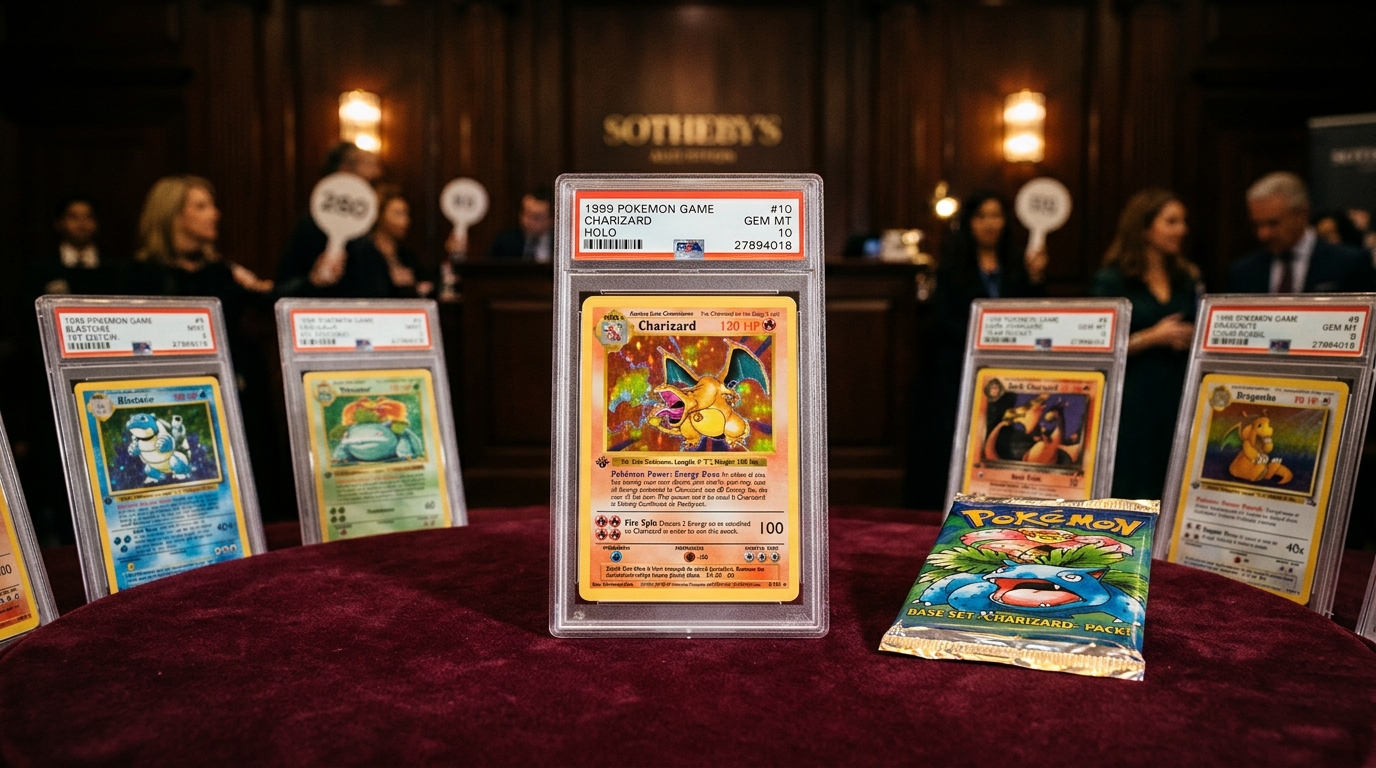
- March 7, 2026: A 1996 Japanese Base Set No Rarity Symbol Charizard #6 PSA 10 (signed and encased by illustrator Mitsuhiro Arita) sold for $1,232,200 at Goldin—the most valuable Charizard sale ever confirmed
- October 23, 2026: A 1st Edition PSA 10 hammered for $1,380,000 at Fanatics Collect (though the sale was reportedly unpaid as of late October)
- October 25, 2026: An English EX Dragon Frontiers Gold Star Charizard #100 PSA 10 sold for $430,660 at Goldin—up from $195,200 in May 2026
The 2026 market has pushed Charizard firmly into blue-chip collectible territory, with multiple seven-figure sales confirmed across different variants.
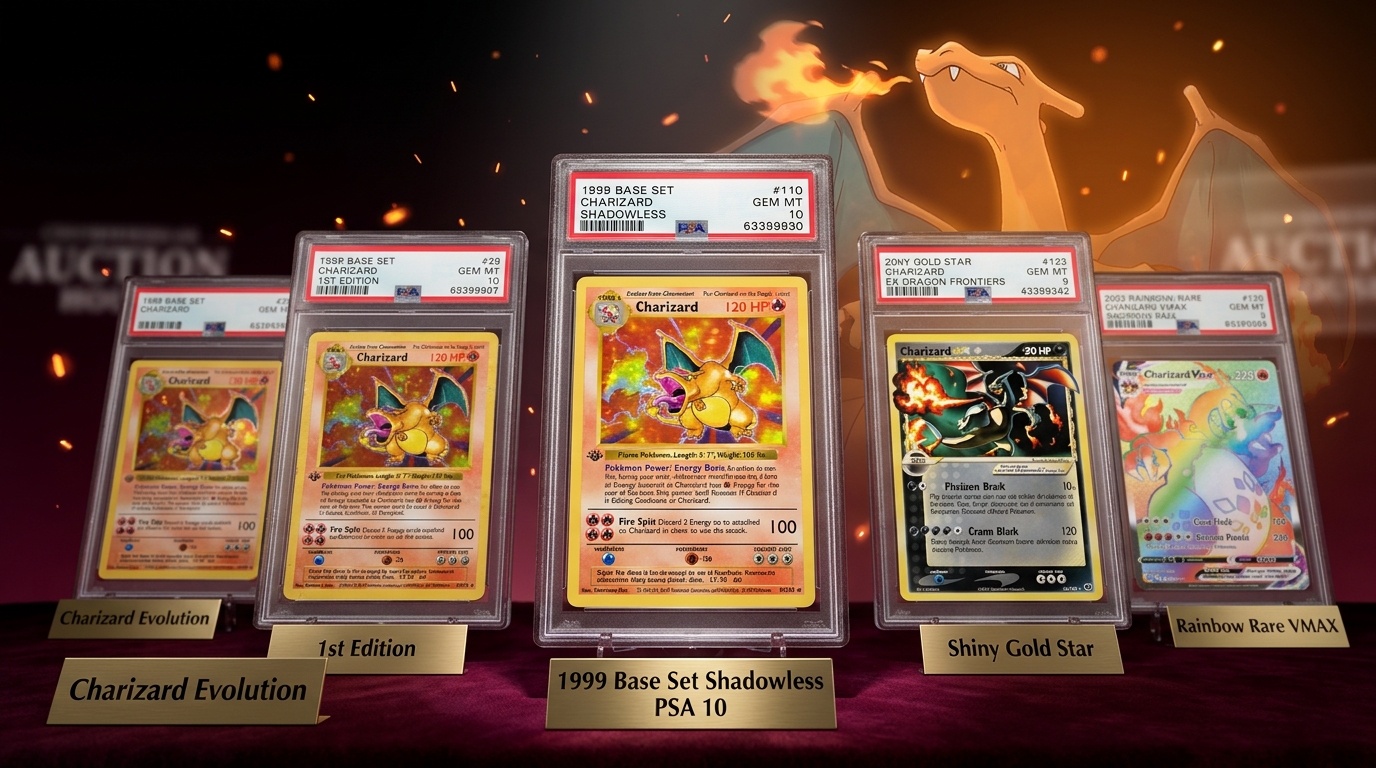
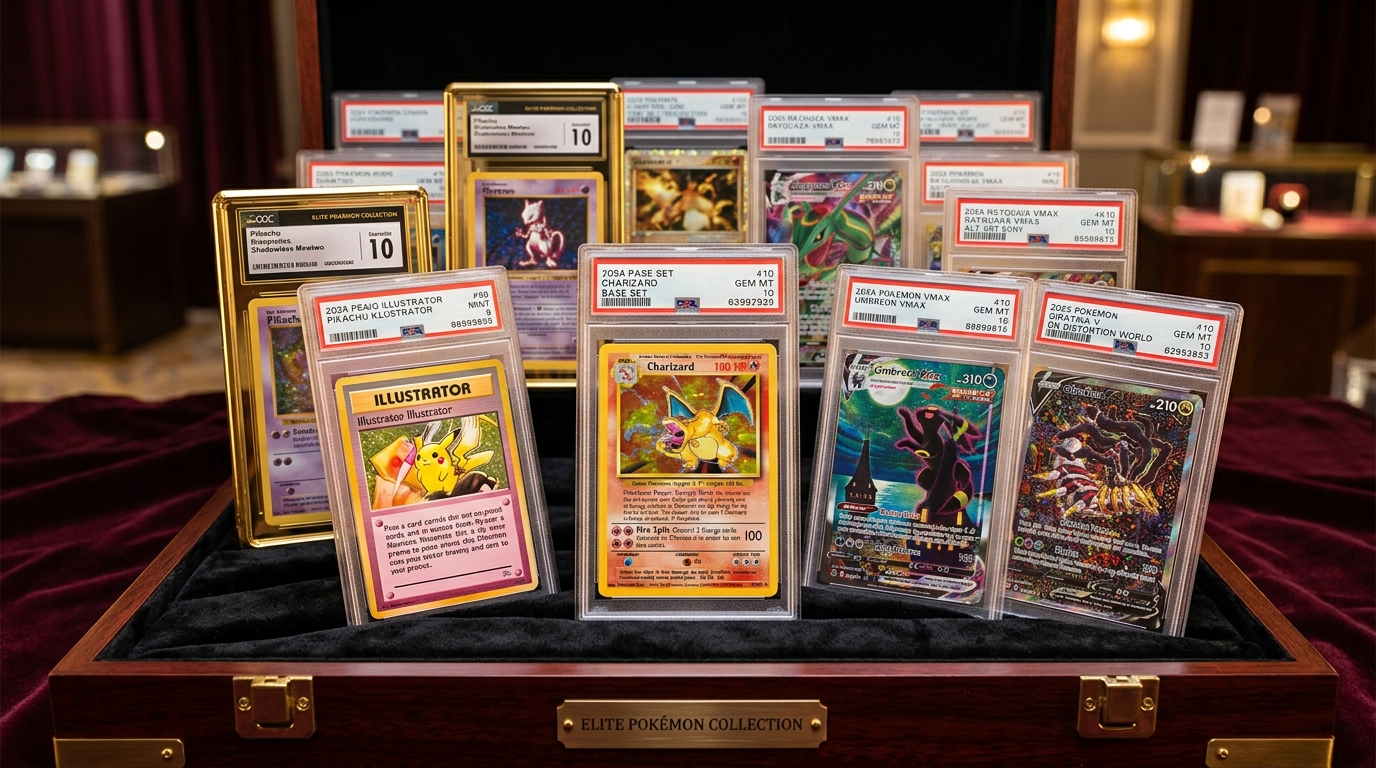
Not all Charizards are created equal. Here's how the most important variants rank in the 2026 market, from highest to lowest average PSA 10 value:
Tier 1: Trophy-Level Variants ($400,000+)
- 1996 Japanese Base Set No Rarity Symbol Charizard #6 – The rarest mainstream Charizard, with signed/encased examples exceeding $1.2M
- 1999 1st Edition Shadowless Base Set Charizard #4 – The flagship chase card, regularly trading $500,000–$1,380,000 in PSA 10
- 2006 EX Dragon Frontiers Gold Star Charizard #100 – Modern-era crown jewel, PSA 10s approaching $500,000
Tier 2: Premium Vintage ($10,000–$100,000)
- 1999 Shadowless Base Set Charizard #4 (non-1st Edition)
- 1999 Unlimited Base Set Charizard #4 in PSA 10
- 2002 Legendary Collection Charizard (Reverse Holo)
- 2003 Skyridge Crystal Charizard #146
Tier 3: Modern Premium ($500–$5,000)
- 2019 Hidden Fates Shiny Charizard GX SV49
- 2020 Champion's Path Charizard V/VMAX
- 2023 Obsidian Flames Charizard ex (Alt Art)
- 2023 Scarlet & Violet 151 Charizard ex (SIR)
You can research current market values and historical trends for any of these variants through Charizard prices on Pokemon Price Tracker.
Understanding the Shadowless vs. Unlimited Price Gap
One of the most important distinctions for new collectors is the difference between the three main 1999 Base Set print runs:
| Variant | Visual Markers | PSA 10 Value Range (2026) |
|---|
| 1st Edition Shadowless | "Edition 1" stamp, no shadow behind art | $500,000–$1,380,000 |
| Shadowless (no stamp) | No shadow behind art, no stamp | $30,000–$75,000 |
| Unlimited | Shadow behind art | $8,000–$20,000 |
The "shadow" refers to the drop shadow on the right side of the artwork border. Shadowless cards were printed earlier and in smaller quantities before Wizards of the Coast added the shadow effect for better readability.
The extreme prices commanded by top-tier Charizards are driven by brutal grading standards and small PSA 10 populations:
- 1st Edition Shadowless Charizard PSA 10: Population around 120-130 (as of 2026)
- Shadowless Charizard PSA 10: Approximately 400-500
- Unlimited Charizard PSA 10: Approximately 2,000+
These numbers help explain why PSA 10 prices can be 10-20x higher than PSA 9 prices for the same card. Collectors researching graded populations can review detailed population data to understand how scarcity drives value.
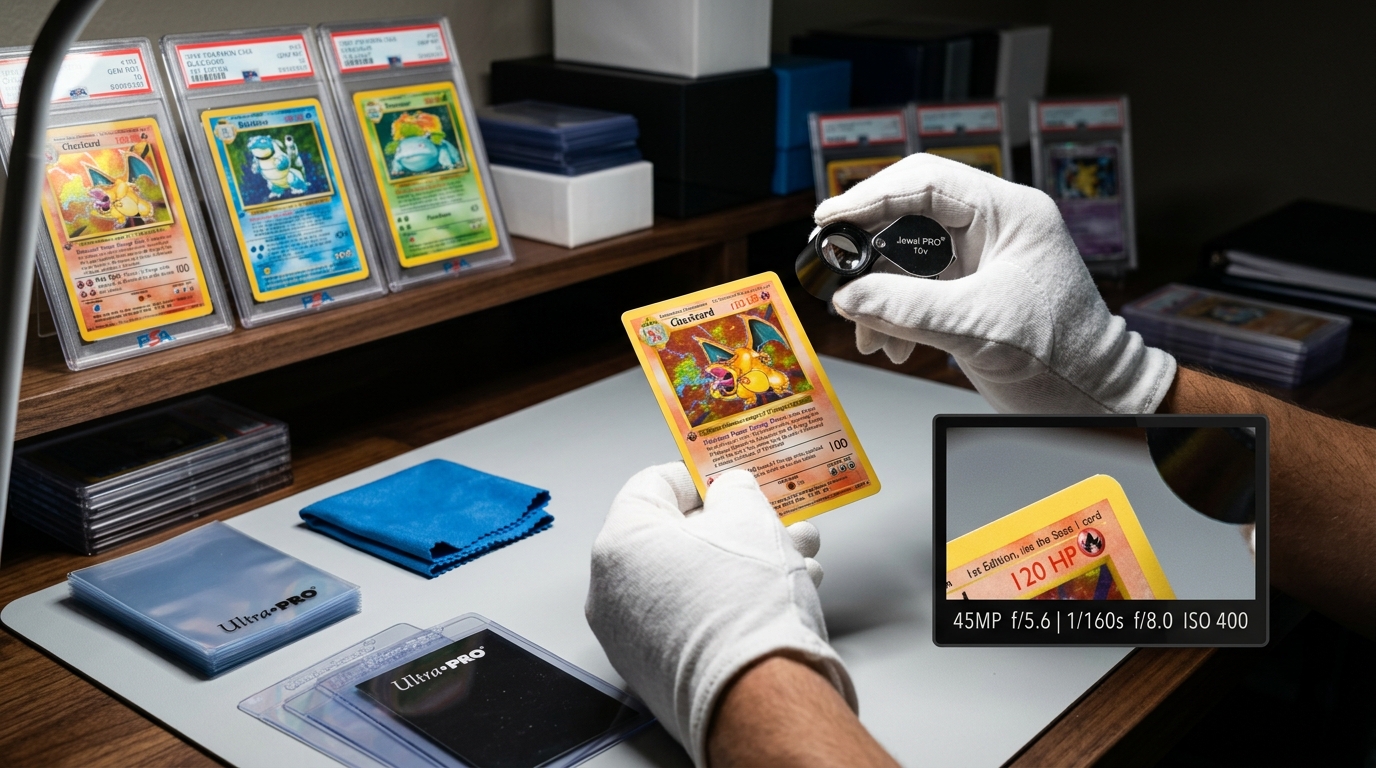
This is one of the most common questions facing Charizard owners. The answer depends heavily on the card's current condition and which variant you own.
General guidelines for 2026:
- Unlimited Base Set Charizard: Grading only makes sense for likely PSA 9+ candidates
- Shadowless Charizard: Grading is almost always worthwhile if the card is NM or better
- 1st Edition Shadowless: Grade it—the ROI is virtually guaranteed for any grade PSA 7 or higher
- Modern Charizards: Only grade cards with pristine centering and no visible flaws
Before sending any card for grading, run the numbers through the Grading ROI Calculator to compare raw prices, grading fees, and expected PSA 10/9/8 values.
Looking at historical compound annual growth rates (CAGR) for 1st Edition PSA 10 Charizard:
- 5-year CAGR (2021-2026): Approximately 25-30% annualized (from ~$220K to ~$950K+)
- 10-year CAGR (2016-2026): Approximately 50%+ annualized
- 25-year CAGR (1999-2026): Over 30% annualized when adjusting for early raw prices
These returns dramatically outpace traditional asset classes, but it's crucial to understand that:
- Performance has been highly cyclical, with significant drawdowns
- Transaction costs (grading fees, auction premiums, shipping) are substantial
- Liquidity for ultra-high-end cards can be limited
- The top of the market represents a tiny subset of Charizard holdings
Note: Past performance does not guarantee future results. Always do your own research before making investment decisions.
Five key factors have historically driven Charizard price movements:
1. Macro Market Cycles
Pokemon card prices correlate (loosely) with broader collectibles markets, discretionary spending, and risk asset sentiment.
2. Anniversary Years
Pokemon's 20th (2016), 25th (2021), and 30th (2026) anniversaries have each produced meaningful price appreciation.
3. Celebrity and Influencer Activity
High-profile purchases by Logan Paul, Logic, Steve Aoki, and others have historically preceded broader price surges.
4. Supply Shocks
Major PSA grading backlogs (2020-2021) temporarily constrained supply, while backlog clearings have periodically increased PSA 10 populations.
5. Modern Charizard Releases
New Charizard cards (like 2023's Obsidian Flames alt art) generate media coverage that benefits vintage prices through brand reinforcement.
Whether you're a long-time collector or new to the hobby, several lessons emerge from 25+ years of Charizard price data:
- Condition is everything: PSA 10s outperform PSA 9s by 5-20x in most variants
- 1st Edition commands enormous premiums: The "Edition 1" stamp is worth hundreds of thousands
- Japanese variants are catching up: No Rarity Symbol cards now command Western-level premiums
- Market cycles are real: The 2022 correction wiped out 40-50% of peak values temporarily
- Modern Charizards carry risk: High initial prices can correct sharply as populations grow
- Grading decisions matter: Not every card belongs in a slab—run the numbers first
As 2026 continues, Charizard remains the most-watched card in the Pokemon TCG market. The 30th anniversary celebrations, continued mainstream media coverage, and the card's unparalleled cultural significance suggest sustained attention—though prices at these levels inevitably carry elevated volatility.
For collectors, the lesson from 25 years of price history is simple: Charizard rewards patience, condition consciousness, and careful variant selection. Whether a 1st Edition PSA 10 crosses $2 million in the coming years or experiences another meaningful correction, the card's place as the king of Pokemon collecting is firmly established.
Note: Past performance does not guarantee future results. Always do your own research before making investment decisions.