Pokemon Card Reprint Guide: Value Impact Analysis 2026
As Pokemon celebrates its 30th anniversary in 2026, collectors and investors face a critical question: how do reprints affect the value of their cards? With The Pokemon Company's aggressive reprint strategy for popular sets like Prismatic Evolutions and the continued resurgence of vintage cards, understanding reprint dynamics has never been more important.
This comprehensive guide examines how reprints impact Pokemon card values, analyzing historical data, current market trends, and the fundamental differences between original prints and their reprinted counterparts.
Understanding Pokemon's Reprint Philosophy
The Pokemon Company International (TPCi) has maintained a consistent approach to reprints since the game's inception, though their strategy has evolved significantly over three decades.
The Core Reprint Strategy
TPCi reprints sets and individual cards to:
- Maintain accessibility for competitive players who need specific cards for tournament play
- Meet sustained demand when products sell out faster than anticipated
- Combat secondary market speculation that prices out younger collectors
- Celebrate anniversaries and milestones with special commemorative releases
Unlike some trading card games that implement strict reserve lists (cards that will never be reprinted), Pokemon has always reserved the right to reprint any card. This fundamental policy shapes the entire market and creates distinct value dynamics between original prints and reprints.
How Pokemon Reprints Work
Pokemon reprints fall into several categories:
- Same-set reprints: Additional print runs of the same set with identical cards
- Cross-set reprints: Popular cards reprinted in later sets (often with new artwork or holofoil patterns)
- Special collection reprints: Cards included in premium collections, tins, or promotional products
- Anniversary reprints: Commemorative releases like Evolutions (2016) and Celebrations (2021)
The Value Impact: Modern Cards (2020-2026)
The modern era has seen dramatic examples of how reprints affect card values, particularly as TPCi has become more aggressive with reprint strategies.
Case Study: Prismatic Evolutions (2025-2026)
Prismatic Evolutions serves as the quintessential example of aggressive reprint impact:
Initial Release (January 2025)
- Umbreon ex Special Illustration Rare peaked at $1,550 in April 2025
- Set sold out immediately, creating artificial scarcity
- Secondary market prices skyrocketed across all chase cards
Post-Reprint Reality (2026)
- Multiple reprint waves throughout 2025-2026
- Umbreon ex SIR dropped to $882-991 (40%+ decline)
- Other special illustration rares experienced similar 35-45% corrections
- Booster box prices stabilized as supply met demand
This pattern demonstrates how sustained reprints compress modern card values, particularly for cards less than 2-3 years old.
Ascended Heroes Reprint Effect
When Ascended Heroes received reprint announcements in early 2026:
- Pikachu ex SIR from Surging Sparks: $320 → $254 (21% decline)
- Charizard ex variants: 15-25% value drops across different versions
- Standard full art cards: 10-15% corrections on average
The announcement alone triggered selling pressure before physical reprints even hit shelves, highlighting how reprint expectations drive immediate market reactions.
Pokemon 151 International Impact
The Japanese Pokemon 151 set provides valuable data:
- Pre-reprint booster boxes: ¥20,000 (~$132 USD)
- Post-reprint announcement: ¥14,999 (~$99 USD)
- Total decline: 25% in booster box value
- Individual chase cards dropped 20-30% on average
The Modern Reprint Timeline
Based on 2024-2026 data, modern sets typically follow this pattern:
Months 1-3: Peak prices as initial supply sells out Months 4-6: First reprint wave causes 15-25% corrections Months 7-12: Additional reprints stabilize prices 30-40% below peaks Years 2-3: Prices find long-term equilibrium based on actual demand Years 4+: True collector demand determines value independent of print runs
Original vs. Reprint: The Vintage Premium
The relationship between original prints and reprints becomes more complex and valuable as cards age, particularly for Wizards of the Coast (WOTC) era cards from 1999-2003.
The 1st Edition Premium
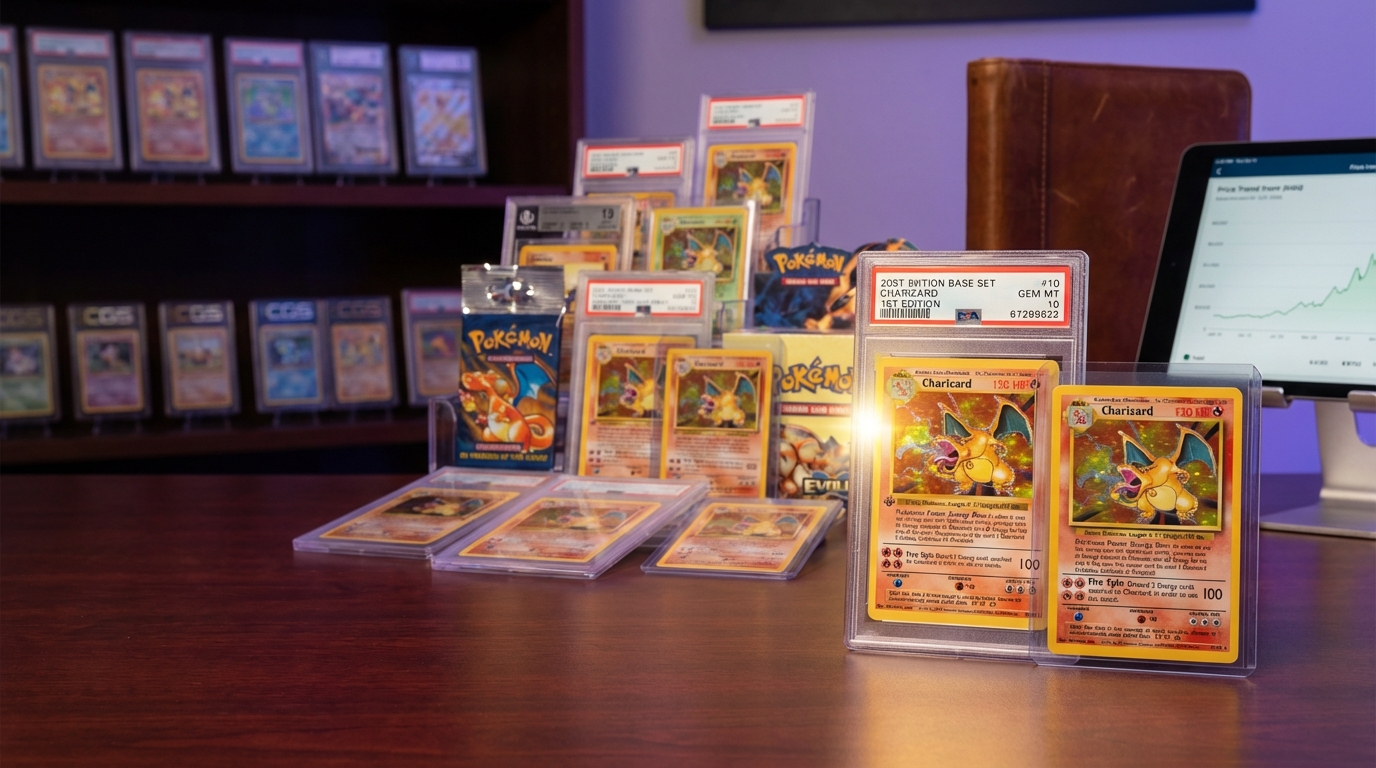
First edition WOTC cards command extraordinary premiums over their unlimited counterparts:
Base Set Charizard (PSA 10)
- 1st Edition: $300,000-500,000+ (only ~120 copies exist)
- Unlimited: $30,000-50,000
- Premium difference: 90%+ value retention for 1st Edition
Base Set Blastoise (PSA 9)
- 1st Edition: $8,000-12,000
- Unlimited: $800-1,200
- Premium difference: 85-90%
This premium exists because:
- Extreme scarcity: 1st Edition print runs were significantly smaller
- Historical significance: These represent the first Pokemon cards ever printed in English
- Population reports: Far fewer high-grade 1st Edition cards exist
- Collector prestige: 1st Edition stamps carry inherent desirability
Shadowless vs. Unlimited Base Set
Even within Base Set, print variations create value differences:
- Shadowless Charizard: Printed after 1st Edition but before Unlimited
- Commands 40-60% premium over Unlimited versions
- Represents a middle ground in scarcity and desirability
- PSA 10 Shadowless Charizard: $50,000-80,000
Base Set 2 and Later Reprints
When Pokemon reprinted Base Set as "Base Set 2" in 2000:
- Cards featured updated copyright dates and different holofoil patterns
- Base Set 2 Charizard (PSA 10): $3,000-5,000
- Represents 90%+ value discount compared to original Base Set Unlimited
- Viewed as commemorative rather than collectible by serious vintage collectors
Evolutions (2016) and Celebrations (2021)
Modern anniversary sets reprinting Base Set cards:
Evolutions Charizard (2016)
- PSA 10: $400-600
- Features modern card template and printing technology
- 98% value discount compared to original Base Set
Celebrations Charizard (2021)
- PSA 10: $150-250
- 25th anniversary commemorative reprint
- 99%+ value discount compared to original
These reprints demonstrate that nostalgia-driven reprints do not cannibalize original card values when sufficient time has passed and the reprints are clearly distinguished as commemorative releases.
Why Original Prints Maintain Premium Value
Several factors protect original print values from reprint erosion:
1. Population Scarcity
Graded population data reveals why originals command premiums:
- Base Set 1st Edition Charizard PSA 10: ~120 copies worldwide
- Base Set Unlimited Charizard PSA 10: ~3,000+ copies
- Modern reprint Charizard PSA 10: 10,000+ copies
The population data shows that original prints, especially 1st Editions, exist in dramatically smaller quantities, creating fundamental scarcity that reprints cannot diminish.
2. Historical Significance
Original prints carry historical weight:
- First appearances of iconic Pokemon
- Connection to specific eras of the game's history
- Part of the original collector experience
- Nostalgia factor for players who owned them as children
3. Print Quality and Authenticity
Vintage cards possess characteristics reprints cannot replicate:
- Original WOTC printing techniques and cardstock
- Specific holofoil patterns unique to their era
- Natural aging and patina that authenticates age
- Manufacturing quirks specific to original print runs
4. Collector Psychology
"First is best" mentality drives premium values:
- Original prints represent the "true" version in collectors' minds
- Completing vintage sets with original cards carries prestige
- Investment-focused buyers prefer originals for long-term value retention
- Reprints viewed as accessible alternatives, not replacements
Market Trends: The 2026 Vintage Renaissance
As Pokemon enters its 30th anniversary year, the vintage card market is experiencing remarkable growth:
WOTC Card Performance (2025-2026)
- Vintage cards showing 30-50% price increases year-over-year
- Base Set, Jungle, and Fossil holos leading growth
- Neo-era cards (2000-2001) experiencing renewed collector interest
- E-Reader series cards (2002-2003) emerging as undervalued vintage
The Collector-Driven Market
The market has fundamentally shifted since the 2020-2021 speculative bubble:
2020-2021 Characteristics:
- Speculator-driven price spikes
- Investment focus on modern sealed products
- Rapid price volatility
- Unsustainable growth rates
2026 Market Reality:
- Genuine collectors driving steady demand
- Focus on condition and authenticity
- Stable, sustainable price appreciation
- Emphasis on completing sets and personal collections
This collector-driven ecosystem actually benefits original prints while allowing reprints to serve their intended purpose: providing affordable access to beloved cards.
Strategic Implications for Collectors and Investors
For Vintage Card Collectors
Reprints pose minimal threat to your holdings:
- Focus on condition: High-grade originals (PSA 9-10) maintain the strongest premiums
- Prioritize 1st Editions: The ultimate protection against reprint value erosion
- Document authenticity: Maintain provenance records for valuable cards
- Consider grading: Professional grading protects value and confirms authenticity
For Modern Card Collectors
Reprints require strategic awareness:
- Buy during reprint waves: Wait for price stabilization before purchasing chase cards
- Focus on first prints: Early print runs may develop premiums over time
- Track print run indicators: Serial numbers, set codes, and printing variations
- Accept volatility: Modern cards under 3 years old remain subject to reprint pressure
For Investors
Understand reprint risk in your portfolio:
- Vintage cards (pre-2003): Minimal reprint risk, reprints don't diminish original value
- Modern cards (2020-present): High reprint risk, expect 30-50% corrections
- Mid-era cards (2004-2019): Moderate risk, selective reprints possible
- Sealed products: Reprint announcements can trigger 20-30% immediate corrections
Note: Past performance does not guarantee future results. Always do your own research before making investment decisions.
For Players and Budget Collectors
Reprints serve you well:
- Wait for reprints: Popular sets almost always receive additional print runs
- Buy reprinted singles: Functionally identical for gameplay at fraction of cost
- Consider commemorative sets: Celebrations-style sets offer affordable nostalgia
- Don't fear reprints: They make the hobby more accessible and sustainable
Identifying Original vs. Reprint Cards
Knowing how to distinguish original prints from reprints protects your collection:
WOTC Era Cards (1999-2003)
Look for these indicators:
- Copyright dates: Original Base Set shows "©1995, 96, 98, 99"
- 1st Edition stamp: Small "1st Edition" stamp on left side of image
- Shadowless: No shadow around image box (early Base Set only)
- Set symbols: Later sets include set symbols (Jungle, Fossil, etc.)
- Card number format: Original format vs. modern reprints
Modern Era Reprints
Distinguishing features:
- Updated copyright dates: Reprints show later copyright years
- Different set codes: Reprint sets have unique identifiers
- Holofoil patterns: Modern reprints use different holofoil technology
- Card stock: Reprints may use updated card stock and coating
- Regulation marks: Modern cards include regulation marks for tournament legality
Special Reprint Collections
Easy to identify:
- Clearly marked as special collections (Celebrations, Evolutions, etc.)
- Different set numbers and symbols
- Often include commemorative stamps or logos
- Packaging explicitly states reprint nature
The Future of Pokemon Reprints (2026 and Beyond)
Based on current trends and TPCi's stated policies:
Expected Reprint Patterns
- Continued aggressive reprinting of popular modern sets to combat scalping
- Anniversary celebrations will likely reprint iconic cards every 5-10 years
- No vintage reprints of actual WOTC cards in original format (confirmed policy)
- Commemorative releases will continue celebrating Pokemon history
Protecting Your Collection
Long-term value preservation strategies:
- Focus on originals: First prints and 1st Editions for vintage cards
- Grade valuable cards: Professional grading confirms authenticity and condition
- Diversify eras: Balance vintage, mid-era, and modern holdings
- Accept reprint reality: Modern cards will be reprinted; plan accordingly
- Buy what you love: Personal enjoyment provides value beyond market price
Market Predictions
While no one can guarantee future performance, historical patterns suggest:
- Vintage originals will continue appreciating as supply dwindles and demand grows
- Modern chase cards will experience 30-50% corrections within 18 months of release
- Mid-era cards (2010-2019) may develop stronger premiums as they age beyond reprint windows
- Sealed vintage products will command increasing premiums as unopened supply depletes
Reprint Impact by Card Type
Different card types respond differently to reprints:
Ultra-Rare Modern Cards
Special Illustration Rares, Alt Arts, Secret Rares:
- Most vulnerable to reprint corrections (40-50% drops possible)
- Rely heavily on scarcity for value
- Multiple reprint waves compress prices significantly
- Long-term value depends on iconic status and artwork quality
Vintage Holos
WOTC holofoil rare cards:
- Minimal vulnerability to reprint impact
- Commemorative reprints don't diminish original value
- Historical significance protects value
- Condition becomes primary value driver
Promotional Cards
Special release promos:
- Variable vulnerability depending on distribution
- Limited distribution promos maintain value better
- Mass distribution promos subject to reprint risk
- Original release versions develop premiums over reprints
Full Art Trainers and Supporters
Popular full art trainer cards:
- Moderate vulnerability to targeted reprints
- Competitive play demand drives reprint decisions
- Original versions may develop small premiums
- Artwork variations create collecting sub-markets
Common Reprint Misconceptions
Several myths about reprints persist in the community:
Myth 1: "Reprints Kill Original Card Value"
Reality: Vintage data proves otherwise. Base Set Charizard has been "reprinted" multiple times (Base Set 2, Evolutions, Celebrations), yet original values have increased 1000%+ since 2015.
Myth 2: "All Reprints Are Identical"
Reality: Reprints feature different printing technology, copyright dates, set codes, and often different artwork or holofoil patterns. They're easily distinguishable.
Myth 3: "Modern Cards Are Safe from Reprints"
Reality: TPCi has explicitly stated they will reprint any card needed for game accessibility. No modern card is immune to reprints.
Myth 4: "Reprints Mean Cards Are Worthless"
Reality: Even heavily reprinted modern cards maintain value based on actual collector demand. Reprints find equilibrium prices, not zero.
Myth 5: "You Can't Tell Originals from Reprints"
Reality: Multiple distinguishing features make identification straightforward for anyone who knows what to look for.
Conclusion: Navigating the Reprint Reality
Understanding reprint dynamics is essential for anyone involved in Pokemon card collecting or investing in 2026. The key takeaways:
For Vintage Collectors
- Your original prints are safe: 25+ years of data confirms reprints don't diminish vintage original values
- First editions command extraordinary premiums: The ultimate protection against any reprint concerns
- Focus on condition: High-grade originals will continue appreciating
For Modern Collectors
- Reprints are inevitable: Plan for 30-50% corrections on chase cards within 18 months
- Buy during reprint waves: Patience rewards you with stabilized prices
- First prints may develop premiums: Early adoption has potential long-term benefits
For All Collectors
- Reprints serve a purpose: They make the hobby accessible and sustainable
- Original prints maintain prestige: "First is best" psychology protects original values
- Knowledge is protection: Understanding reprint patterns helps you make informed decisions
As Pokemon celebrates 30 years in 2026, the reprint system has proven itself sustainable and beneficial. Vintage originals continue appreciating, modern cards find fair equilibrium prices after reprints, and new collectors can access the hobby affordably. By understanding these dynamics, you can build a collection that brings both enjoyment and long-term value.
The Pokemon TCG remains the world's most popular trading card game, and its balanced approach to reprints ensures it will continue thriving for decades to come. Whether you're chasing vintage grails or modern chase cards, understanding reprint impact helps you navigate the market with confidence.
Note: Past performance does not guarantee future results. Always do your own research before making investment decisions.
Tags:
Pokemon Price Tracker
Market Analyst
Related Articles
Best Pokemon Booster Boxes to Buy and Hold in 2026
From Evolving Skies to Japanese Pokemon 151, discover the best Pokemon booster boxes to buy and hold in 2026. Data-driven picks, portfolio strategy, and key metrics to watch for long-term sealed investors.
Pokemon Price Tracker
PSA 10 vs PSA 9: 2026 Price Gap Analysis & ROI Data
PSA 10s command 3x to 20x more than PSA 9s in 2026, but the gap varies wildly by card and era. We break down real sales data, ROI frameworks, and when grading actually makes financial sense.
Pokemon Price Tracker
Japanese vs English Pokemon Cards: Which Holds Value in 2026?
The Japanese vs English Pokemon card debate has fundamentally shifted in 2026. Japanese PSA 10s now command 20-40% premiums over English equivalents, while raw English cards still cost 2x-6x more. Here's how to navigate both markets strategically.
Pokemon Price Tracker
Stay Updated
Subscribe to our newsletter for the latest Pokemon card market trends, investment opportunities, and exclusive insights delivered straight to your inbox.