Selling Pokemon Cards in 2026: Best Platforms & Pricing
Pokemon Price Tracker
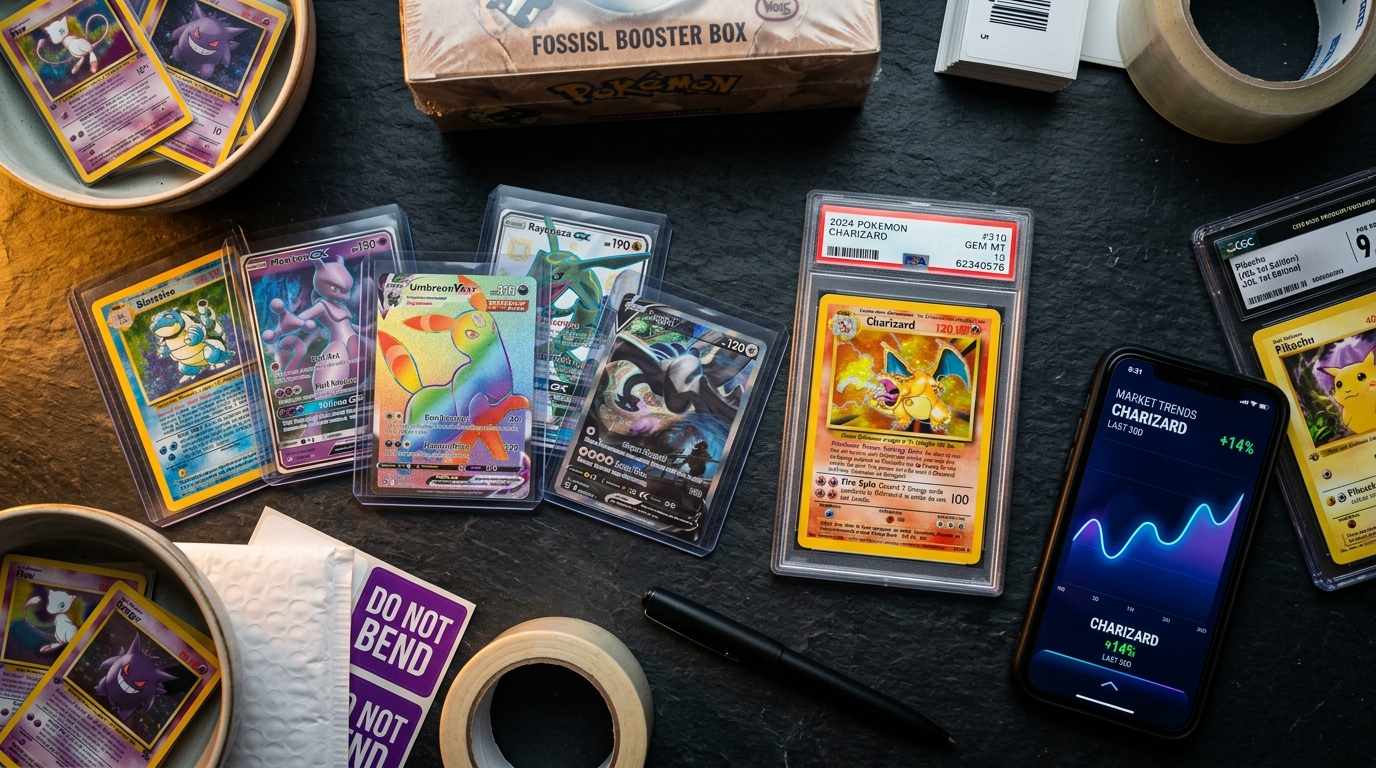
Selling Pokemon Cards in 2026: Best Platforms and Pricing Strategies
The Pokemon TCG secondary market is bigger than ever in 2026, with resale volume hitting $2.1 billion by mid-year and PSA submissions climbing 22% in February following the 30th Anniversary celebration. For sellers, this is both an opportunity and a challenge: more buyers mean more demand, but also more platforms, more fees, and more complex pricing decisions.
Whether you're flipping a single PSA 10 Charizard, offloading a binder of modern bulk, or moving sealed booster boxes, choosing the right marketplace can mean the difference between a 6% and a 16% fee bite. This guide breaks down every major selling platform in 2026, walks through real fee math, and shares pricing strategies that consistently move cards at fair market value.
The 2026 Pokemon Selling Landscape
Before diving into specific platforms, it's worth understanding where the market sits today. The 30th Anniversary set release on February 27, 2026, triggered a wave of nostalgia-driven buying, lifting prices on vintage Base Set, Jungle, and Fossil cards by an average of 18-30% year-over-year. Goldin's record-breaking $16.49M sale of the Pikachu Illustrator in early 2026 cemented Pokemon's position as a legitimate alternative asset class, and that halo effect has trickled down to mid-tier collectibles.
What does this mean for sellers? Demand exists across every tier — but liquidity, fees, and audience quality vary dramatically by platform. The right choice depends on three variables:
- Card value (sub-$20, $20-$200, $200-$1,000, $1,000+)
- Card type (raw singles, graded slabs, sealed product, bulk lots)
- Your time investment (passive listing vs. active live selling)
Platform-by-Platform Breakdown
1. eBay — The Default for Graded and High-Value Cards
eBay still dominates Pokemon sales, holding roughly 58% of total transaction volume in 2026. It's the most liquid market for PSA 10s, vintage holos, and any card priced above $100.
Fee structure (2026):
- 13.25% final value fee
- 2.9% + $0.30 payment processing
- Total effective fee: ~15-16%
Authenticity Guarantee is now mandatory for any card sold at $250 or above. Cards route through eBay's authentication center, which adds 3-5 business days to delivery and a $12-22 handling fee paid by the buyer. This has dramatically reduced fraud and counterfeit complaints, but it also means sellers need to package carefully — rejected items get returned at the seller's expense.
Best for:
- PSA/CGC/BGS graded cards
- Vintage WOTC-era cards
- Auction-format chase cards (Charizards, Lugias, modern alt arts)
- Anything priced $100+
Pricing tip: Use eBay's "Sold" filter (not "Completed") to see actual transaction prices over the past 90 days, then price 5-10% below the median for fast turnover or at the median for patient selling.
2. TCGPlayer — King of Raw Singles and Playsets
For raw modern singles, TCGPlayer is unbeatable. Its standardized condition tiers (NM, LP, MP, HP, DMG) and integrated pricing tools make it the go-to for competitive players buying staples — which means fast sales for sellers.
Fee structure (2026):
- 10.25% commission
- 2.5% + $0.30 payment processing
- Total effective fee: ~13%
- Optional Seller Pro subscription: $19.99/month for dynamic pricing
TCGPlayer also boasts the lowest dispute rate of any major platform at 0.42%, largely because buyers know exactly what condition they're getting.
Best for:
- Modern singles in the $2-$50 range
- Playsets of competitive cards
- Bulk lots of commons/uncommons
- Sellers with 100+ cards to list
Pricing tip: TCGPlayer's algorithm rewards listings priced at or just below the current market price. If you're 10%+ above market, your card buries on page 5 and never sells. Use the price history charts on Pokemon Price Tracker to see whether prices are trending up (hold firm) or down (undercut to move quickly).
3. Whatnot — Live Selling and Sealed Product Champion
Whatnot's live auction format has exploded in 2026, particularly for sealed product and pack openings. Sellers go live, viewers bid in real time, and the energy of a live audience often pushes final prices above static marketplace listings.
Fee structure (2026):
- 8% seller fee
- Payment processing (~3%)
- Total effective fee: ~11% — the lowest of any major platform
The catch: Whatnot requires a 1-2 week seller approval process, and successful sellers typically need to commit to consistent streaming schedules to build an audience.
Best for:
- Sealed booster boxes and ETBs
- Live break/pack-opening shows
- Mystery packs and repacks
- Sellers comfortable on camera
Pricing tip: Whatnot buyers respond to scarcity and urgency. Setting low starting bids ($1) on desirable items often generates higher final prices than fixed BIN pricing — but only if your stream pulls 50+ concurrent viewers.
4. PWCC Marketplace — High-End Specialist ($500+)
PWCC caters to the upper end of the market and is the preferred venue for cards priced $500 and above. Their tiered fee structure starts at 12% and decreases for higher-value items, making them increasingly competitive on cards above $2,500.
Best for:
- Vintage Charizards, Blastoises, and Pikachus
- High-grade modern alt arts ($500+)
- Sealed vintage product (Base Set boxes, etc.)
- Sellers who want white-glove handling and professional photography
PWCC's monthly Premier Auctions attract serious collectors and investors, and consigned cards routinely realize 10-15% higher final prices than equivalent eBay listings — though the trade-off is a longer sales cycle (typically 30-60 days).
5. Mercari, Facebook Groups, and Local Card Shops
These tertiary options serve specific niches:
- Mercari: ~10% fee, casual buyer base, best for sub-$50 modern cards. Higher dispute rates than TCGPlayer.
- Facebook Pokemon Groups: 0% platform fee, but you handle PayPal G&S fees (~3.5%) and shipping logistics yourself. Best for established sellers with reputation in the community.
- Local Card Shops (LCS): Instant cash, but expect 50-60% of market value for raw cards and 65-75% for graded. Worth it for bulk you don't want to ship.
Fee Comparison at a Glance
Here's what selling a $100 card actually nets you across platforms:
| Platform | Effective Fee | You Net (on $100) |
|---|---|---|
| Whatnot | ~11% | $89.00 |
| TCGPlayer | ~13% | $87.00 |
| Mercari | ~13% | $87.00 |
| eBay | ~15-16% | $84.00-$85.00 |
| PWCC (sub-$500) | ~14-15% | $85.00-$86.00 |
| Local Card Shop | ~35-50% | $50.00-$65.00 |
| Facebook Group | ~3.5% | $96.50 |
Facebook looks like the obvious winner on paper, but it carries the highest fraud risk and requires building trust over time. For most sellers, eBay and TCGPlayer remain the workhorses.
Pricing Strategies That Actually Work
Choosing a platform is half the battle — pricing correctly is the other half. Here are the strategies top sellers use in 2026.
1. Anchor to Recent Sold Comps, Not Active Listings
The single biggest mistake new sellers make is pricing based on what others are asking. Active listings tell you what hasn't sold; sold comps tell you what the market actually pays. Pull at least 5-10 recent sales from the past 30-60 days and calculate the median.
2. Account for Condition Honestly
A Near Mint card and a Lightly Played card can have a 25-40% price gap on modern singles, and even more on vintage. Photograph corners, edges, and surface under good lighting. Buyers who feel deceived leave negative feedback, which costs you far more than the $5 you'd save by overgrading.
3. Consider Grading ROI Before Listing Raw
If you're sitting on a clean modern card that might grade PSA 10, the math often favors grading first. A raw NM Charizard ex from a recent set might sell for $80, while a PSA 10 of the same card sells for $250 — even after $25-35 in grading fees and 4-8 weeks of turnaround time. To run this math on any specific card, check the Grading ROI Calculator to see whether your card hits the break-even threshold.
Note: Past performance does not guarantee future results. Always do your own research before making investment decisions.
4. Time Your Listings Strategically
Sunday evenings (6-9 PM ET) consistently produce the highest auction close prices on eBay. For TCGPlayer, listings refreshed in the morning catch buyers running pre-tournament shopping lists. Avoid major release weekends if you're selling older product — attention shifts entirely to the new set.
5. Bundle Strategically
Low-value cards ($1-5 each) move much faster as bundles or playsets than as individual listings. A 100-card bulk lot of holos at $0.50 each is more attractive than 100 separate listings at $0.75 each — both for buyer psychology and your time.
6. Use Dynamic Pricing for Modern Singles
The Pokemon market is volatile. A card worth $40 today might be $28 in three weeks if a new meta-relevant card replaces it. If you list a large inventory, either subscribe to a dynamic repricing tool or audit your prices weekly. Stale pricing is invisible inventory.
Selling Graded Cards: A Different Game
Graded cards behave differently than raw. Population matters enormously — a PSA 10 from a low-population set commands a significant premium over the same card from a heavily-submitted modern set. Before pricing a graded card, it's worth checking the population data to understand how rare your specific grade truly is. A PSA 10 with a population of 200 is a fundamentally different product than one with a population of 12,000.
Key rules for selling graded:
- Always sell on eBay or PWCC — TCGPlayer's graded category has thinner liquidity
- Photograph the slab front, back, and the cert number clearly — buyers verify on PSA's site
- Price relative to the most recent sale, not the all-time high — graded prices fluctuate more than raw
- Disclose any flaws visible through the slab (scratches on the case, minor surface issues visible at angle)
Common Selling Mistakes to Avoid
- Overpaying on shipping: USPS Ground Advantage is now $4.65 for a small bubble mailer in 2026 — quote shipping accurately or build it into your price.
- Skipping tracking on cards over $20: Lost-mail claims without tracking are unwinnable. PayPal and eBay both side with buyers.
- Using top-loaders without team bags: Cards slide out in transit. Always bag and tape.
- Listing during quiet hours: Tuesday afternoons see 40% less Pokemon traffic than weekend evenings.
- Ignoring offers: On eBay, sellers who counter-offer within 4 hours close 31% more deals than those who let offers expire.
Putting It All Together: A Decision Framework
Here's a simple flowchart to choose your platform:
- Card under $20, raw, modern? → TCGPlayer
- Card $20-$200, raw or graded? → eBay
- Card $200-$1,000, graded? → eBay with Authenticity Guarantee
- Card $1,000+ or vintage sealed? → PWCC consignment
- Sealed booster box or ETB? → Whatnot live
- Bulk 500+ commons/uncommons? → TCGPlayer bulk or local card shop
- You hate fees and have community trust? → Facebook groups
Key Takeaways
- The 2026 Pokemon market is liquid and growing, but fees vary from 8% to 16% depending on platform
- eBay dominates graded and high-value sales; TCGPlayer owns raw modern singles
- Whatnot is the lowest-fee option but requires live-selling commitment
- Always price from sold comps, not active listings
- For potentially high-grade raw cards, run the grading math before listing
- Population data matters enormously for graded card pricing
- Honest condition descriptions and clean photography pay for themselves in feedback and repeat buyers
Selling Pokemon cards profitably in 2026 isn't about finding one magic platform — it's about matching the right card to the right venue and pricing based on real data, not hope. The sellers who consistently net the most aren't always the ones with the rarest cards; they're the ones who understand the fee math, time their listings, and price honestly against actual sold comps.
Note: Past performance does not guarantee future results. Always do your own research before making investment decisions.
Pokemon Price Tracker
Market Analyst
Related Articles

Best Pokemon Booster Boxes to Buy and Hold in 2026
From Evolving Skies to Japanese Pokemon 151, discover the best Pokemon booster boxes to buy and hold in 2026. Data-driven picks, portfolio strategy, and key metrics to watch for long-term sealed investors.
Pokemon Price Tracker
PSA 10 vs PSA 9: 2026 Price Gap Analysis & ROI Data
PSA 10s command 3x to 20x more than PSA 9s in 2026, but the gap varies wildly by card and era. We break down real sales data, ROI frameworks, and when grading actually makes financial sense.
Pokemon Price Tracker
Japanese vs English Pokemon Cards: Which Holds Value in 2026?
The Japanese vs English Pokemon card debate has fundamentally shifted in 2026. Japanese PSA 10s now command 20-40% premiums over English equivalents, while raw English cards still cost 2x-6x more. Here's how to navigate both markets strategically.
Pokemon Price Tracker
Stay Updated
Subscribe to our newsletter for the latest Pokemon card market trends, investment opportunities, and exclusive insights delivered straight to your inbox.