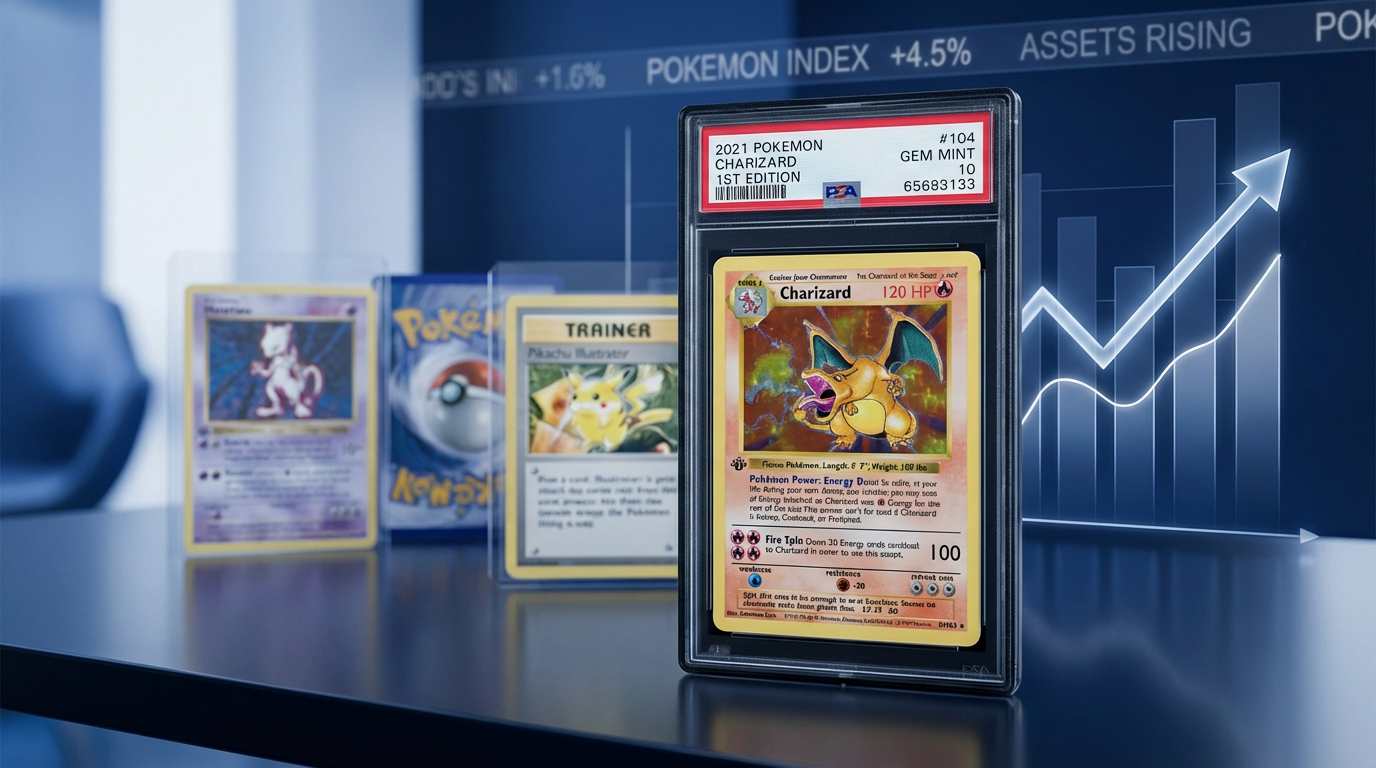
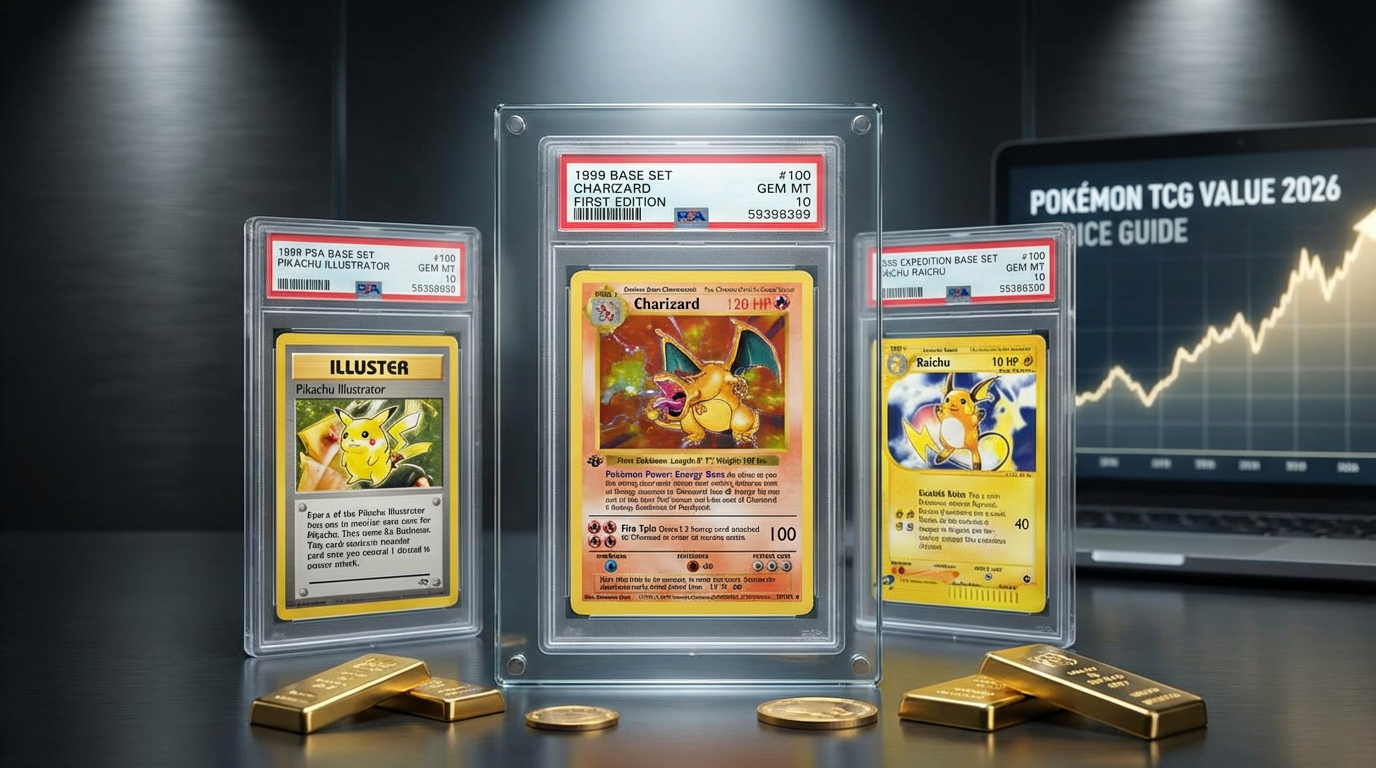
The Pokemon card market has evolved from a nostalgic hobby into a legitimate alternative investment asset class. With record-breaking sales, institutional interest, and a passionate global collector base, understanding how to navigate Pokemon card investing has never been more important. Whether you're a seasoned collector looking to maximize returns or a newcomer exploring this exciting market, this comprehensive guide will equip you with the knowledge to make informed investment decisions in 2026.
Understanding the Pokemon Card Market Landscape in 2026
The Pokemon card market continues to mature, with more sophisticated pricing tools and analytics available to investors than ever before. Unlike traditional collectibles, Pokemon cards benefit from an active player base, continuous new releases, and cross-generational appeal that drives sustained demand.
Key Market Drivers to Watch
Several factors influence Pokemon card values in today's market:
- Nostalgia cycles: Millennials and Gen Z collectors drive demand for vintage and modern chase cards
- Set releases and rotations: New expansions create investment opportunities while rotating older sets out of standard play
- Pop culture moments: Anniversary celebrations, video game releases, and media appearances impact card prices
- Grading population reports: PSA and other grading services' population data directly affects scarcity perception
Understanding these dynamics is essential for timing your Pokemon card investments effectively. Tools like PokemonPriceTracker.com provide daily-updated pricing data and historical trends that help investors identify optimal entry and exit points.
Professional Sports Authenticator (PSA) remains the gold standard for Pokemon card authentication and grading. A PSA grade can dramatically impact a card's value, sometimes multiplying its worth by 10x or more for gem mint specimens.
How PSA Grading Affects Card Values
The difference between PSA grades represents significant value gaps:
| Grade | Typical Value Multiplier | Market Perception |
|---|
| PSA 10 (Gem Mint) | 3-10x raw value | Investment grade |
| PSA 9 (Mint) | 1.5-3x raw value | Collector grade |
| PSA 8 (Near Mint-Mint) | 1-1.5x raw value | Entry-level graded |
| PSA 7 and below | Often below raw value | Budget collecting |
Calculating Your PSA Grading ROI
Before submitting cards for grading, smart investors calculate potential return on investment. Consider these factors:
- Current raw card value: What's the card worth ungraded?
- Grading costs: PSA fees range from $20-$150+ depending on service level
- Expected grade: Be realistic about your card's condition
- Graded card market value: Research what each grade sells for
The PSA Analysis feature on PokemonPriceTracker.com simplifies this calculation by showing population reports alongside price data, helping you determine whether grading makes financial sense for specific cards.
Pro Tips for Maximizing PSA Grading Success
- Inspect cards thoroughly before submission using proper lighting and magnification
- Focus on centering: This is the most common reason for grade reductions
- Protect cards properly during shipping with semi-rigid holders and appropriate padding
- Track population reports: Low-pop cards in high grades command premium prices
- Consider timing: Submit during slower periods for faster turnaround
Successful Pokemon card investing requires diversification and strategic allocation across different card categories.
Vintage Cards (1999-2003)
Base Set, Jungle, Fossil, and early e-Series cards represent the foundation of Pokemon card collecting. These cards benefit from:
- Fixed, diminishing supply
- Strong nostalgic appeal
- Established price history
Use the Raw Price History and PSA Price History tools on PokemonPriceTracker.com to analyze long-term trends for vintage cards before making significant investments.
Modern Chase Cards
Modern sets offer lower entry points with high upside potential. Focus on:
- Illustration Rare and Special Art Rare cards: These showcase premium artwork
- Trainer Gallery cards: Popular character combinations drive demand
- Secret Rares: Low pull rates create natural scarcity
Sealed Product Investments
Sealed booster boxes and Elite Trainer Boxes (ETBs) offer diversified exposure to entire sets. The Sealed Product Prices feature helps investors track:
- Current market prices across retailers
- Expected value calculations based on pull rates
- Historical appreciation patterns for out-of-print products
The Crossover Strategy
Identify cards featuring Pokemon with upcoming video game appearances, movie roles, or anniversary celebrations. These catalysts often drive short-term price spikes.
Population Play
Monitor PSA population reports for cards approaching meaningful thresholds. A card with only 50 PSA 10s behaves differently than one with 5,000.
Arbitrage Opportunities
Price discrepancies exist across platforms and regions. Sophisticated investors use comprehensive pricing tools to identify these opportunities. The PokemonPriceTracker.com API enables developers and serious investors to programmatically monitor prices across the market for arbitrage detection.
Every investment carries risk, and Pokemon cards are no exception. Protect your portfolio by:
- Never investing more than you can afford to lose
- Diversifying across eras, sets, and card types
- Storing cards properly in climate-controlled environments
- Insuring valuable collections with specialized collectibles coverage
- Verifying authenticity before purchasing high-value cards
Successful investors track their portfolio performance meticulously. Essential metrics include:
- Cost basis: What you paid for each card
- Current market value: Up-to-date pricing data
- Unrealized gains/losses: Paper profits before selling
- ROI percentage: Return relative to initial investment
PokemonPriceTracker.com is a Pokemon card price tracking tool, offering comprehensive Card Prices across all conditions and variants. Whether you're evaluating raw cards or PSA graded specimens, having accurate, up-to-date pricing data is essential for making informed investment decisions.
The Pokemon card market offers genuine investment opportunities for those willing to do their research and approach collecting strategically. Remember these essential points:
- PSA grading can significantly increase card values, but always calculate ROI before submitting
- Diversify your portfolio across vintage, modern, and sealed products
- Use professional tools like PokemonPriceTracker.com to access daily-updated pricing, historical trends, and PSA analytics
- Stay informed about market catalysts including new releases and pop culture moments
- Practice proper risk management and never over-extend financially
The intersection of nostalgia, gaming culture, and alternative investing makes Pokemon cards a unique asset class. By combining passion with data-driven decision-making, you can build a collection that brings both joy and financial returns.
Ready to start tracking your Pokemon card investments? Visit PokemonPriceTracker.com to access comprehensive pricing data, PSA analysis tools, and historical trends that give you the edge in today's competitive market.