CGC vs BGS Grading 2026: Which Is Best for Pokemon Cards?
Pokemon Price Tracker
CGC vs BGS Grading 2026: Which Is Best for Pokemon Cards?
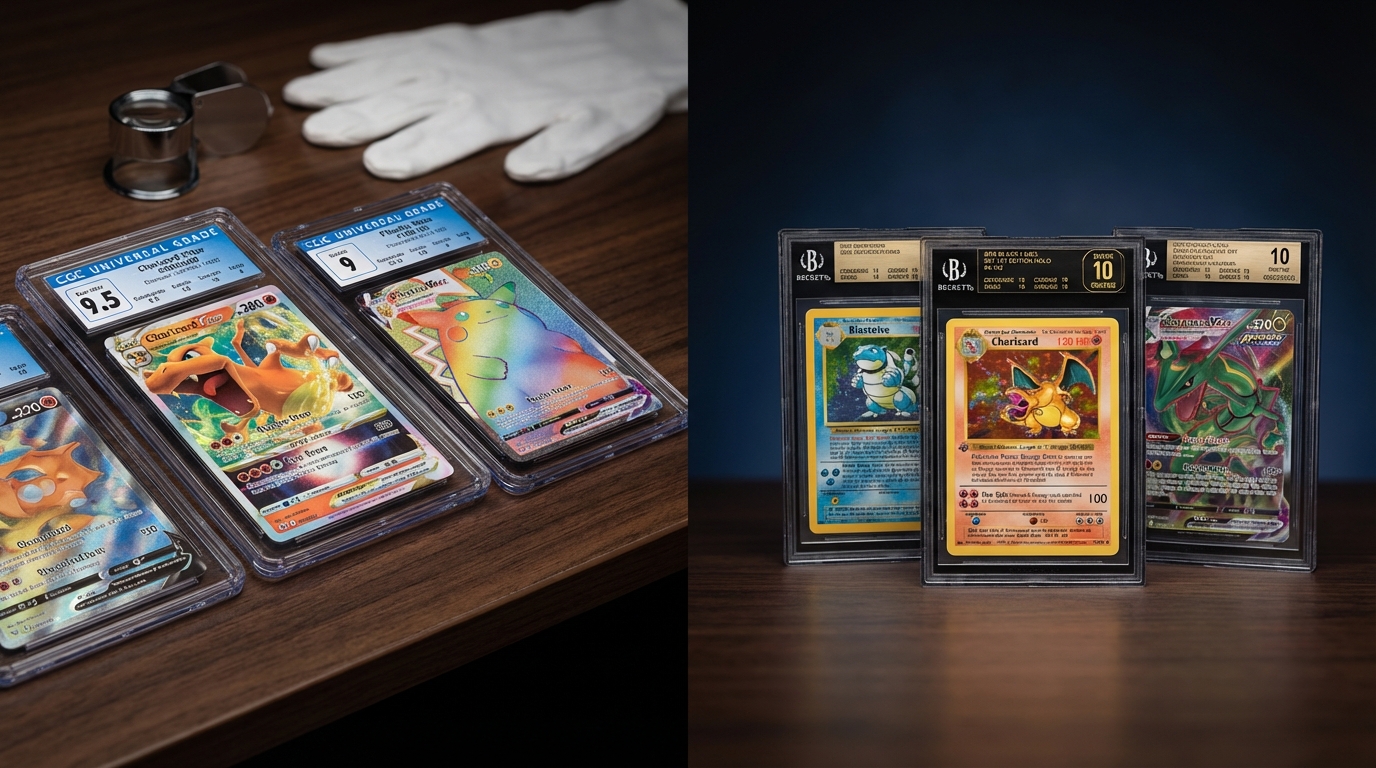
Choosing between CGC and BGS for grading your Pokemon cards can significantly impact both your turnaround time and resale value. While PSA dominates the Pokemon grading market with roughly 67-75% market share, CGC and BGS compete fiercely for the remaining collectors and investors. In 2026, the landscape has evolved considerably, with CGC emerging as the fastest-growing grading company and BGS maintaining its legacy reputation for detailed subgrade analysis.
This comprehensive guide breaks down everything you need to know about CGC versus BGS grading for Pokemon cards, from turnaround times and grading standards to resale values and which company best fits your specific needs.
Understanding CGC and BGS: Company Backgrounds
Certified Guaranty Company (CGC)
CGC originally built its reputation grading comic books before rapidly expanding into trading cards. In the Pokemon community, CGC has positioned itself as the speed-focused alternative to slower competitors. The company's clean, modern slabs and consistent grading standards have earned growing acceptance among Pokemon collectors, particularly for modern releases.
Key CGC Strengths:
- Fastest turnaround times in the industry (20-45 business days)
- Clean, protective slab design
- Growing market acceptance for Pokemon cards
- Competitive pricing structure
- Strong reputation from comic book grading expertise
Beckett Grading Services (BGS)
BGS traces its lineage back to James Beckett III's price guides from 1979, giving it decades of credibility in the collectibles market. While BGS has historically been stronger in sports cards, it maintains a dedicated following in Pokemon collecting, particularly among collectors who value detailed condition analysis.
Key BGS Strengths:
- Detailed subgrade system (centering, corners, edges, surface)
- Legacy reputation and established market presence
- BGS Black Label 10 (pristine perfect) commands premium prices
- Strong authentication standards
- Preferred by collectors seeking in-depth card analysis
Turnaround Times: The Speed Factor in 2026
Turnaround time has become one of the most critical factors for collectors in 2026, especially with highly anticipated releases like Perfect Order and Z-A generating massive submission volumes.
CGC Turnaround Times
Current Average: 20-45 business days
CGC has established itself as the clear winner for speed. In February 2026, most standard submissions are returning within 30-35 business days, with some collectors reporting even faster service during less busy periods. This speed advantage is particularly valuable when:
- Grading newly released chase cards from sets like Prismatic Evolutions
- Flipping modern cards while market interest is high
- Building inventory for selling seasons (holidays, conventions)
- Protecting valuable pulls before prices potentially decline
BGS Turnaround Times
Current Average: Significantly longer than CGC
BGS has struggled with longer processing times, though exact timelines vary by service level. Standard BGS submissions typically take 60-90+ business days, making it less attractive for time-sensitive grading needs. However, BGS does offer premium expedited services for collectors willing to pay significantly higher fees.
Turnaround Time Winner: CGC by a substantial margin
For most Pokemon collectors in 2026, CGC's speed advantage is difficult to ignore, especially when grading modern cards where market timing matters.
Grading Standards and Consistency
Both companies maintain rigorous grading standards, but their approaches differ significantly.
CGC Grading Approach
CGC uses a straightforward 1-10 scale with half-point increments. The company has built a reputation for consistency, with collectors generally reporting predictable results across multiple submissions. CGC graders evaluate:
- Centering
- Corner wear
- Edge condition
- Surface quality
- Print defects
CGC 10 (Pristine): Near-perfect card with only microscopic flaws CGC 9.5 (Gem Mint): Exceptional card with minor imperfections CGC 9 (Mint): High-grade card with slight visible flaws
BGS Grading Approach with Subgrades
BGS's defining feature is its detailed subgrade system. Each card receives four separate scores:
- Centering (front and back alignment)
- Corners (sharpness and wear)
- Edges (smoothness and whitening)
- Surface (scratches, print lines, holofoil quality)
The overall grade is calculated from these subgrades, though it's not a simple average. A BGS 9.5 typically requires mostly 9.5 subgrades with perhaps one 9, while the coveted BGS Black Label 10 requires perfect 10s across all four categories.
Why Subgrades Matter:
- Transparency about specific card weaknesses
- Educational for improving card handling and storage
- Valuable for understanding why a card didn't achieve a higher grade
- Important for high-end cards where condition nuances affect value
Grading Strictness Comparison
Both companies are considered relatively strict compared to some alternatives, but collector feedback suggests:
- CGC tends to be slightly more consistent but occasionally conservative on modern cards
- BGS can be stricter on achieving 9.5+ grades, particularly for the centering subgrade
- Neither company is definitively "easier" or "harder" - results vary by card era and type
Resale Value and Market Acceptance
This is where the rubber meets the road for most collectors and investors.
Current Market Premiums (2026 Data)
PSA 10 Baseline: 100% (market standard) CGC 10 Pristine: 75-85% of PSA 10 equivalent BGS 9.5 Gem Mint: 70-90% of PSA 10 equivalent BGS 10 Black Label: 150-300% of PSA 10 equivalent (for perfect cards)
CGC Market Acceptance
CGC's acceptance in the Pokemon market has grown substantially over the past two years. For modern sets like Prismatic Evolutions, Ascended Heroes, and Stellar Crown, CGC 10s are increasingly viewed as legitimate alternatives to PSA. The gap in resale value continues narrowing, particularly for:
- Modern full art trainers
- Special illustration rares (SIRs) like Mega Gengar ex from Ascended Heroes
- Recent chase cards like Umbreon ex from Prismatic Evolutions
- First Partner Illustrations promos
However, for vintage cards (especially WOTC era), CGC still trades at a more noticeable discount compared to PSA.
BGS Market Position
BGS occupies an interesting niche in Pokemon. Standard BGS 9.5s typically trade at a slight discount to PSA 10s, but BGS Black Label 10s can command extraordinary premiums for truly perfect cards. This makes BGS particularly attractive for:
- Absolutely pristine pulls you believe could achieve Black Label status
- High-end vintage cards where subgrades add credibility
- Personal collection pieces where you value detailed condition information
- Cards where you want to prove perfection (all 10 subgrades)
Real-World Examples
Terapagos ex SIR from Stellar Crown:
- PSA 10: $180-220
- CGC 10 Pristine: $140-175
- BGS 9.5: $130-165
- BGS 10 Black Label: $350-450
Umbreon ex from Prismatic Evolutions:
- PSA 10: $450-550
- CGC 10 Pristine: $350-450
- BGS 9.5: $325-425
- BGS 10 Black Label: $900-1,200
These examples demonstrate that while CGC and standard BGS grades trade at discounts, BGS Black Labels can dramatically outperform even PSA 10s.
Cost Analysis: Which Offers Better Value?
Grading costs have remained relatively stable in 2026, but the value proposition differs between companies.
Typical Pricing Structure
CGC Standard Service:
- $20-30 per card (standard turnaround)
- Volume discounts available
- Lower-cost bulk options for modern cards
BGS Standard Service:
- $25-35 per card (standard turnaround)
- Subgrades included automatically
- Premium pricing for faster service levels
Calculating True Value
When evaluating cost, consider:
- Turnaround time value: If you're grading a hot modern card, CGC's speed might generate 20-30% more revenue by hitting the market faster
- Resale discount: Factor in the 15-25% typical discount CGC receives compared to PSA
- Black Label potential: If your card is truly pristine, BGS's potential for 2-3x premiums might justify the cost and wait
- Volume considerations: Grading 50+ cards? CGC's speed means faster capital recovery
Before committing to grading, consider using a grading calculator to determine whether the potential value increase justifies the grading cost and time investment.
Which Grading Company Should You Choose?
Choose CGC If You:
✅ Need fast turnaround times (grading modern releases, time-sensitive flips) ✅ Grade primarily modern Pokemon cards (2020 and newer) ✅ Value speed over marginal resale differences ✅ Submit high volumes and need predictable processing ✅ Prefer clean, modern slab aesthetics ✅ Want consistent, reliable grading standards ✅ Are building inventory for near-term sales
Best CGC Candidates:
- Modern chase cards from Prismatic Evolutions, Ascended Heroes
- Special illustration rares and full art trainers
- Recently released cards with strong market demand
- Cards where speed to market matters most
- Medium-value cards ($50-500 range) where the PSA premium is less critical
Choose BGS If You:
✅ Have potentially perfect cards (Black Label candidates) ✅ Value detailed subgrade information for personal knowledge or resale transparency ✅ Grade vintage or high-end cards where condition nuances matter ✅ Collect for long-term holding (time isn't critical) ✅ Want to prove absolute perfection with all-10 subgrades ✅ Appreciate the legacy reputation and traditional slab design ✅ Have cards where subgrades add significant value
Best BGS Candidates:
- Pack-fresh pulls that appear absolutely flawless
- Vintage WOTC holos in pristine condition
- High-value cards ($500+) where Black Label potential exists
- Personal collection centerpieces
- Cards where you want detailed condition documentation
The Hybrid Approach
Many experienced collectors use both services strategically:
- CGC for modern bulk submissions needing fast turnaround
- BGS for exceptional cards with Black Label potential
- PSA for vintage cards where it commands the highest premiums
Slab Design and Protection
While often overlooked, slab design affects both aesthetics and long-term protection.
CGC Slabs
- Clean, modern design with minimal branding
- Clear front and back viewing
- Secure sonic welding
- Easy to stack and store
- Barcode for authentication verification
BGS Slabs
- Traditional design with prominent Beckett branding
- Subgrades displayed clearly on label
- Slightly bulkier than CGC
- Distinctive gold, silver, or black labels based on grade
- Well-established anti-counterfeiting measures
Both companies provide excellent physical protection. Your preference will likely come down to aesthetics and whether you value the subgrade display on BGS slabs.
Common Grading Mistakes to Avoid
Regardless of which company you choose, avoid these pitfalls:
1. Grading Cards That Don't Justify the Cost
Don't grade cards worth less than $50 in raw form unless you're building a personal collection. The grading fee rarely pays off for low-value cards.
2. Overestimating Card Condition
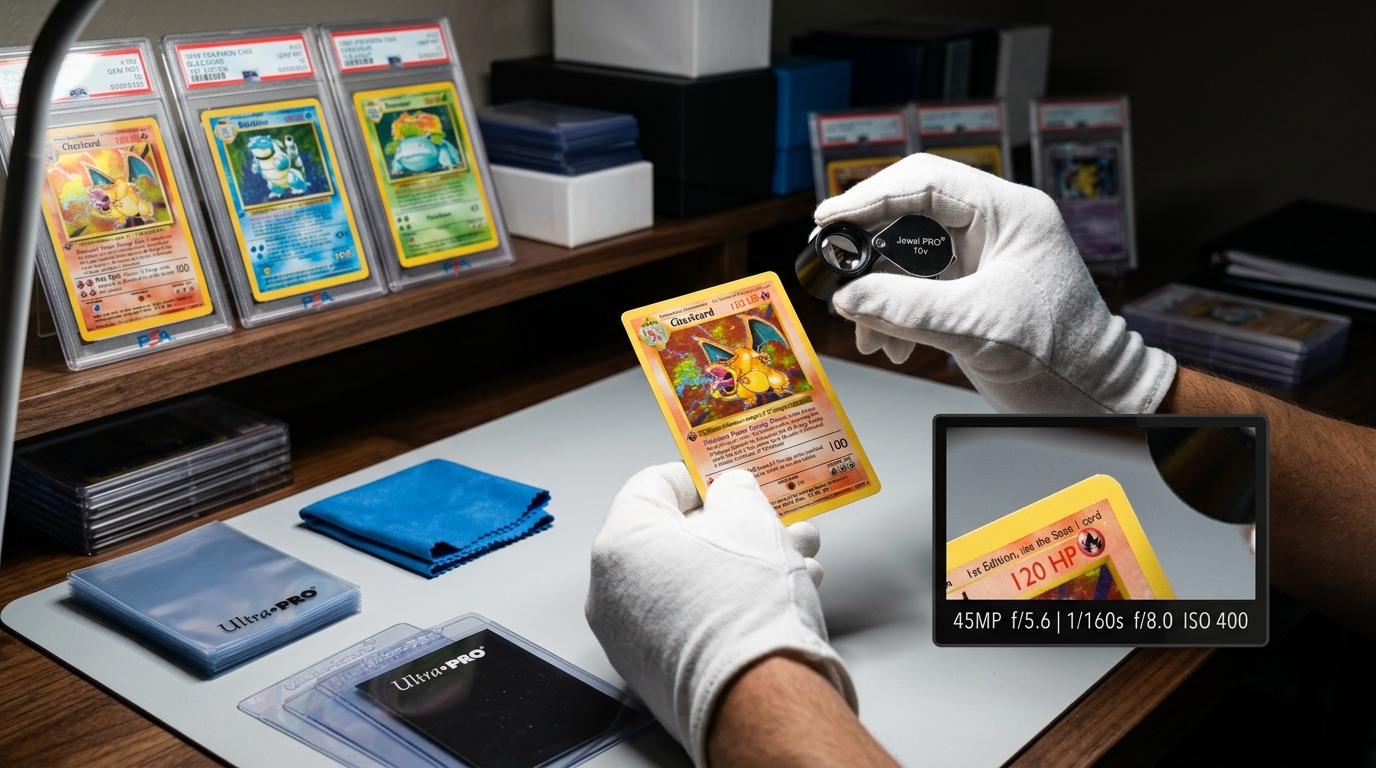
Most collectors believe their cards are in better condition than they actually are. Use a jeweler's loupe and examine under bright light before submission. Even minor edge whitening or surface scratches can prevent gem mint grades.
3. Ignoring Market Timing
Grading the latest chase card? CGC's speed advantage is crucial. Grading vintage cards for long-term holding? BGS's subgrades might add more value.
4. Poor Submission Packaging
Cards damaged during shipping are rejected or receive lower grades. Use card savers (not top loaders), team bags, and adequate padding.
5. Neglecting Population Data
Before grading, check population reports to understand how many graded copies exist. Low-population cards often see bigger premiums from grading.
2026 Market Trends Affecting Grading Decisions
Several trends are shaping grading choices in 2026:
CGC's Growing Acceptance
CGC-graded Pokemon cards are increasingly accepted by major marketplaces and auction houses. The stigma that existed 2-3 years ago has largely disappeared for modern cards, narrowing the resale gap.
Speed Premium
With sets like Perfect Order and Z-A generating massive hype, getting cards graded and to market quickly has never been more valuable. CGC's turnaround advantage translates directly to profit for many sellers.
Subgrade Demand for High-End Cards
As Pokemon cards increasingly sell for five and six figures, buyers want detailed condition information. BGS subgrades provide transparency that adds confidence to major purchases.
Modern vs Vintage Divide
The grading company that's "best" increasingly depends on card era:
- Modern (2020+): CGC gaining ground rapidly
- Ex/DP Era (2003-2009): More even split
- WOTC Vintage (1999-2003): PSA still dominates, but BGS Black Labels command respect
Investment Considerations
If you're grading Pokemon cards as investments, consider these factors:
Liquidity
CGC and BGS cards are both liquid in the current market, but PSA still offers the fastest sales at the highest prices. Factor in the potential 15-25% discount and slightly longer selling times for CGC/BGS.
Long-Term Value
For cards you plan to hold 5-10+ years, grading company matters less than grade and card quality. A BGS 10 or CGC 10 of a truly iconic card will retain value regardless of slab.
Portfolio Diversification
Some investors intentionally grade with multiple companies to diversify their portfolio and hedge against shifts in market preference.
Note: Past performance does not guarantee future results. Always do your own research before making investment decisions.
Practical Tips for Submission Success
Pre-Grading Inspection Checklist
Before submitting to either company:
- Examine centering with a ruler (60/40 or better for gem grades)
- Check corners under magnification for any whitening or softness
- Inspect edges for chipping, whitening, or roughness
- Review surface under angled light for scratches, print lines, or dents
- Verify authenticity if purchasing raw cards for grading
Packaging Best Practices
- Use penny sleeves and card savers (not top loaders)
- Place in team bags or sealed plastic
- Use adequate padding (bubble wrap, packing peanuts)
- Include clear submission forms
- Consider insurance for valuable cards
Timing Your Submissions
Best times for faster service:
- January-February (post-holiday lull)
- Late spring before summer conventions
- Avoid major set release periods when volumes spike
Best times for grading hot cards:
- Within 2-4 weeks of set release
- Before major tournament events featuring the card
- During sustained market interest (use CGC for speed)
The Verdict: CGC vs BGS in 2026
There's no universal "winner" between CGC and BGS—the best choice depends entirely on your specific situation:
CGC wins for:
- Speed and turnaround time (decisive advantage)
- Modern Pokemon card grading
- High-volume submissions
- Cards where time to market matters
- Collectors who value efficiency and consistency
BGS wins for:
- Potentially perfect cards (Black Label candidates)
- Detailed condition analysis via subgrades
- High-end cards where subgrades add credibility
- Collectors who value legacy reputation
- Long-term holdings where speed doesn't matter
The pragmatic approach: Use CGC as your default for modern cards and fast turnarounds, but reserve BGS for exceptional cards that might achieve Black Label status or where subgrades add significant value.
Frequently Asked Questions
Q: Is CGC or BGS more strict with grading?
Both companies maintain similar standards, though BGS can be particularly strict on achieving 9.5+ grades with strong subgrades. CGC tends to be more consistent across submissions.
Q: Do CGC Pokemon cards sell for less than BGS?
CGC 10s typically sell for 75-85% of PSA 10 equivalents, while BGS 9.5s sell for 70-90%. However, BGS Black Label 10s can sell for 150-300% of PSA 10 prices.
Q: How long does CGC grading take in 2026?
CGC currently averages 20-45 business days, significantly faster than BGS or PSA standard services.
Q: Should I get subgrades from BGS?
Subgrades come automatically with BGS grading. They're most valuable for high-end cards, educational purposes, or proving condition quality to potential buyers.
Q: Which grading company is best for vintage Pokemon cards?
PSA remains the market leader for vintage Pokemon, but BGS Black Labels command respect and premiums. CGC is gaining acceptance but still trades at larger discounts for vintage cards.
Final Thoughts
The CGC versus BGS decision ultimately comes down to your priorities: speed and efficiency versus detailed analysis and Black Label potential. In 2026's fast-moving Pokemon market, CGC's turnaround advantage makes it the practical choice for most modern card submissions. However, BGS remains the go-to option for collectors with potentially perfect cards or those who value comprehensive condition documentation.
Whichever company you choose, remember that grading is just one tool in the collector's arsenal. Focus on acquiring quality cards, understanding market trends, and making informed decisions based on your specific goals—whether that's building a personal collection, flipping modern releases, or investing for the long term.
The Pokemon TCG market continues evolving rapidly in 2026, and both CGC and BGS are adapting to serve collectors' changing needs. By understanding each company's strengths and aligning them with your objectives, you can make grading decisions that maximize value and satisfaction with your collection.
Tags:
Pokemon Price Tracker
Market Analyst
Related Articles
How to Grade Pokemon Cards: Step-by-Step 2026 Guide
Learn how to grade Pokemon cards in 2026 with this complete step-by-step guide covering PSA's paused Value tiers, the $79.99 minimum, pre-screening techniques, and when grading still makes financial sense.
Pokemon Price Tracker
PSA 10 vs PSA 9: 2026 Price Gap Analysis & ROI Data
PSA 10s command 3x to 20x more than PSA 9s in 2026, but the gap varies wildly by card and era. We break down real sales data, ROI frameworks, and when grading actually makes financial sense.
Pokemon Price Tracker
CGC vs PSA in 2026: Which Grader Holds Value Best?
PSA's 2026 Value tier pause has reshaped the grading landscape. We compare CGC vs PSA on pricing, turnaround, resale premiums, and market share to help you choose the right grader for every submission.
Pokemon Price Tracker
Stay Updated
Subscribe to our newsletter for the latest Pokemon card market trends, investment opportunities, and exclusive insights delivered straight to your inbox.