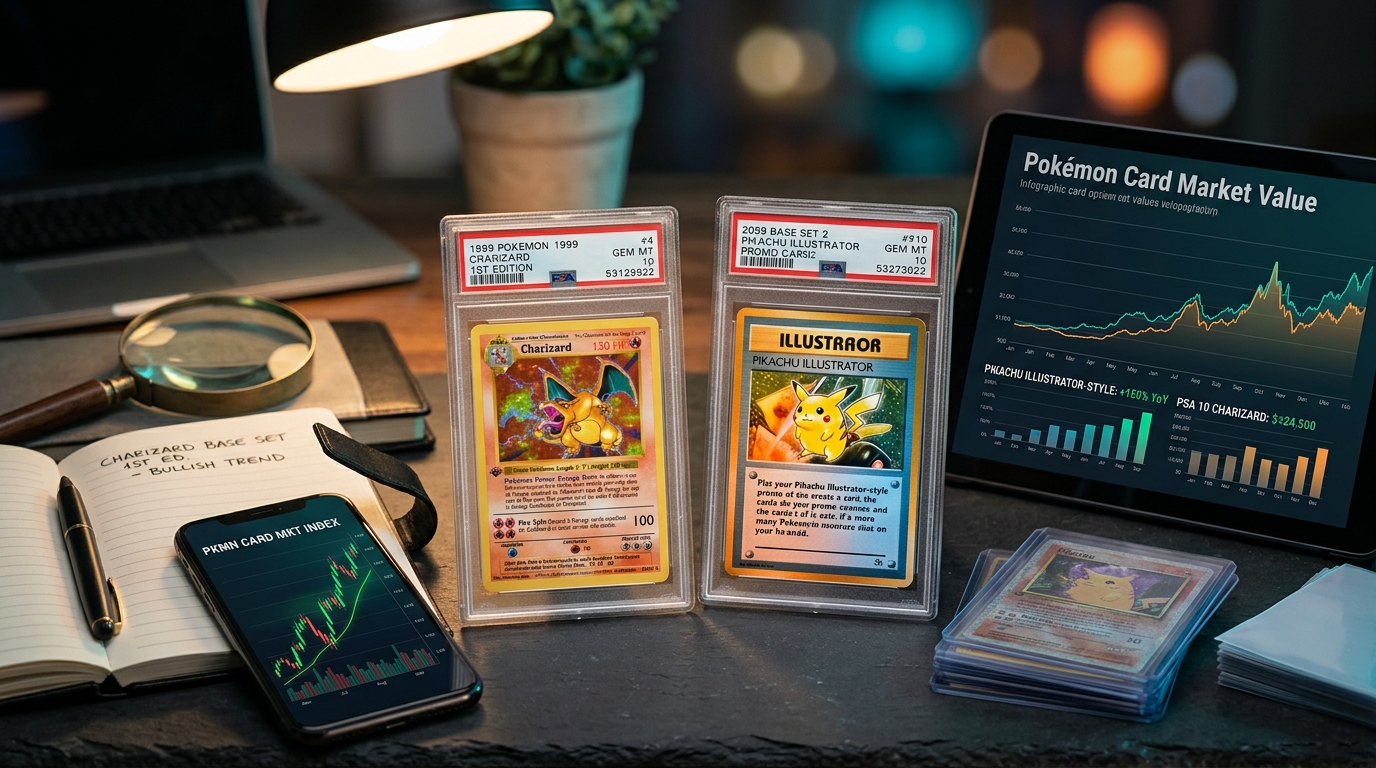
How to Track Pokemon Card Prices in 2026: Tools and Strategies
The Pokemon TCG market has evolved into a $2.7 billion annual ecosystem in 2026, with trading volume up 40% year-over-year. With Pokemon's 30th anniversary driving sustained demand and headline-grabbing sales like the $16.49 million Pikachu Illustrator PSA 10 at Goldin Auctions in February 2026, knowing how to accurately track card prices is no longer optional — it's essential for any serious collector or investor.
Whether you're trying to time the sale of a chase card, evaluate whether to grade a vintage holo, or simply make sure you're not overpaying on a trade, this guide breaks down the best tools, strategies, and data sources for tracking Pokemon card prices in 2026.
Why Price Tracking Matters More Than Ever in 2026
The Pokemon card market has appreciated 3,821% since 2004 — vastly outperforming the S&P 500's 483% return over the same period. But that growth hasn't been linear. In 2026, we're seeing a bifurcated market:
- Modern singles have undergone a healthy 20-30% correction
- Vintage cards and sealed products are projected to appreciate 15-25% throughout the year
- Graded chase cards continue to set new auction records
Without accurate, real-time price data, you're flying blind. A card that sold for $400 last month might be $280 today — or $550. Price tracking tools turn guesswork into informed decision-making.
The Essential Pokemon Card Price Tracking Tools
1. Pokemon Price Tracker
pokemonpricetracker.com aggregates data across major marketplaces to provide real-time pricing, historical charts, and population data in one place. Key features include:
- Real-time singles pricing across raw and graded conditions
- Price history charts going back years for trend analysis
- Population reports for PSA, CGC, and BGS graded cards
- Sealed product tracking for booster boxes, ETBs, and special collections
- Japanese card pricing for collectors in the Asian market
You can check the price history of any card to spot patterns — like seasonal dips before set rotations or spikes following anime/competitive announcements.
2. TCGPlayer Market Price
TCGPlayer is the largest dedicated TCG marketplace in North America. When using it, focus on the Market Price figure — not individual listing prices. Market Price reflects what cards are actually selling for, calculated from completed transactions. Sellers often list cards 20-40% above market hoping for an uninformed buyer.
Pro tip: Cross-reference TCGPlayer Market Price with sold listings before buying. A card with a $50 Market Price but only $30 sold listings recently is likely overpriced.
3. eBay Sold Listings
eBay sold listings remain the gold standard for true transaction data, especially for:
- Graded cards (PSA 9, PSA 10, CGC 10 Pristine)
- Vintage cards with condition variability
- Rare promos and error cards without consistent marketplace pricing
To access this data: search the card → filter by Sold Items → sort by most recent. Look at the last 15-30 days of sales to establish a fair market range. Ignore obvious outliers (suspicious low sales between accounts, or fee-inclusive bundle deals).
4. PriceCharting
PriceCharting provides clean historical price graphs and is particularly useful for sealed product trends and vintage WOTC-era cards. Its data is less granular than dedicated trackers but offers a quick visual reference.
5. Pokemon Card Scanner Apps
In 2026, scanner apps have improved dramatically thanks to better computer vision models. The best ones can identify a card by image and pull live pricing data in seconds. These are ideal for:
- Bulk collection cataloging
- Card show negotiations when you need a quick price check
- Estate or thrift store finds where you have no idea what you're holding
Just remember: scanner apps are only as accurate as their underlying data source. Always verify high-value finds against multiple platforms.
Strategies for Accurate Price Tracking
Having the tools is one thing — using them effectively is another. Here are the strategies experienced collectors and investors use.
Strategy 1: Triangulate Across Multiple Sources
Never rely on a single data point. For any card valued over $50, check at least three sources:
- TCGPlayer Market Price (current marketplace)
- eBay sold listings (true completed transactions)
- A dedicated tracker like Pokemon Price Tracker (aggregated historical context)
If all three align within 10-15%, you have a reliable price. If they diverge significantly, dig deeper — there's usually a reason (condition discrepancies, fake listings, or a market shift in progress).
Strategy 2: Match Condition Precisely
Price tracking is meaningless if you're comparing apples to oranges. A near-mint raw card and a PSA 10 of the same card can differ by 10x or more in value. Always match:
- Raw condition grade (NM, LP, MP, HP, DMG)
- Graded company (PSA generally commands premium over CGC and BGS for modern, though CGC has gained ground)
- Specific grade tier (PSA 9 vs PSA 10 can be a 3-5x price difference)
- Print variant (1st Edition, Shadowless, Unlimited, reverse holo, etc.)
Strategy 3: Use Population Data to Spot Opportunities
Population data tells you how many copies of a card exist at each grade. This is critical because:
- Low population + high demand = premium pricing potential
- High PSA 10 population means the grade is easier to obtain (and less of a premium)
- Sudden population spikes often precede price corrections as supply increases
In 2026, savvy investors are watching population reports weekly. A card with a stable population and rising sold prices is a much stronger signal than price movement alone.
Strategy 4: Track Sealed Product Separately
Sealed products follow different market dynamics than singles. They're influenced by:
- Print run announcements (or lack thereof)
- Set rotation cycles
- EV (expected value) of pack contents
If you're considering opening vs. holding sealed, run the numbers using an EV Calculator to see whether the pack's expected value justifies the rip versus continued appreciation.
Strategy 5: Factor in Grading Economics
When you own a raw card that might grade well, the question isn't just "what is it worth?" — it's "what is it worth graded, minus grading costs?" A card worth $80 raw might be worth $400 as a PSA 10, but only if you account for:
- Grading service fees (which vary by tier and turnaround)
- Shipping and insurance both ways
- The realistic probability of hitting that top grade
Use our Grading ROI Calculator to model these scenarios before sending cards in. In 2026, grading fees have continued to rise, making this math more important than ever.
Common Price Tracking Mistakes to Avoid
Even experienced collectors fall into these traps:
- Cherry-picking the highest sold listing as your reference price — always use the median or recent average
- Ignoring shipping costs in sold prices (a $50 sale with $10 free shipping is really a $40 card)
- Using listing prices instead of sold prices — listings reflect seller hopes, not market reality
- Forgetting about fees — TCGPlayer and eBay both take ~13% from sellers, which affects net realized value
- Not accounting for currency/region — Japanese versions, European prints, and US prints can trade at very different prices
Building Your Personal Tracking Workflow
For most collectors, a simple weekly routine works well:
- Monday: Review your portfolio's top 10 cards using a dedicated tracker
- Wednesday: Spot-check sold listings on any cards showing unusual movement
- Friday: Review sealed product prices and population reports for graded holdings
- Monthly: Reassess overall portfolio allocation between vintage, modern, sealed, and Japanese cards
More active traders may check daily, but for long-term holders, weekly is usually sufficient and prevents emotional decision-making based on short-term noise.
Key Takeaways
- The Pokemon card market in 2026 is more sophisticated than ever, with $2.7 billion in annual activity and 40% YoY trading volume growth
- No single tool tells the whole story — triangulate across TCGPlayer Market Price, eBay sold listings, and dedicated trackers
- Match condition, grade, and print variant precisely when comparing prices
- Population data and EV calculators turn price tracking from reactive to strategic
- Build a consistent weekly workflow rather than obsessively checking prices daily
Accurate price tracking is the foundation of every smart decision in the hobby — whether you're buying, selling, trading, or grading. The tools are better than they've ever been; the collectors who use them systematically will have a measurable edge in the 2026 market.
Note: Past performance does not guarantee future results. Always do your own research before making investment decisions.
Pokemon Price Tracker
Market Analyst
Related Articles
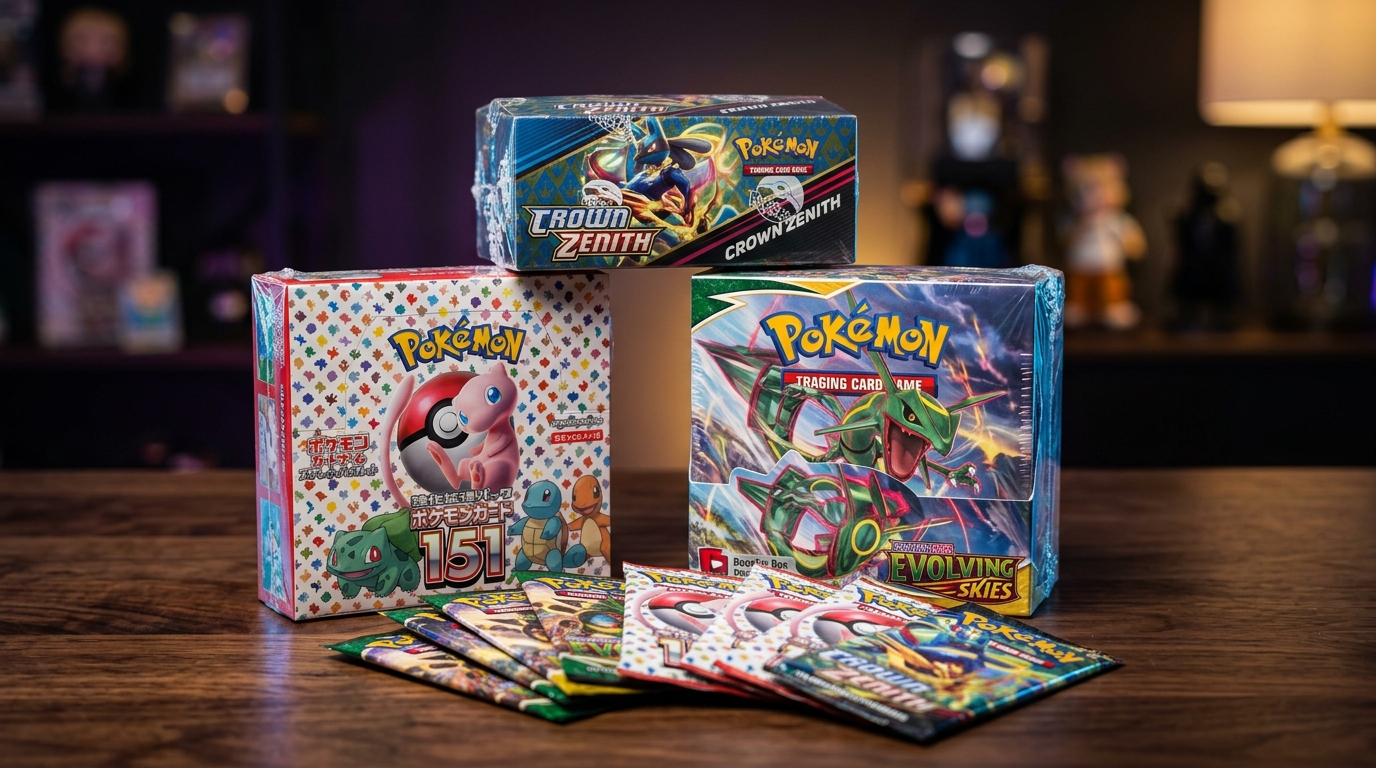
Best Pokemon Booster Boxes to Buy and Hold in 2026
From Evolving Skies to Japanese Pokemon 151, discover the best Pokemon booster boxes to buy and hold in 2026. Data-driven picks, portfolio strategy, and key metrics to watch for long-term sealed investors.
Pokemon Price Tracker
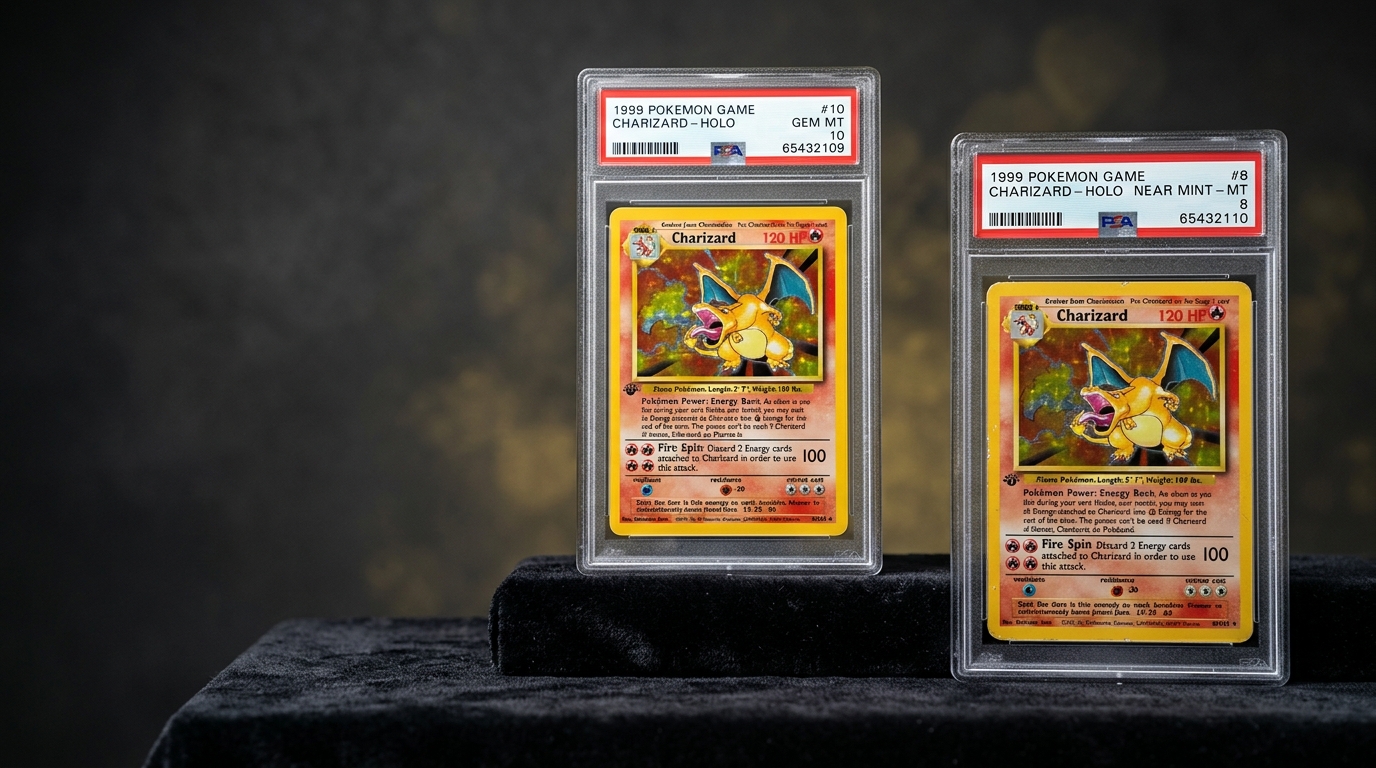
PSA 10 vs PSA 9: 2026 Price Gap Analysis & ROI Data
PSA 10s command 3x to 20x more than PSA 9s in 2026, but the gap varies wildly by card and era. We break down real sales data, ROI frameworks, and when grading actually makes financial sense.
Pokemon Price Tracker
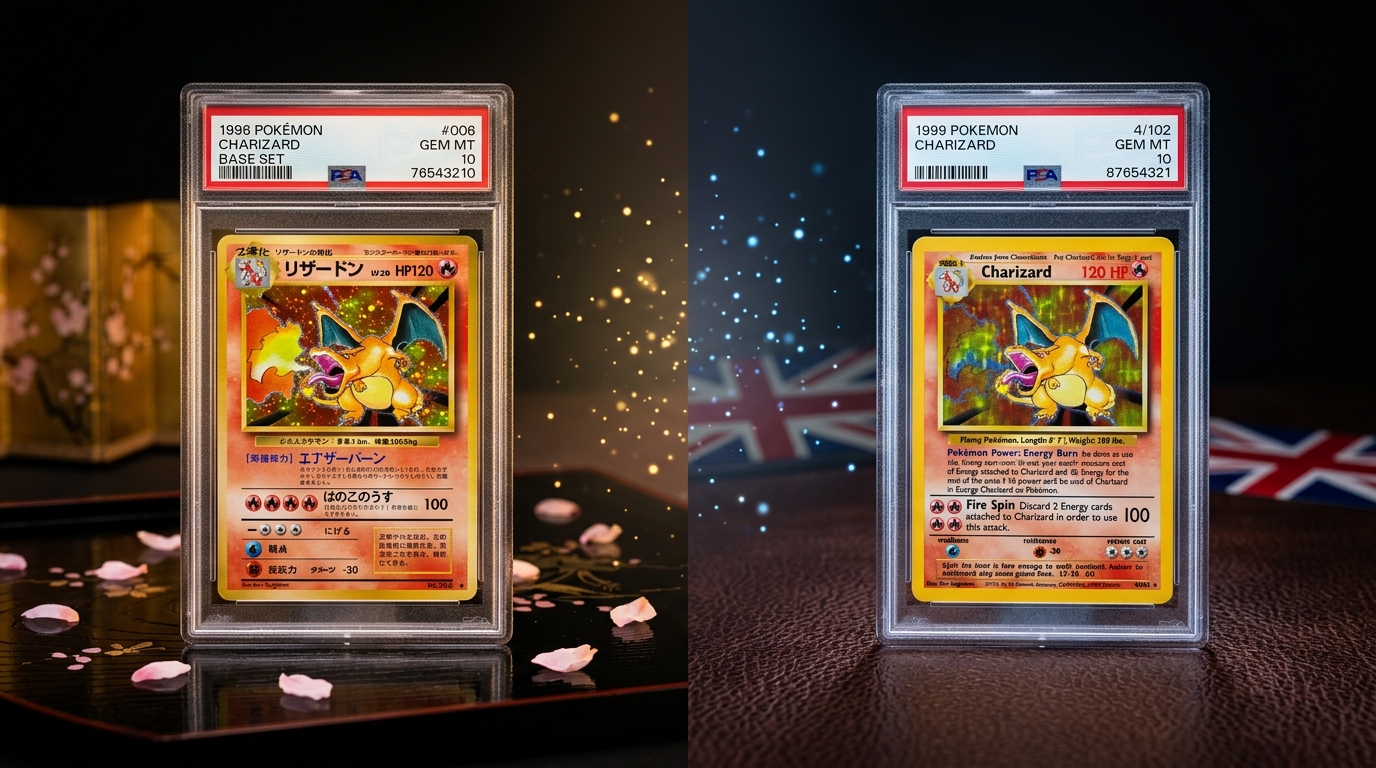
Japanese vs English Pokemon Cards: Which Holds Value in 2026?
The Japanese vs English Pokemon card debate has fundamentally shifted in 2026. Japanese PSA 10s now command 20-40% premiums over English equivalents, while raw English cards still cost 2x-6x more. Here's how to navigate both markets strategically.
Pokemon Price Tracker
Stay Updated
Subscribe to our newsletter for the latest Pokemon card market trends, investment opportunities, and exclusive insights delivered straight to your inbox.