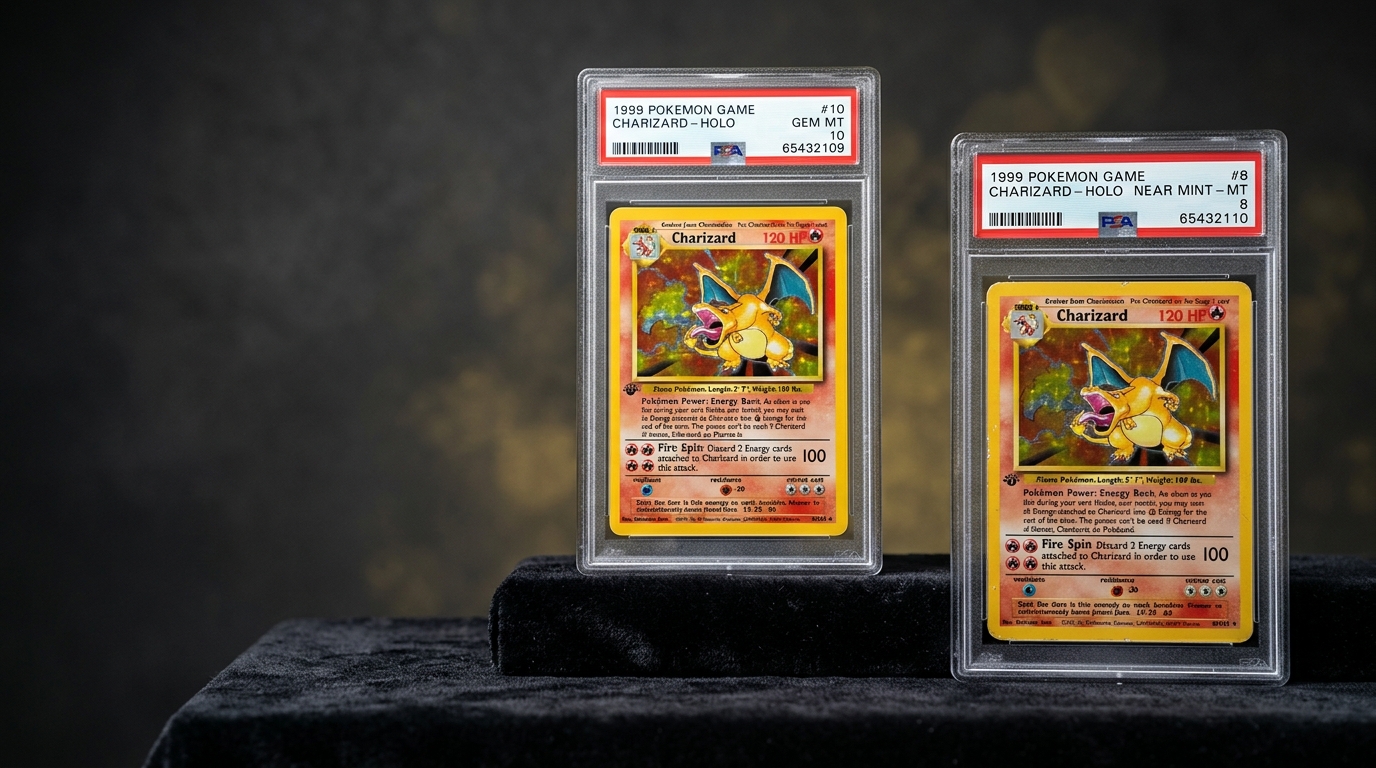
The difference between a PSA 10 and PSA 9 grade can mean hundreds—or even thousands—of dollars on the same Pokemon card. In 2026, with Pokemon's 30th anniversary driving record submission volumes and modern sets like Ascended Heroes, Perfect Order, and Chaos Rising flooding graders' queues, the PSA 10 premium remains one of the most hotly debated topics in the hobby.
Whether you're weighing whether to grade a raw card, deciding between a PSA 9 and PSA 10 for your personal collection, or building a portfolio, understanding the true price gap between these grades is essential. This comprehensive analysis breaks down the data, market dynamics, and actionable strategies for navigating the PSA 10 vs PSA 9 landscape in 2026.
Understanding the PSA 10 vs PSA 9 Premium
PSA grading operates on a 10-point scale, with PSA 10 (Gem Mint) representing a virtually flawless card and PSA 9 (Mint) representing a card with minor imperfections detectable under close inspection. Despite the seemingly small difference in condition, the market treats these grades very differently.
The Core Multiplier Data
Here's what the 2026 market data reveals about typical price gaps:
- Modern Pokemon cards: PSA 10 typically sells for 3x to 10x more than PSA 9
- Vintage Pokemon cards: The gap widens dramatically to 5x to 20x because achieving PSA 10 on older cards is extremely scarce
- Ultra-modern flagship chase cards: PSA 10 premiums often range from 1.3x to 2x over PSA 9
- Average PSA 9 pricing: A PSA 9 typically sells for 30–50% of its PSA 10 counterpart
The variance is significant, and understanding why the multiplier differs across cards is the key to smart grading decisions.
Let's look at specific, verifiable market data from recent 2026 sales:
Modern Set Comparisons
| Card | PSA 9 Price | PSA 10 Price | Multiplier |
|---|
| Evolving Skies Umbreon VMAX Alt Art | $200–$250 | $350–$500 | 1.5–2.0x |
| Pokemon 151 Charizard ex SAR | $120–$160 | $200–$300 | 1.5–2.0x |
| Prismatic Evolutions Umbreon ex SIR | $350–$450 | $500–$700 | 1.3–1.8x |
| Crown Zenith Charizard VSTAR | $80–$120 | $130–$180 | 1.3–1.7x |
Chase-Card Outliers
Certain modern chase cards command far larger premiums. The Mega Gengar ex SAR from Ascended Heroes has a PSA 10 population of roughly 480, with copies selling in the £2,800–£3,200 range versus raw copies at £780–£930—a 220–240% uplift over ungraded copies.
The Vintage Gap Is Even Wider
When you shift to vintage cards, the PSA 10 premium becomes staggering:
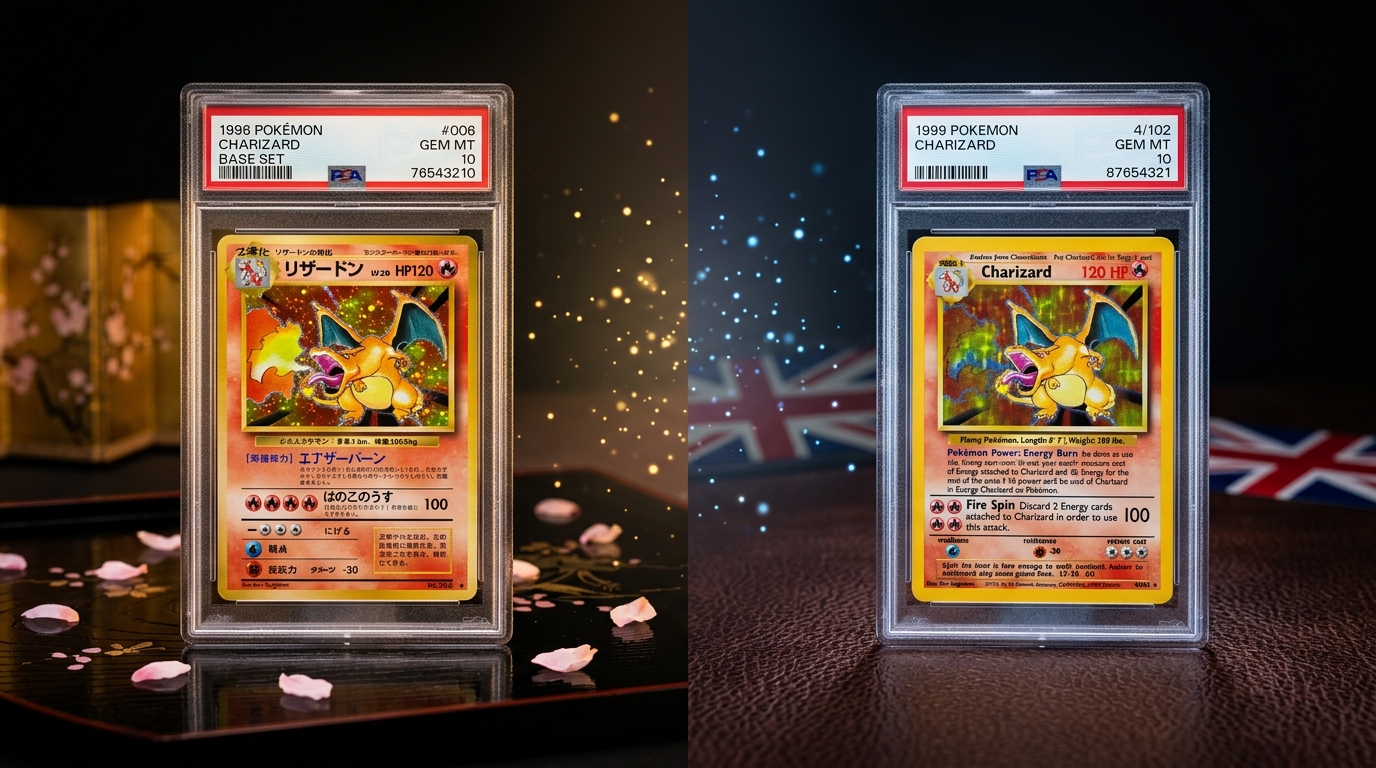
- Base Set Charizard (1999): The gap between a PSA 9 and PSA 10 can exceed $10,000
- Across a broad sample of iconic vintage holos, PSA 10s command 4.9x to 6.9x more than PSA 9s
- For the Prismatic Evolutions Umbreon ex SAR, that gap alone can mean $940 separating the two grades
The scarcity dynamics on vintage cards—decades of handling, off-centering from printing tolerances of the era, and edge wear—make PSA 10 examples exponentially rarer than PSA 9s.
The PSA 10 premium isn't arbitrary. Several fundamental factors drive it:
1. Population Scarcity
For most modern cards, PSA 9 populations vastly outnumber PSA 10 populations. When only 10–25% of submissions receive a Gem Mint grade, that scarcity translates directly into price. You can review population data to see exact census figures across grades for the specific cards you're tracking.
2. Collector Preference for the "Perfect" Grade
Gem Mint carries psychological weight. Many collectors specifically seek PSA 10s for registry sets, showpiece collections, or as the definitive version of a card. This creates concentrated demand at the top of the grading scale.
3. The 30th Anniversary Boom
Pokemon's 30th anniversary has driven a 46% year-over-year price increase in average Pokemon card prices. This has amplified the PSA 10 premium because the flagship, showcase-quality copies attract the most competitive bidding.
4. Investment-Grade Appeal
PSA 10 copies of chase cards are treated as blue-chip assets, while PSA 9s are often seen as "nice collector copies." This bifurcation reinforces the price gap over time.
One of the most counterintuitive—and financially painful—phenomena in modern grading is when a PSA 9 sells for less than a raw near-mint copy of the same card.
Here's why this happens on ultra-modern releases:
- Raw copies carry PSA 10 upside: Buyers pay a premium for the chance of grading a 10
- PSA 9 has "consumed" that upside: The card has been graded and the ceiling is now locked in
- Grading fees are sunk costs: If you paid $25+ to grade and got a 9 on a card only worth $30 raw, you've actively lost money
This is especially common on modern Sword & Shield and Scarlet & Violet-era cards where centering issues plague the print runs. Before submitting anything, run the numbers with the Grading ROI Calculator to determine if grading actually makes financial sense given the card's PSA 10 population, current market prices, and historical grade distribution.
The decision to grade should be data-driven, not emotional. Here's a practical framework:
Step 1: Assess Card Condition Honestly
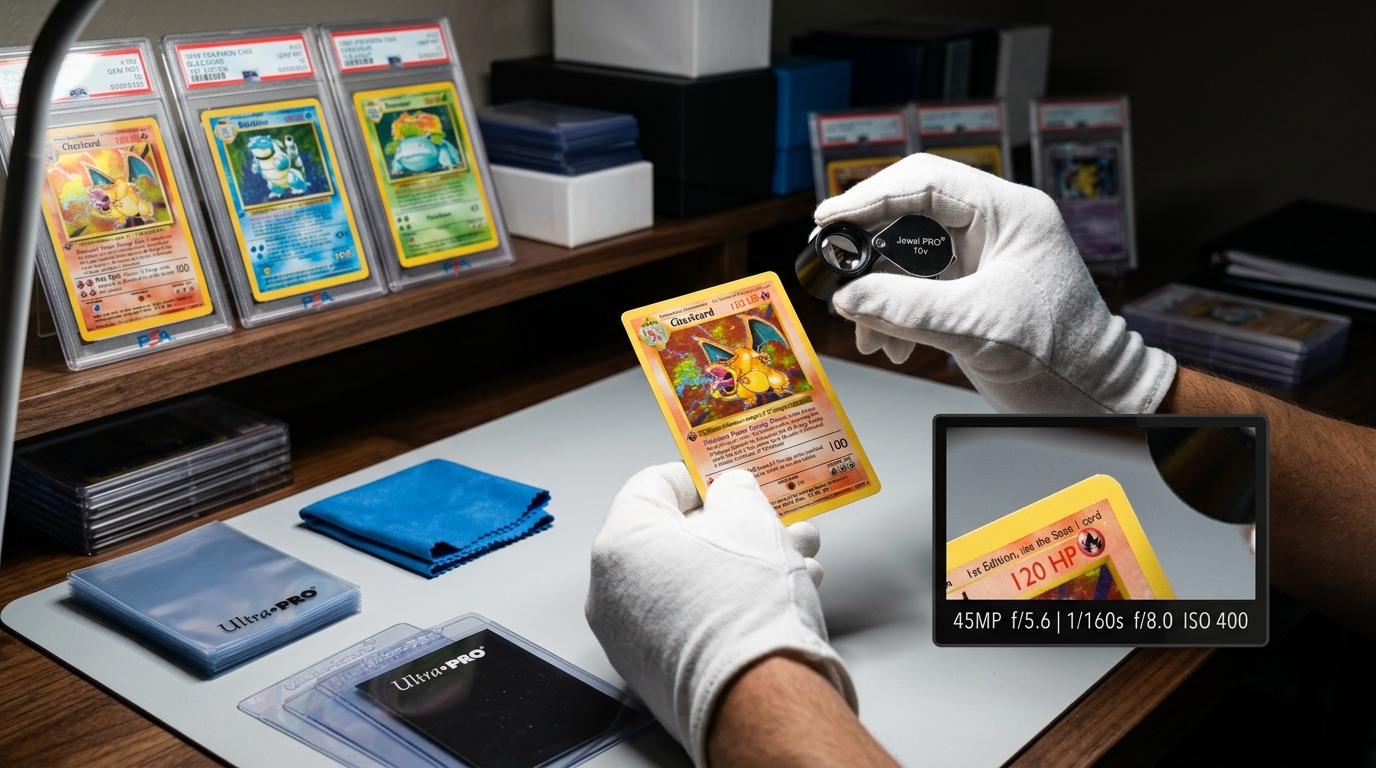
Be brutally objective about:
- Centering (front and back)
- Corner sharpness under magnification
- Edge whitening or nicks
- Surface scratches, print lines, or holo scratches
- Any signs of handling
If you see any of these, PSA 10 is unlikely.
Step 2: Check Current PSA 9 and PSA 10 Prices
Pull recent sold data—not asking prices—for both grades. You can check the price history to see how each grade has trended over the past 30, 90, and 365 days.
Step 3: Factor In All Costs
- PSA grading fee (varies by service tier and declared value)
- Shipping to and from PSA
- Insurance
- eBay/marketplace fees when selling (typically 13%+)
- Time to grade (currently 20–60+ business days depending on tier)
Step 4: Apply the Break-Even Formula
Break-Even PSA 10 Price = (Raw Card Value + Grading Fee + Shipping) / (PSA 10 Success Rate)
If a card has a 25% PSA 10 rate, you need the PSA 10 sale price to be 4x your total cost basis just to break even—because 3 out of 4 submissions will come back as PSA 9 or lower.
Based on 2026 market data, these categories consistently offer strong grading ROI:
Strong Candidates
- Vintage holos in visibly clean condition (Base Set, Jungle, Fossil, Team Rocket, Neo-era)
- Modern chase alt arts and SIRs with strong PSA 10 premiums (Umbreon ex SIR, Moonbreon, top Special Illustration Rares)
- Japanese exclusive promos with limited print runs
- First-print run flagship cards from anniversary sets
Weak Candidates
- Common and uncommon modern cards without chase appeal
- Cards with visible flaws (a PSA 8 or 9 return often destroys ROI)
- Cards where PSA 9 sells below raw (check current sold comps before submitting)
- Modern bulk holos with populations already in the tens of thousands
Modern PSA 10 populations have exploded in 2026. Sets like Prismatic Evolutions, 151, and Paldea Evolved now have PSA 10 populations for their chase cards ranging from a few thousand to over 20,000+ for the most-submitted cards.
Key implications:
- Higher populations compress premiums over time: As PSA 10 pop counts grow, the multiplier over PSA 9 tends to shrink
- Early-graded copies benefit from first-mover pricing: Cards graded within the first 6 months of release often established higher price ceilings
- Population velocity matters more than absolute count: A card adding 500 PSA 10s per month has a very different outlook than one adding 50
Always cross-reference population growth with price trajectory before making grading or buying decisions.
Strategic Takeaways for Collectors and Investors
For Collectors
- Buy the grade that fits your budget and goals. PSA 9s often represent 50–70% of the visual quality at 30–50% of the price
- Consider PSA 9s for display copies of expensive vintage cards where PSA 10 is financially out of reach
- Prioritize eye appeal within the grade—a well-centered PSA 9 can look better than a poorly centered PSA 10
For Investors
- PSA 10s of flagship modern chase cards and vintage holos have historically shown the strongest appreciation
- Avoid grading marginal cards where the PSA 9/PSA 10 gap is small and the fail rate is high
- Track population reports for cards you hold—rapidly growing populations can signal near-term price pressure
- Diversify across eras: Don't concentrate solely in ultra-modern where population inflation is fastest
For Flippers
- Focus on cards with 1.5x+ PSA 10 vs PSA 9 multipliers where the PSA 10 rate is 20%+ on visibly clean copies
- Buy raw near-mint copies at market rates, not at PSA 10 upside prices
- Move quickly on freshly released chase cards before population growth erodes premiums
- PSA 10 vs PSA 9 price gaps in 2026 range from 1.3x on ultra-modern common chase cards to 20x+ on vintage holos
- The 30th anniversary boom has amplified premiums but also driven massive submission volumes that are inflating modern populations
- PSA 9 sometimes sells below raw on ultra-modern releases—always check comps before submitting
- Grading ROI depends on honest condition assessment, current comps, PSA 10 success rate, and all-in costs
- Population data is as important as price data—a rising PSA 10 pop count can compress future premiums
The PSA 10 premium is real, persistent, and data-supported—but it's not universal. Smart collectors and investors in 2026 rely on population reports, sold comps, and grading ROI calculations rather than assumptions. Do the math before you submit, and you'll avoid the most common—and expensive—grading mistakes.
Note: Past performance does not guarantee future results. Always do your own research before making investment decisions.