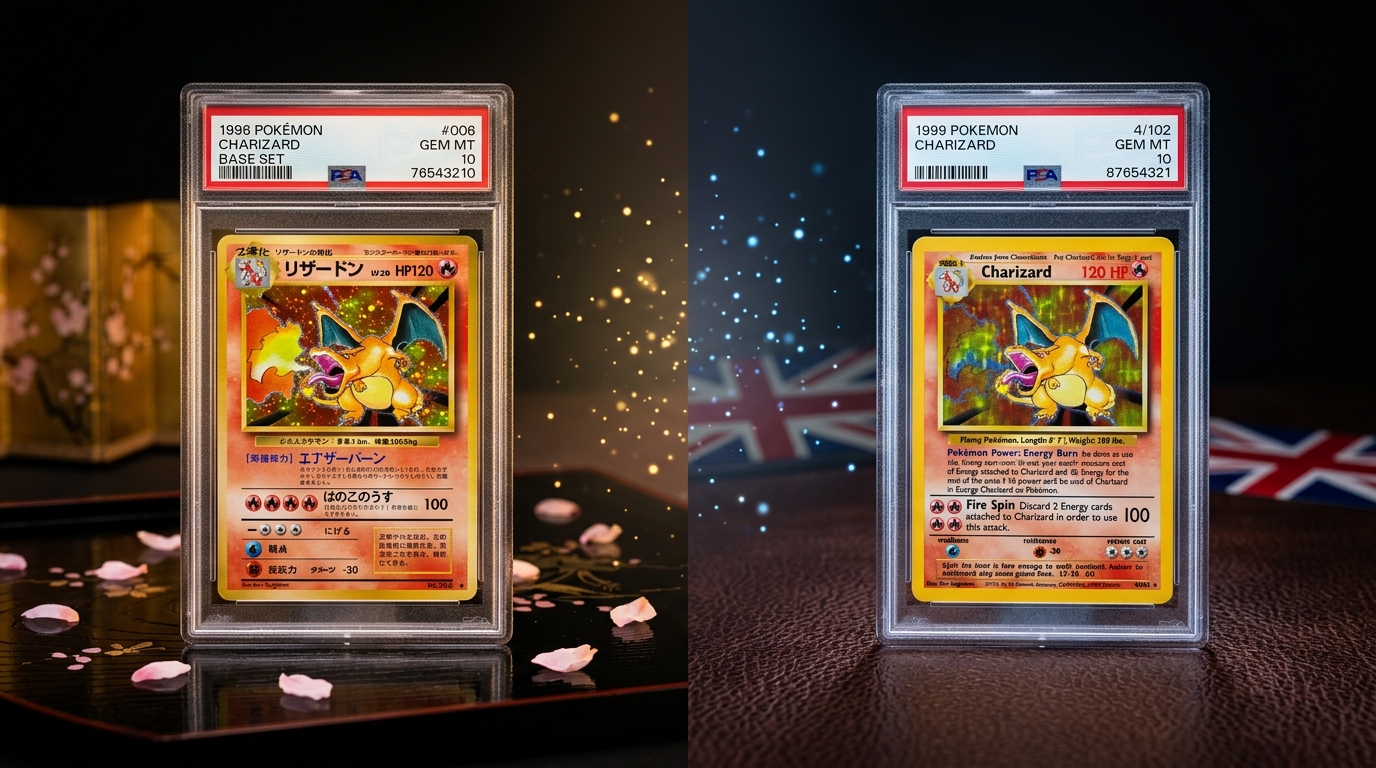
The age-old debate between Japanese and English Pokemon cards has taken a dramatic turn in 2026. For decades, collectors operated under a simple assumption: English cards were the premium product, while Japanese cards were cheaper alternatives that were harder to resell in Western markets. That conventional wisdom has been shattered.
In 2026, Japanese cards in high grade are now commanding prices above their English equivalents for certain references — a historic first for the hobby. With the Card Ladder Pokémon Index up 116% over the past year and January 2026 being called a 'watershed moment' for the entire TCG market, understanding the Japanese vs English dynamic has never been more important for collectors and investors.
This comprehensive guide breaks down the current market realities, pricing data, grading advantages, and strategic recommendations for navigating both markets in 2026.
Three major forces have converged to reshape the Japanese vs English pricing dynamic:
- Global collector base expansion — International demand for Japanese cards has exploded, particularly from North American and European buyers who now recognize the print quality advantage.
- Grading population dynamics — Japanese PSA 10 populations remain significantly smaller for many chase cards, creating scarcity at the top of the grading scale.
- Set design premiums — Japan-exclusive sets like the 30th Anniversary Celebration collection and the Mega Evolution reboot have introduced artwork and card treatments not available in English.
The average Pokemon card rose 46% year-over-year heading into 2026, but the gains have been unevenly distributed. Japanese sealed and high-grade singles have outperformed English equivalents in several key categories.
Ask any long-time grader why Japanese cards trade at a premium and the answer is always the same: quality control.
The Grading Advantage
Japanese cards are 2 to 3 times more likely to come back PSA 10 than their English counterparts. This isn't anecdotal — it's reflected consistently in population data across nearly every comparable set. The reasons come down to manufacturing:
- Superior card stock: Japanese cards use a denser, more consistent stock that resists edge wear and surface scratches during packaging.
- Tighter centering tolerances: Japanese print runs demonstrate significantly better centering consistency, the #1 killer of PSA 10 grades.
- Cleaner holo patterns: Holographic foils show fewer scratches and print lines out of the pack.
- Sharper textures: Special rarity treatments (SAR, SIR, AR) have crisper texture patterns.
What This Means for Grading ROI
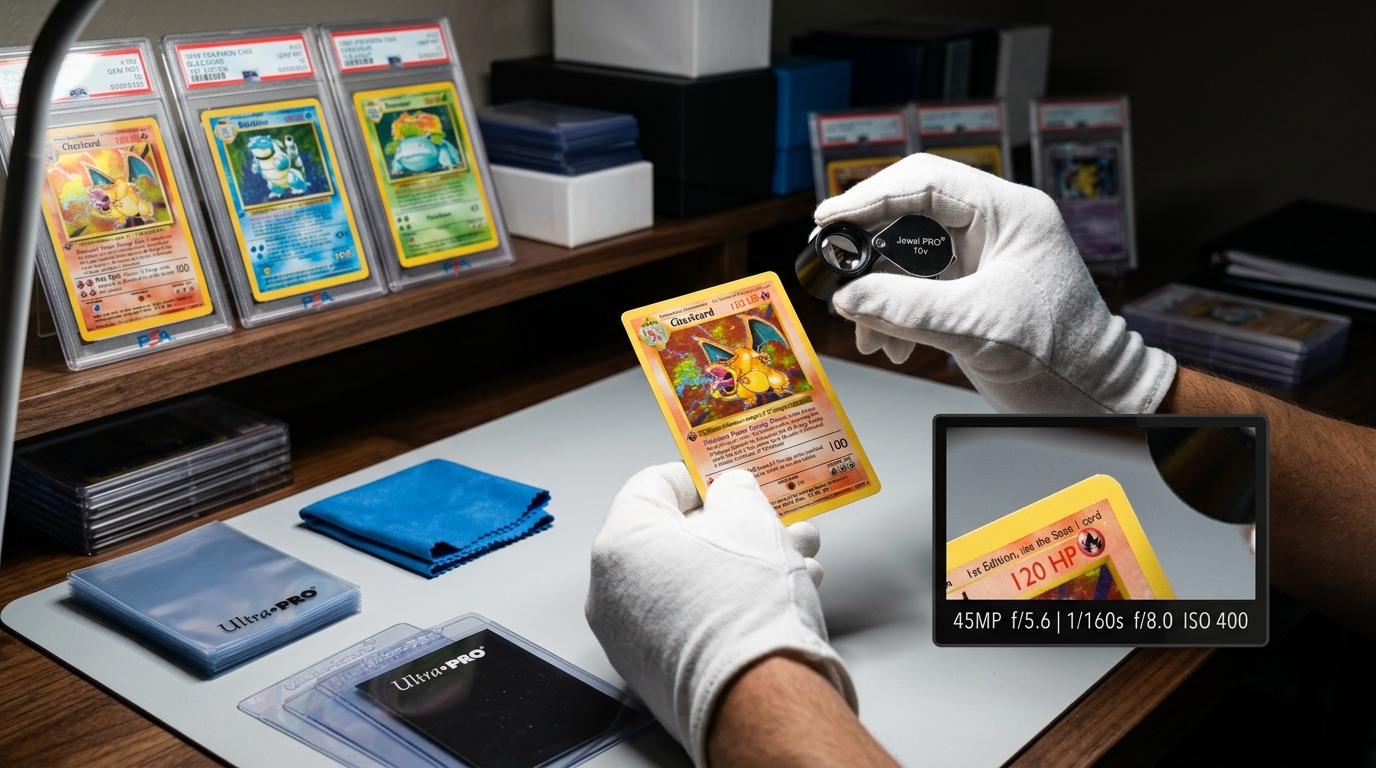
If you're pulling raw cards or buying near-mint copies with grading in mind, Japanese cards offer meaningfully better economics. A rough rule of thumb: for every 10 near-mint Japanese cards you send in, you might get 4-6 PSA 10s. For the same 10 English cards, you might get 1-2.
Before submitting anything, run the numbers through a Grading ROI Calculator to determine whether the price gap between raw and PSA 10 justifies the submission cost.
Here's where the market gets fascinating. The Japanese premium applies almost exclusively at the top of the grading scale — raw and low-grade prices tell a very different story.
Raw Card Prices
In raw form, English Pokemon cards typically cost 2x to 6x more than Japanese cards for identical artwork. Examples include:
- Chase Special Art Rares: English versions frequently sell for $80-$150 while Japanese equivalents move at $25-$60.
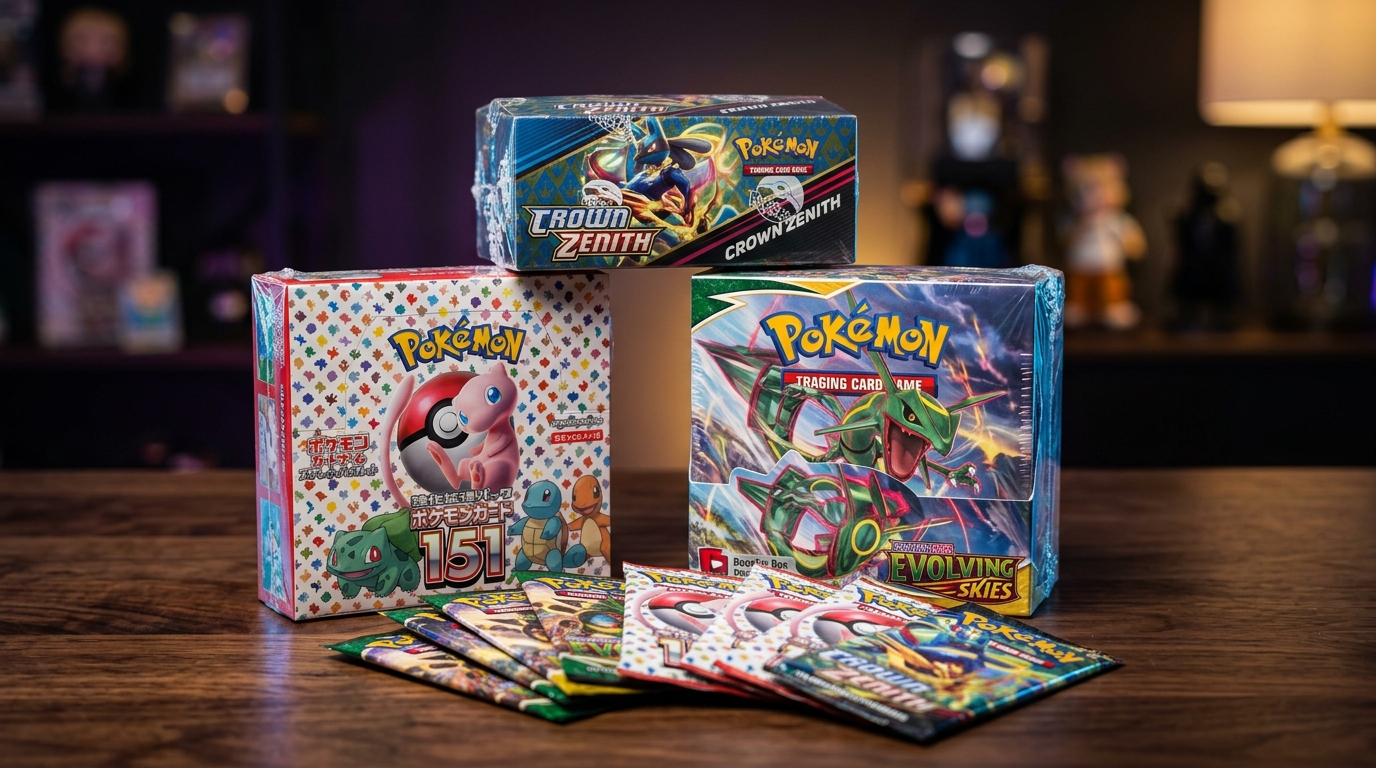
- Booster Boxes: Japanese booster boxes sell in the $80-$110 range compared to English boxes at $130-$170.
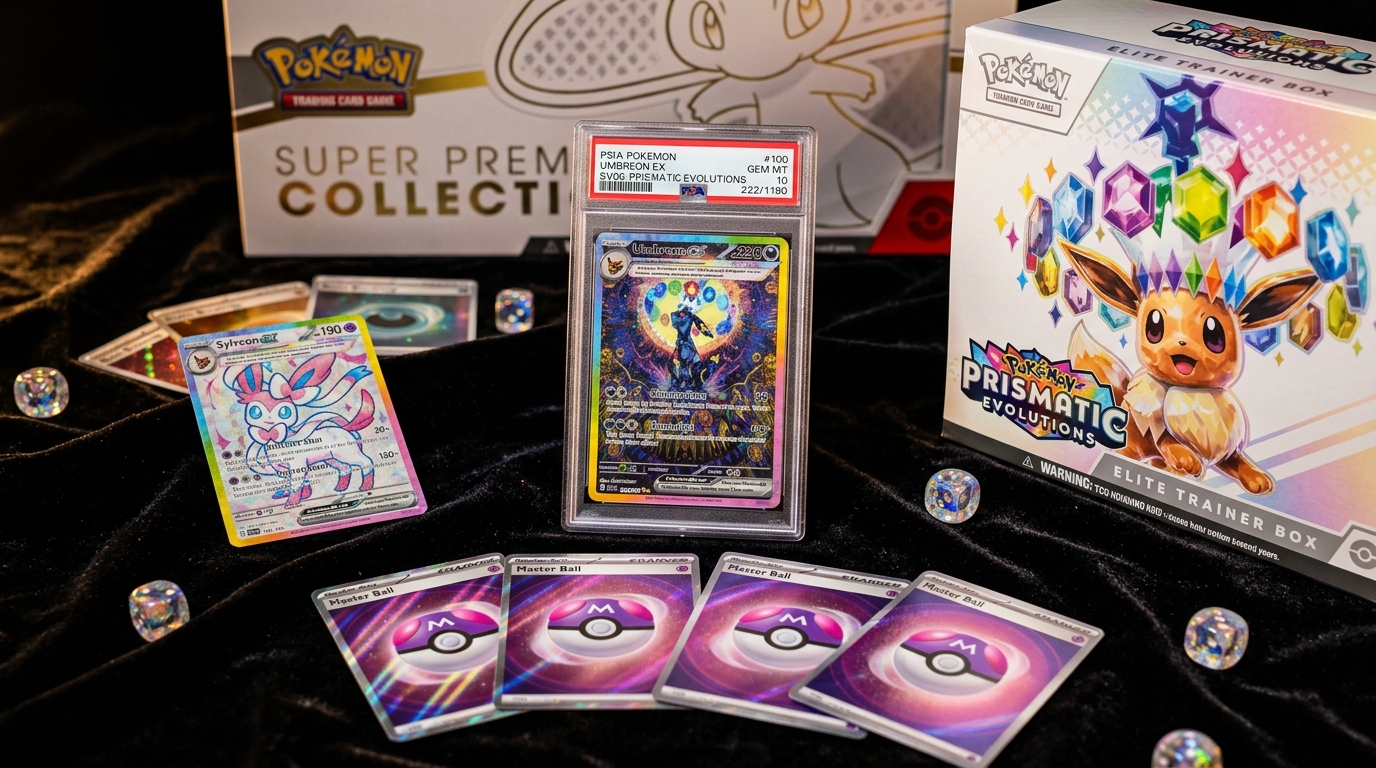
- Elite Trainer Boxes / Premium Collections: English exclusive products can command 3x the price of comparable Japanese sets.
PSA 10 Prices
The picture flips at PSA 10. Japanese PSA 10s now command 20-40% premiums over English equivalents for many meta-relevant cards. This premium is driven by:
- Smaller high-grade populations
- Strong Japanese domestic collector demand
- Growing international recognition of Japanese quality
- Language-agnostic appeal of alternate art cards
For certain categories, Japanese premiums have averaged as high as 258% over English versions — particularly for character rares, alt arts, and secret rares from hit sets.
Few cards better illustrate the Japanese vs English dynamic than the Iono Special Art Rare.
- English Iono SAR PSA 10: Consistently trades in premium territory but with a larger PSA 10 population.
- Japanese Iono SAR PSA 10: Commands a notable premium with a smaller top-grade census.
Both versions have appreciated significantly, but the Japanese copy has demonstrated stronger high-grade price momentum through 2025 and into 2026. You can compare current Japanese card prices against English equivalents to see the spread in real time.
The 30th Anniversary Celebration release has been one of the standout products of 2026. Japan received an exclusive premium set featuring:
- Reprints of iconic classic artwork with modern card treatments
- New alternate art versions of fan-favorite Pokemon
- Premium foiling techniques not available in English releases
- Limited allocation compared to global demand
Japanese 30th Anniversary Celebration booster boxes have shown strong secondary market performance out of the gate, with premium chase cards driving significant single-card interest. English collectors seeking these specific artworks have no choice but to buy Japanese, further inflating international demand.
The reintroduction of Mega Evolution mechanics in 2026 has been another major catalyst. Mega Evolution Pokemon cards have historically been strong long-term holds — the original XY-era Mega cards have appreciated substantially — and the new generation is following a similar trajectory.
Japanese Mega Evolution alternate arts have been particularly hot, with several cards doubling or tripling from release-week prices. Watch this category carefully; if history repeats, high-grade copies of the most iconic Mega artwork could be defining chase cards of the decade.
Note: Past performance does not guarantee future results. Always do your own research before making investment decisions.
Sealed Japanese product has been one of the most quietly effective investment categories of the past three years. Here's why:
Lower Entry Cost
A Japanese booster box at $80-$110 represents roughly half the capital commitment of an English box. This lower barrier allows collectors to:
- Build diversified sealed portfolios more efficiently
- Absorb short-term price volatility
- Take positions in multiple set releases
Faster Print Cycles
Japanese sets go out of print faster than English equivalents. Once a set rotates out, secondary market prices tend to firm up quickly — especially for hit sets with strong chase cards.
Expected Value Considerations
When evaluating whether to open or hold Japanese sealed product, use an EV Calculator to compare the expected value of pack contents against current sealed prices. In many cases, the sealed premium exceeds the EV of opening — a signal that holding sealed is the better play. You can also track sealed product prices across both markets.
Despite the Japanese premium at the top, English cards retain critical advantages in several areas:
Vintage & Iconic Cards
Nothing in the Japanese market comes close to the halo status of iconic English vintage cards. The 1st Edition Base Set Charizard has sold for approximately $420,000, and other WOTC-era chase cards routinely trade for five and six figures. Japanese vintage exists but doesn't carry the same cultural weight in Western markets.
Tournament Playability
Competitive Pokemon TCG in North America and Europe requires English cards. If you're building for play as well as collection, English is the only option.
Broader Liquidity
English cards move faster in Western marketplaces. Selling English is simply easier and quicker for most collectors outside of Asia.
Set Symbol Recognition
English set logos, symbols, and branding are more universally recognized among casual collectors, which can matter for gift-giving and lower-end market segments.
The Grader / Flipper
Lean Japanese. The grading economics are simply better. Higher PSA 10 rates and stronger high-grade premiums make Japanese the more efficient play for grade-and-sell strategies. Focus on chase cards from hit sets and use population data to identify undergraded opportunities.
The Long-Term Investor
Diversify across both. English vintage remains the crown jewel of the hobby, but modern Japanese chase cards have shown remarkable strength. A balanced portfolio might allocate 60% English (heavy on vintage and iconic modern) and 40% Japanese (heavy on high-grade modern chase and sealed).
The Set Collector
Follow your passion. If you love the artwork and the hunt, either market delivers. Japanese sets often offer superior print quality and lower entry costs, while English sets provide the classic collecting experience most Western hobbyists grew up with.
The Sealed Investor
Japanese offers better ROI potential in 2026. Lower entry costs, faster print cycles, and strong secondary demand create favorable conditions. But don't ignore English — hit English sets from the past two years have also performed well.
The Player
English only. No debate here — you need tournament-legal cards.
Managing positions across both Japanese and English markets requires good data. On PokemonPriceTracker.com you can:
- Compare Japanese and English versions of the same card side-by-side
- Check price history charts to identify trends and entry points
- Monitor sealed product prices across both markets
- Access PSA population data to spot scarcity opportunities
Setting up watchlists for specific cards in both languages is one of the fastest ways to spot arbitrage opportunities and market shifts.
- Assuming Japanese is always cheaper. At PSA 10, this is often no longer true.
- Ignoring language stamps and set variations. Japanese sets have promo variants, tournament stamps, and regional exclusives that dramatically affect value.
- Buying ungraded Japanese hoping for easy PSA 10s. Even with better print quality, condition matters. Always inspect carefully.
- Overpaying for sealed Japanese product from years-old sets. Some older sealed has plateaued or declined. Check historical data before buying.
- Neglecting shipping and import costs. Buying direct from Japan involves fees that can erode margins.
- Raw prices favor Japanese: English raw cards cost 2x-6x more than Japanese equivalents for identical artwork.
- PSA 10 premiums favor Japanese: 20-40% premiums are now the norm for many modern chase cards.
- Grading economics favor Japanese: 2-3x higher PSA 10 hit rates make submissions more profitable.
- English vintage remains supreme: Iconic English cards from WOTC-era hold cultural and financial premiums Japanese can't touch.
- Sealed Japanese offers strong ROI potential: Lower entry costs and faster print cycles create favorable conditions.
- The 30th Anniversary Celebration and Mega Evolution sets are the categories to watch heading through 2026.
The Japanese vs English debate is no longer a binary choice. Smart collectors and investors in 2026 recognize that each market serves different strategic purposes, and the best portfolios often blend both. Use the data available, run the numbers on grading submissions, and let your collecting goals — not outdated assumptions — drive your decisions.
Note: Past performance does not guarantee future results. Always do your own research before making investment decisions.