As Pokemon celebrates its historic 30th anniversary in 2026, the grading landscape has undergone seismic shifts that every collector needs to understand. With 94% of confirmed collectors now owning graded cards, choosing the right grading company has never been more critical—or more complicated.
The biggest story? Collectors Holdings (PSA's parent company) now owns both SGC and Beckett, fundamentally altering the competitive dynamics of the grading industry. This consolidation means your choice between PSA and SGC isn't just about cost and turnaround times—it's about understanding how these sister companies position themselves in a market they collectively dominate.
This comprehensive analysis breaks down everything you need to know about SGC versus PSA in 2026, from pricing structures and turnaround times to market acceptance and long-term value implications.
The New Grading Landscape: What Changed in 2024-2026
The Collectors Holdings Consolidation
The grading industry experienced unprecedented consolidation between 2024 and 2025:
- February 2024: Collectors Holdings acquired SGC, bringing the #2 grading company under PSA's umbrella
- Late 2025: Collectors acquired Beckett (BGS/BVG), eliminating another major competitor
- Result: One parent company now controls approximately 90%+ of the graded card market
This consolidation has created a unique dynamic. While PSA and SGC technically compete, they're ultimately owned by the same entity. SGC's president Peter Steinberg stepped down shortly after the acquisition, signaling significant organizational changes.
Market Share Breakdown (2026)
- PSA: 67-78% of the graded card market
- SGC: 22-23% market share (clear #2 position)
- CGC: ~7% and growing as the primary independent competitor
- Others: Remaining small percentage
CGC, backed by Blackstone and Fanatics' Michael Rubin, has emerged as the main truly independent grading option. Some collectors are deliberately shifting to CGC to support genuine competition in the marketplace.
SGC Pricing Structure
SGC's pricing remains its most compelling competitive advantage:
Standard Pokemon Card Grading:
- TCG Cards: $9/card (no minimums, no membership required)
- Sports Cards: $15/card
- Bulk Submissions: $15-18/card for larger orders
- No value-based upcharges on modern cards
- No membership fees to access any service level
Real-World Example: Submitting 5 modern Pokemon cards to SGC costs $45 total (5 × $9).
PSA Pricing Structure
PSA's pricing has become increasingly complex with mandatory membership requirements:
Membership Tiers:
- Collector: $99/year (access to Value Bulk)
- Silver: $149/year (access to TCG Bulk)
- Gold: $249/year (access to TCG Bulk with better rates)
Service Levels (2026):
- TCG Bulk: $18.99-$19/card (20+ card minimum, Silver/Gold membership required)
- Value Bulk: $21.99-$22/card (5+ cards, Collector membership minimum)
- Value Plus: $44.99/card (max $500 declared value)
- Regular: $80/card
- Express: $150/card
- Super Express: $300+/card
Real-World Example: Submitting 5 modern Pokemon cards to PSA:
- Value Bulk: $109.95 (5 × $21.99)
- Plus $99 annual membership
- Total first-year cost: $208.95
Cost Comparison Scenarios
Scenario 1: Casual Collector (5 cards/year)
- SGC: $45 total
- PSA: $208.95 total (including membership)
- SGC saves $163.95 (78% cheaper)
Scenario 2: Active Collector (50 cards/year)
- SGC: $450 total
- PSA: $1,098.50 ($999.50 + $99 membership at Value Bulk rates)
- SGC saves $648.50 (59% cheaper)
Scenario 3: High-Volume Submitter (200 cards/year)
- SGC: $1,800 total
- PSA: $3,949 ($3,800 + $149 Silver membership at TCG Bulk rates)
- SGC saves $2,149 (54% cheaper)
For most collectors, SGC offers substantial savings. The only scenario where PSA becomes cost-competitive is if you're submitting 100+ cards annually and can leverage the absolute lowest bulk rates.
SGC Turnaround Times (2026)
Current Performance:
- Standard Service: 20-30 business days (typical)
- Peak Season: 35-45 business days
- Consistency: Generally reliable and predictable
- Communication: Regular updates through online tracking
SGC has maintained relatively stable turnaround times even during peak periods. The 30th anniversary celebration hasn't dramatically impacted their processing speeds.
PSA Turnaround Times (2026)
Current Performance:
- TCG Bulk: 65-90 business days (3-4+ months)
- Value Bulk: 50-65 business days
- Value Plus: 30-40 business days
- Regular: 20-30 business days
- Express: 10-15 business days
- Super Express: 3-5 business days
Important Context: PSA processed 97 of the top 100 most-graded cards in the first half of 2025, indicating massive volume. The Pokemon 30th anniversary has created unprecedented submission volumes, pushing turnaround times to the longer end of these ranges.
Real-World Timeline Comparison
If you submit a card on March 1, 2026:
SGC Standard ($9):
- Expected return: Early to mid-April 2026
- Total time: ~6 weeks
PSA Value Bulk ($21.99 + membership):
- Expected return: Late May to early June 2026
- Total time: ~12-14 weeks
PSA Value Plus ($44.99 + membership):
- Expected return: Late April to early May 2026
- Total time: ~8-9 weeks
For collectors who need cards back quickly, SGC's standard service often matches or beats PSA's premium tiers at a fraction of the cost.
PSA's Market Premium
PSA remains the market leader for several reasons:
Vintage Card Premium:
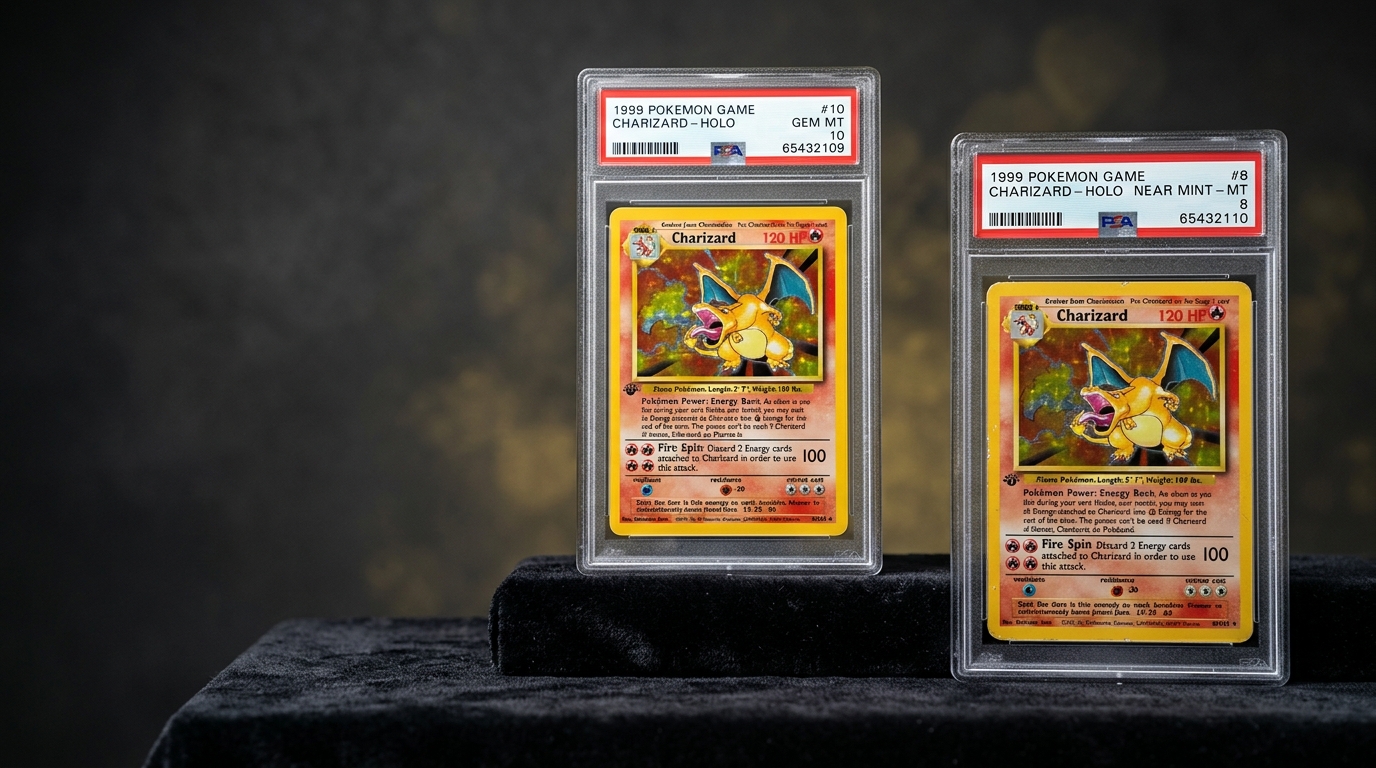
- PSA 10 vintage cards typically command 10-30% premiums over SGC 10
- PSA 9 vintage cards often sell for 5-15% more than SGC 9
- The gap widens for iconic cards (Base Set Charizard, 1st Edition holos, etc.)
Why the Premium Exists:
- Longest track record (established 1991 vs. SGC's 1998)
- Highest market share creates network effects
- Most established population reports and historical data
- Preferred by high-end auction houses
- Greater international recognition, especially in Asian markets
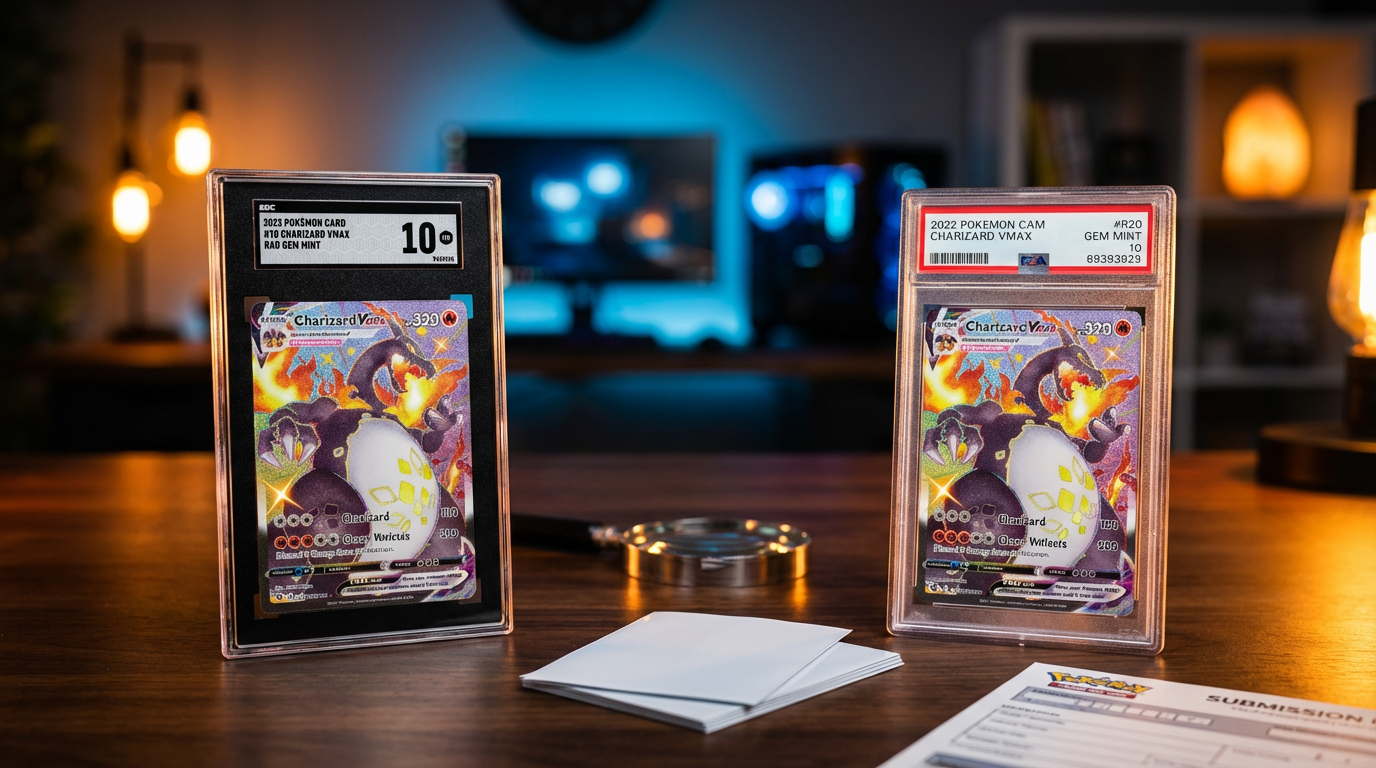
Example: A PSA 10 1st Edition Base Set Charizard might sell for $45,000, while an SGC 10 of the same card might fetch $38,000-$40,000.
Where SGC Holds Strong
Modern Cards (2016-Present):
- Premium gap narrows significantly (often 0-10% difference)
- Many modern collectors view SGC and PSA as equivalent
- Cost savings often outweigh small resale premiums
Mid-Grade Cards (PSA/SGC 6-8):
- Minimal price difference between companies
- Buyers focus more on the grade than the grading company
- SGC's cost advantage makes it the logical choice
Personal Collection Cards:
- If you're grading for protection/authentication rather than resale
- SGC provides identical protective benefits at lower cost
- No premium matters if you're not selling
The CGC Alternative
CGC graded Pokemon cards currently sell at a 15-25% discount compared to PSA equivalents, but this gap has been narrowing:
- CGC offers competitive pricing ($15-20/card)
- Faster turnaround times than PSA
- Growing acceptance, especially among modern card collectors
- Supports genuine market competition
- Excellent holder quality and customer service
Grading Standards: Are They Actually Different?
The Grading Philosophy Debate
A common belief is that SGC grades more strictly than PSA. The reality is more nuanced:
Centering Standards:
- Both companies use similar centering tolerances for each grade
- PSA 10: 60/40 centering or better
- SGC 10: 55/45 centering or better (slightly stricter on paper)
- In practice, differences are minimal
Surface and Edge Standards:
- SGC historically emphasized edges and corners more heavily
- PSA has tightened standards significantly in recent years
- Modern cards: Standards are now very comparable
- Vintage cards: Some collectors still perceive SGC as stricter
Population Data Reality Check:
- PSA 10 population: Higher absolute numbers (due to volume)
- SGC 10 population: Lower absolute numbers
- Percentage of 10s: Actually quite similar between companies
- This suggests similar grading standards, with volume explaining population differences
Crossover Results
When collectors "crossover" cards (resubmit an SGC card to PSA or vice versa):
- ~60-70% receive the same grade
- ~20-25% grade higher
- ~10-15% grade lower
This variability exists in both directions and reflects the subjective nature of grading more than systematic differences between companies.
SGC makes the most sense in these scenarios:
1. Modern Card Submissions (2016-2026)
Why SGC Wins:
- Minimal resale premium difference
- Massive cost savings ($9 vs. $22+ per card)
- Faster turnaround times
- Modern collectors increasingly view SGC as equivalent
Best For:
- Modern set grading projects
- Recent pulls you want to protect
- Sealed product breaks
- Building a graded collection affordably
2. Mid-Grade Vintage Cards
Why SGC Wins:
- PSA premium disappears at lower grades
- SGC 6-8 sells for similar prices to PSA 6-8
- Save money on grading fees without sacrificing resale value
Best For:
- Played condition vintage cards
- Cards with visible wear
- Personal collection vintage pieces
3. High-Volume Submissions
Why SGC Wins:
- No membership fees
- Straightforward $9/card pricing
- Savings multiply with volume
- Predictable costs for budgeting
Best For:
- Set completion projects
- Bulk modern card grading
- Sealed product investors grading pulls
4. Personal Collection Grading
Why SGC Wins:
- Same protective benefits as PSA
- Same authentication value
- Significantly lower cost
- Resale premium irrelevant if not selling
Best For:
- Cards you plan to keep long-term
- Childhood collection preservation
- Display pieces
PSA remains the better choice in specific situations:
1. High-Grade Vintage Cards
Why PSA Wins:
- 10-30% resale premium on vintage PSA 9-10s
- Greater buyer confidence for expensive cards
- Preferred by serious vintage collectors
- Better auction house acceptance
Best For:
- 1st Edition WOTC holos
- Base Set Charizards
- Neo Genesis/Destiny holos
- Any vintage card likely to grade PSA 9-10
2. Investment-Grade Cards
Why PSA Wins:
- Highest liquidity for resale
- Largest buyer pool
- Best price realization at auction
- Most trusted for high-value transactions
Best For:
- Cards worth $1,000+
- Trophy cards and rarities
- Cards you plan to flip quickly
- Cards targeting international buyers
3. Population-Sensitive Cards
Why PSA Wins:
- Most comprehensive population reports
- Historical data going back decades
- Better for pop report speculation
- More meaningful for registry sets
Best For:
- Low-pop modern cards
- Registry set building
- Cards where population matters for value
4. International Resale
Why PSA Wins:
- Stronger brand recognition in Asia
- Preferred in Japanese market
- Better for European collectors
- More established global presence
Best For:
- Cards targeting Asian buyers
- High-end Japanese cards
- Cards for international auction
The fact that PSA and SGC share the same parent company raises important questions:
Potential Concerns
Market Dynamics:
- Reduced competitive pressure on pricing
- Potential for coordinated policy changes
- Less innovation without true competition
- Risk of service level changes
Grading Standards:
- Could standards converge over time?
- Will SGC maintain its distinct identity?
- Leadership changes may affect company culture
Counterarguments
Brand Differentiation:
- Collectors Holdings benefits from maintaining distinct brands
- SGC targets price-conscious segment
- PSA targets premium segment
- Both can coexist profitably
Current Reality:
- Services remain operationally separate
- Grading standards haven't visibly changed
- Pricing structures remain distinct
- Different facilities and staff
The CGC Factor
CGC's emergence as a well-funded independent competitor provides important market dynamics:
- Prevents total monopoly
- Forces innovation and competitive pricing
- Offers collectors a true alternative
- Backed by serious institutional money (Blackstone)
Some collectors are deliberately choosing CGC to support market competition, even accepting current price discounts as an investment in long-term market health.
The historic 30th anniversary is affecting grading decisions:
Demand Surge
What's Happening:
- Vintage sealed products up 15-25% in 2026
- Modern singles corrected 20-30% from 2021 peaks
- Grading submissions at all-time highs
- Both PSA and SGC experiencing peak volume
Implications:
- Longer turnaround times across all companies
- Consider submitting early for anniversary-related sales
- Modern card grading may offer better ROI than recent years
Strategic Considerations
Vintage Cards:
- Anniversary driving premium pricing
- PSA premium may be worth paying for high-grade vintage
- Consider grading now for mid-2026 sales
Modern Cards:
- Correction creates grading opportunities
- SGC's low cost makes speculative grading viable
- Focus on cards with long-term potential
Use this decision tree to choose your grading company:
Step 1: Assess Card Value & Era
High-value vintage (pre-2003):
- Expected grade PSA 9-10? → PSA
- Expected grade PSA 8 or lower? → SGC
- Personal collection only? → SGC
Modern cards (2016-2026):
- Investment/resale focus? → Slight edge to PSA
- Personal collection? → SGC
- Bulk submission? → SGC
Step 2: Consider Your Goals
Resale-focused:
- Quick flip? → PSA (higher liquidity)
- Long-term hold? → Either (market may equalize)
- International buyer? → PSA
Collection-focused:
- Protection/authentication? → SGC (better value)
- Registry sets? → PSA (better population data)
- Display pieces? → SGC (save money)
Step 3: Calculate ROI
Before submitting any card, consider using a Grading ROI Calculator to determine if grading makes financial sense.
Basic ROI Formula:
- Estimated graded value - (raw value + grading cost + shipping) = Net profit
- If net profit < $20-30, grading may not be worthwhile
SGC Advantage:
- Lower grading cost means more cards have positive ROI
- Can profitably grade cards in the $50-100 graded value range
- PSA often requires $100+ graded value for positive ROI
Step 4: Factor in Volume
1-10 cards/year:
- SGC saves money and hassle (no membership)
- PSA membership cost hurts ROI
10-50 cards/year:
- SGC still more cost-effective
- PSA membership becomes more justified
50+ cards/year:
- SGC maintains cost advantage
- PSA bulk rates become competitive
- Consider splitting between both companies
Don't overlook CGC as a third option:
CGC Strengths
Competitive Advantages:
- True independent competitor
- Excellent holder quality
- Strong customer service reputation
- Competitive pricing ($15-20/card)
- Fast turnaround times
- No membership requirements
Growing Acceptance:
- Modern card collectors increasingly embrace CGC
- Price gap narrowing (was 30%, now 15-25%)
- Strong presence in other TCG markets
- Institutional backing ensures longevity
When CGC Makes Sense
- Supporting market competition matters to you
- Modern card focus (minimal premium difference)
- Personal collection grading
- You value fast service and good customer experience
- You're willing to accept current price discount for future market health
Submission Best Practices
Preparation:
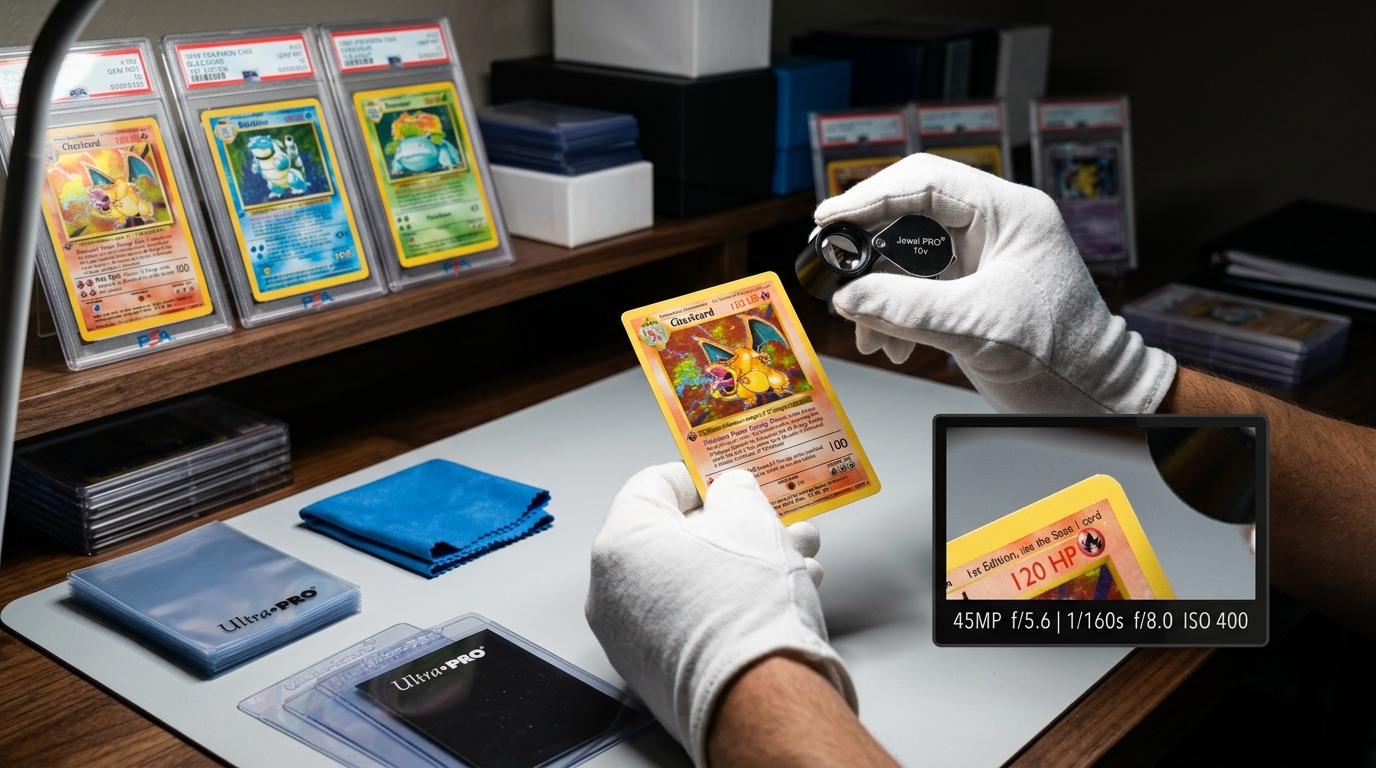
- Use card savers, not top loaders
- Handle cards by edges only
- Review cards under bright light before submitting
- Photograph cards before shipping
- Use proper packaging with bubble wrap
Timing:
- Avoid peak seasons (post-Christmas, major set releases)
- Submit in January-February for faster service
- Plan ahead for selling deadlines
- Consider turnaround times for time-sensitive sales
Service Level Selection:
- Don't overpay for speed you don't need
- Use bulk services for non-urgent submissions
- Reserve express services for time-sensitive needs
- Calculate whether faster service justifies cost
Common Mistakes to Avoid
Don't:
- Submit cards with obvious damage (save grading fees)
- Overestimate grade (be realistic about condition)
- Ignore shipping insurance (protect valuable cards)
- Submit without researching current market values
- Grade cards worth less than $30-40 (usually not profitable)
Do:
- Research recent sales of comparable graded cards
- Calculate ROI before submitting
- Use proper card savers and packaging
- Track submissions through online portals
- Keep detailed records for tax purposes
Market Predictions (Cautious)
While we cannot guarantee future price movements, several trends seem likely:
SGC's Position:
- May continue gaining market share in modern cards
- Cost advantage remains compelling
- Ownership by Collectors Holdings provides stability
- Could see gradual premium reduction vs. PSA
PSA's Position:
- Will likely maintain vintage card dominance
- Network effects and history create strong moat
- Volume leadership seems secure
- Premium may persist for high-end cards
CGC's Position:
- Growth trajectory depends on continued investment
- Could capture 10-15% market share by 2028
- Success depends on narrowing price gap
- Represents best hope for market competition
Industry Changes to Watch
Potential Developments:
- AI-assisted grading technology
- Blockchain authentication integration
- Further consolidation or new entrants
- International expansion by all companies
- Changes in grading standards or holder designs
There's no universal answer—the right choice depends on your specific situation.
Choose SGC if:
- You're grading modern cards (2016-2026)
- You're on a budget or doing high-volume submissions
- You're grading for personal collection protection
- You're submitting mid-grade vintage cards (PSA 8 or lower)
- You value fast turnaround times
- You want straightforward pricing without memberships
Choose PSA if:
- You're grading high-value vintage cards likely to grade 9-10
- You're focused on investment and resale
- You're targeting international buyers
- You're building registry sets
- You want maximum liquidity and buyer confidence
- Premium pricing is justified by expected returns
Consider CGC if:
- You want to support genuine market competition
- You're grading modern cards for personal collection
- You value customer service and fast turnaround
- You're willing to accept current price discount
- You're focused on long-term collecting rather than quick flips
For many collectors, the optimal strategy is using both companies strategically: PSA for high-value vintage and investment pieces, SGC for modern cards and personal collection items.
As Pokemon celebrates its 30th anniversary in 2026, the grading market has never been more important—or more complex. Understanding the nuances of each company helps you make informed decisions that protect your collection and maximize your investment.
Note: Past performance does not guarantee future results. Always do your own research before making investment decisions. Grading costs, turnaround times, and market premiums can change. Verify current pricing and service levels before submitting cards.