Top 10 Pokemon Cards Under $50 With Investment Potential
Pokemon Price Tracker
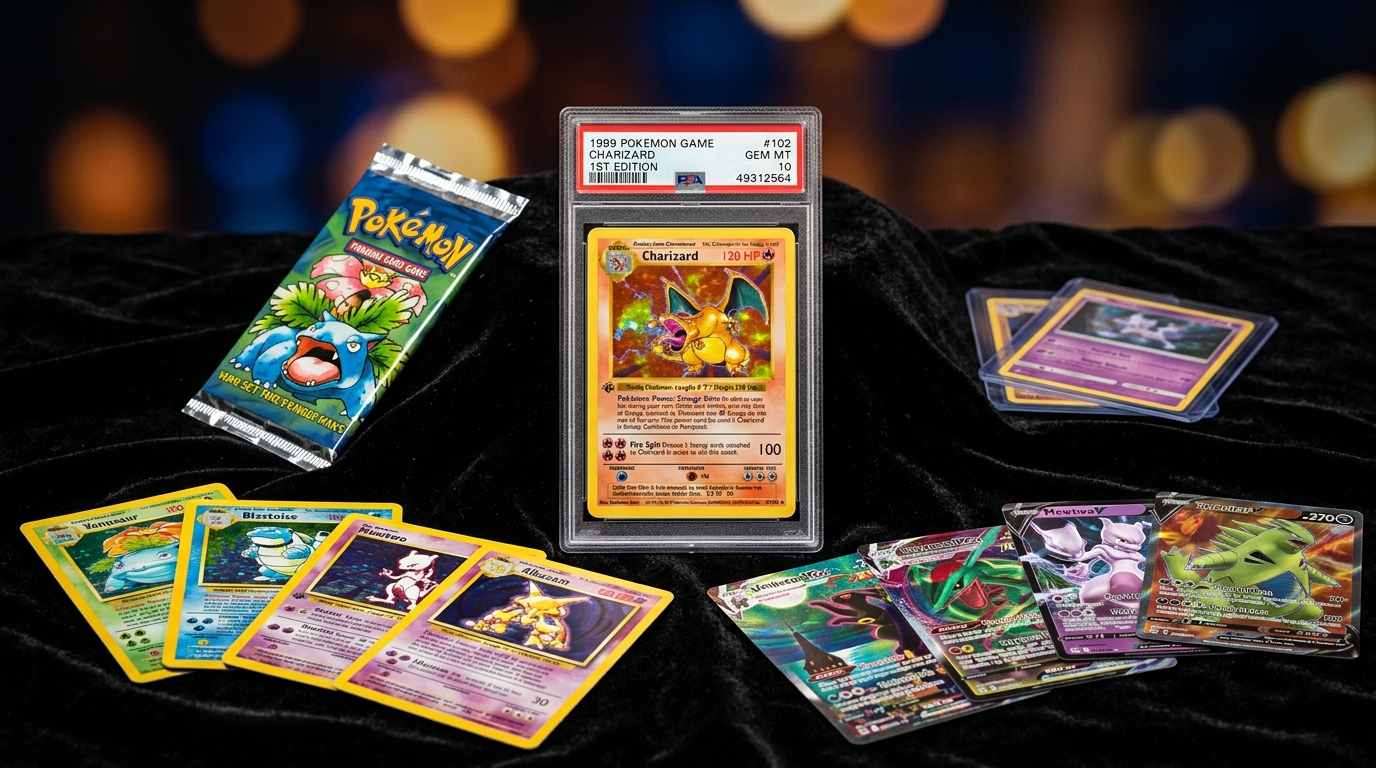
Top 10 Pokemon Cards Under $50 With Investment Potential in 2026
The Pokemon card market is having a moment. With the Pikachu Illustrator shattering records at $16.49 million in February 2026 and institutional money flowing into the hobby, headlines have been dominated by six and seven-figure grails. But here's what most investors overlook: some of the strongest percentage returns in this cycle are happening in the sub-$50 range.
Under fifty bucks, you can still buy vintage holographics, modern chase cards with world-class artwork, PSA-graded slabs, and sealed product with genuine pull potential. It's the sweet spot where accessibility meets upside — and where budget-conscious collectors can build a diversified portfolio without needing a five-figure bankroll.
In this guide, we'll break down 10 Pokemon cards under $50 that show strong investment characteristics heading into the back half of 2026. Every pick is supported by market fundamentals, print run considerations, and current demand trends.
Why the Sub-$50 Range Is a Smart Entry Point
Before diving into specific cards, it's worth understanding why the affordable segment deserves serious attention in the current market environment.
According to long-term data, the average Pokemon card has appreciated roughly 3,261% over the past 20 years, with the average one-year increase sitting near 46% — a pace that dwarfs the S&P 500's roughly 12% annual return. Even a fraction of that growth on a $30 card produces meaningful gains, and the entry cost keeps risk manageable.
Several 2026 catalysts are pushing the market:
- 30th Anniversary Momentum: Pokemon Day (February 27, 2026) kicked off a year-long celebration, with a global Celebration Collection launching in October 2026.
- Mega Evolution Era: Ascended Heroes (January 30, 2026) and Perfect Order (March 27, 2026) revitalized the TCG with tighter print runs and healthier supply dynamics.
- Standard Rotation: The April 10, 2026 rotation removed G-regulation sets, creating scarcity for still-playable cards.
- Institutional Attention: The Logan Paul Illustrator sale has pulled mainstream investor eyes back into the category.
Affordable cards benefit disproportionately from these tailwinds because they have room to run before hitting resistance from collector budgets.
How These Picks Were Selected
Each card on this list meets four criteria:
- Current market price under $50 (raw or in lower graded slabs, depending on the card)
- Clear scarcity or demand drivers — either print run, artwork, competitive play, or nostalgia
- Active liquidity — regular sales data, not a card that trades once a quarter
- Upside catalyst — a specific reason the card could appreciate over the next 12–24 months
You can track any of these cards using price history tools on Pokemon Price Tracker to monitor entry points and exit signals.
The Top 10 Pokemon Cards Under $50 for 2026
1. Nidoking – Scarlet & Violet 151 Illustration Rare
The 151 set continues to be the gold standard for modern budget investing. Nidoking's illustration rare features stunning full-art detail, and the card has settled into the $25–$40 raw range depending on centering.
Why it works:
- The 151 set taps directly into original 1st-generation nostalgia — the strongest demographic in the hobby
- Illustration rares from 151 have shown consistent long-term appreciation since the set's release
- Nidoking is an iconic Gen 1 heavyweight with broad brand recognition beyond just competitive players
Upside catalyst: As the 30th Anniversary celebration builds through October 2026, Gen 1-focused cards typically outperform. This is a set-and-forget hold.
2. Charizard ex – Obsidian Flames (Non-Full Art)
While the special art versions of Charizard ex trade for hundreds, the standard ex version is still floating in the $15–$25 range. Any Charizard card is a defensible hold, and this one is no exception.
Why it works:
- Charizard remains the single most valuable brand in the Pokemon TCG
- Standard ex versions are often overlooked in favor of chase alt arts
- Sealed Obsidian Flames product continues to disappear from retail channels
Upside catalyst: As Obsidian Flames ages out of print and Charizard's collector demand persists, even the "basic" ex has meaningful floor support.
3. Umbreon VMAX (Non-Alt Art) – Evolving Skies
The alt art Umbreon VMAX ("Moonbreon") is a five-figure card. But the standard rainbow/regular VMAX versions of Umbreon are still accessible in the $30–$50 range depending on condition.
Why it works:
- Umbreon is a tier-one fan-favorite Pokemon with permanent demand
- Evolving Skies is widely regarded as one of the most important modern sets
- Halo effect from Moonbreon prices lifts all Umbreon cards from the set
Upside catalyst: Evolving Skies sealed product has been drying up for years. The entire set benefits as pack-fresh supply dwindles.
4. Gengar VMAX Alt Art – Fusion Strike
Once a $200+ card, Gengar's alt art VMAX has cooled considerably and can now be found in the $35–$50 range for well-centered raw copies.
Why it works:
- Alt art VMAX cards from the Sword & Shield era have historically outperformed standard prints
- Gengar is a top-5 fan-favorite by most polling
- The card's artwork is widely considered among the best in Fusion Strike
Upside catalyst: Sword & Shield-era alt arts are entering their "post-hype consolidation" phase, which historically precedes long-term appreciation.
5. Pikachu with Grey Felt Hat – Van Gogh Museum Promo (SWSH285)
The original run of this card sold for hundreds during its viral moment in 2023. In 2026, cleaner copies without the pull-and-flip damage are available in the $30–$45 range.
Why it works:
- Extremely limited distribution due to the Van Gogh Museum shutting sales down early
- Cross-cultural appeal beyond the standard Pokemon collector base
- Iconic, one-of-one style artwork partnership
Upside catalyst: Museum collaboration cards have historically appreciated as the memory of the original event fades and supply gets locked into long-term collections.
6. Mew ex – Scarlet & Violet 151 (Standard ex)
The non-special-art Mew ex has been trading in the $20–$35 range and represents solid value in the 151 ecosystem.
Why it works:
- Mew is one of the most iconic Pokemon ever printed
- 151 remains a benchmark modern set with strong nostalgia hooks
- Multiple Mew variants in the set create collector demand for the full rainbow
Upside catalyst: As 151 sealed English product becomes harder to find, singles across the set tend to lift together.
7. Iono – Paldea Evolved (Full Art Trainer)
Character trainer full arts have been one of the most consistently appreciating sub-categories in modern Pokemon. Iono's standard full art currently sits in the $25–$40 range.
Why it works:
- Character trainer cards have massive crossover appeal with anime fans
- Iono is one of the most popular new-generation trainer characters
- Full art trainers historically outperform Pokemon full arts over 3-5 year periods
Upside catalyst: Character trainer full arts have benefited enormously from the 2025–2026 collector wave, and this segment shows no signs of slowing.
8. Vintage WOTC Holos – Base Set 2, Team Rocket, Gym Sets (PSA 7)
Rather than a single card, this is a category play. WOTC-era holos in PSA 7 condition can regularly be found for $30–$50 — a fraction of what PSA 9s and 10s command.
Why it works:
- Vintage holos have appreciated consistently for two decades
- PSA 7s offer the aesthetic of a graded slab at a fraction of the higher-grade cost
- Ceiling for vintage keeps rising as PSA 9/10 copies become unattainable for average collectors
Upside catalyst: As high-grade vintage prices continue climbing, mid-grade slabs benefit from spillover demand. If you're considering grading raw copies yourself, run the numbers through the Grading ROI Calculator first to make sure the math works before submitting.
9. Terapagos ex – Stellar Crown (Regular ex Version)
The standard ex Terapagos card is floating in the $10–$20 range, well below its special art counterparts. Terapagos is the mascot legendary of the current generation and has structural importance.
Why it works:
- Mascot legendaries historically hold long-term value regardless of set popularity
- Very low entry price offers strong risk/reward asymmetry
- Post-rotation, still relevant in casual and expanded formats
Upside catalyst: Generation-defining legendaries tend to appreciate as their generation ages out and nostalgia kicks in — this is a 3-5 year hold, not a flip.
10. Sealed Pokemon 151 Booster Bundles
Sealed product deserves a spot on any budget investment list. Pokemon 151 booster bundles have been trading in the $35–$50 range, and the set continues to see supply pressure.
Why it works:
- Sealed product has multiple exit strategies: hold, rip for singles, or sell later
- 151 has become one of the most beloved modern sets
- English 151 has faced print run controversy and constrained supply throughout its life cycle
Upside catalyst: As sealed 151 becomes harder to source from retail channels, secondary market prices tend to follow. You can monitor sealed product prices to time entries.
Building a Balanced Sub-$50 Portfolio
Rather than putting your entire budget into a single card, consider allocating across categories:
- 40% Modern Chase Cards (151 illustration rares, alt arts, character trainers)
- 25% Vintage Mid-Grade (WOTC PSA 7s, sealed vintage packs if you can find them)
- 20% Sealed Modern Product (booster bundles, ETBs from key sets)
- 15% Speculative/Promo (museum collabs, limited promos, niche cards)
This structure protects against any single segment underperforming while giving exposure to the strongest tailwinds in the market.
Common Mistakes Budget Investors Make
Chasing Hype Without Checking Comps
Social media can pump a card overnight. Before buying, always verify recent sold prices across multiple platforms. A card trending on TikTok may already be past its optimal entry point.
Ignoring Condition
At the sub-$50 level, condition still matters. A near-mint copy of any card on this list will outperform a lightly played copy over time. Don't cheap out on damaged cards just to "get in."
Overpaying for Grading
Grading a $20 card into a PSA 9 that sells for $35 isn't a win once you factor in fees and shipping. Only grade cards where the math clearly works.
Neglecting Storage
A sleeve and top loader cost less than a dollar. Store cards properly from day one — condition degradation is the silent killer of return on investment.
Key Takeaways
- The sub-$50 tier is one of the most opportunity-rich segments in the current Pokemon market
- 2026's structural catalysts (30th Anniversary, Mega Evolution era, rotation, institutional interest) favor accessible cards
- Diversification across modern, vintage, sealed, and promo categories reduces single-card risk
- Condition, storage, and disciplined entry points matter more than picking the "perfect" card
- Track your positions actively rather than buying and forgetting
Budget investing in Pokemon isn't about finding the next $16 million grail — it's about consistent, data-driven positioning in cards with real demand fundamentals. The 10 cards outlined here offer a solid starting framework, but the real edge comes from continuous monitoring and disciplined execution.
Note: Past performance does not guarantee future results. Always do your own research before making investment decisions. The Pokemon card market can be volatile, and prices referenced in this article reflect market conditions at time of writing and may have shifted.
Pokemon Price Tracker
Market Analyst
Related Articles
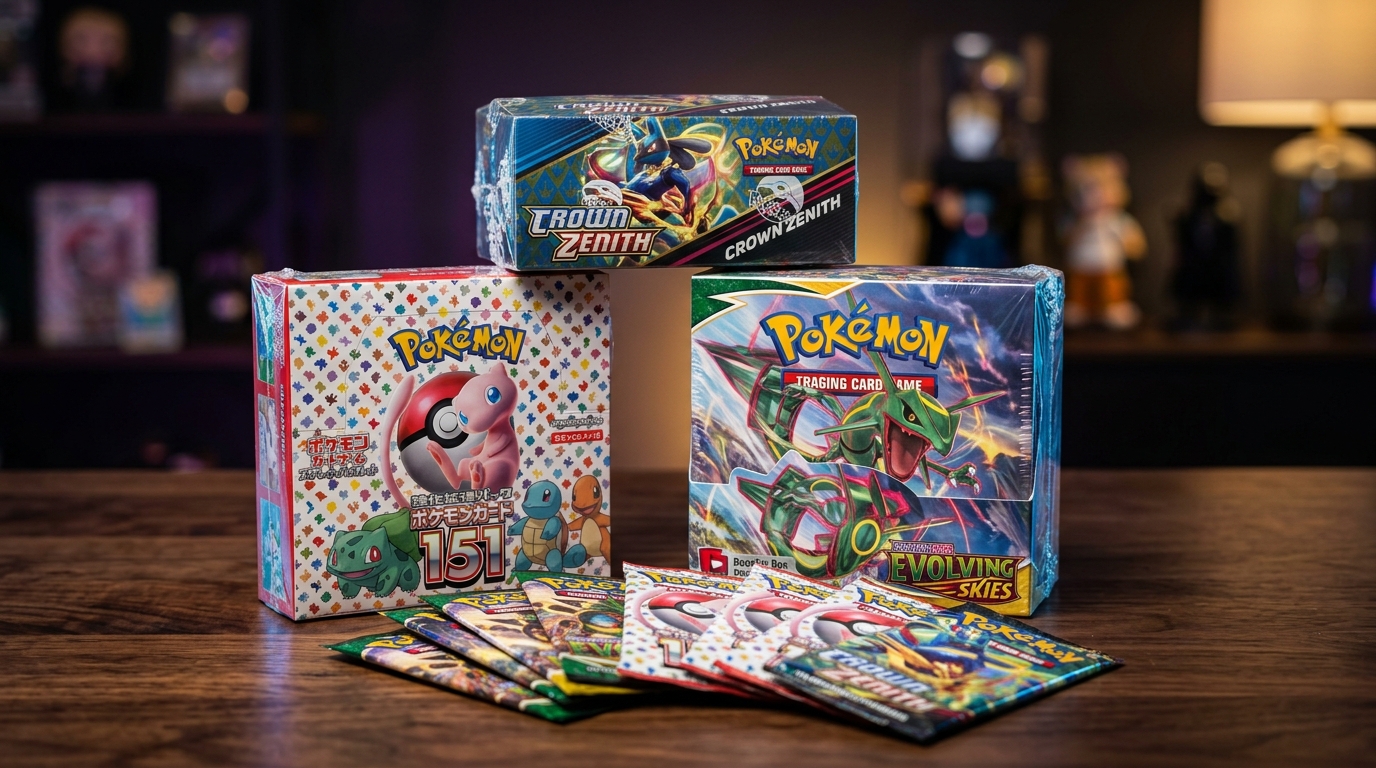
Best Pokemon Booster Boxes to Buy and Hold in 2026
From Evolving Skies to Japanese Pokemon 151, discover the best Pokemon booster boxes to buy and hold in 2026. Data-driven picks, portfolio strategy, and key metrics to watch for long-term sealed investors.
Pokemon Price Tracker
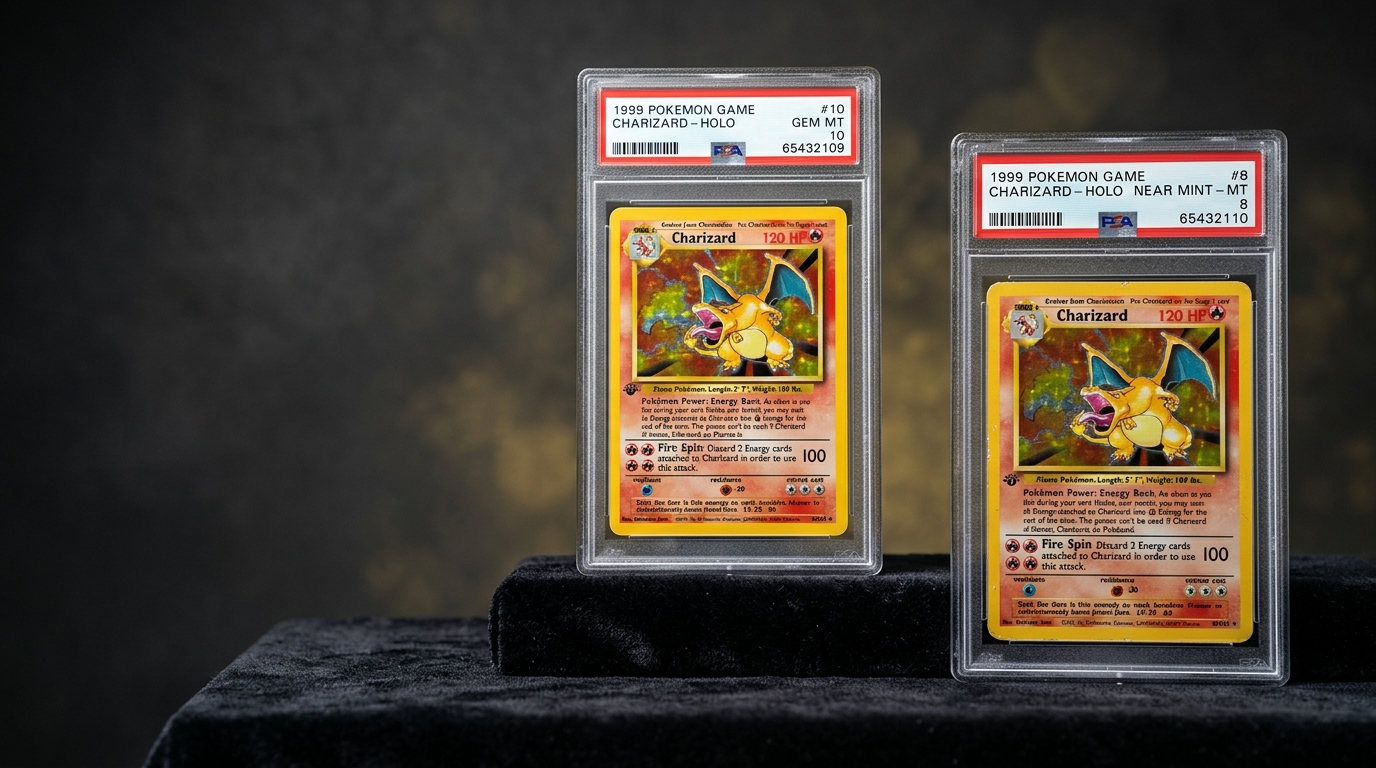
PSA 10 vs PSA 9: 2026 Price Gap Analysis & ROI Data
PSA 10s command 3x to 20x more than PSA 9s in 2026, but the gap varies wildly by card and era. We break down real sales data, ROI frameworks, and when grading actually makes financial sense.
Pokemon Price Tracker
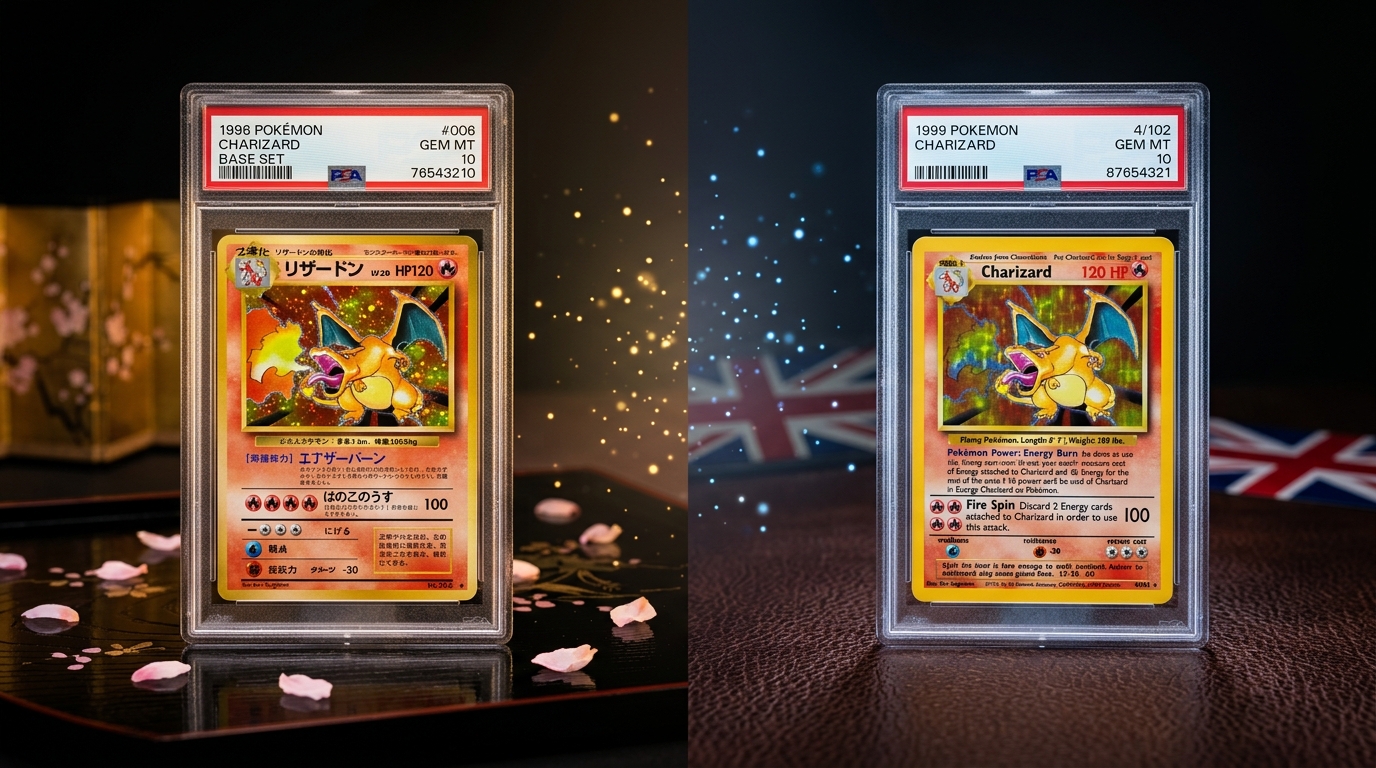
Japanese vs English Pokemon Cards: Which Holds Value in 2026?
The Japanese vs English Pokemon card debate has fundamentally shifted in 2026. Japanese PSA 10s now command 20-40% premiums over English equivalents, while raw English cards still cost 2x-6x more. Here's how to navigate both markets strategically.
Pokemon Price Tracker
Stay Updated
Subscribe to our newsletter for the latest Pokemon card market trends, investment opportunities, and exclusive insights delivered straight to your inbox.