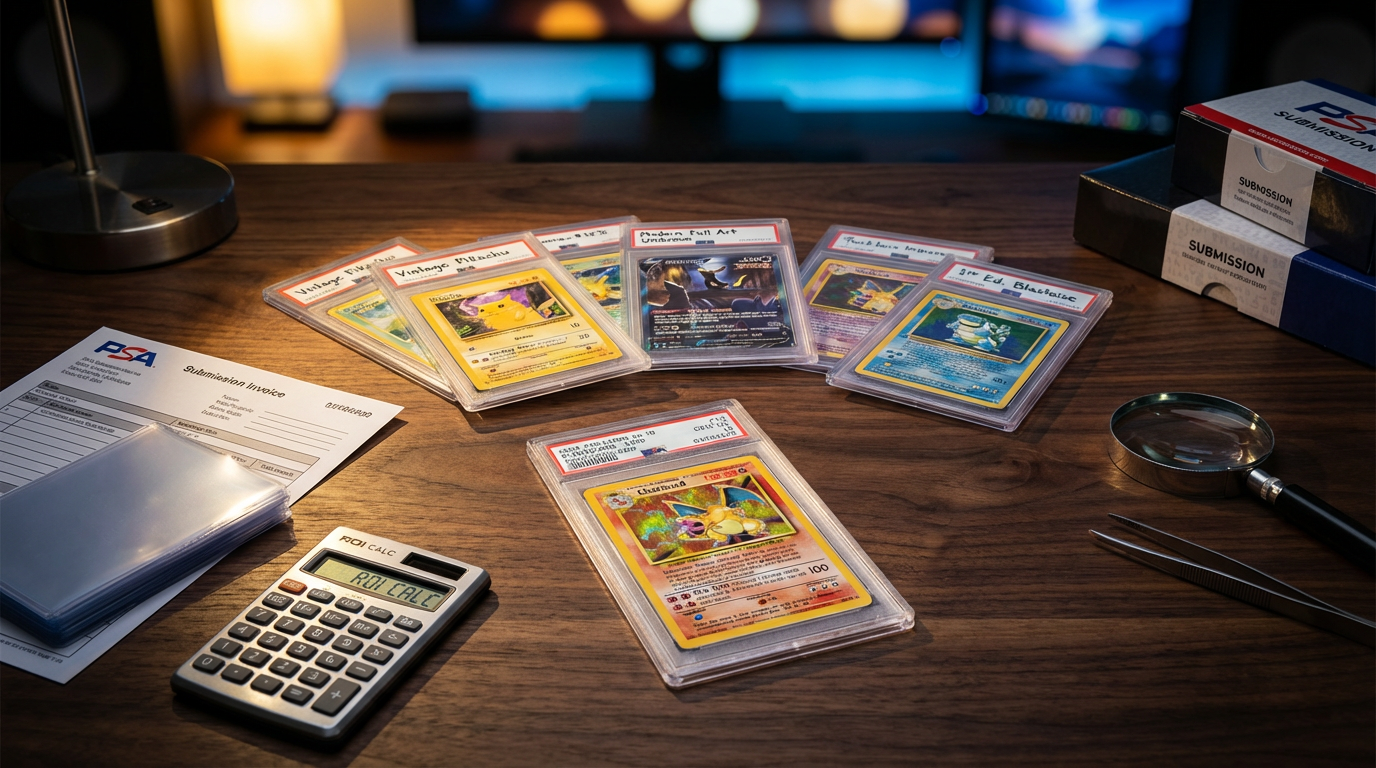
Deciding whether to grade your Pokemon cards can mean the difference between a profitable investment and throwing money away. With PSA grading costs ranging from $25 to $600+ per card in 2026, understanding when grading makes financial sense is crucial for collectors and investors alike.
This comprehensive guide breaks down the exact calculations you need to determine if grading your Pokemon cards will generate positive returns. Whether you're sitting on vintage WOTC holos or modern chase cards from the latest Scarlet & Violet sets, we'll show you how to calculate your break-even point and maximize your ROI.
Understanding Pokemon Card Grading Costs in 2026
Before diving into ROI calculations, you need to understand the full cost picture of grading Pokemon cards.
Direct Grading Service Fees
PSA (Professional Sports Authenticator)
- Value Tier: $25-35 per card (65+ business days)
- Regular Service: $75-100 per card (20-30 business days)
- Express Service: $150-200 per card (10-15 business days)
- Super Express: $300+ per card (priority processing)
CGC (Certified Guaranty Company)
- Economy: $20-30 per card (standard turnaround)
- Standard: $35-50 per card (faster processing)
- Express: $75-100 per card (expedited service)
BGS (Beckett Grading Services)
- Standard: $30-50 per card
- Premium: $75-125 per card
- Expedited: $150+ per card
Hidden Costs That Impact Your ROI
Many collectors forget these additional expenses when calculating grading profitability:
- Card savers and holders: $2-5 per card
- Shipping to grading company: $10-30 (depending on insurance value)
- Return shipping: Usually included, but express return costs extra
- Insurance: 1-3% of declared value for high-value cards
- Opportunity cost: Your money is tied up for 2-6 months during grading
Total realistic cost per card: For most collectors using PSA Value service, expect $35-45 per card all-in. For premium services, costs can exceed $200 per card.
Here's the fundamental equation every collector needs to understand:
Break-Even Point = (Total Grading Costs) / (Expected Grade Premium - 1)
Let's break this down with real examples.
Example 1: Modern Chase Card (Scarlet & Violet Special Illustration Rare)
Card: Iono Special Illustration Rare from Paldea Evolved
- Raw card value: $120
- Total grading cost (PSA Value): $40
- PSA 10 value: $200
- PSA 9 value: $130
Scenario A: You receive PSA 10
- Gross profit: $200 - $120 = $80
- Net profit after grading: $80 - $40 = $40
- ROI: ($40 / $160) × 100 = 25%
Scenario B: You receive PSA 9
- Gross profit: $130 - $120 = $10
- Net profit after grading: $10 - $40 = -$30
- ROI: -18.75% (loss)
Key Insight: For this card, you MUST receive a PSA 10 to profit. The risk-reward ratio is unfavorable unless you're extremely confident in a gem mint grade.
Example 2: Vintage WOTC Holo
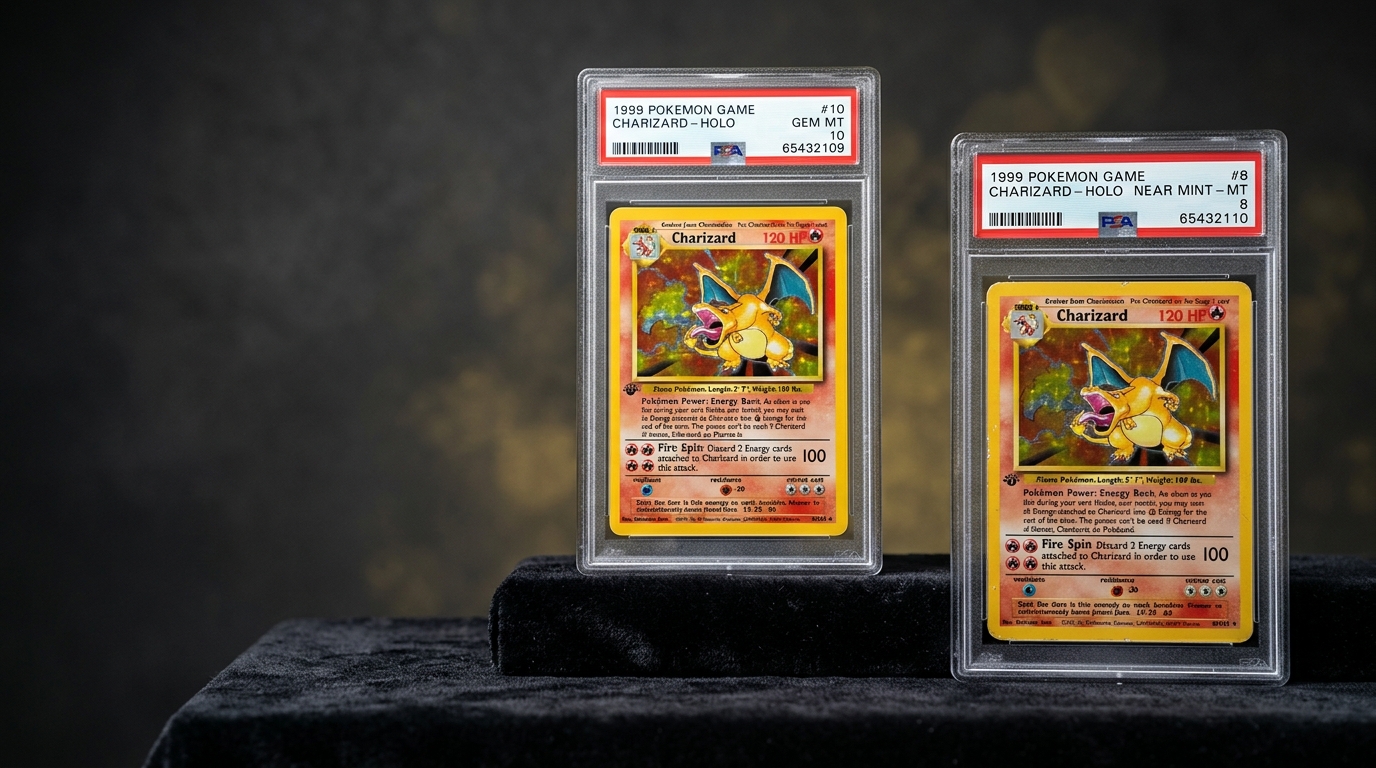
Card: Base Set Charizard (Unlimited, LP-NM condition)
- Raw card value: $300
- Total grading cost (PSA Regular): $90
- PSA 9 value: $1,200
- PSA 8 value: $600
- PSA 7 value: $400
Scenario A: PSA 9
- Net profit: $1,200 - $300 - $90 = $810
- ROI: 207%
Scenario B: PSA 8
- Net profit: $600 - $300 - $90 = $210
- ROI: 53.8%
Scenario C: PSA 7
- Net profit: $400 - $300 - $90 = $10
- ROI: 2.5%
Key Insight: Even with a PSA 7, you break even. Vintage cards with strong raw values typically offer much better grading ROI than modern cards.
Collector forums and experienced graders have established a practical rule of thumb:
Never grade a card worth less than $75-100 raw unless it's for personal collection purposes.
Here's why this rule exists:
- Grading costs eat into margins: At $40 total cost, you need significant grade premiums to profit
- Risk of lower grades: Even well-centered cards can receive PSA 9 or lower
- Market volatility: Modern card values can drop during the 2-3 month grading period
- Liquidity concerns: Graded cards under $100 can be harder to sell than raw cards
When to Break This Rule
- Bulk vintage submissions: If you have 20+ WOTC commons/uncommons in mint condition
- Personal collection goals: Grading for preservation rather than profit
- Long-term holds: Cards you believe will appreciate significantly over 5+ years
- Set registry completion: Building PSA Set Registry collections
Understanding typical grade premiums helps you calculate realistic ROI projections.
Vintage WOTC Era (1999-2003)
Ultra-Rare Holos (Charizard, Blastoise, Lugia, etc.)
- PSA 10: 8-15x raw value
- PSA 9: 3-5x raw value
- PSA 8: 1.5-2.5x raw value
Standard Holos
- PSA 10: 4-8x raw value
- PSA 9: 2-3x raw value
- PSA 8: 1.2-1.8x raw value
Non-Holos (Commons/Uncommons)
- PSA 10: 3-6x raw value (if raw value >$20)
- PSA 9: 1.5-2x raw value
Modern Era (2020-2026)
Chase Secret Rares/Alt Arts
- PSA 10: 1.5-3x raw value
- PSA 9: 0.9-1.2x raw value (often at or below raw)
- PSA 8: 0.5-0.8x raw value (usually negative ROI)
Standard Ultra Rares
- PSA 10: 1.3-2x raw value
- PSA 9: 0.8-1.1x raw value
- PSA 8: 0.5-0.7x raw value
Bulk Holos/Rares
- Generally not worth grading for ROI purposes
- PSA 10 might only be worth $15-30
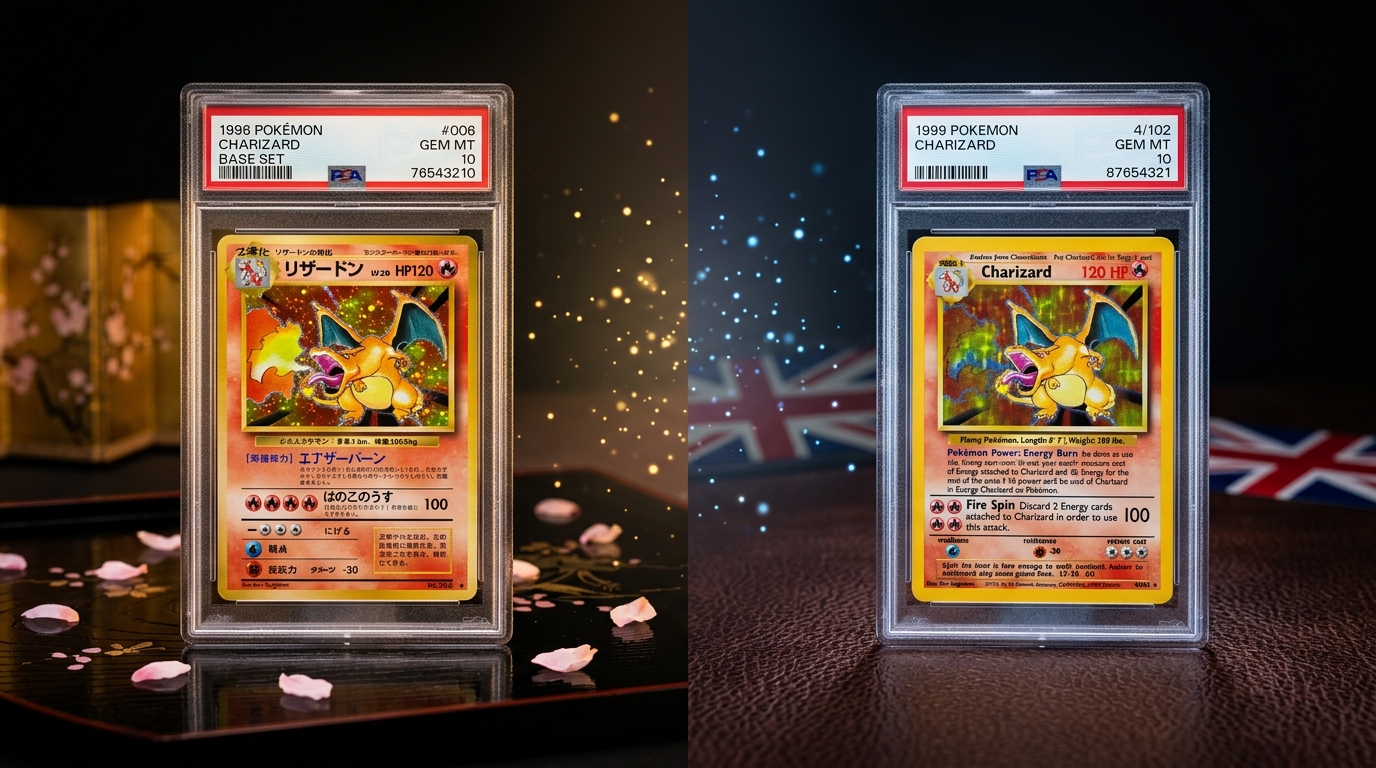
Japanese Cards
Vintage Japanese
- PSA 10: 5-10x raw value
- Generally better ROI than English counterparts due to rarity
Modern Japanese
- PSA 10: 1.8-3.5x raw value
- Better multipliers than English modern cards
- Higher print quality often means more PSA 10s, affecting premium
Manual calculations work, but a dedicated calculator saves time and reduces errors. Our Grading ROI Calculator helps you determine profitability by factoring in:
- Current raw card value
- Grading service and tier selection
- Estimated grade probability
- Current graded values for each grade
- All associated costs (shipping, insurance, holders)
Step-by-Step Calculator Usage
- Enter your card details: Set, card name, condition assessment
- Input current raw value: Use recent eBay sold listings or market data
- Select grading service: PSA, CGC, or BGS with specific tier
- Review graded values: Calculator pulls current PSA 10, 9, 8 values
- Assess condition honestly: Input your realistic grade expectation
- Calculate break-even: See exactly what grade you need to profit
- Compare scenarios: Test different services and tiers
Real Calculator Example
Card: Umbreon VMAX Alt Art (Evolving Skies)
- Raw value: $180
- PSA Value tier cost: $40
- PSA 10 value: $350
- PSA 9 value: $190
Calculator Output:
- Break-even grade: PSA 9.5 (between 9 and 10)
- Probability of profit: 40-50% (assuming 40% PSA 10 rate, 50% PSA 9 rate)
- Expected value: $15-25 profit
- Recommendation: Marginal candidate - only grade if centering is exceptional
Accurate condition assessment is critical for ROI calculations. Here's how to evaluate your cards:
Centering (Most Important for Modern Cards)
PSA 10 Requirements:
- Front: 55/45 or better left-to-right, top-to-bottom
- Back: 75/25 or better
How to measure: Use a digital caliper or centering app
- Measure border widths on all four sides
- Calculate ratios
- Modern cards with 60/40 centering rarely achieve PSA 10
Surface Condition
PSA 10: No scratches, print lines, or surface wear visible under bright light
PSA 9: Minimal surface wear, possibly one tiny print line
PSA 8: Light scratching or multiple print lines
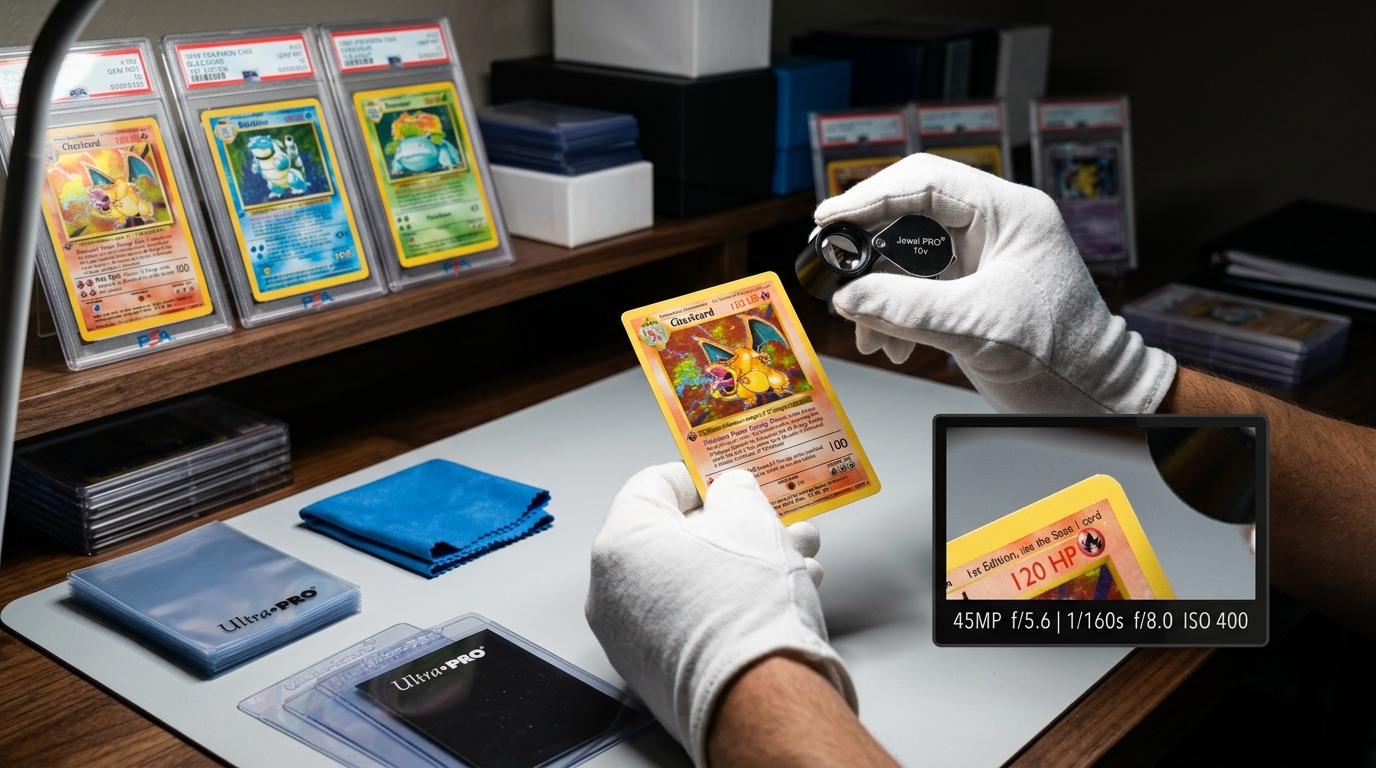
Pro tip: Use a jeweler's loupe or phone macro lens to inspect surfaces
Edges and Corners
PSA 10: Sharp corners, no whitening, pristine edges
PSA 9: One corner with microscopic wear acceptable
PSA 8: Light corner wear on 2-3 corners
Common mistake: Assuming pack-fresh means PSA 10. Modern cards often have factory edge wear or print defects.
Modern Cards (2020-2026)
When to Grade:
- Card raw value exceeds $150
- Centering is 55/45 or better
- Card is from a premium set (151, Crown Zenith, Evolving Skies)
- You're confident in PSA 10 potential
When to Skip:
- Raw value under $100
- Centering is 60/40 or worse
- Card is from recent set with high print run
- PSA 9 values are at or below raw
Best candidates:
- Special Illustration Rares with perfect centering
- Gold Secret Rares from popular sets
- Alt Art VMAXs from Evolving Skies
- Master Set chase cards from 151
Vintage Cards (WOTC Era)
When to Grade:
- Any holo in NM or better condition
- Raw value exceeds $50
- Card has collector demand (Charizard, Pikachu, Lugia, etc.)
- You're building a set registry
When to Skip:
- Heavy play wear (likely PSA 5 or below)
- Creases or bends present
- Significant whitening on multiple corners
Best candidates:
- Base Set, Jungle, Fossil holos in NM condition
- Neo series holos
- E-reader series cards
- Promotional cards (Black Star Promos)
Key advantage: Vintage cards have much better PSA 9 to raw value ratios, reducing risk.
PSA (Best for Resale Value)
Advantages:
- Highest market recognition and liquidity
- Best resale premiums (10-20% higher than competitors)
- Largest population database
- Most trusted by collectors
Disadvantages:
- Higher costs than CGC
- Longer turnaround times
- Stricter grading (some argue)
Best for: Vintage cards, high-value modern cards, cards you plan to sell
CGC (Best for Value)
Advantages:
- Lower costs ($20-30 for economy)
- Faster turnaround times
- Detailed subgrades available
- Better holder design (some prefer)
Disadvantages:
- Lower resale values (10-20% less than PSA)
- Less market acceptance
- Smaller population data
Best for: Personal collection, bulk modern submissions, budget-conscious grading
BGS (Best for Pristine Cards)
Advantages:
- Black Label BGS 10 (quad 10 subgrades) commands premium prices
- Subgrade system provides detailed feedback
- Strong reputation in sports card market
Disadvantages:
- Higher costs
- BGS 9.5 often sells for less than PSA 10
- More complex grading scale
Best for: Cards with exceptional centering and surfaces, collectors seeking black labels
Bulk Submission Discounts
Submitting 20+ cards at once can reduce per-card costs by 20-40%:
- PSA Value tier requires 20+ card minimum
- CGC offers bulk pricing at 50+ cards
- Group submissions through local card shops can access dealer pricing
ROI Impact: Reduces break-even point from $100 to $60-75 raw value
Timing the Market
Grading turnaround times mean you're making a 2-6 month bet on card values:
Submit when:
- Card prices are stable or trending up
- New set releases create demand for older cards
- Major tournaments or events drive interest
Avoid submitting when:
- Card is at all-time high (likely to regress)
- New reprints announced
- Market is in correction phase
Grade Speculation
Some investors buy raw cards specifically to grade:
Strategy: Purchase raw NM cards at 40-60% of PSA 9 value
- Grade only cards with PSA 9+ potential
- Sell graded cards at market value
- Target 50-100% ROI after grading costs
Risk: Requires excellent condition assessment skills and market knowledge
1. Overestimating Card Condition
Mistake: Assuming your card is PSA 10 because it looks mint
Reality: Only 20-30% of pack-fresh modern cards achieve PSA 10
Solution: Grade conservatively; assume PSA 9 for ROI calculations
2. Ignoring Centering
Mistake: Submitting cards with 60/40 or worse centering
Reality: Poor centering caps grade at PSA 9 regardless of other factors
Solution: Measure centering before submitting; skip cards with 65/35 or worse
3. Grading Low-Value Cards
Mistake: Submitting $20-30 raw value cards hoping for 3x multiplier
Reality: Even PSA 10 might only be worth $60-80, netting $10-20 profit
Solution: Stick to $75-100+ minimum raw value rule
4. Using Premium Services Unnecessarily
Mistake: Paying $150+ for express service on $200 cards
Reality: Extra speed rarely justifies 3-5x higher cost
Solution: Use economy/value tiers unless card value exceeds $1,000
5. Not Factoring in Selling Fees
Mistake: Calculating ROI without considering eBay/PayPal fees
Reality: Selling fees are 12-15% of final sale price
Solution: Reduce expected graded values by 15% in calculations
The Pokemon card market in 2026 presents unique grading considerations:
Selective Strength in Modern Cards
- Chase cards from premium sets maintain strong values
- Bulk modern cards have softened significantly
- Special Illustration Rares and Alt Arts remain grading candidates
- Standard VMAXs and Vs rarely justify grading costs
Vintage Market Remains Strong
- WOTC era cards continue appreciating
- PSA 9 and 10 vintage holos show consistent demand
- Lower grade vintage (PSA 7-8) has stabilized
- Grading vintage cards remains profitable for most holos
Japanese Card Opportunities
- Japanese cards often have better centering than English
- Lower population numbers for Japanese PSA 10s
- Growing Western demand for Japanese exclusive cards
- Better ROI potential on modern Japanese vs. English
If you're grading cards for profit, understand the tax considerations:
- Grading costs are deductible business expenses if you're a dealer
- Capital gains apply when selling graded cards
- Hobby vs. business classification affects deductibility
- Keep detailed records of all grading costs and sales
Consult a tax professional familiar with collectibles for specific guidance.
Use this checklist before submitting any card for grading:
✓ Raw card value exceeds $75-100 (minimum threshold)
✓ Centering is 55/45 or better (for PSA 10 potential)
✓ No visible surface scratches or print lines (under bright light)
✓ Corners are sharp with no whitening (all four corners)
✓ PSA 10 value is at least 2x raw value (for modern cards)
✓ PSA 9 value exceeds raw value + grading costs (safety net)
✓ Card has strong market demand (liquidity matters)
✓ You can afford to wait 2-6 months (opportunity cost)
If you check 7/8 boxes: Strong grading candidate
If you check 5-6/8 boxes: Marginal candidate, proceed with caution
If you check fewer than 5 boxes: Skip grading or grade for personal collection only
Grading Pokemon cards can be highly profitable when done strategically, but it's not a guaranteed money-maker. The key to positive ROI is:
- Accurate condition assessment - Be honest about your card's grade potential
- Realistic value calculations - Use current market data, not optimistic projections
- Proper card selection - Focus on cards exceeding the $75-100 minimum threshold
- Service selection - Choose PSA for resale, CGC for personal collection or budget submissions
- Understanding multipliers - Vintage cards offer better ROI than most modern cards
Remember: grading should enhance your collection or investment strategy, not become a money pit. When in doubt, calculate your break-even point and only proceed if the risk-reward ratio favors profit.
Note: Past performance does not guarantee future results. Always do your own research before making investment decisions. Card values fluctuate based on market conditions, and grading outcomes can vary.
For collectors serious about maximizing grading ROI, using data-driven tools and staying informed about current market conditions is essential. Whether you're grading vintage WOTC holos or modern chase cards, the fundamental principle remains: only grade cards where the numbers clearly support profitability.