Pokemon Card Grading Turnaround Times 2026: Complete Guide
Pokemon Price Tracker
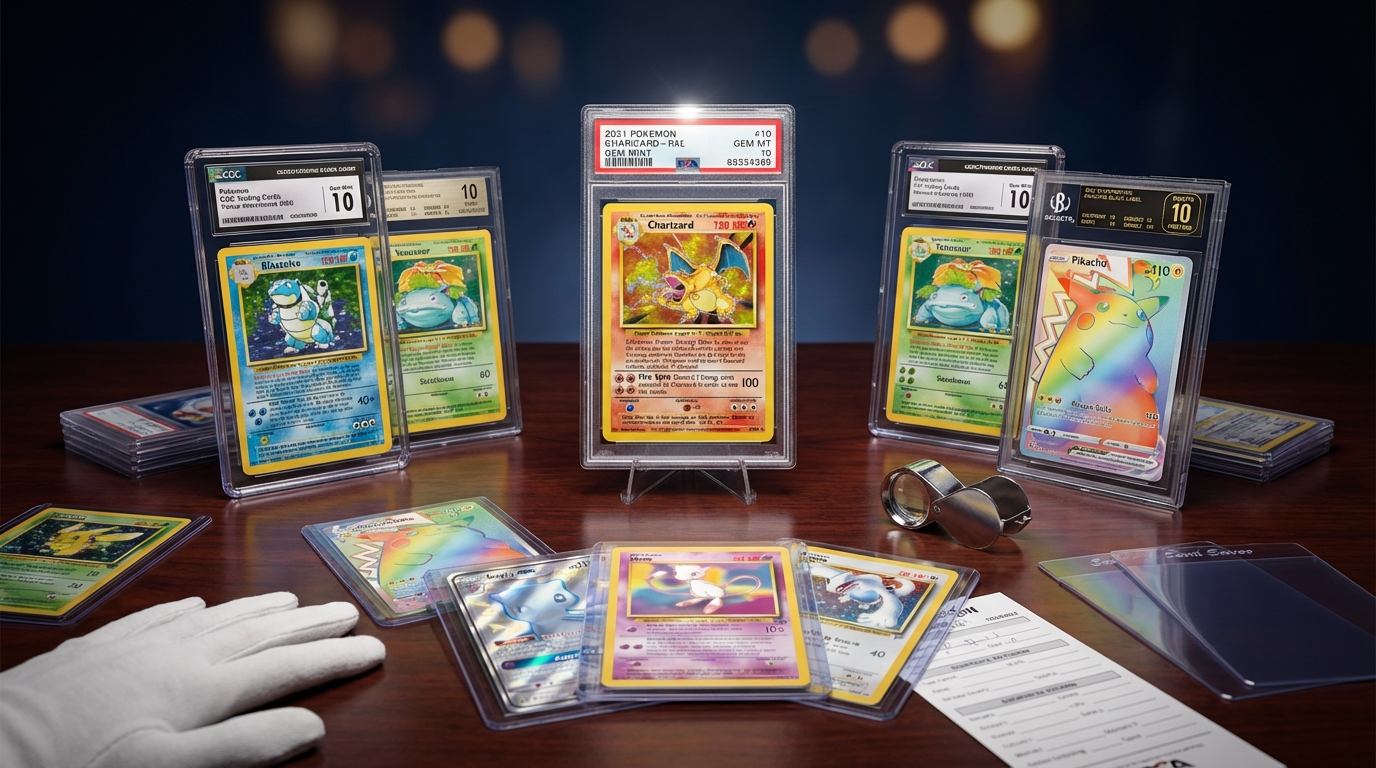
Pokemon Card Grading Turnaround Times 2026: Complete Guide
Choosing the right grading company for your Pokemon cards in 2026 means balancing three critical factors: turnaround time, cost, and resale value. With PSA implementing their second major price increase since late 2025 and CGC capturing 25% market share, the grading landscape has fundamentally shifted. This comprehensive guide breaks down current turnaround times, costs, and strategic considerations for every major grading company.
PSA Grading Times and Costs (2026)
Current Service Levels
PSA has implemented significant changes in early 2026, including starting the turnaround clock when submissions physically arrive at their facility rather than when entered into their system. Here's what collectors face as of February 2026:
Value Bulk ($24.99/card, up from $21.99)
- Turnaround: ~95 business days
- Best for: Large volume submissions where time isn't critical
- Minimum: 20 cards
Value ($32.99/card, up from $27.99)
- Turnaround: ~75 business days
- Best for: Mid-range cards worth $500-$1,500
- Most popular tier for serious collectors
Value Plus ($49.99/card)
- Turnaround: ~45 business days
- Best for: Cards worth $1,000-$2,500
- Sweet spot for faster service without premium pricing
Value Max ($64.99/card)
- Turnaround: ~35 business days
- Best for: Higher-value cards needing quicker results
Regular ($79.99/card)
- Turnaround: ~25 business days
- Best for: Time-sensitive submissions or premium cards
- Fastest standard-tier service since pre-pandemic 2020
PSA's Processing Capacity
PSA now processes over 250,000 cards weekly, a massive infrastructure investment driven by the 32% increase in cards graded during 2025. Standard-tier submissions are consistently returning in under 60 days—performance levels not seen since before the 2020 Pokemon card boom.
The price increases reflect both increased demand and PSA's efforts to manage submission volume while maintaining quality control. For collectors, this means paying more but getting significantly faster service than in previous years.
CGC Grading Times and Costs (2026)
The Rising Challenger
CGC has emerged as PSA's most serious competitor, with turnaround times of 20-45 days across most service levels—significantly faster than PSA's comparable tiers. January 2026 brought price increases, but CGC remains competitive:
Bulk ($15/card, up from $14)
- Turnaround: 35-45 business days
- Minimum: 20 cards
- Best value for volume submissions
Economy ($18/card, up from $17)
- Turnaround: 25-35 business days
- No minimum requirement
- Excellent for testing CGC's service
Standard ($55/card, up from $45)
- Turnaround: 20-25 business days
- Best for: Cards worth $500-$2,500
Express ($100/card, up from $85)
- Turnaround: 10-15 business days
- Premium speed for high-value cards
WalkThrough ($300/card, up from $275)
- Turnaround: 2-5 business days
- Ultra-premium service for immediate needs
Real-World Performance
Collector reports from early 2026 show impressive results: one submission returned in just 18 days at the $15/card bulk rate, compared to a PSA submission that took 42 days at $22/card. This speed advantage is driving CGC's market share growth.
The Beckett Acquisition Impact
CGC's acquisition of Beckett (BGS) assets has positioned them as a grading powerhouse. They've redesigned their grading scale with "Gem Mint 10" as the base designation, creating clearer market comparisons with PSA 10s. This strategic move addresses previous confusion about CGC's grading standards.
BGS (Beckett) Under New Ownership
Current Market Position
Beckett Grading Services, now operating under CGC ownership, faces interesting dynamics in 2026:
- BGS 9.5 grades with pristine sub-grades sell for noticeably less than PSA 10s
- Liquidity remains an issue compared to PSA slabs
- Collector portfolios typically show: 68% PSA, 22% BGS, 10% CGC
- Sub-grade appeal remains strong for vintage collectors
For cards where centering or surface quality is exceptional, BGS 9.5 with perfect sub-grades can still command premium prices. However, the market consistently shows preference for PSA 10s when it comes to resale velocity and final sale prices.
ACE Grading: The European Alternative
UK-Based Value Option
ACE Grading has established itself as the affordable champion for UK and European collectors:
- Turnaround: 2-60 business days
- Competitive pricing for international submissions
- Growing recognition in European markets
- Lower shipping costs for UK/EU collectors
While ACE lacks the resale premium of PSA or CGC in North American markets, they're an excellent option for European collectors looking to avoid international shipping costs and customs delays.
Price Premium Analysis: PSA vs CGC in 2026
The Narrowing Gap
The most significant market shift in 2026 is the narrowing price gap between PSA 10s and CGC Gem Mint 10s:
Modern Cards: Gap narrowed to just 5-10% (was 25-30% in 2024)
- Mega Lucario ex SIR: PSA 10 sells for $1,078, CGC Gem Mint 10 clears $980
- Modern chase cards showing strongest price convergence
Vintage Cards: PSA maintains 15-25% premium
- Established collector preference for PSA vintage
- Market liquidity heavily favors PSA for cards from Base Set through EX era
Japanese Cards: CGC gaining ground with 8-12% gap
- Japanese collectors increasingly accepting CGC
- Faster turnaround times particularly appealing for international submissions
This convergence reflects CGC's market maturation and growing collector confidence in their grading standards. The 25% market share CGC captured in 2025 (per GemRate data) demonstrates this acceptance.
Strategic Decision Framework
When to Choose PSA
Best for:
- Vintage cards (WOTC era and earlier)
- Ultra-premium cards over $5,000
- Maximum resale value and liquidity
- Building a collection for long-term holding
Consider if:
- You can wait 35-95 business days
- The PSA premium justifies higher grading costs
- You're grading iconic cards where PSA commands significant premiums
When to Choose CGC
Best for:
- Modern cards (Sword & Shield era forward)
- Time-sensitive submissions
- Volume submissions where speed matters
- Testing cards before committing to premium services
Consider if:
- You need cards back in 20-45 days
- You're grading modern chase cards where the PSA premium is minimal
- Cost efficiency is important for your submission
When to Choose BGS
Best for:
- Cards with exceptional centering and surface quality
- Vintage cards where sub-grades tell the story
- Personal collection pieces (not quick flips)
Consider if:
- You value detailed sub-grade information
- You're not in a hurry to sell
- The card has obvious gem qualities worth documenting
Cost-Benefit Analysis: Running the Numbers
Before submitting cards for grading, calculate your potential return using a systematic approach:
The Basic Formula
- Raw card value: Current market price ungraded
- Grading cost: Service tier + shipping + insurance
- Expected grade: Realistic assessment (most cards grade 8-9)
- Graded value: Market price for expected grade
- Net profit: Graded value - (raw value + grading costs)
Real Example: Modern Chase Card
Card: Charizard ex SAR from Obsidian Flames
- Raw value: $180
- CGC Bulk cost: $15 + $10 shipping = $25 total
- Expected grade: Gem Mint 10 (card is pack-fresh)
- CGC 10 value: $320
- Net profit: $320 - ($180 + $25) = $115 profit
- ROI: 56% return
Same card, PSA Value tier:
- Grading cost: $32.99 + $10 shipping = $43
- PSA 10 value: $350
- Net profit: $350 - ($180 + $43) = $127 profit
- ROI: 57% return
- But: 75-day wait vs 35-day wait
For modern cards with minimal PSA premium, CGC's speed advantage often outweighs PSA's slight value edge. If you're looking to calculate grading ROI for your specific cards, consider using our Grading Calculator to determine if grading makes financial sense.
Tips for Faster Turnaround Times
Optimize Your Submission Strategy
1. Submit During Slower Periods
- Avoid post-holiday rushes (January-February)
- Summer months typically see faster processing
- Mid-week submissions may enter the queue faster
2. Proper Packaging Prevents Delays
- Use card savers (not top loaders) for PSA
- Follow each company's specific packaging requirements
- Include all required forms completely filled out
- Incomplete submissions get delayed for correction
3. Choose the Right Service Level
- Don't overpay for speed you don't need
- Bulk submissions work great for building inventory
- Save express services for time-sensitive cards
4. Consider Group Submissions
- Join local card shop group submissions
- Share shipping costs with other collectors
- Some shops offer discounted service tiers
5. Track Your Submissions
- Monitor order status regularly
- Contact customer service if submissions exceed stated times
- Keep detailed records of submission dates
The 2026 Grading Market Outlook
Industry Trends to Watch
Continued Price Pressure: Both PSA and CGC have raised prices in early 2026, and further increases are likely as demand remains strong. Budget accordingly for submissions planned later in the year.
CGC Market Share Growth: With 25% market share in 2025 and competitive pricing plus faster turnaround times, CGC is positioned to capture additional market share in 2026, particularly for modern cards.
Technology Integration: Grading companies are investing in AI-assisted grading technology to improve consistency and speed. Expect incremental improvements in turnaround times as these systems mature.
Population Report Dynamics: As more cards get graded, population reports grow, potentially affecting prices for common PSA 10s. This makes timing your submissions increasingly important.
Market Maturation
The Pokemon card grading market is maturing beyond the pandemic boom. Collectors are becoming more sophisticated about when to grade, which company to choose, and how to calculate ROI. This maturation benefits serious collectors who approach grading strategically rather than emotionally.
Making Your Decision
The "best" grading company in 2026 depends entirely on your specific situation:
For maximum resale value on vintage cards: PSA remains the gold standard despite higher costs and longer waits.
For speed and value on modern cards: CGC offers compelling turnaround times and increasingly competitive resale values.
For detailed quality documentation: BGS sub-grades provide unmatched detail, though at the cost of liquidity.
For European collectors: ACE Grading offers regional advantages that offset their lower international recognition.
The key is matching your grading strategy to your goals. Are you building a long-term collection, flipping cards for profit, or preserving valuable pulls? Your answer determines which company's strengths align with your needs.
Conclusion
Pokemon card grading in 2026 offers more options and faster service than ever before, but at higher costs across all major companies. PSA's infrastructure investments have dramatically improved turnaround times to pre-pandemic levels, while CGC's aggressive market expansion and faster service make them increasingly attractive for modern cards.
The narrowing price gap between PSA and CGC—now just 5-10% for modern cards—fundamentally changes the grading calculation. Combined with CGC's 20-45 day turnaround times versus PSA's 35-95 days, many collectors are finding CGC offers better value for modern submissions.
For vintage cards and maximum resale value, PSA's market dominance persists. The 68/22/10 split in collector portfolios (PSA/BGS/CGC) reflects this reality, though expect CGC's share to grow throughout 2026.
Ultimately, successful grading strategy in 2026 requires understanding these dynamics and choosing the right company for each specific card. Calculate your ROI, consider your timeline, and submit strategically. The companies that succeed will be those that balance speed, cost, and market acceptance—and in 2026, that competition benefits collectors.
Note: Past performance does not guarantee future results. Always do your own research before making investment decisions regarding graded Pokemon cards.
Pokemon Price Tracker
Market Analyst
Related Articles
How to Grade Pokemon Cards: Step-by-Step 2026 Guide
Learn how to grade Pokemon cards in 2026 with this complete step-by-step guide covering PSA's paused Value tiers, the $79.99 minimum, pre-screening techniques, and when grading still makes financial sense.
Pokemon Price Tracker
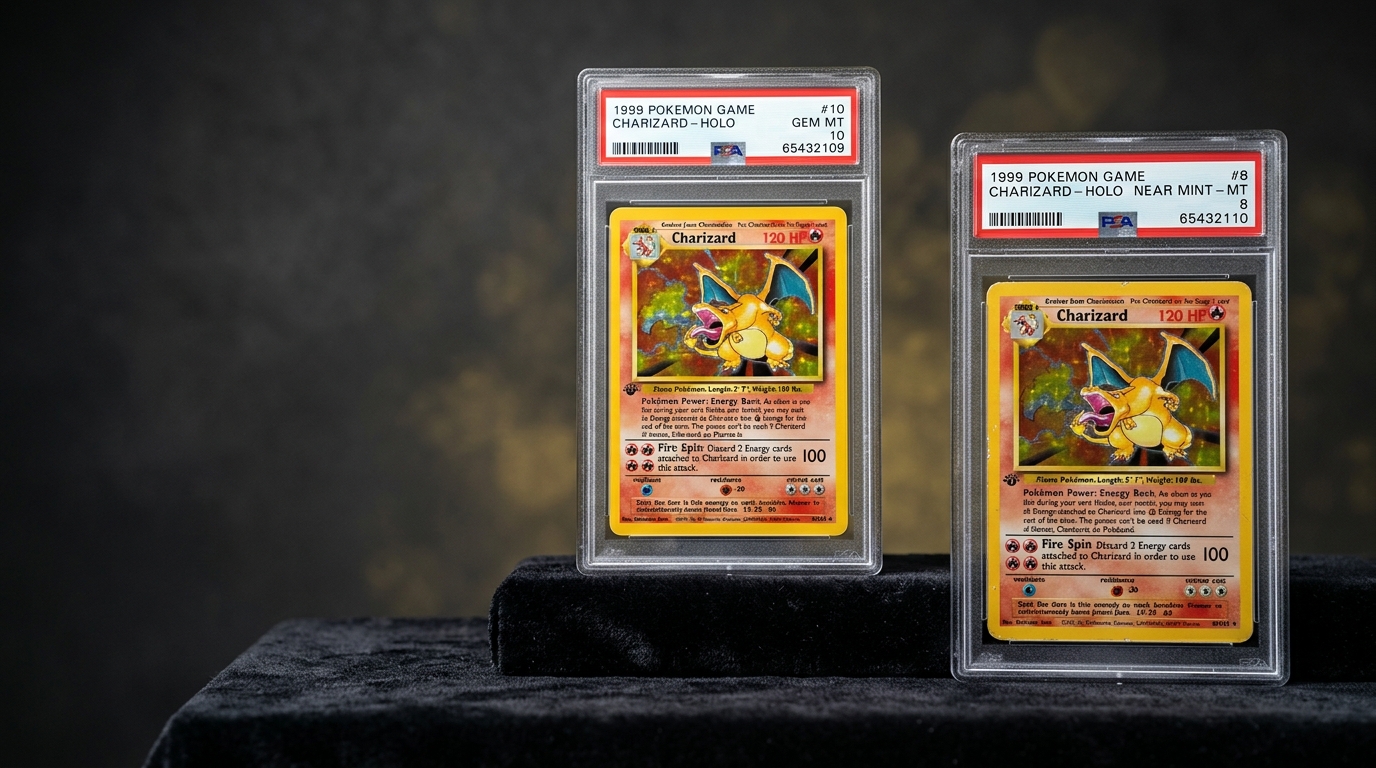
PSA 10 vs PSA 9: 2026 Price Gap Analysis & ROI Data
PSA 10s command 3x to 20x more than PSA 9s in 2026, but the gap varies wildly by card and era. We break down real sales data, ROI frameworks, and when grading actually makes financial sense.
Pokemon Price Tracker

Japanese vs English Pokemon Cards: Which Holds Value in 2026?
The Japanese vs English Pokemon card debate has fundamentally shifted in 2026. Japanese PSA 10s now command 20-40% premiums over English equivalents, while raw English cards still cost 2x-6x more. Here's how to navigate both markets strategically.
Pokemon Price Tracker
Stay Updated
Subscribe to our newsletter for the latest Pokemon card market trends, investment opportunities, and exclusive insights delivered straight to your inbox.