The Pokemon card market in 2026 presents a unique opportunity for collectors and investors. Following the 20-30% correction in Q1 2026, prices are stabilizing while the 30th anniversary momentum drives renewed interest. With Standard rotation hitting April 10, 2026, and sealed products reaching attractive entry points, now is the time to build a strategic Pokemon card portfolio.
Whether you're allocating $1,000 or $10,000, this comprehensive guide will walk you through proven portfolio-building strategies that balance risk, diversification, and growth potential in today's market.
Understanding the 2026 Pokemon Card Market Landscape
Before building your portfolio, it's essential to understand current market conditions:
Market Correction vs. Market Crash
The Pokemon card market experienced a correction—not a crash—in early 2026. Modern sealed products saw 20-30% price adjustments, but this represents healthy market normalization rather than collapse. Sealed Evolving Skies booster boxes, for example, now trade at $150+ per box, down from peak prices but showing strong stabilization.
The 30th Anniversary Effect
Pokemon's 30th anniversary in 2026 is fueling significant nostalgia-driven demand. Pokemon Day on February 27 sparked renewed collector interest, particularly in vintage cards and anniversary-themed releases. This momentum creates both opportunities and considerations for portfolio builders.
Standard Rotation Impact
April 10, 2026 marks a critical date: Standard format rotation. G-regulation sets including Scarlet & Violet Base, Paldea Evolved, Obsidian Flames, 151, Paradox Rift, and Paldean Fates are rotating out. This creates scarcity opportunities as competitive players offload playsets while collectors recognize long-term potential.
Successful Pokemon card portfolios balance three primary asset classes: sealed products, graded singles, and raw cards. Your allocation should reflect your risk tolerance, budget, and investment timeline.
The 70-20-10 Foundation Strategy
For most investors, especially beginners, this allocation provides optimal risk-adjusted returns:
70% Sealed Products - Your portfolio's foundation. Sealed products offer:
- Steady appreciation without singles volatility
- Lower authentication risk
- Easier storage and insurance
- Proven historical returns of 40-200% over 2-5 years for modern sets
- 300-1500% gains over 10-20 years for vintage sealed
20% Graded Singles (PSA 10 Focus) - Your growth engine. High-grade slabs provide:
- 3-5x premiums over raw counterparts
- Authentication and condition guarantee
- 80-600% potential returns over 5-10 years on chase cards
- Liquidity during market peaks
10% Raw Cards - Your tactical allocation. Raw cards enable:
- Quick entry during post-release dips
- Flipping opportunities during hype cycles
- Future grading candidates when purchased strategically
- Lower upfront capital requirements
Adjusting for Experience Level
Beginner Portfolio (Under $2,000):
- 80% Sealed Products
- 15% Graded Singles
- 5% Raw Cards
Focus on learning market dynamics with lower-risk sealed products while building grading knowledge.
Intermediate Portfolio ($2,000-$10,000):
- 70% Sealed Products
- 20% Graded Singles
- 10% Raw Cards
Balanced approach with increased graded exposure as you develop authentication skills.
Advanced Portfolio ($10,000+):
- 60% Sealed Products
- 30% Graded Singles
- 10% Raw Cards
Higher graded allocation capitalizes on authentication expertise and market timing abilities.
Sealed products form your portfolio's backbone. Here's how to build this allocation strategically:
Modern Sealed Selection Criteria
Not all modern sets deserve portfolio space. Prioritize sets with:
1. Chase Card Density
Sets with multiple high-value chase cards maintain stronger sealed demand. Look for:
- Multiple cards worth $100+ in PSA 10
- Desirable alternate arts or special illustrations
- Competitive staple cards with lasting appeal
2. Limited Print Runs
Special sets and holiday releases typically see shorter print windows:
- Holiday sets (Paldean Fates, Shining Fates)
- Anniversary releases
- Premium collection boxes with unique promos
3. Proven Track Record
Sets showing early appreciation signals:
- Evolving Skies: 200-300% gains over 3 years
- 151: Strong sustained demand post-release
- Crown Zenith: Premium positioning maintaining value
2026 Sealed Product Recommendations
Tier 1 - Core Holdings (40% of sealed allocation):
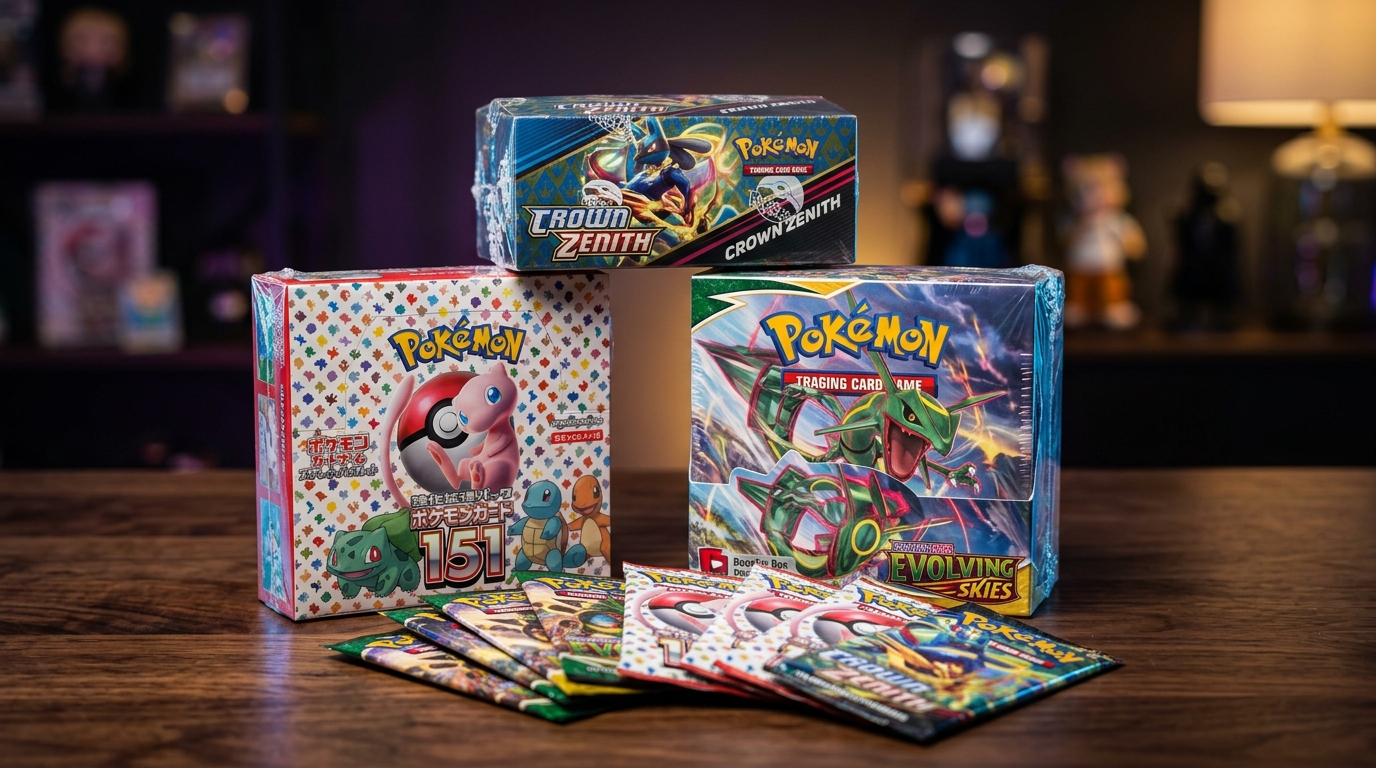
- Evolving Skies Booster Boxes: Alt art Eeveelutions drive enduring demand. Current $150+ entry point offers strong risk/reward.
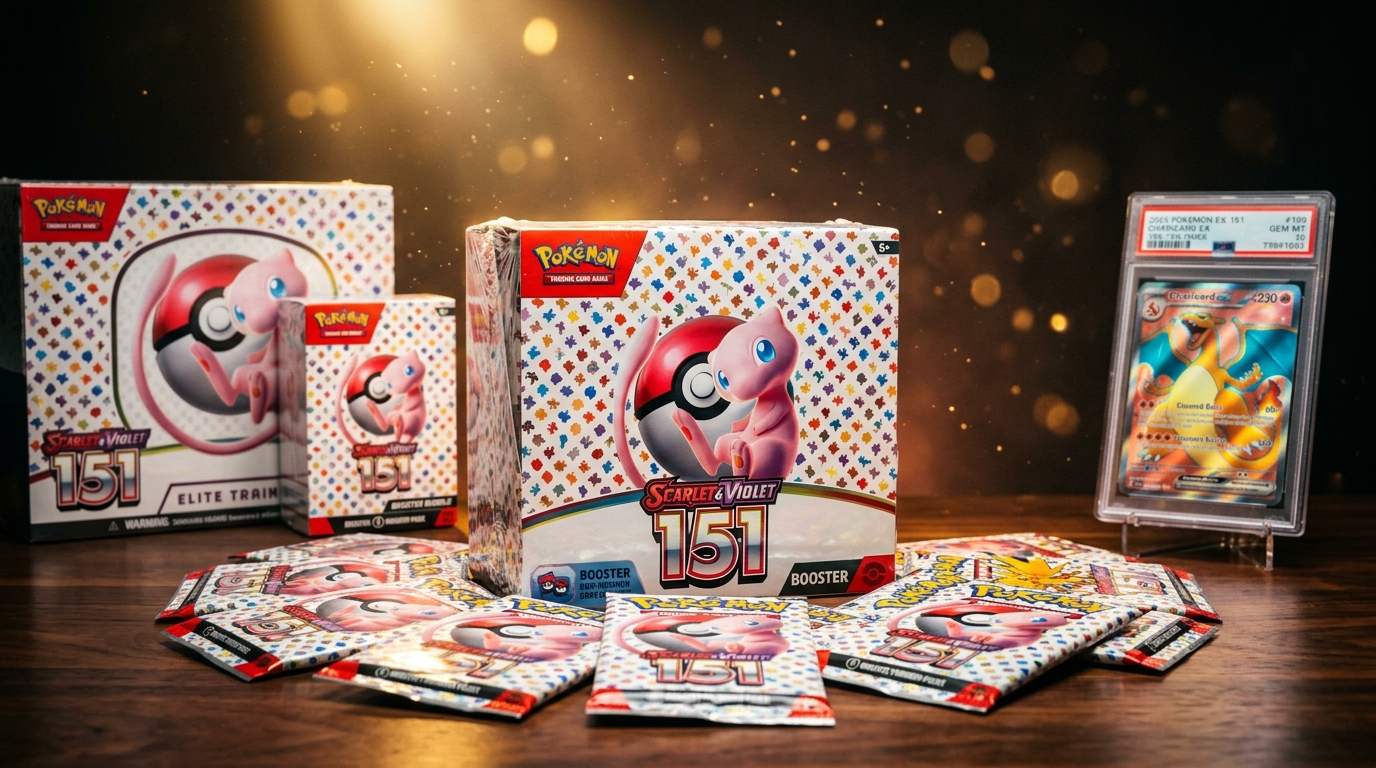
- 151 Booster Boxes: Nostalgia factor and Master Ball reverse holos create lasting appeal.
- Crown Zenith Elite Trainer Boxes: Premium positioning with strong chase cards.
Tier 2 - Growth Positions (30% of sealed allocation):
- Obsidian Flames Booster Boxes: Rotating out April 2026, creating near-term scarcity.
- Paldean Fates Elite Trainer Boxes: Special set dynamics with limited availability.
- Upcoming 30th Anniversary Products: Allocate budget for Q2-Q3 2026 anniversary releases.
Tier 3 - Speculative Holdings (30% of sealed allocation):
- Paradox Rift Booster Boxes: Undervalued relative to chase card value.
- Temporal Forces Premium Collections: Recent release with potential for appreciation.
- Japanese Exclusive Sets: Premium positioning for international collectors.
Vintage Sealed Opportunities
If budget allows, vintage sealed offers portfolio diversification:
WOTC Era (1999-2003):
- Base Set, Jungle, Fossil booster boxes: $10,000-$50,000+
- Neo Series: $3,000-$15,000
- Extreme scarcity drives 300-1500% returns over decades
EX Era (2003-2007):
- EX FireRed & LeafGreen: $2,000-$5,000
- EX Holon Phantoms: $1,500-$4,000
- Strong middle-ground between WOTC and modern
Black & White Era (2011-2013):
- Plasma Freeze: $800-$1,500
- Boundaries Crossed: $600-$1,200
- Emerging vintage category with growth potential
Only allocate 10-20% of total portfolio to vintage sealed due to capital intensity and authentication complexity.
Graded singles provide your portfolio's growth potential. Focus on PSA 10 specimens for maximum appreciation:
PSA 10 Selection Framework
Character Popularity Hierarchy:
- Tier 1 Characters: Charizard, Pikachu, Eevee evolutions
- Tier 2 Characters: Mewtwo, Lugia, Rayquaza, Umbreon
- Tier 3 Characters: Legendary Pokemon, starters, fan favorites
- Tier 4 Characters: Competitive staples, meta-relevant Pokemon
Allocate 60% to Tier 1, 25% to Tier 2, 15% to Tier 3-4.
Card Type Priority:
- Alternate Art Cards: Premium illustrations with lower population counts
- Special Illustration Rares: Modern chase cards with artistic appeal
- Full Art Trainers: Waifu cards maintain strong demand
- Secret Rare Gold Cards: Premium finish with collector appeal
- Vintage Holos: WOTC-era holos with nostalgia factor
2026 PSA 10 Investment Targets
Modern Alternate Arts ($200-$800 range):
- Umbreon VMAX Alt Art (Evolving Skies): $400-600
- Giratina VSTAR Alt Art (Lost Origin): $250-400
- Charizard ex SAR (Obsidian Flames): $300-500
- Iono SAR (Paldea Evolved): $200-350
These cards show strong population control and enduring demand.
Special Illustration Rares ($150-$400 range):
- Rika SAR (Temporal Forces): $200-300
- Mew ex SAR (151): $250-400
- Iron Thorns ex SAR (Temporal Forces): $150-250
Recent releases with appreciation potential as sets go out of print.
Vintage PSA 10s ($500-$2,000 range):
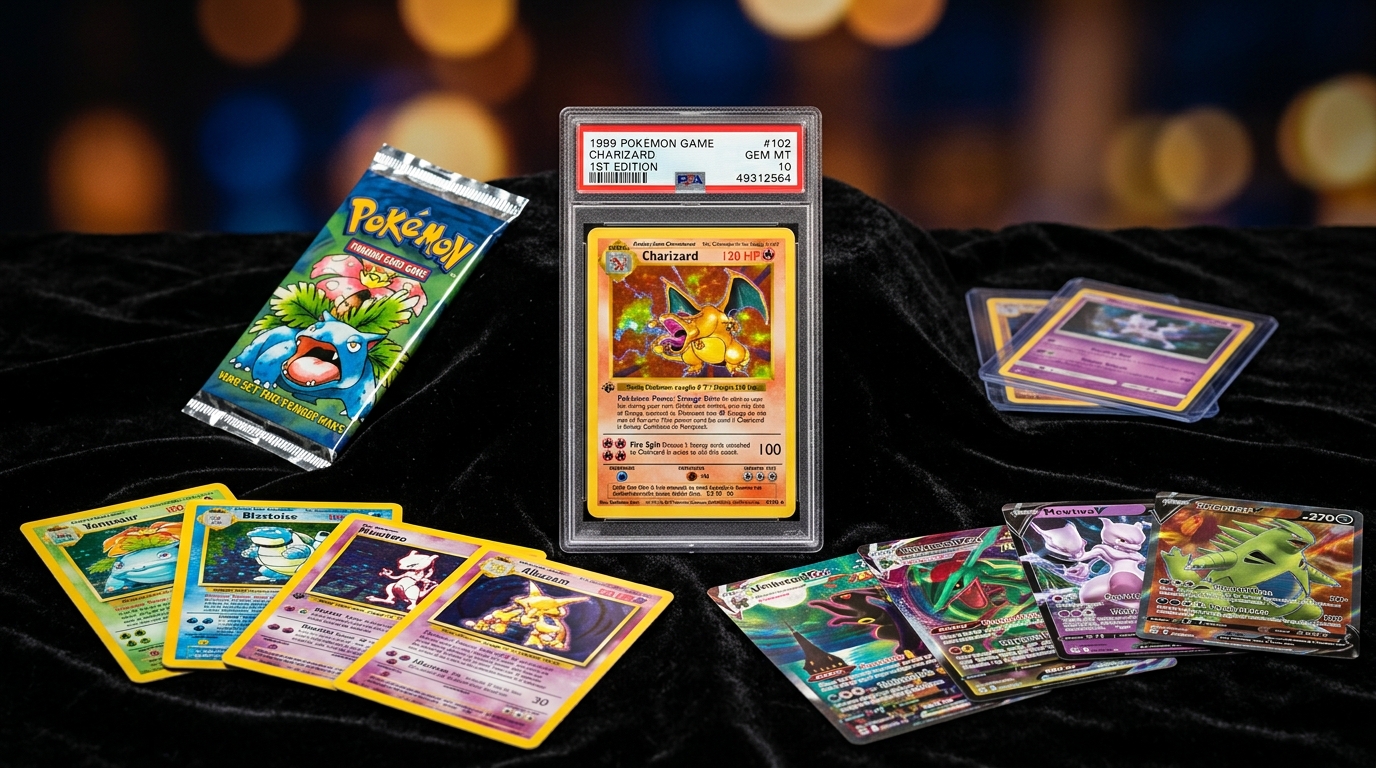
- Base Set Holo Charizard PSA 10: $1,500-2,500
- Neo Genesis Lugia PSA 10: $800-1,200
- Skyridge Umbreon PSA 10: $1,000-1,500
Vintage 10s offer portfolio diversification but require higher capital allocation.
When to Grade vs. Buy Graded
The raw-to-graded decision significantly impacts returns. Consider these factors:
Grade Raw Cards When:
- Purchasing fresh pulls at 40-60% of PSA 10 value
- Card shows gem mint characteristics (centering, edges, corners, surface)
- Population reports show PSA 10 rates above 30%
- You have experience identifying gradable cards
Buy Pre-Graded When:
- PSA 10 populations are extremely low (under 100)
- Raw-to-graded price gap is narrow (under 2x)
- You lack grading experience
- Time value matters (grading takes 2-4 months)
For grading decisions, tools like our Grading Calculator help determine if grading fees justify potential premiums.
Your 10% raw allocation serves three strategic purposes:
1. Post-Release Dip Buying
Chase cards typically dip 2-4 weeks post-release as supply floods the market. Target:
- Cards down 30-50% from week-one peaks
- Strong long-term potential based on character/artwork
- Near-mint or better condition for future grading
Example Strategy:
A $400 Special Illustration Rare drops to $200-250 in week three. Purchase raw, hold 3-6 months for market stabilization, then either:
- Flip at $300-350 (25-40% gain)
- Grade if gem mint (potential $600-800 PSA 10)
- Hold long-term as set goes out of print
2. Rotation Arbitrage
Standard rotation creates predictable patterns:
Weeks Before Rotation (Now through April 2026):
- Competitive players dump playsets
- Prices dip 20-40% on staple cards
- Collectors haven't yet recognized scarcity value
Weeks After Rotation:
- Supply constricts as sets go out of print
- Collector demand increases
- Prices recover 30-60% within 6 months
Target Cards:
- Iono (Paldea Evolved)
- Gardevoir ex (Scarlet & Violet Base)
- Miraidon ex (Scarlet & Violet Base)
3. Hype Cycle Flipping
Raw cards enable quick liquidity during:
- Tournament meta shifts
- Anime/game announcements
- Social media viral moments
- Set release hype windows
Maintain 3-5 position diversity to capitalize on unpredictable hype cycles.
Era Diversification
Spread holdings across Pokemon eras:
- Vintage (1999-2007): 20-30% of portfolio
- Middle Era (2008-2016): 10-15% of portfolio
- Modern (2017-2026): 55-70% of portfolio
This protects against era-specific market fluctuations.
Set Diversification
Avoid over-concentration in single sets:
- Maximum 25% of sealed allocation in any one set
- Maximum 15% of graded allocation in any one set
- Spread across 6-10 different sets minimum
Character Diversification
While Charizard dominates, over-exposure creates risk:
- Maximum 30% in Charizard cards
- Allocate 20-25% to Pikachu/Eevee evolutions
- Distribute remaining 45-50% across diverse characters
Product Type Diversification
Sealed Products:
- 60% Booster Boxes
- 25% Elite Trainer Boxes
- 15% Premium Collections/Special Products
Singles:
- 50% Alternate Arts/Special Illustrations
- 30% Full Arts/Secret Rares
- 20% Vintage Holos
Position Sizing
No single card should represent more than 10% of total portfolio value. This protects against:
- Individual card price crashes
- Authentication issues
- Condition disputes
- Market preference shifts
Authentication Protection
For purchases over $200:
- Only buy PSA/BGS/CGC graded cards
- Verify slab authenticity through certification numbers
- Purchase from reputable sellers with return policies
- Avoid raw "investment grade" claims without grading
Storage and Insurance
Protect physical assets:
- Store sealed products in climate-controlled environments (60-70°F, 40-50% humidity)
- Use penny sleeves + toploaders for raw cards
- Store graded slabs in protective cases
- Document collection with photos and spreadsheets
- Consider collectibles insurance for portfolios over $5,000
Liquidity Planning
Maintain portfolio liquidity:
- Keep 20-30% in easily liquidated assets (modern sealed, popular PSA 10s)
- Avoid illiquid positions (obscure vintage, low-population cards)
- Know your exit strategy before purchasing
- Track sold listings, not asking prices
30th Anniversary Positioning
Pokemon's 30th anniversary creates unique opportunities:
Official Anniversary Products:
- Premium collection boxes featuring anniversary artwork
- Special promos celebrating franchise history
- Limited-edition sealed products
Allocate 15-20% of 2026 sealed budget to anniversary releases.
Nostalgia-Driven Vintage Demand:
Anniversary momentum increases vintage interest:
- Base Set Charizard seeing renewed attention
- Original 151 Pokemon gaining premium
- WOTC-era sealed products appreciating faster
Mega Evolution Cards
Rumors of Mega Evolution's return to the video games create speculation opportunities:
Target Mega Evolution Cards:
- Mega Charizard ex (Flashfire) PSA 10: $150-300
- Mega Rayquaza ex (Roaring Skies) PSA 10: $200-400
- Mega Gardevoir ex (Primal Clash) PSA 10: $100-200
These represent speculative positions—limit to 5-10% of portfolio.
Standard Rotation Plays
G-regulation rotation creates immediate opportunities:
Pre-Rotation Accumulation (Now through April 10):
- Purchase rotating staples at suppressed prices
- Target 30-40% discounts from peak prices
- Focus on collector-appealing cards (alt arts, full arts)
Post-Rotation Hold (April-December 2026):
- Wait 6-12 months for supply constriction
- Monitor out-of-print announcements
- Exit positions as prices recover 40-80%
$1,000 Beginner Portfolio
Sealed Products ($800):
- 3x Evolving Skies Booster Boxes: $450
- 2x 151 Elite Trainer Boxes: $200
- 1x Obsidian Flames Booster Box: $150
Graded Singles ($150):
- 1x Umbreon VMAX Alt Art PSA 10: $150
Raw Cards ($50):
- 2-3x rotation arbitrage targets: $50
Expected 24-Month Return: 50-100% ($1,500-2,000)
$5,000 Intermediate Portfolio
Sealed Products ($3,500):
- 10x Evolving Skies Booster Boxes: $1,500
- 4x 151 Booster Boxes: $800
- 3x Crown Zenith ETBs: $400
- 2x Paldean Fates ETBs: $300
- 5x Obsidian Flames Booster Boxes: $500
Graded Singles ($1,000):
- 1x Giratina VSTAR Alt Art PSA 10: $350
- 1x Charizard ex SAR PSA 10: $400
- 1x Iono SAR PSA 10: $250
Raw Cards ($500):
- 5-8x post-release dip purchases: $300
- 3-5x rotation arbitrage plays: $200
Expected 24-Month Return: 60-120% ($8,000-11,000)
$10,000 Advanced Portfolio
Sealed Products ($6,000):
- 20x Evolving Skies Booster Boxes: $3,000
- 8x 151 Booster Boxes: $1,600
- 1x Plasma Freeze Booster Box: $1,000
- Various premium modern sealed: $400
Graded Singles ($3,000):
- 1x Base Set Charizard PSA 10: $2,000
- 1x Umbreon VMAX Alt Art PSA 10: $500
- 2x Modern alt arts PSA 10: $500
Raw Cards ($1,000):
- 10-15x strategic raw positions: $1,000
Expected 24-Month Return: 70-150% ($17,000-25,000)
Portfolio Maintenance and Rebalancing
Quarterly Review Process
Every three months:
- Document Current Values: Update spreadsheet with current market prices
- Calculate Performance: Measure gains/losses by allocation category
- Assess Market Conditions: Review market trends and adjust strategy
- Rebalance if Needed: Sell overweight positions, buy underweight categories
- Update Exit Strategies: Revise price targets based on market data
When to Take Profits
Consider selling positions when:
- Individual cards gain 100%+ and represent over 15% of portfolio
- Sealed products reach 2x MSRP with declining momentum
- Market shows bubble characteristics (rapid unsustainable growth)
- You need liquidity for superior opportunities
- Portfolio becomes overweight in single allocation
When to Buy More
Add to positions when:
- Market corrections create 25-40% discounts
- New information increases long-term potential
- Allocation drifts below target percentages
- Cash reserves exceed 20% of portfolio
Over-Concentration
The biggest portfolio killer: putting too much in single cards or sets. Diversification protects against:
- Set-specific demand crashes
- Character popularity shifts
- Reprint announcements
- Market preference changes
Chasing Hype
FOMO-driven purchases at peak prices destroy returns:
- Wait for 2-4 week post-release dips
- Avoid buying during viral social media moments
- Ignore "next Charizard" speculation
- Focus on fundamental value, not hype
Neglecting Condition
Condition determines value:
- Near mint raw cards grade PSA 8-9, not 10
- Whitening, scratches, centering issues kill value
- Learn grading standards before buying raw
- When in doubt, buy pre-graded
Ignoring Liquidity
Illiquid positions trap capital:
- Obscure cards take months to sell
- Niche sets have limited buyer pools
- Ultra-high-end vintage requires specialized buyers
- Maintain 20-30% in liquid assets
Emotional Attachment
Personal favorites often make poor investments:
- Separate collection from investment portfolio
- Exit positions at target prices regardless of attachment
- Don't overpay for childhood nostalgia
- Make data-driven decisions, not emotional ones
Consult a tax professional, but understand basics:
Capital Gains
- Cards held over 1 year qualify for long-term capital gains (typically 15-20% federal)
- Cards held under 1 year taxed as ordinary income (up to 37% federal)
- Document purchase prices and dates
- Track all transactions for tax reporting
Sales Tax
- Many states require sales tax on collectibles
- Online marketplaces may collect automatically
- Private sales may require self-reporting
- Rules vary by state and transaction size
Record Keeping
Maintain detailed records:
- Purchase receipts with dates and prices
- Grading invoices and certification numbers
- Sale confirmations with buyer information
- Photos documenting condition
- Spreadsheet tracking all transactions
Month 1: Foundation
- Set Budget: Determine total investment capital
- Choose Allocation: Select beginner/intermediate/advanced strategy
- Research Targets: Study current market prices and trends
- Make First Purchases: Buy core sealed products (Evolving Skies, 151)
- Set Up Tracking: Create spreadsheet and documentation system
Months 2-3: Expansion
- Add Graded Singles: Purchase 1-2 PSA 10 chase cards
- Diversify Sealed: Add 2-3 different sets to holdings
- Start Raw Positions: Buy rotation arbitrage opportunities
- Learn Grading: Study PSA standards and population reports
- First Review: Assess performance and adjust strategy
Months 4-6: Optimization
- Rebalance: Adjust allocations based on performance
- Take Profits: Sell positions hitting 100%+ gains
- Add Vintage: If budget allows, add vintage sealed or singles
- Grade Cards: Submit raw cards showing gem mint characteristics
- Quarterly Review: Full portfolio assessment and strategy update
Months 7-12: Maturation
- Maintain Discipline: Stick to allocation targets
- Capitalize on Opportunities: Buy market dips and corrections
- Rotate Positions: Exit mature positions, enter new opportunities
- Expand Knowledge: Study market trends and historical data
- Plan Year 2: Develop 12-24 month strategy based on Year 1 results
Building a Pokemon card portfolio in 2026 requires strategy, discipline, and patience. The current market correction provides attractive entry points, while the 30th anniversary momentum creates tailwinds for appreciation.
Key takeaways for portfolio success:
- Prioritize sealed products (70%+ allocation) for stable, predictable returns
- Focus on PSA 10 singles for growth potential with authentication protection
- Maintain diversification across eras, sets, characters, and product types
- Buy during corrections and take profits during peaks
- Think long-term with 2-5 year holding periods for optimal returns
- Document everything for tax reporting and insurance purposes
- Avoid emotional decisions based on personal attachment or FOMO
- Rebalance quarterly to maintain target allocations
The Pokemon card market has demonstrated 25+ years of sustained collector interest and price appreciation. While short-term volatility is inevitable, well-constructed portfolios focusing on quality assets, proper diversification, and disciplined execution can generate 50-200% returns over 24-48 months.
Start with your risk tolerance and budget, follow the allocation frameworks outlined above, and adjust as you gain experience and market knowledge. The 2026 market presents exceptional opportunities for patient, strategic portfolio builders.
Note: Past performance does not guarantee future results. Always do your own research before making investment decisions. The information provided is for educational purposes and should not be considered financial advice.